- 1What is worldschooling?
- 2What worldschooling really looks like day-to-day
- 3Worldschooling with multiple kids
- 4The deschooling transition
- 5Starting mid-year
- 6Slow travel vs. bucket-list travel
- 7Real story: learning in El Salvador
- 8Homeschooling while traveling: the logistics
- 9Grandparents and extended family on the road
- 10Learning a second language on the road
- 11Building structure on the road
- 12Is worldschooling right for your family?
- 13Frequently asked questions
When we pulled our kids out of school and started planning our first trip, everyone asked: "But what about their education?" Since we started last September, I can tell you: their education didn't stop. It expanded in ways a classroom never could.
This guide covers everything we've learned about worldschooling: what it really looks like day-to-day, how to navigate the deschooling transition, the logistics of homeschooling while traveling, and how to build a flexible learning rhythm that works for your whole family, whether you're traveling for three weeks or three years.
What is worldschooling?
Worldschooling means using the world as your classroom. It's not just "homeschooling while traveling"; it's an intentional approach that treats every new place, culture, and experience as a learning opportunity. A market in Guatemala teaches economics. A museum in Paris teaches history. A hike in Costa Rica teaches biology. The world does the teaching; you just facilitate.
The word gets used broadly, and that's okay. Some families worldschool full-time, traveling for years without a home base. Others do it for a semester or a summer. Some never leave their country but approach local communities with the same curiosity a worldschooler brings to a foreign one. The defining feature isn't a passport stamp; it's the mindset that the world is the curriculum.
What worldschooling really looks like day-to-day
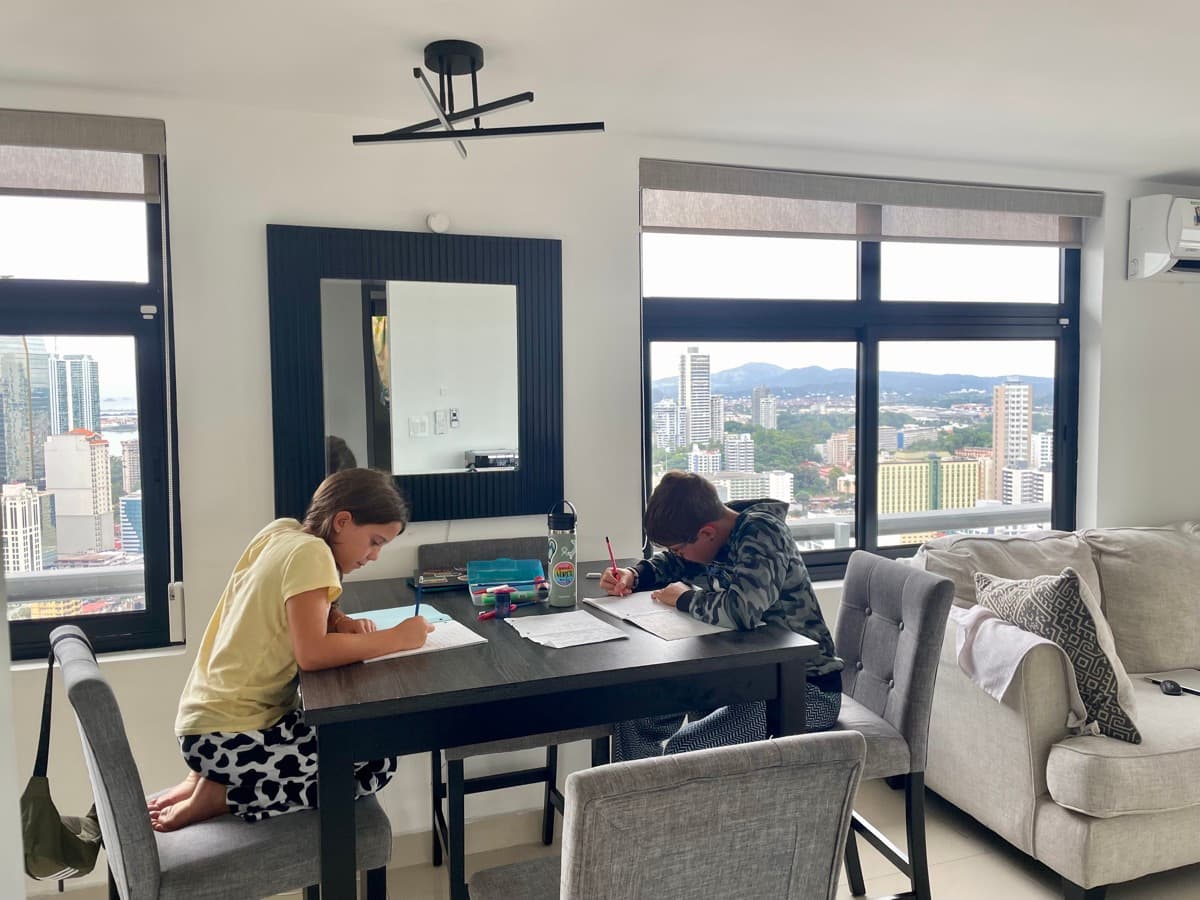
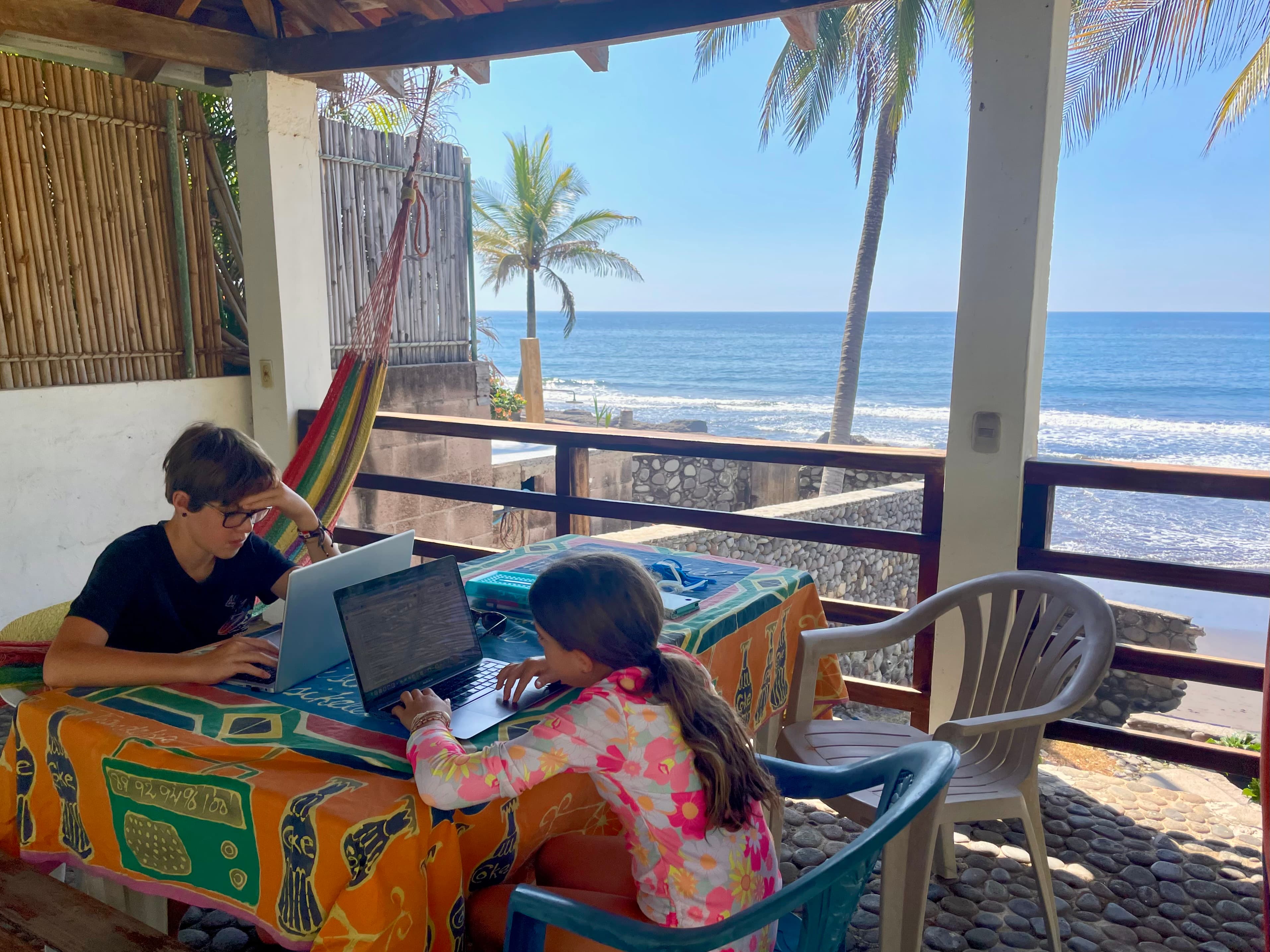
Social media shows the highlight reel: kids doing math on a beach in Bali, journals spread across a cafe table in Lisbon. The reality is less photogenic and more beautiful. A typical worldschooling day in our family involves a morning routine (reading, writing, and some focused skill work), followed by an afternoon of exploration that looks different in every place we land.
In a new city, that afternoon might be walking a neighborhood, getting lost on purpose, and figuring out how to ask for directions in a new language. In a place we've settled for a month, it might be our kids playing with local kids in a park while I work from a nearby bench. On a travel day, it might be nothing at all, and that's fine.
We share our actual worldschool day structure in detail, including the parts that don't look like learning but absolutely are. The biggest surprise for most new worldschool families is how much learning happens in the "boring" moments: waiting for a bus, ordering food, navigating a grocery store in a language you don't speak.
Worldschooling with multiple kids
One of the most common questions we get is: "How do you worldschool kids at different ages and stages?" The honest answer: it's both easier and harder than you'd think.
Easier, because real-world experiences naturally scale. A visit to a historical site works for a 5-year-old (who notices the big cannon) and a 12-year-old (who reads about the battle) simultaneously. A cooking class teaches knife skills to one child and fractions to another. The world provides multi-level learning automatically.
Harder, because different kids have different needs for focused skill work, different energy levels for walking, and different thresholds for "one more museum." We wrote about worldschooling with two kids and what it honestly looks like with a 9-year-old and a 12-year-old. The short version: keep expectations low and curiosity high. Some days are rich and magical. Some days are Netflix in a hotel room because everyone's had enough. The learning happens across weeks and months, not in individual days.
The deschooling transition
If your kids have been in traditional school, the first weeks (or months) of worldschooling can feel chaotic. That's deschooling, the necessary process of unlearning the habits and expectations of institutional education. Your kids need time to rediscover their natural curiosity. You need time to let go of the idea that learning looks like sitting at a desk.
Deschooling isn't a one-time event. It happens in stages, and understanding those stages can save you months of anxiety. The general rule of thumb is one month of deschooling for every year your child was in traditional school, but it varies wildly by child and family.
The stages of deschooling
The early phase feels liberating: no alarms, no homework, freedom. Then comes the crash: boredom, resistance, and the terrifying feeling that your kids aren't learning anything. That's the middle stage, and it's where most families panic and reach for a curriculum. If you can ride it out, something shifts. Your child starts asking questions again, picking up books voluntarily, and showing interest in the world around them.
Our deep dive on the 5 stages of deschooling walks through each phase in detail, including what to expect and how to support your child (and yourself) through the hardest parts. Stage 3 is the one that breaks people, but it's also where the magic starts.
Parents need to deschool too. You need to unlearn the belief that learning requires a desk, a schedule, and a curriculum. This is harder than it sounds. Most of us have 12+ years of conditioning telling us what "real school" looks like. Give yourself grace and time.
Starting mid-year
You don't have to wait for September. Some of the best worldschooling journeys start in the middle of a school year, when a family realizes the current path isn't working and decides to try something different.
If you're thinking about pulling your kids mid-year, our guide on how to start homeschooling mid-year covers the practical steps: legal requirements, how to talk to your school, and how to handle the emotional transition for kids who are leaving friends and routines behind. The logistical part is usually simpler than parents expect. The emotional part takes more care.
Slow travel vs. bucket-list travel
The biggest mistake new worldschool families make is trying to see everything. We knew from the start that we wanted to slow travel, and it made all the difference. Families who try to cram in four countries in a month end up with exhausted, cranky kids who aren't learning much; they're just surviving the logistics of constant movement.
Slow travel, spending weeks or months in one place, is where the real learning happens. Your kids make friends, learn routines, pick up language, and develop a genuine connection to a place. They stop being tourists and start being residents, even temporarily. That shift changes everything about the quality of their learning.
Our take on why slow travel beats bucket-list travel explains this in more detail, including why we chose this approach from day one. The sweet spot for our family turned out to be 4-6 weeks per destination. Long enough to feel settled, short enough to stay curious.
You don't need to see the whole world to worldschool. You need to see one place deeply enough that it changes how you see everything else.
Real story: learning in El Salvador
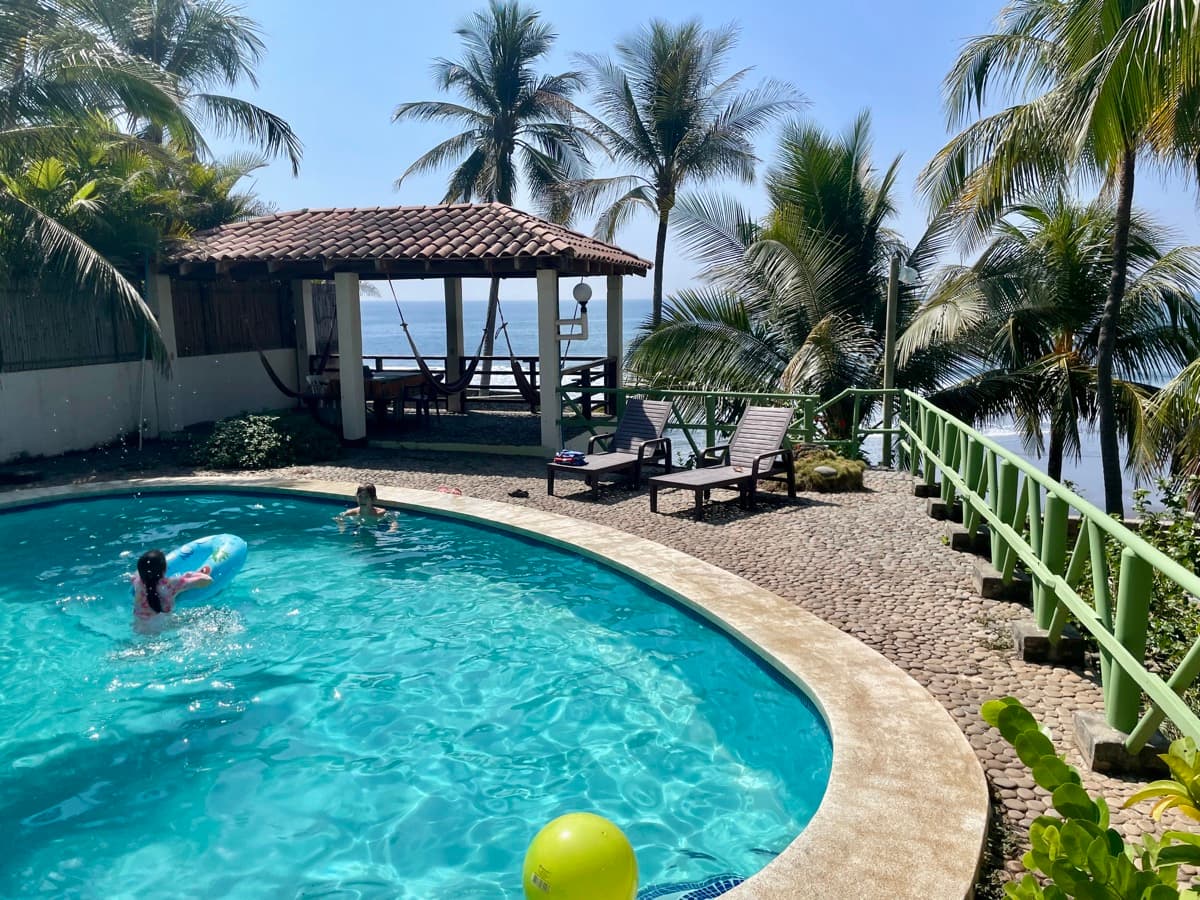
I share this because the best way to understand worldschooling is through specific stories, not abstract concepts. When we spent four weeks in El Salvador, our kids learned about volcanic geology by hiking Santa Ana volcano, about economics by watching how a surf town's economy runs on tourism, and about history through conversations with people who lived through the civil war.
None of that was planned. We didn't have a "unit study on El Salvador." We just showed up, stayed long enough to get curious, and followed the threads. Our full account of worldschooling in El Salvador includes what the kids actually learned, what we struggled with, and what surprised us.
Homeschooling while traveling: the logistics
Let's talk about the practical stuff that nobody's Instagram shows. How do you actually do focused learning when you're changing locations, dealing with unreliable WiFi, living out of suitcases, and managing jet lag?
The answer is: imperfectly. Some weeks are rich with structured learning. Other weeks, "school" is a 20-minute reading session in an airport lounge. The key is accepting that worldschooling has a different rhythm than home-based homeschooling, and that's okay. Travel days are low-learning days. Settling-in days are low-learning days. Deep-exploration days make up for all of it.
Our guide on homeschooling while traveling covers the nuts and bolts: WiFi solutions, time zone management, keeping records, legal requirements across borders, and how to maintain a bare-minimum learning routine on even the most chaotic days.
What to pack for worldschooling
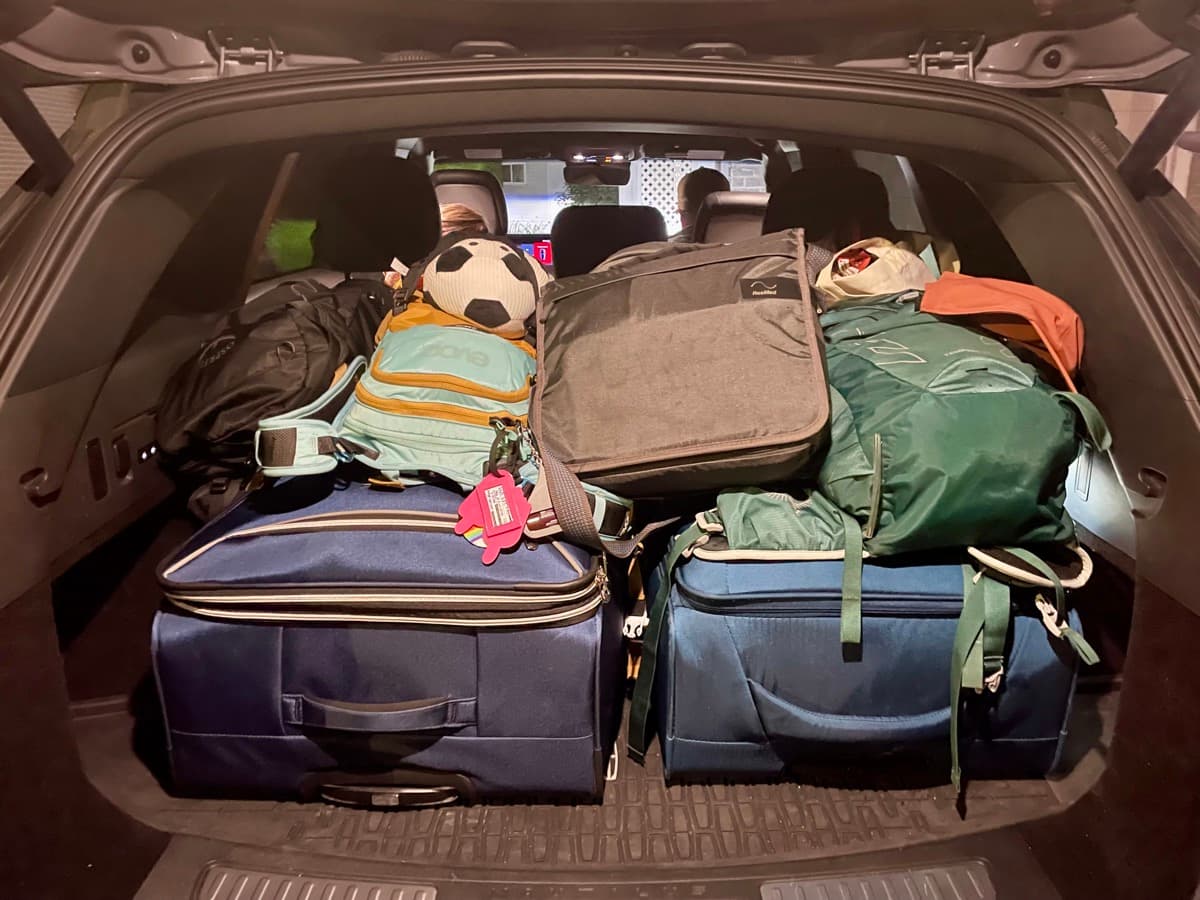
Less than you think. Our family travels with a laptop for my son, an iPad for my daughter, e-readers for both kids, two pencil cases, extra white sheets, and a laminated world map. We started with binders full of workbooks, but barely touched them after the first few months. The real world was teaching everything those pages were trying to cover.
Our full worldschooling packing list covers everything we actually brought, what earned its place, what we ditched along the way, and what we wish we'd packed from day one.
If you can access it digitally, don't pack the physical version. If you can buy it locally, don't pack it at all. The only things worth their weight in a suitcase are the ones that are hard to replace: a favorite comfort item, specialized art supplies, and whatever your kid is currently obsessed with reading.
Grandparents and extended family on the road
One of the unexpected gifts of worldschooling has been inviting grandparents to join us for portions of our trip. It solves several problems at once: the kids get quality time with family, grandparents get to see the learning happening firsthand (which eases their concerns about "what about school?"), and parents get a much-needed break.
Our experience with grandparents joining our worldschool trip took some adjustment, but the intergenerational learning was irreplaceable. Mamie had the kids identifying toucans and macaws within days. Papi walked them to the local panadería every afternoon. Card games after dinner turned into nightly strategy sessions. And everything naturally switched between French and English, which was language immersion no class could replicate.
Learning a second language on the road
Immersion is the most effective way to learn a language, and worldschooling gives your family something no class can replicate: genuine motivation to communicate. When your child wants to order ice cream and the vendor speaks Spanish, they have a reason to learn that no textbook assignment can create.
That said, language learning while traveling isn't automatic. Kids who are naturally outgoing will absorb language quickly. Shy kids need more scaffolding: language games, simple phrases practiced at home before venturing out, and low-pressure situations where they can try without fear of embarrassment.
The best language learning we've seen happened naturally: ordering food at a local tienda, chatting with kids at the park, asking for directions. When your child has a genuine reason to communicate, the motivation takes care of itself.
Building structure on the road
Worldschooling doesn't mean no structure; it means flexible structure. Most worldschool families find a rhythm: mornings for focused skill-building (reading, writing, math), afternoons for exploration. Some families use a project-based approach tied to their current location. Others follow their kids' interests entirely.
What I've found is that kids actually crave some routine, even when everything else is changing. Having a consistent morning practice, even a short one, gives them an anchor in the chaos of travel. It doesn't need to be elaborate. Thirty minutes of reading, twenty minutes of math practice, and some journaling. That baseline keeps skills sharp and gives both kids and parents the reassurance that "school" is happening.
See how we structure our days in what a worldschool day actually looks like. The most important takeaway: hold your routine loosely. Some days it works perfectly. Some days you throw it out because there's a local festival, or the kids found a tide pool, or you all just need a slow morning. Flexibility is a feature, not a failure.
Is worldschooling right for your family?
Worldschooling isn't for every family, and it doesn't have to be full-time. Some families worldschool for a gap year. Others do it every summer. Some travel full-time for years. Some never leave their home country but approach local adventures with a worldschooler's mindset.
The question isn't "Can we do this?" It's "What would our version look like?" You don't need to sell your house and buy a one-way ticket (though some families do). You can start with a three-week trip that's designed around learning instead of sightseeing. You can worldschool in your own city by visiting neighborhoods you've never explored. The mindset matters more than the miles.
If you're feeling the pull but aren't sure where to begin, start with one trip. Make it long enough to slow down (at least two weeks if possible). Pick a place that genuinely interests your kids. And leave the itinerary open enough for serendipity. That's where the best learning happens.
Want ready-to-use activities? Browse our free printable travel and worldschool checklists for kids.