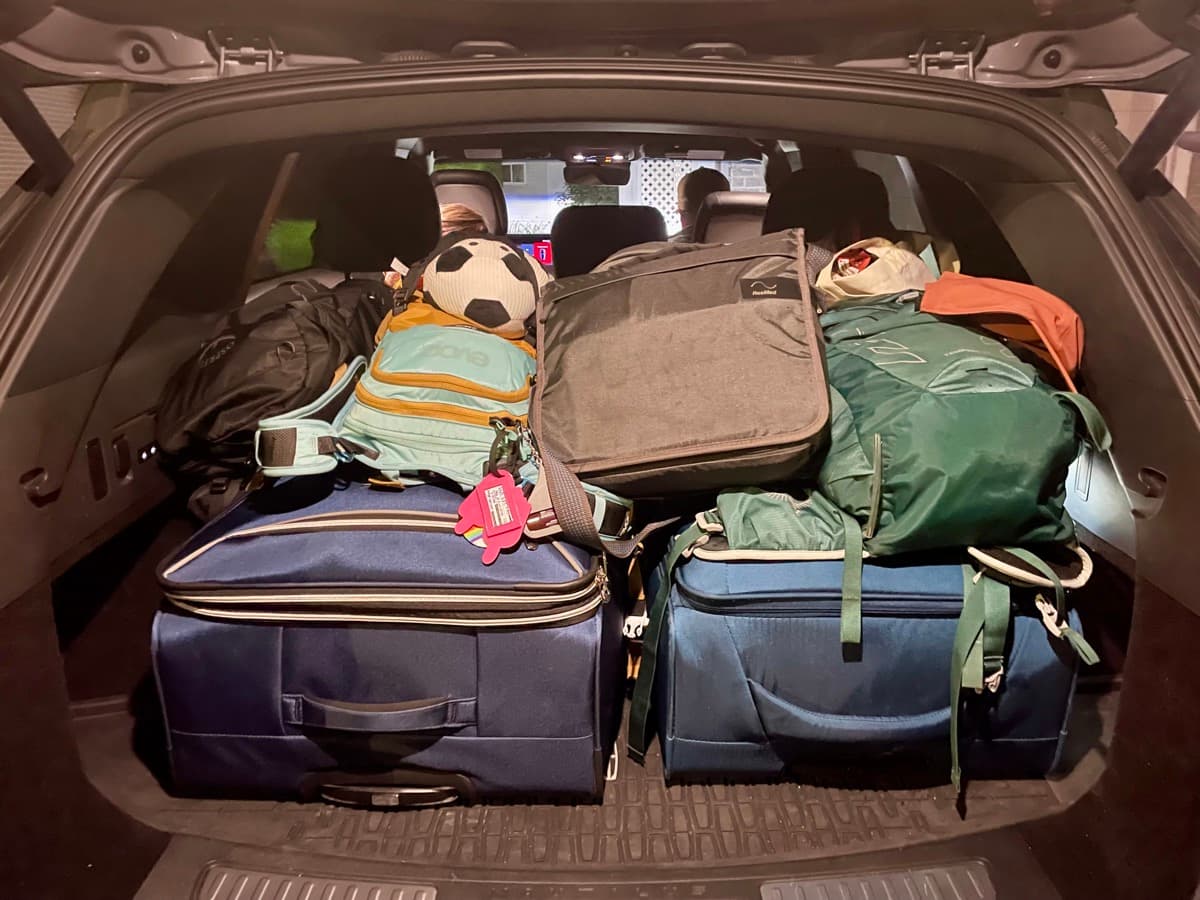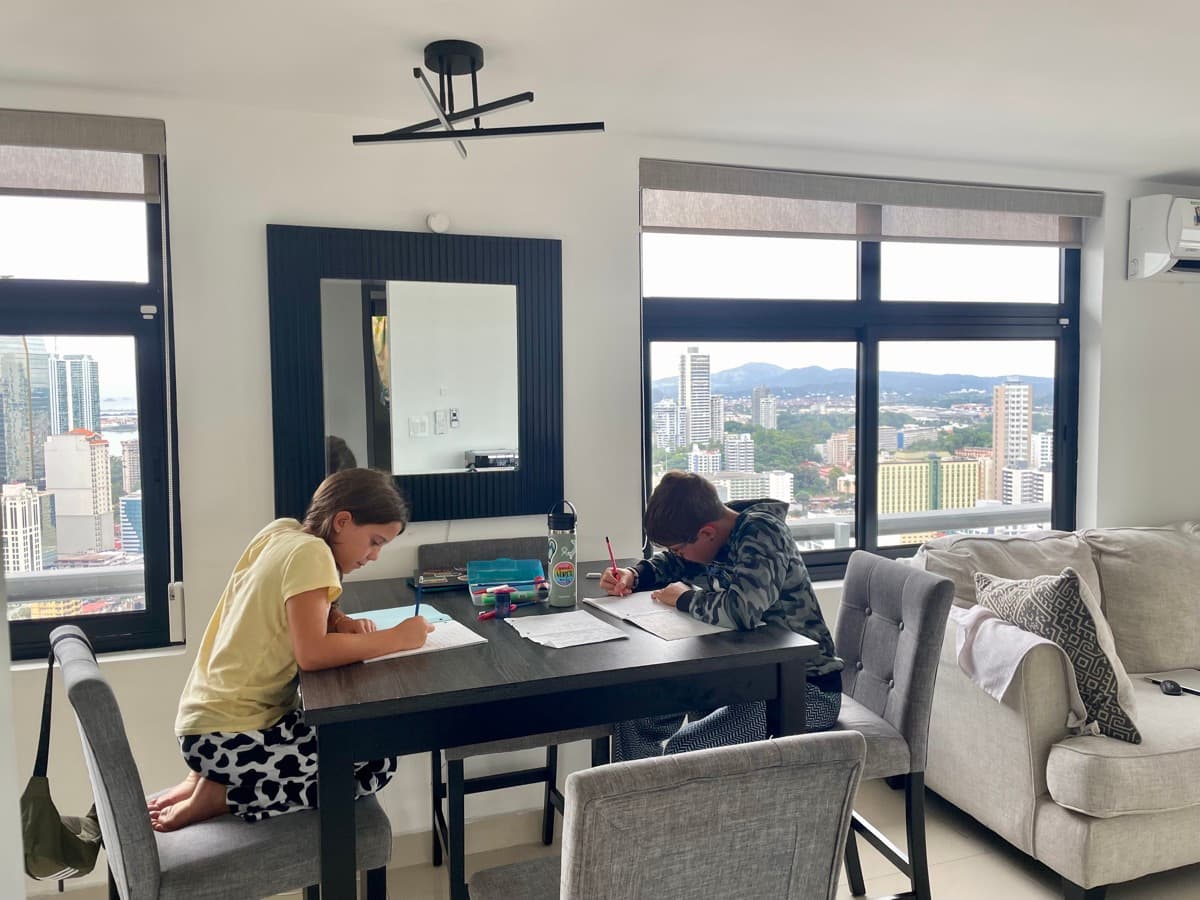
When we first started traveling, I packed a couple of workbooks thinking we’d keep some structure going on the road. And we did use them, for a little while. But the more we traveled, the less we reached for them. The learning was already happening around us, and the workbooks just couldn’t compete with what the real world was offering.
It took me a while to realise: traveling IS the education. You don’t need to force school into the gaps between sightseeing. The sightseeing is the school. The airport is the school. The restaurant menu in a language you don’t speak is the school.
But I also know the anxiety. The voice that says: “are they learning enough?” Here’s everything I’ve figured out after months of educating on the move, what works, what doesn’t, and what to let go of completely. If you want the bigger picture before you book flights, our full worldschooling guide covers how families actually live this out.
The mindset shift that changes everything
Stop thinking about “fitting school into travel.” Start thinking about what travel already teaches.
A single day of travel can cover more ground than a week of worksheets. Think about what happens when your family flies somewhere new:
- Airport: reading signs, navigating, time zones, currency conversion, patience and waiting
- New city: map reading, public transport, budgeting, cultural awareness, safety awareness
- Restaurant: reading a menu, trying new foods, tipping customs, ordering in another language
- Museum or landmark: history, art, architecture, storytelling, asking questions
- Getting lost: problem-solving, asking for help, staying calm under pressure
None of this requires a lesson plan. It just requires you to be present and pay attention to what’s already happening.
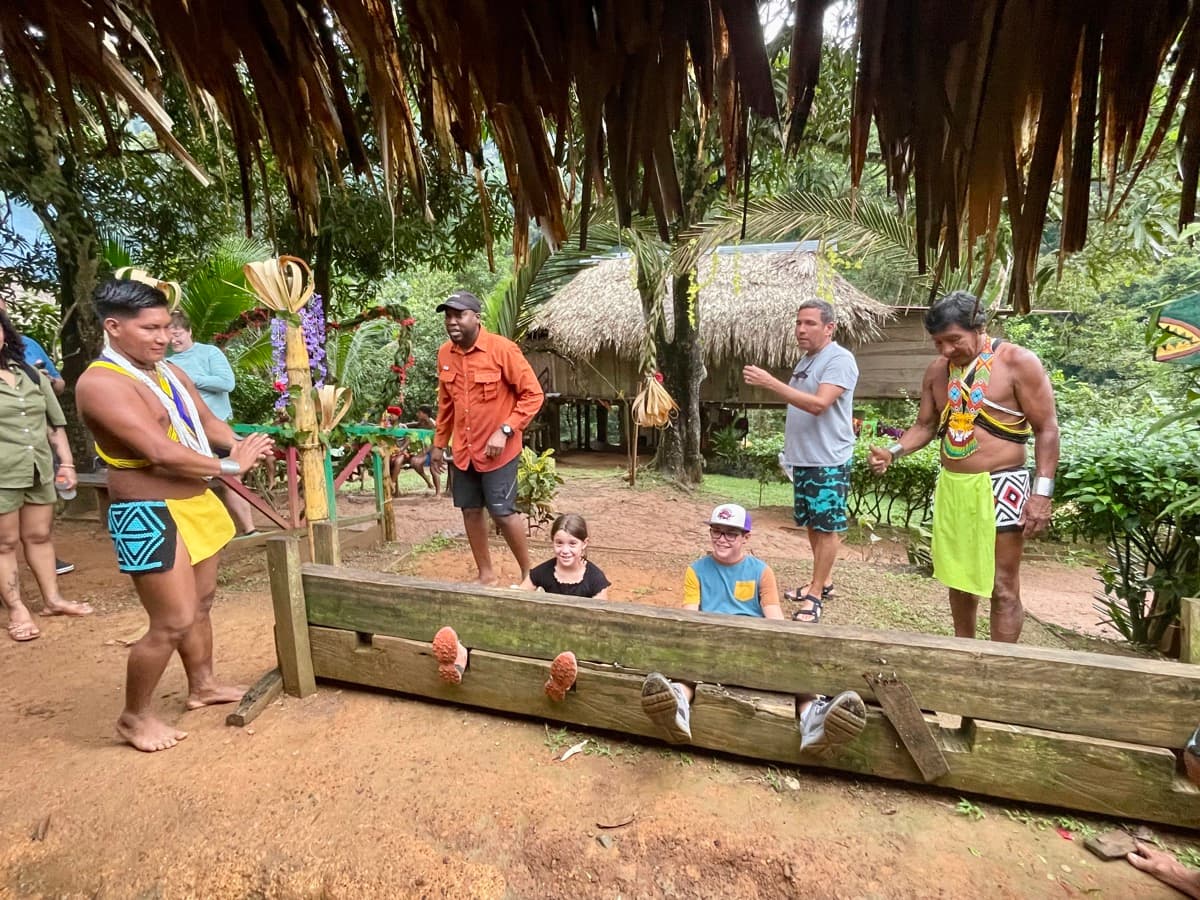
Travel doesn’t interrupt learning. It IS learning. You just have to stop looking for it in a workbook.
What to bring (and what to leave behind)
Bring these
- Something for them to create with: a family blog, a shared notebook, a video diary. Whatever format gets them writing, reflecting, and making something from their experiences. This becomes their portfolio.
- A few digital activity guides, lightweight, low-prep, works anywhere. Download before you leave and open on any device.
- A good reading book each, let them choose. Reading for pleasure IS literacy.
- A deck of cards or travel games, strategy, maths, turn-taking, losing gracefully.
- Their curiosity, and yours.
Leave behind
- Workbooks and textbooks; they’re heavy, they’re boring on the road, and travel teaches the same concepts better.
- A rigid daily schedule; you’re not at home. Let the rhythm of travel set the pace.
- The guilt: seriously. Your kids are experiencing the world. That is enough.
Practical strategies that actually work
1. The daily journal habit
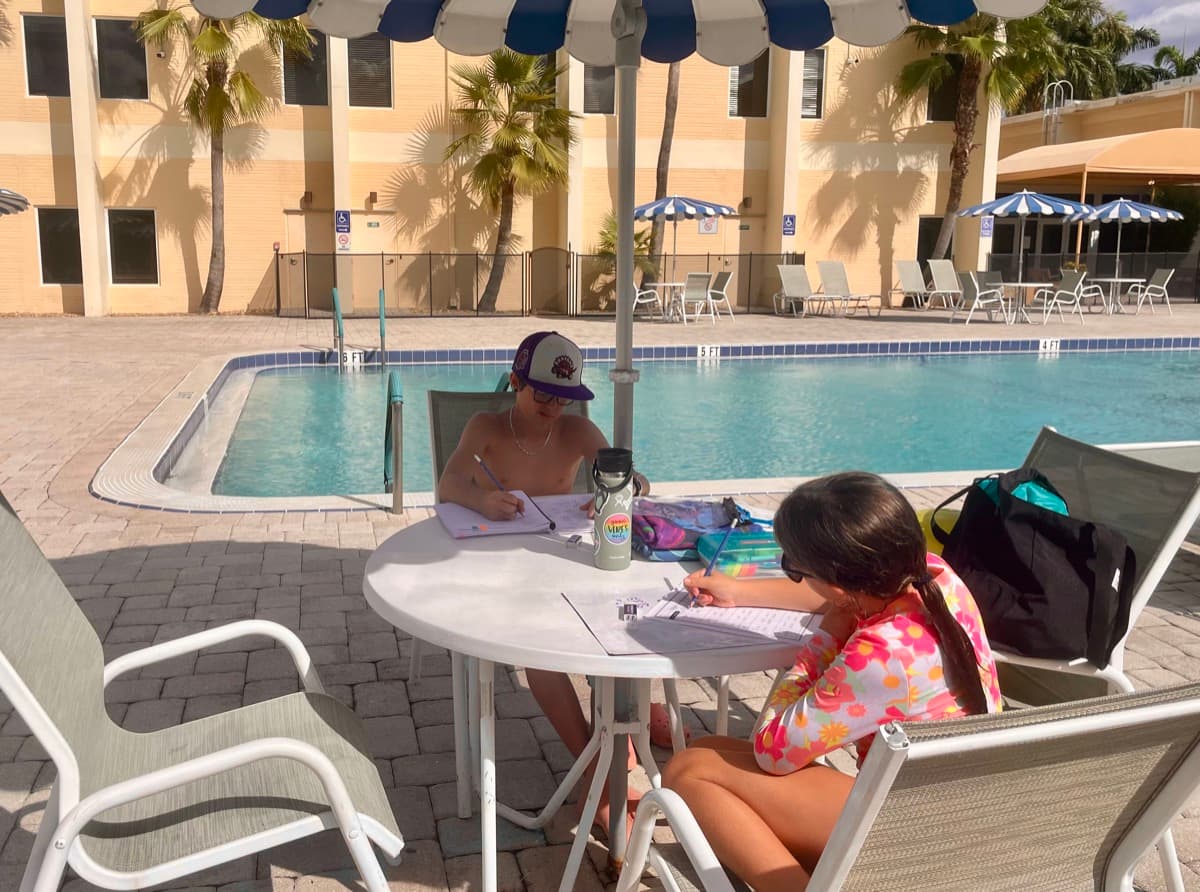
For us, this means a travel blog. Our kids write about each country, research the things they’re curious about, and make video presentations. Your version might be a notebook, a photo journal, or even just a shared notes app. The format doesn’t matter, what matters is that they’re reflecting on what they experienced.
It’s writing practice. It’s reflection. It’s a record they’ll treasure for years. Some days it’s a full research piece about hurricanes. Some days it’s a quick sketch of a sea turtle. Both count. (For more on how this can grow into a real creative project, see how our kids make videos as part of their learning.)
2. Let kids be the navigator
Hand them the map. Let them figure out which bus to catch. Let them ask for directions. When kids are responsible for getting somewhere, they’re learning geography, spatial reasoning, communication, and confidence, all at once.
3. Give them a budget
Each kid gets a small daily or weekly budget in local currency. They decide what to spend it on. This one activity teaches more real-world maths than a year of worksheets: addition, subtraction, currency conversion, opportunity cost, saving vs spending, and the hard lesson of “I already spent it all.” For the drive itself, road trip math turns the fuel, the distance, and the budget into the lesson.
4. The question jar
Carry a small notebook (or use your phone) and write down every question your kids ask during the day. “Why is the water that colour?” “How old is this building?” “Why do they drive on the other side?” These become evening research projects, conversation starters, or the seeds for longer investigations.
5. Slow down
This is the hardest one. The temptation when traveling is to see everything. But kids learn best when they have time to absorb, explore, and revisit. Two activities in a day is plenty. Leave space for boredom. Leave space for the unplanned conversation with a local shopkeeper that turns into the highlight of the trip.
Pick one “go deep” day per week. Instead of visiting three sites, spend the whole day at one. Let the kids sketch, write, ask questions, and really engage. Depth beats breadth every time.
In the Membership
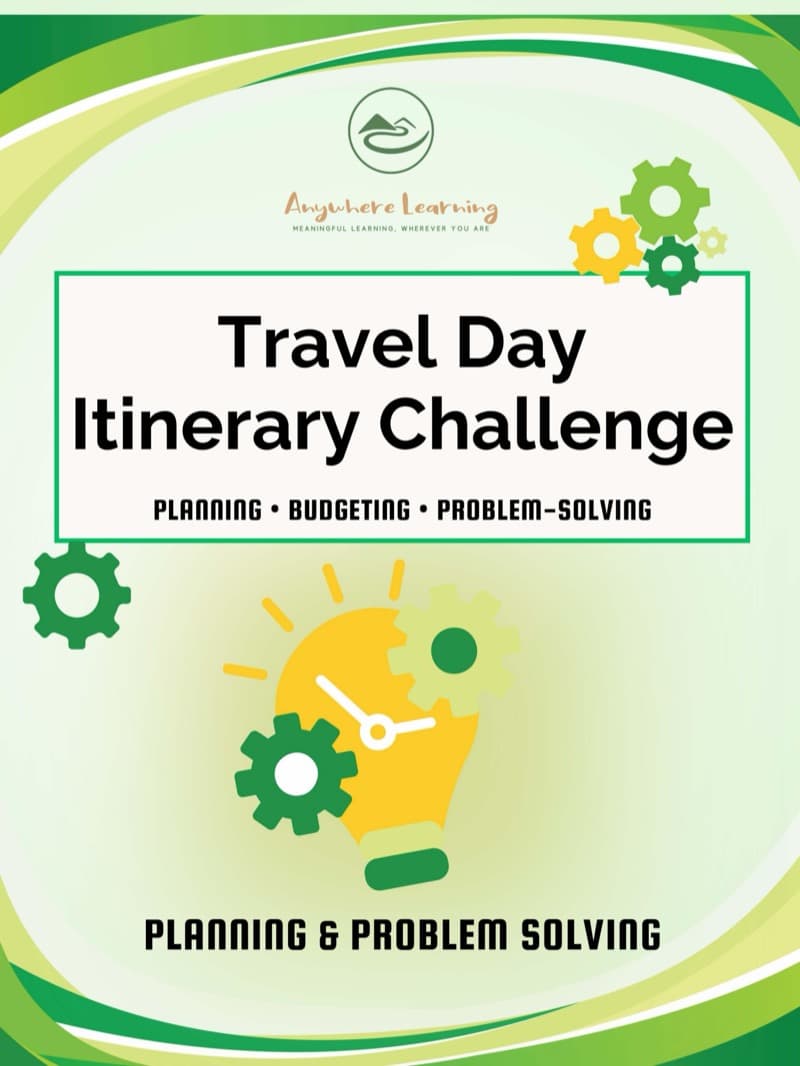
Travel Day Itinerary Challenge
Planning activity for kids ages 9-14: plan a real day trip with budget, itinerary, curveball, and backup plan.
What about reading and maths?
This is the question every traveling homeschool parent dreads. And the answer is: your kids are doing more maths and reading than you think.
Reading menus, signs, guidebooks, maps, and their own journals IS reading. Converting currency, budgeting, calculating tips, comparing prices, and figuring out time zones IS maths. If you want something more structured, 20 minutes of reading before bed and a quick maths game with cards or dice is genuinely enough to keep skills sharp while traveling.
The formal stuff can happen more intensively when you’re stationary. Travel days are for living. Don’t waste them on worksheets.
Different types of travel, different approaches
Road trips (1–2 weeks)
Short enough that you don’t need to worry about formal academics at all. Pack journals, activity guides, audiobooks for the car, and let the trip do the teaching. Focus on geography, nature, and local history at every stop.
Slow travel (1–3 months in one place)
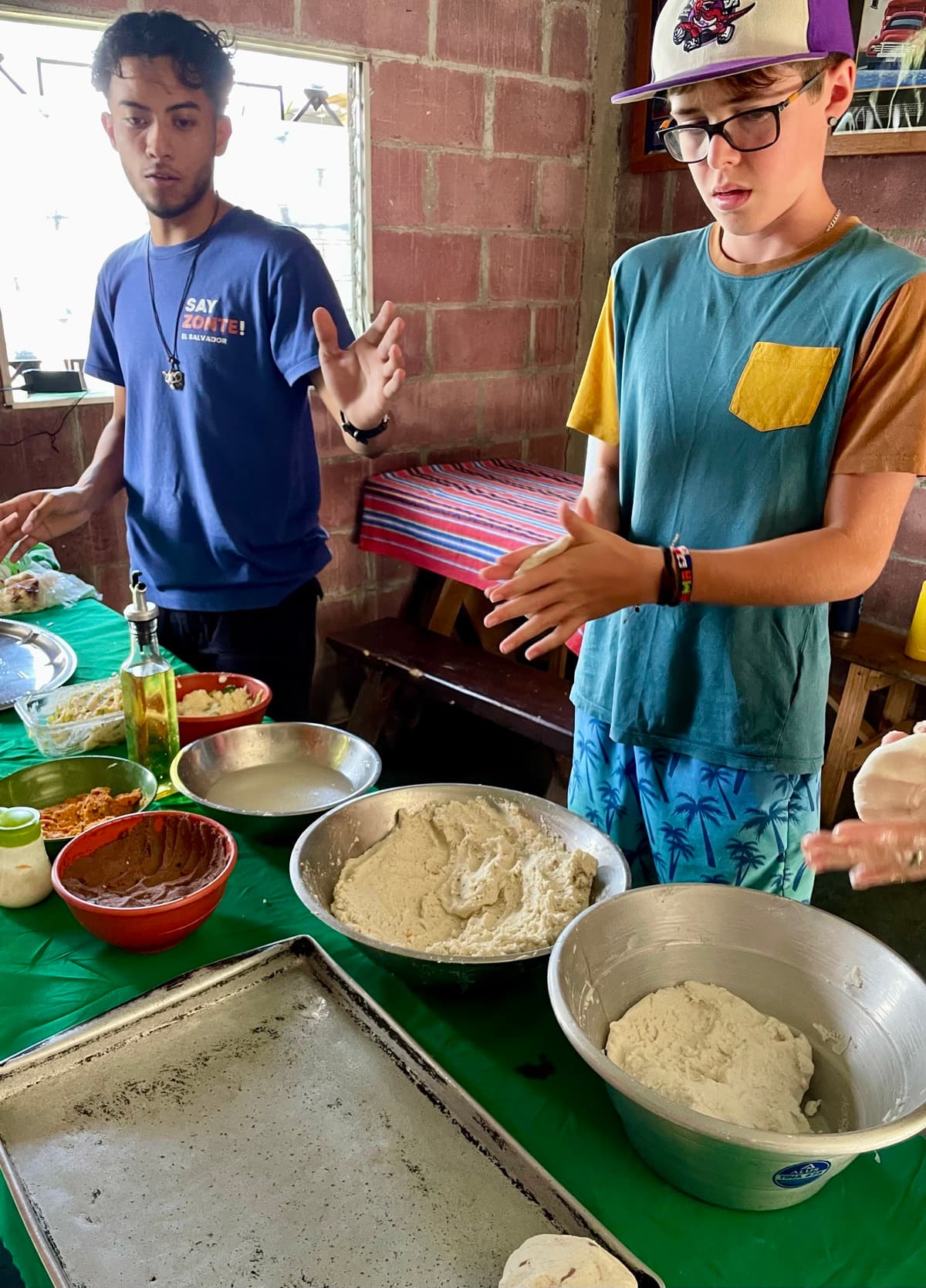
This is where you can build a gentle routine. Mornings for reading and journaling, afternoons for exploring. Find a local rhythm, a favourite café, a park you return to, a market you visit weekly. Routine doesn’t require curriculum. We make the case for slow travel over bucket-list travel here, and our actual worldschool day structure here.
Full-time travel
When travel is your life, not just a trip, you need sustainable habits rather than packed schedules. The journal habit is non-negotiable. Reading daily is non-negotiable. Everything else can flex around where you are and what’s available. Some weeks are heavy on exploration. Some weeks you hunker down and do focused work. Both are valid.
The permission slip you need
If you’re reading this and still feeling guilty that your kids aren’t doing enough “real school” while traveling, here’s your permission slip: travel is one of the most powerful educational experiences a child can have. Full stop.
Your kids are learning geography by living in it. History by walking through it. Language by hearing it. Economics by spending in it. Science by seeing it. And social skills by navigating a world that doesn’t revolve around them.
That’s not “enough.” That’s extraordinary.
Want this as a free printable? Grab the 22 Travel & Worldschool Activities for Kids, free to read, and the printable version lands in your inbox.