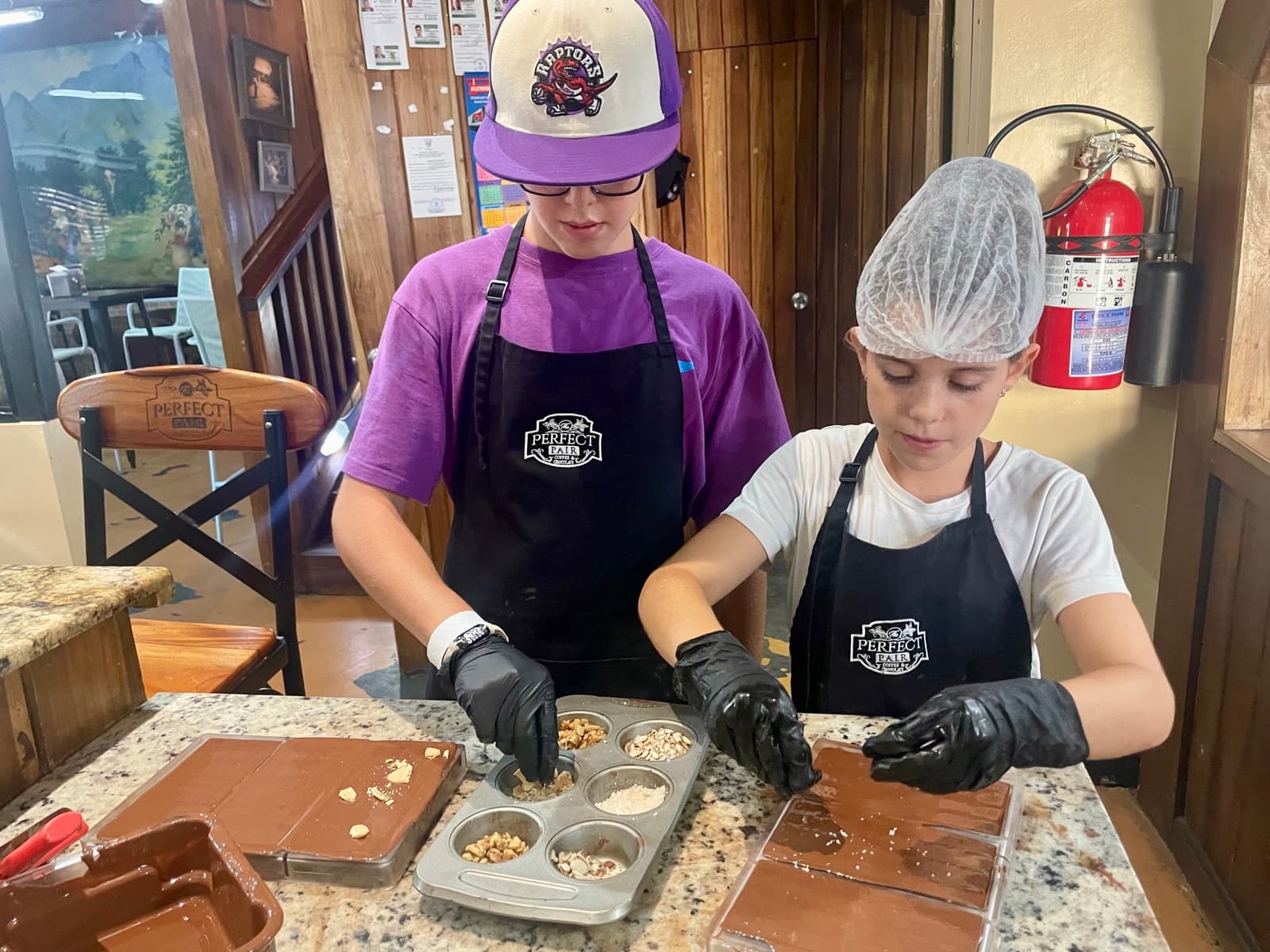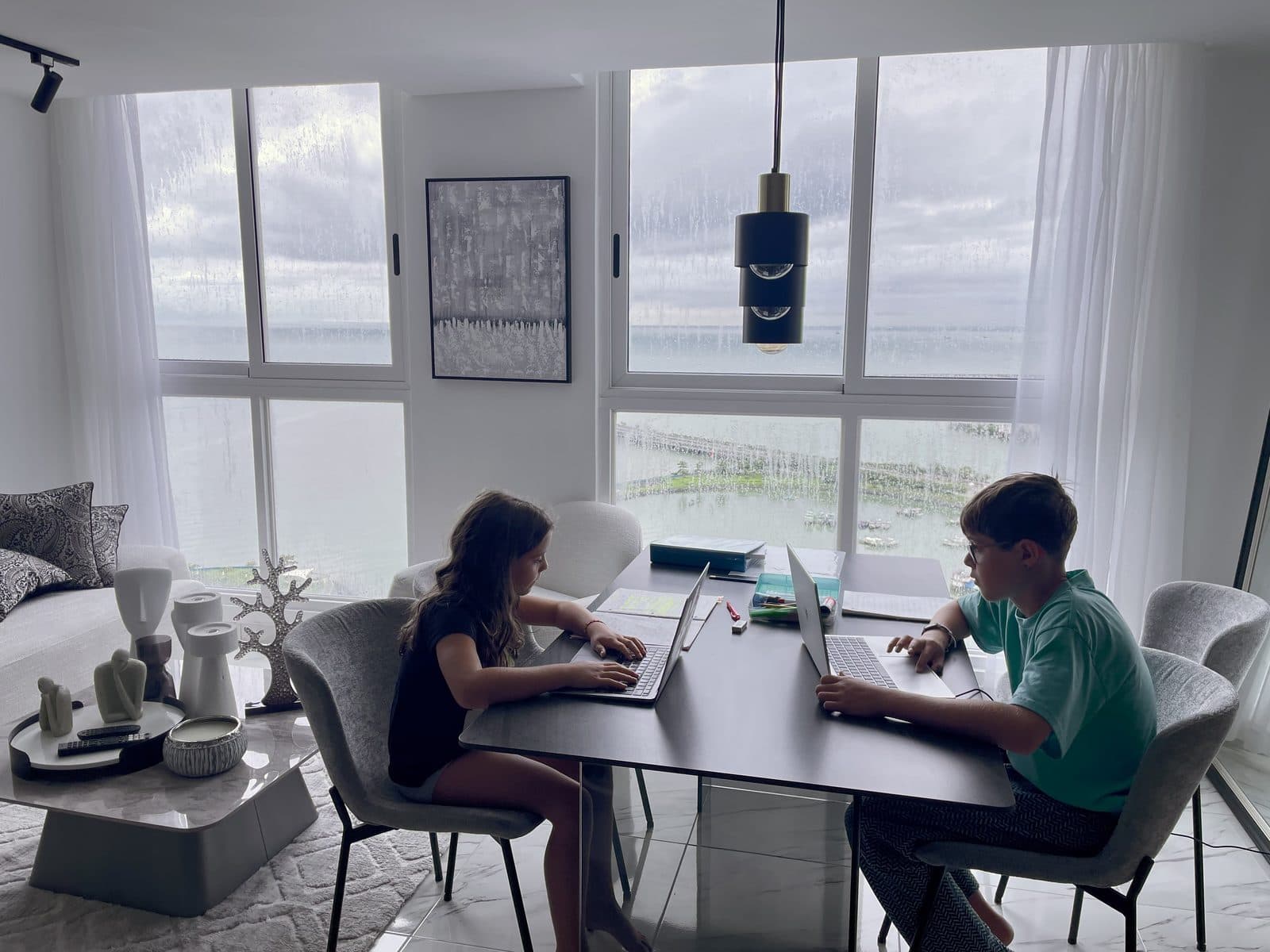
My son’s latest project is an interview film. He sat down with his sister, my husband, and me, one by one, and asked us about our entire seven-month trip. “What was your proudest moment?” “Did this trip change you?” “What would you do differently?” He planned the questions, set up the camera, conducted every interview, and edited the whole thing together in iMovie. He’s twelve.
Before that, he wrote and recorded “Tous les jours au Salvador”, an original song about our time in El Salvador. In French. My daughter made “Connaissez vous le Salvador?”, Do you know El Salvador? She covers what she finds surprising, funny, and interesting about the country, edited it all together in iMovie on her iPad. It’s personal, opinionated, and very her.
Neither of these was assigned. Neither was graded. Neither followed a template or a rubric. They made them because they wanted to share what they’ve been experiencing, and video is the format that feels most natural to them. This is what real-world learning tends to look like once kids are deep in it; they create because they have something to say.
I’m not going to pretend they’re producing polished content. The audio is sometimes rough, the posters have spelling mistakes, and the editing is rough. But the learning packed into each video is staggering when you actually break it down.
What making a video actually requires
When your kid decides to make a video about something they’ve learned, they’re not just “making a video.” Here’s what’s actually happening:
- Research: they need to know enough about the topic to talk about it
- Writing, even if there’s no formal script, they’re organising thoughts into a sequence
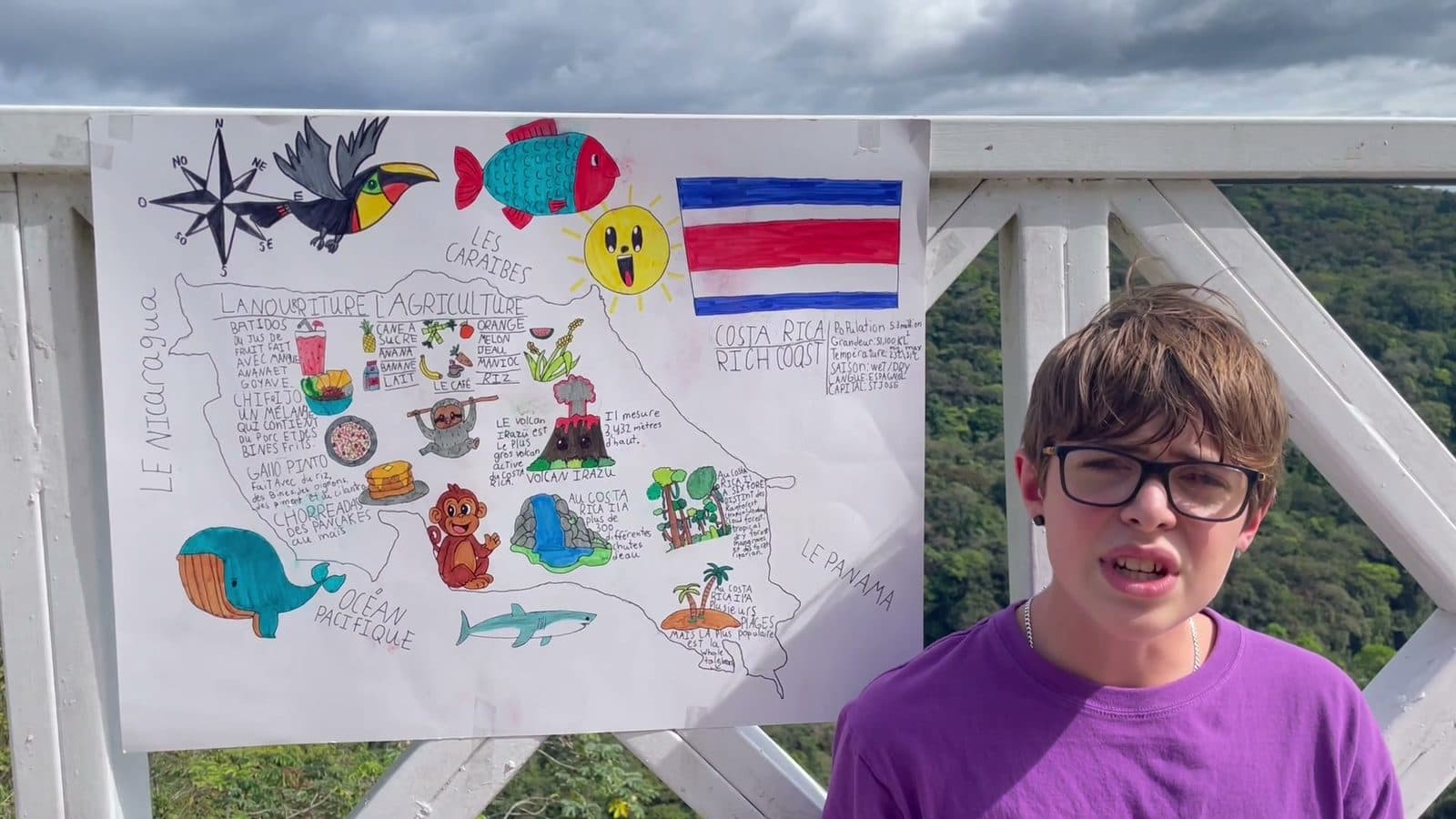
- Visual communication: choosing what to draw, how to layout a poster, which images help explain the concept
- Public speaking: talking to a camera is harder than talking to a friend
- Editing and revision: “that take didn’t work, let me try again” is the creative process in action
- Second language practice: our kids present in French, which adds a whole layer of skill-building
- Technical skills: basic understanding of recording, lighting, framing
Compare that to a book report. Read the book, summarise the plot, hand it in. I know which one involves deeper thinking, and it’s not the one with the template. This is the same logic behind project-based learning at home: the format kids choose matters less than the integration of skills underneath it.
Why creating beats consuming
We spend a lot of time worrying about kids watching too much content. Which is fair, passive consumption is passive. But the solution isn’t just “less screen time.” It’s shifting kids from consumers to creators.
When you watch a video, information flows in one direction. When you make a video, you have to understand something well enough to explain it. That’s a completely different cognitive process. You can’t fake understanding when you’re the one presenting. The gaps in your knowledge become obvious immediately, and filling those gaps is where the real learning happens.
My son couldn’t just say “the Panama Canal is long.” He had to find out exactly how long (80 kilometres), how many lock systems there are (three), and how many boats pass through per year (over 14,000). Because when you’re making something, vague doesn’t cut it. This is one of the reasons we’re comfortable with kids using AI as a creative tool when it’s in service of something they’re actually making, not consuming.
You can’t fake understanding when you’re the one explaining. That’s what makes creating so powerful.
Simple beats polished
I want to push back on the idea that kid-made content needs to look professional. My kids edit in iMovie on a laptop and an iPad. They film with my phone. Nothing is designed in Canva or filmed with a ring light.
That’s the point. The interview film means my son had to think about what questions would draw out real answers, figure out how to set up shots, manage the conversation, and edit it all into something that flows. A polished documentary would have skipped most of that learning.
If your kid wants to make content, give them the simplest tools possible: a device, a basic editing app, and something they’re curious about. Constraints breed creativity. The learning is in the making, not the production value.
In the Membership
Create a Mini Movie or Radio Drama
Creativity project for kids ages 6-14: create a mini movie, stop-motion, or radio drama, from script to premiere.
It doesn’t have to be YouTube
Our kids post to YouTube because it’s what they know. But the same learning happens with any form of making:
- A family blog or travel journal (our kids write posts in French for ours)
- A podcast or voice recording explaining something they learned
- A hand-drawn poster or comic strip
- A photo essay, pictures they took, with captions they wrote
- A physical creation, a model, a sculpture, an invention
- A presentation to family, grandparents make the best audience
- A slideshow, a zine, a scrapbook, a map
The medium doesn’t matter. What matters is the shift from “I absorbed information” to “I made something with what I know.” That shift changes everything about how deeply a kid engages with a topic.
Ask your kid: “If you had to explain [thing they’re interested in] to someone who knows nothing about it, how would you do it?” Then let them choose the format. Video, poster, blog post, spoken presentation over dinner, all of it counts. Provide materials and stay out of the way.
The audience effect
One thing I’ve noticed is that having a real audience, even a tiny one, changes the effort kids put in. When my kids write for the family blog, they know Papi et Mamie will read it. When they make a YouTube video, they know a few family friends will watch. That’s enough.
They check their facts more carefully. They re-record when something sounds wrong. They care about whether the drawing is accurate. Not because anyone is grading them, but because someone they care about is going to see it.
You don’t need a public platform for this. Share their work with grandparents, aunts, uncles, family friends. Let them present at a homeschool group gathering. Print their poster and hang it on the wall. The point is that someone besides you sees it and says “tell me more about that.”
What I’ve stopped worrying about
I used to worry that my kids weren’t producing enough “work.” That their education didn’t have enough tangible evidence. Then I looked at what they’d actually created in seven months: an original song in French, a full interview film, iMovie videos about El Salvador, travel blog posts, posters about Costa Rica, and hours of conversation where they taught me things I didn’t know.
They’re writing more than most kids their age. They’re researching topics that genuinely interest them. They’re communicating ideas in two languages. They’re learning to teach themselves things: which is the skill that matters most in the long run.
So if your kid wants to make a video about Minecraft builds or a poster about their favourite animal or a podcast reviewing snacks, let them. The topic is less important than the process. And the process of creating something from scratch teaches more than any textbook chapter ever will. (More on this mindset in how to raise creative kids without buying more craft supplies.)
Want this as a free printable? Grab the 26 Creative & Maker Ideas for Kids, free to read, and the printable version lands in your inbox.