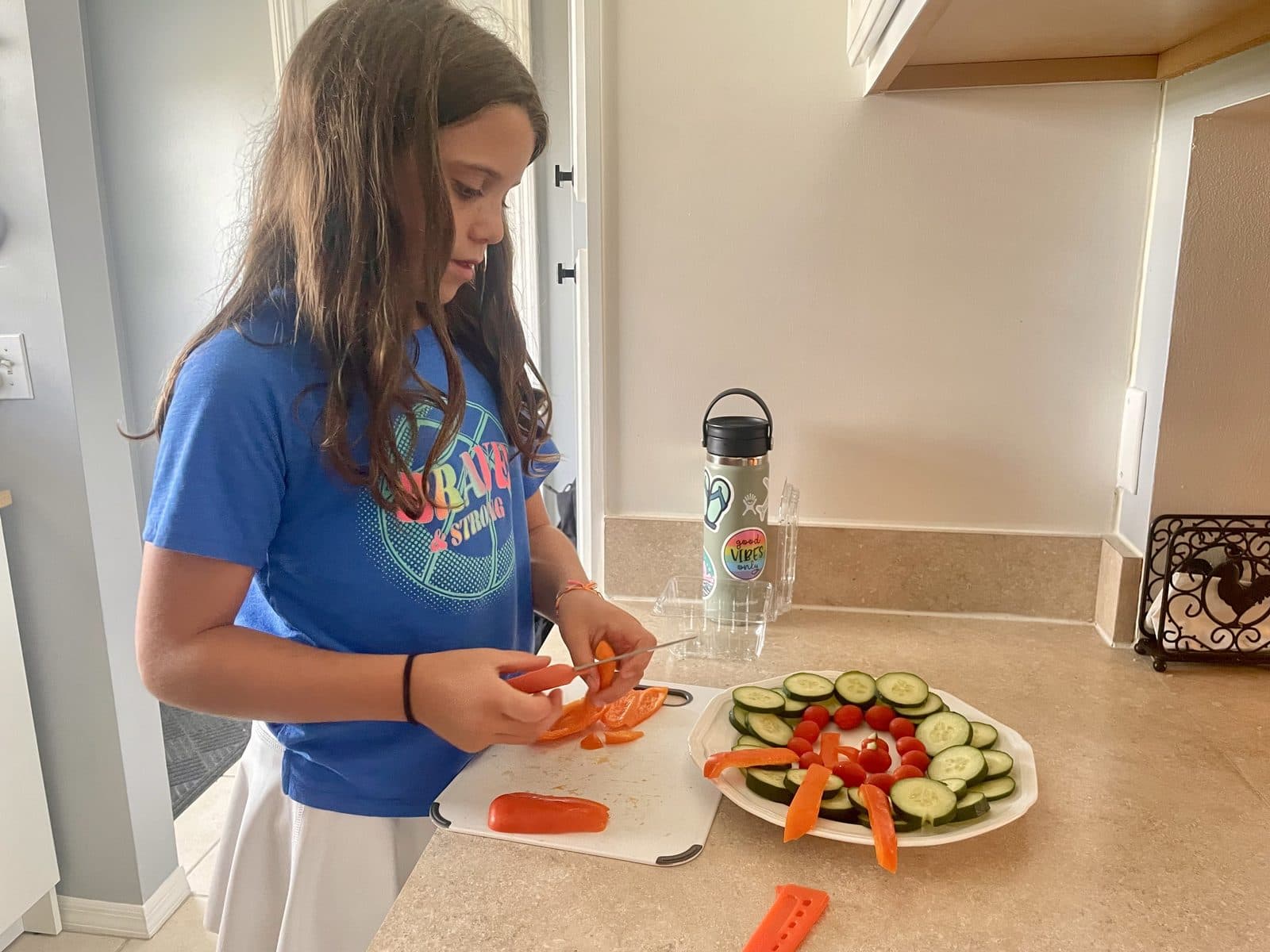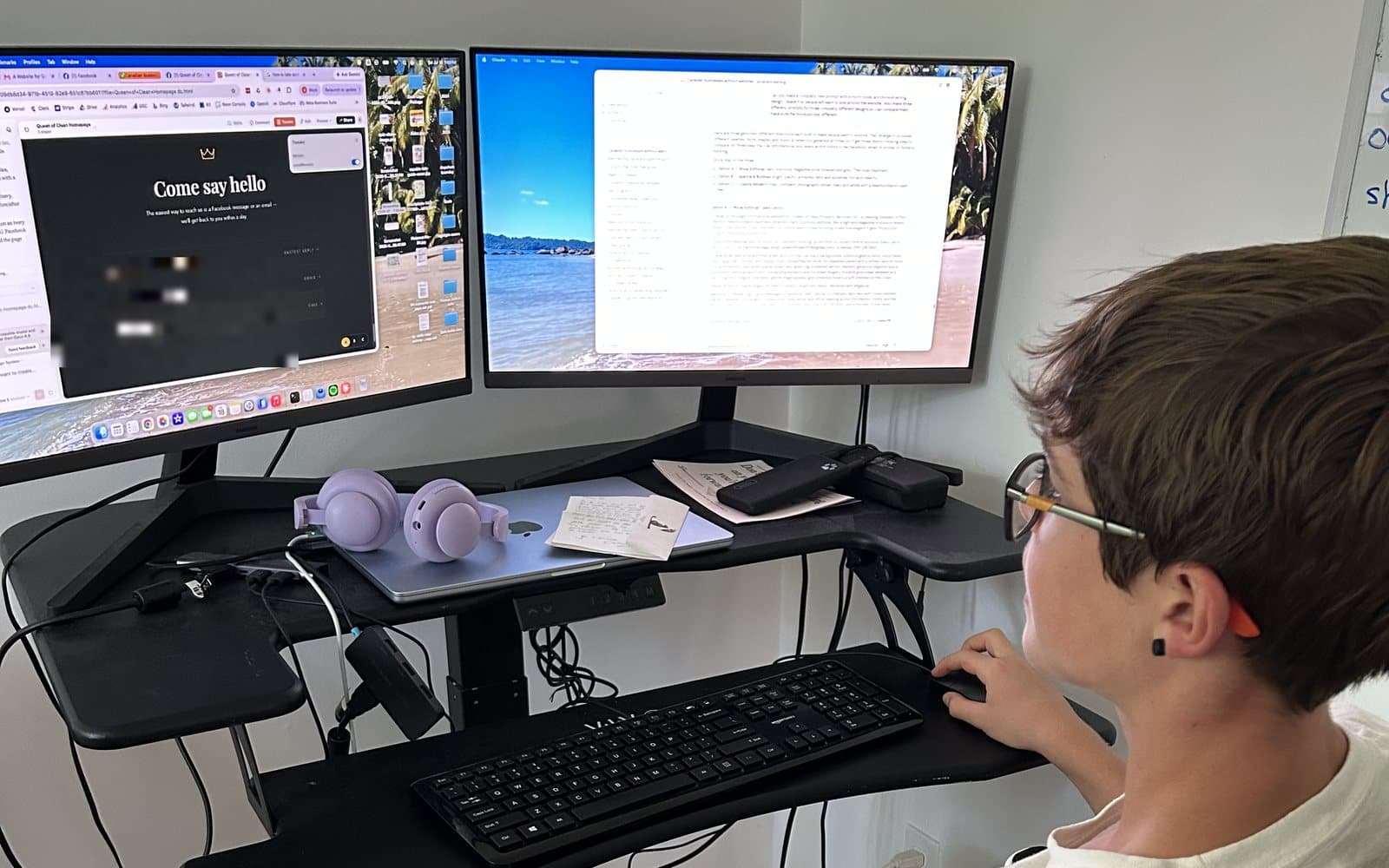
My son came home from a friend’s house and told me he’d used a chatbot to write a whole story. “It did it in like two seconds,” he said, clearly impressed. My daughter, meanwhile, was convinced Siri actually understands her feelings. Two kids, two completely different misunderstandings of AI, and both needed a real conversation, not a lecture.
Most kids are already using AI daily, talking to voice assistants, watching algorithm-recommended content, playing with chatbots, and forming opinions based on whatever they happen to encounter. Without guidance, their understanding gets shaped by marketing, science fiction, and playground rumours.
Whether you’re enthusiastic or cautious about AI, one thing is clear: your kids need to understand what it is, what it isn’t, and how to think critically about it. And you don’t need a computer science degree to teach them. (Our AI and digital literacy guide lays out the full framework if you want a roadmap.)
What kids actually need to understand about AI
Forget the technical details. Kids don’t need to know about neural networks or training data. They need to understand four core concepts:
- 1AI is a tool, not a brain. It doesn’t think, feel, or understand; it predicts patterns.
- 2AI learns from data humans provide. That data can be biased, wrong, or incomplete.
- 3AI can be incredibly useful AND deeply flawed at the same time.
- 4Humans are responsible for how AI is used. The tool isn’t moral; the user is.
If your child understands these four things, they’re already more AI-literate than most adults.
The pattern machine explanation
The simplest way to explain AI to a child: “It’s a pattern machine. It looks at millions of examples and learns to predict what comes next.”
Try this exercise: write a sentence like “The cat sat on the...” and ask your child to finish it. They’ll say “mat” because they’ve read that pattern hundreds of times. That’s what AI does, but with billions of sentences, images, and data points. It’s not magic. It’s statistics at scale.
Open your phone’s text keyboard and let your child tap the predicted next word 20 times in a row. Read the result together. It’ll be vaguely coherent but kind of weird, and that’s a perfect demonstration of how AI generates text. Pattern-matching, not understanding.
Hands-on AI activities for different ages
Ages 5–7: Sorting and patterns
Play a game where you show your child pictures and ask them to sort them into groups: animals vs. vehicles, happy faces vs. sad faces. Then explain: “That’s what an AI does: it sorts and groups things based on patterns it’s seen before.”
You can also try “bot or not”: read two short stories, one written by you and one generated by AI. Can they tell the difference? This builds critical awareness early.
Ages 8–10: Prompt engineering basics
Let them use a chatbot (with supervision) and see how the quality of the answer depends on how they ask the question. A vague prompt gives a vague answer. A specific, detailed prompt gives something useful. (We go deep on this in how to teach kids to prompt AI so it actually helps them learn.)
This is prompt engineering, and it’s genuinely one of the most valuable digital skills of the next decade. Learning to ask good questions of an AI is learning to think clearly about what you actually want.
Ages 11–13: Critical analysis
Have them ask an AI chatbot factual questions and then verify the answers using actual sources. They’ll discover that AI confidently states things that are wrong. That’s a crucial lesson: sounding right and being right are not the same thing.
You can also explore bias: ask the AI to draw a “doctor” and a “nurse,” what patterns do you notice? This opens important conversations about where data comes from and whose world it reflects.
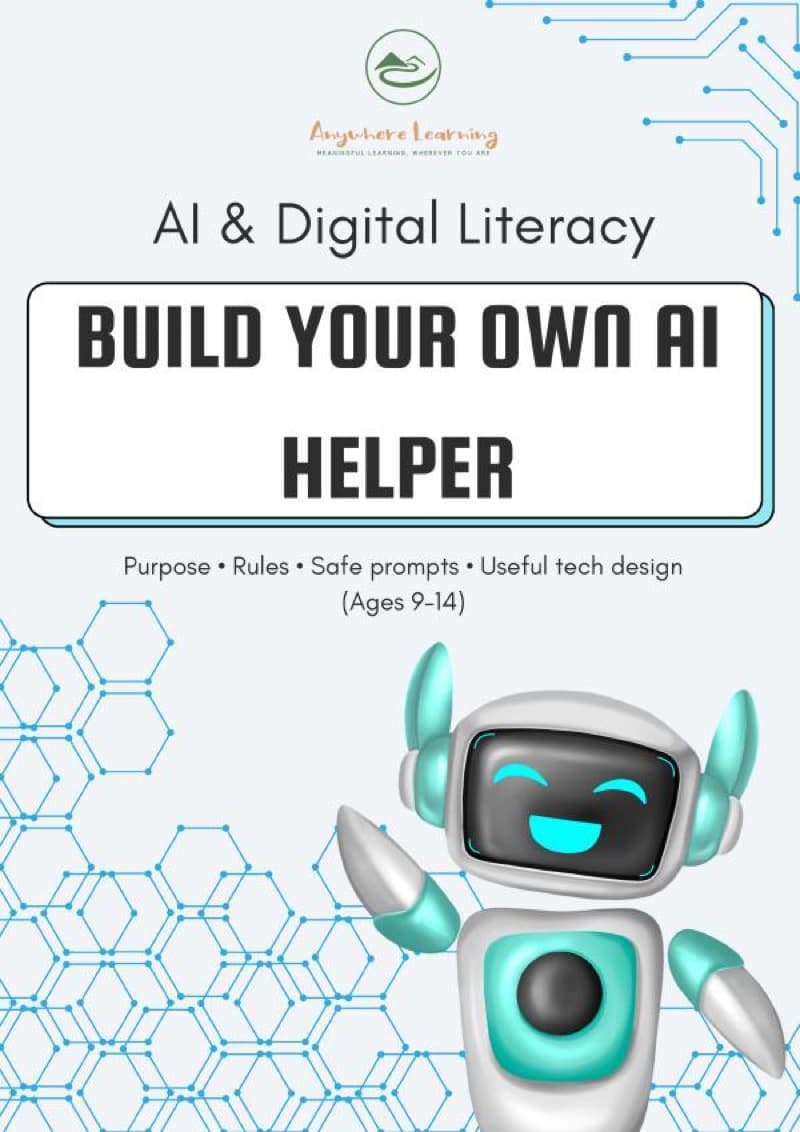
In the Membership
Build Your Own AI Helper
STEM technology activity for kids ages 9-14: design an AI helper from concept to ethics. AI literacy, no coding needed.
The ethics conversation
Kids have a natural sense of fairness, and AI ethics is really about fairness. Here are questions that work well as family dinner conversations:
- If an AI writes an essay, who should get the grade: the student or the AI?
- Is it lying if an AI makes something up but sounds confident?
- Should an AI be allowed to make decisions about people (like who gets a job)?
- If an AI makes art, is it really art? Who’s the artist?
- How do you feel about talking to something that seems human but isn’t?
There are no right answers to these questions. The value is in the thinking. A child who has wrestled with these ideas will navigate the AI-saturated world far better than one who hasn’t.
Setting family boundaries around AI
Every family will land differently here, and that’s fine. What matters is that you make conscious choices rather than defaulting to whatever the technology allows. Some questions to discuss:
- When is it okay to use AI for help? When isn’t it?
- Should we use AI for creative work (art, writing, music)?
- What information should we never share with an AI?
- How do we handle it when friends use AI differently?
The goal isn’t to keep kids away from AI. It’s to raise humans who can think alongside it without being replaced by it.
What this means for homeschoolers
Homeschool families are actually in the best position to teach AI literacy. You can integrate it naturally, have real conversations about ethics, and supervise first encounters. You’re not bound by school policies that either ban AI entirely or adopt it without guidance.
Use AI tools as part of your learning when they’re helpful. Question them when they’re not. Let your kids see you being a thoughtful, critical user, not a passive consumer. The same critical lens applies to everything else online; here is our take on media literacy for kids.
Want this as a free printable? Grab the 18 AI & Digital Literacy Ideas for Kids, free to read, and the printable version lands in your inbox.
Every time your family uses an AI tool, ask three questions: What did it get right? What did it get wrong? Could we have done this better ourselves? This simple habit builds critical thinking muscles that will serve your kids for decades.