Last year, my son told me, with total confidence, that AI was going to become smarter than all humans within five years and take over the world. He’d picked this up from a YouTube video. My daughter, meanwhile, believed that Siri actually understood her feelings because it said “I’m sorry to hear that” when she told it she was sad.
Neither of them was being silly. They were doing what all of us do: making sense of something complex based on whatever information they’d encountered. The problem is, most of the information floating around about AI is either wildly optimistic or deeply apocalyptic, and neither extreme is useful.
So we started having myth-busting conversations at dinner. Not lectures, just “hey, do you think this is true?” followed by a lot of back-and-forth. Here’s what we covered, and what I wish every family would talk about.
Myth 1: AI thinks like a human brain
This is the big one. Kids (and plenty of adults) assume that because AI can hold a conversation, it must be thinking. It’s not. AI is a pattern machine, it predicts what word or pixel comes next based on billions of examples. It doesn’t understand what it’s saying any more than a calculator understands what “7” means.
Try this with your kids: ask an AI chatbot a question, then ask it “why did you say that?” It’ll give a plausible-sounding explanation, but that explanation is itself just pattern-matching. It’s predicting what a good reason would sound like, not actually reasoning. When my kids saw this in action, the lightbulb went on.
Myth 2: AI is always right
My daughter used to treat AI answers like gospel. If the chatbot said it, it must be true. This is possibly the most dangerous misconception, because it turns kids into passive consumers of whatever the machine produces.
We did an experiment: we asked an AI to tell us facts about our home country, and then we checked every single one. Some were spot-on. Some were subtly wrong. One was completely fabricated, a confident, detailed answer about something that doesn’t exist. The kids were genuinely shocked, and that shock was the lesson. Now, whenever they use an AI tool, their first instinct is to verify. That habit alone is worth more than any AI curriculum.
Myth 3: AI will replace all jobs
This one creates real anxiety in kids, especially older ones who are starting to think about their future. They hear “AI will take your job” and feel helpless. The reality is more nuanced: AI will change many jobs, eliminate some, and create others that don’t exist yet. The skills that protect you aren’t the ones AI can replicate; they’re the deeply human ones like creativity, empathy, complex problem-solving, and the ability to connect with other people.
I asked my son: “Could an AI have figured out that you were upset at lunch today just from your body language?” He thought about it and said no. “Could an AI have decided to sit with you and make you feel better?” Also no. Those human skills aren’t going anywhere, and they’re exactly the ones we nurture through real-world learning.
In the Membership
AI Basics: Myths, Facts & Smart Rules
STEM technology activity for kids ages 9-14: what AI really is, common myths vs facts, and smart rules for responsible use at home.
Myth 4: AI is magic (or too advanced for kids to understand)
Some parents avoid the topic entirely because they feel like they’d need a computer science degree to explain it. You don’t. The core concepts are surprisingly simple, and kids grasp them faster than most adults because they don’t have years of sci-fi assumptions to unlearn.
AI looks at patterns. AI makes predictions. AI gets things wrong. AI reflects the data it was trained on. That’s it. A 7-year-old can understand those four ideas. And once they do, the “magic” dissolves into something much more useful: a tool they can evaluate, question, and use intentionally.
Myth 5: AI is too dangerous for kids to use
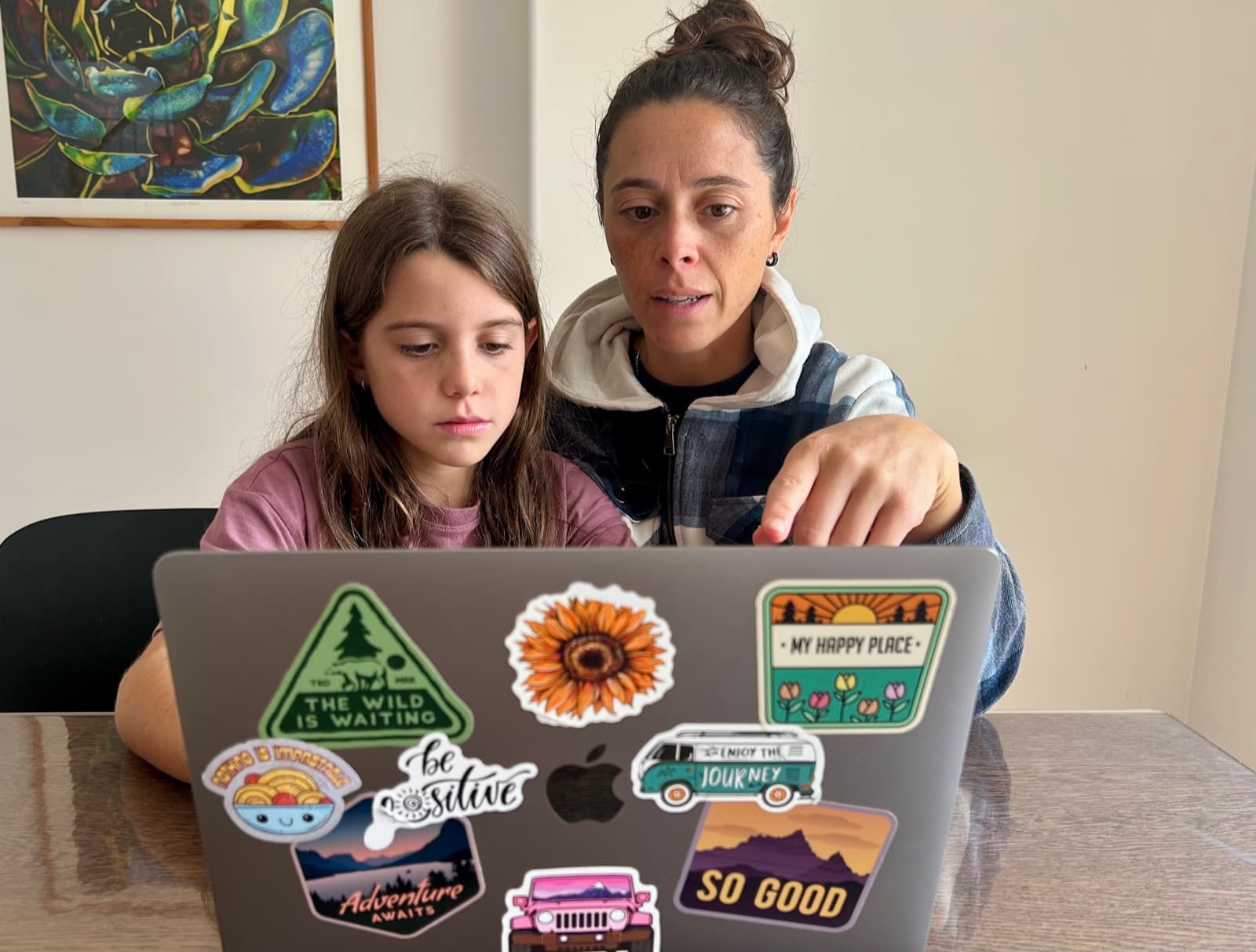
I understand the impulse to ban it entirely. But here’s the thing: your kids will encounter AI whether you introduce it or not. The question isn’t whether they’ll use it; it’s whether they’ll have the critical thinking skills to use it well. A child who has explored AI with a thoughtful parent beside them is far better prepared than one who encounters it alone for the first time at a friend’s house.
That doesn’t mean handing a 5-year-old an unrestricted chatbot. It means age-appropriate exploration with guardrails and conversation. The same approach you’d take with any powerful tool.
The biggest AI myth isn’t about technology. It’s that you need to be a tech expert to have these conversations with your kids. You don’t. You just need to be curious together.
How to have the myth-busting conversation
Don’t sit your kids down for a lecture. That’s the fastest way to make them tune out. Instead, work AI conversations into moments that are already happening. When they’re using a voice assistant, ask: “Do you think Alexa actually knows the answer, or is it looking it up?” When they see an AI-generated image, ask: “How can you tell if a photo is real?”
- Start with what they already believe, ask before you tell
- Use hands-on experiments rather than explanations
- Let them catch the AI being wrong (it’s more powerful than you telling them)
- Keep it conversational, not correctional
- Revisit the topic regularly: their understanding will deepen over time
The best conversations we’ve had about AI weren’t planned. They happened when something came up naturally, a weird AI-generated ad, a homework debate at a friend’s house, a news story about deepfakes. If you’re paying attention, the teaching moments are everywhere.
Want this as a free printable? Grab the 18 AI & Digital Literacy Ideas for Kids, free to read, and the printable version lands in your inbox.
Pick a topic your child is interested in and ask an AI five questions about it. Then have your child fact-check every answer using books, trusted websites, or their own knowledge. Keep score: how many did the AI get right? Partially right? Completely wrong? This one activity builds more AI literacy than any course.