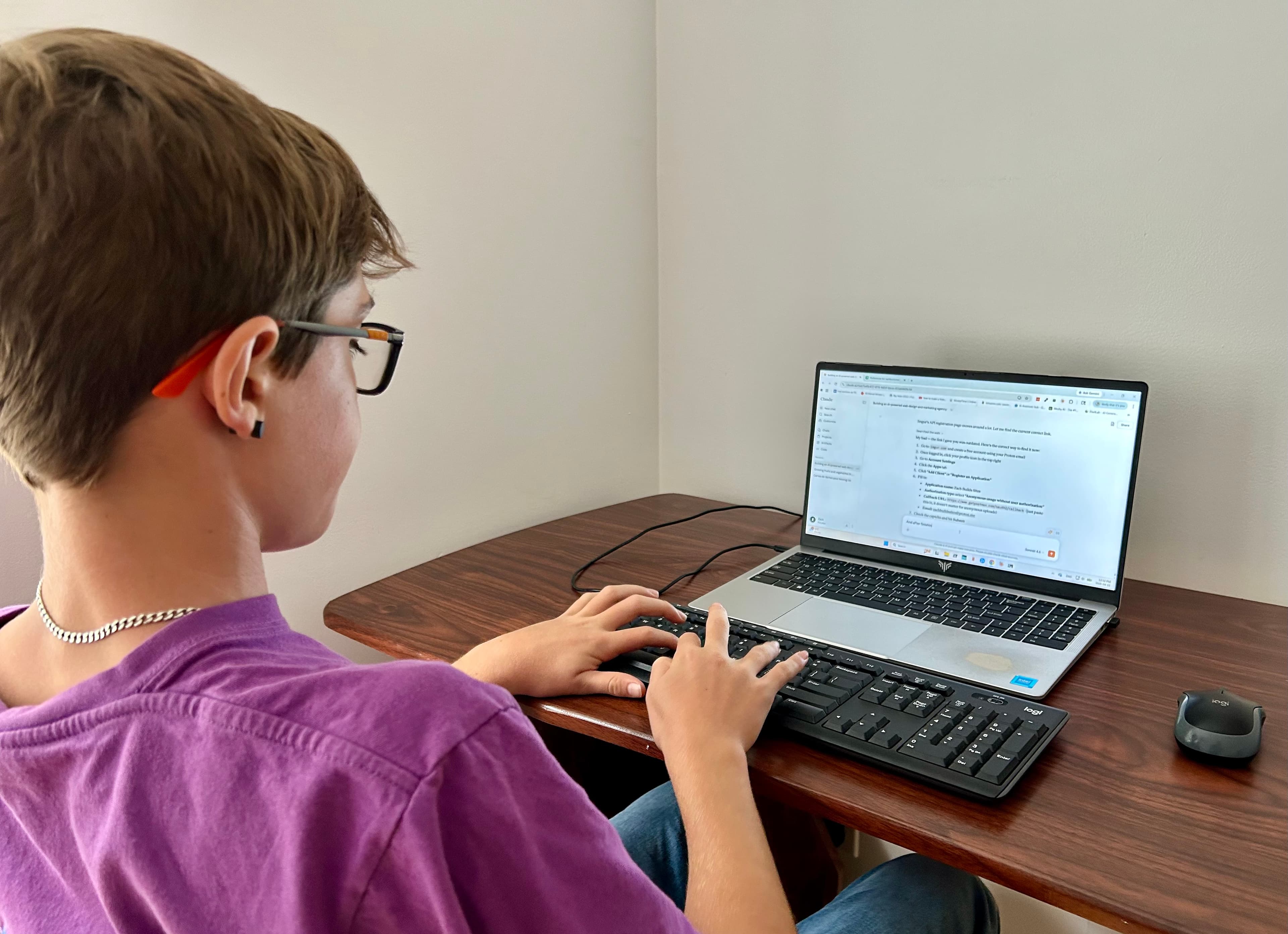
A few months ago, my son was working on a project about volcanoes. He typed “tell me about volcanoes” into an AI chatbot and got back a wall of generic text that could have come from any encyclopedia. He looked at me and said, “This is useless.”
So I asked him: “What do you actually want to know?” He thought for a minute. “I want to know why some volcanoes explode and others just ooze lava.” We typed that in instead, and the answer was completely different, specific, interesting, and actually helpful for his project.
That moment taught him more about thinking clearly than any worksheet ever could. And it’s become a pattern in our house: the AI isn’t the teacher. The prompting is. If you’re mapping out where AI fits into your kid’s overall learning, our guide to AI and digital literacy lays out the bigger picture.
Why prompting is really a thinking skill
Here’s what most people miss about prompt engineering: it’s not a tech skill. It’s a thinking skill. To write a good prompt, you have to know what you’re actually asking. You have to be specific. You have to anticipate what kind of answer you want. That’s metacognition, thinking about your own thinking, and it’s one of the most valuable cognitive skills a child can develop.
When a child moves from “tell me about space” to “explain why planets orbit the sun using an analogy a 10-year-old would understand,” they haven’t just learned to use a tool better. They’ve learned to articulate what they need, which is useful in every conversation, every email, and every problem they’ll ever encounter.
Bad prompts vs. good prompts (with real examples)
The best way to teach prompting is to show the difference. We do this as a family game: someone types a bad prompt, we all look at the mediocre result, then we improve it together and see the difference.
Example 1: Research
Bad prompt: “Tell me about sharks.” Result: generic encyclopedia entry. Better prompt: “What are three ways that great white sharks are different from whale sharks? Explain it like I’m 9.” Result: specific, comparative, age-appropriate.
Example 2: Creative writing
Bad prompt: “Write me a story.” Result: generic and boring. Better prompt: “Write the opening paragraph of a mystery story set in a treehouse during a thunderstorm. The main character is an 11-year-old who just found a locked box.” Result: vivid, specific, and a genuine springboard for the child’s own writing.
Example 3: Learning something new
Bad prompt: “Explain fractions.” Result: a maths textbook definition. Better prompt: “Explain fractions using a pizza analogy. I understand halves but I get confused when the pieces are different sizes.” Result: targeted to exactly where the child is stuck.
The pattern is always the same: be specific, give context, and say what kind of answer you want. Once kids see this pattern, they start applying it everywhere, not just with AI, but in how they ask questions of real people too.
In the Membership
Prompt Like a Coach
AI literacy for kids ages 9-14: write better AI prompts. Ask better questions and guide AI like a coach.
Age-appropriate approaches
Ages 6–8: The “ask a better question” game
At this age, kids don’t need to type prompts themselves. Play a verbal game: you pretend to be the AI, and they have to ask you questions. If they ask “tell me about dogs,” you give a boring, generic answer. If they ask “what’s the fastest dog breed and could it outrun a bicycle?” you give something much more interesting. They learn that better questions get better answers, a life skill that has nothing to do with technology.
Ages 9–11: Guided prompting with real tools
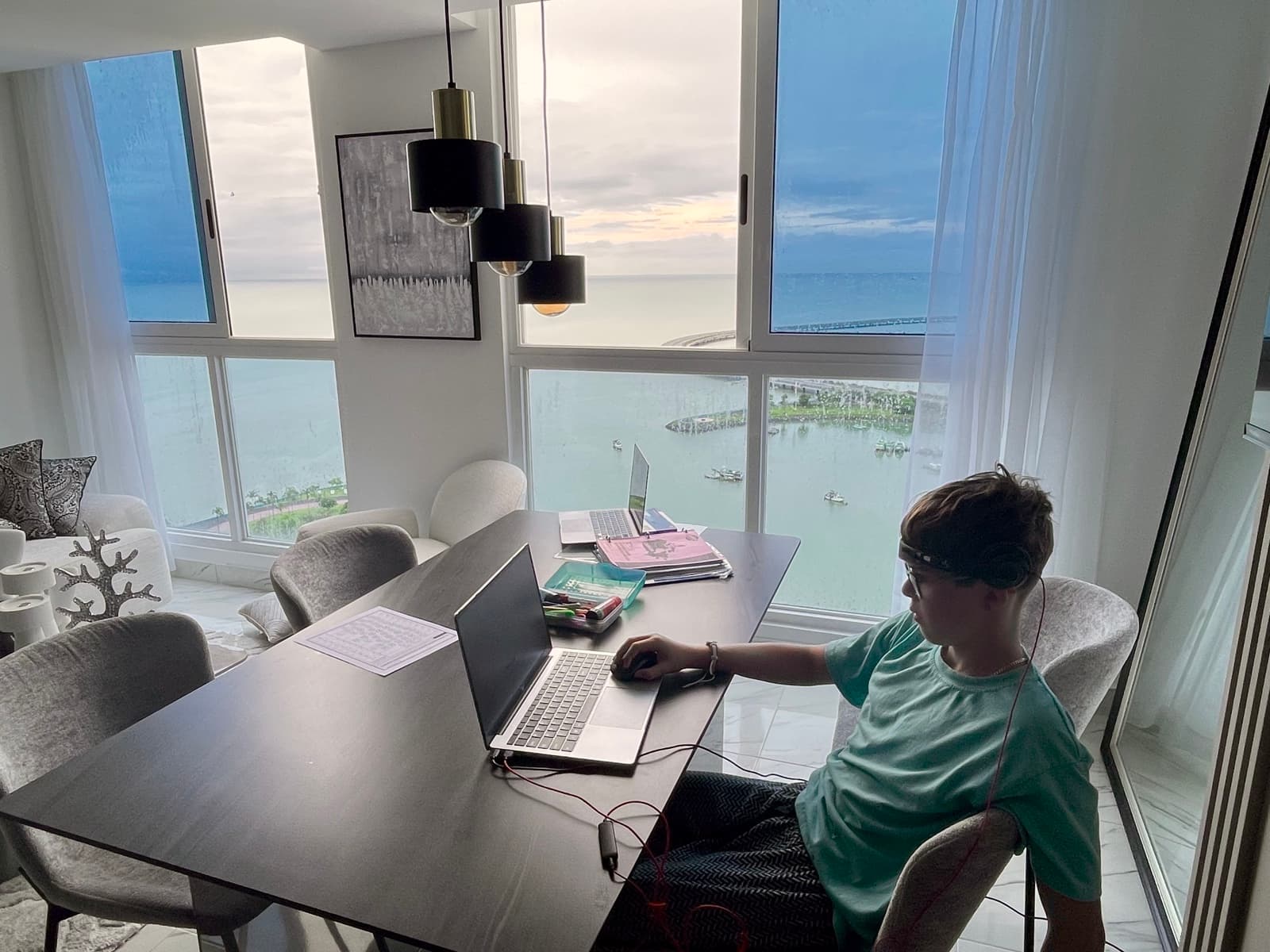
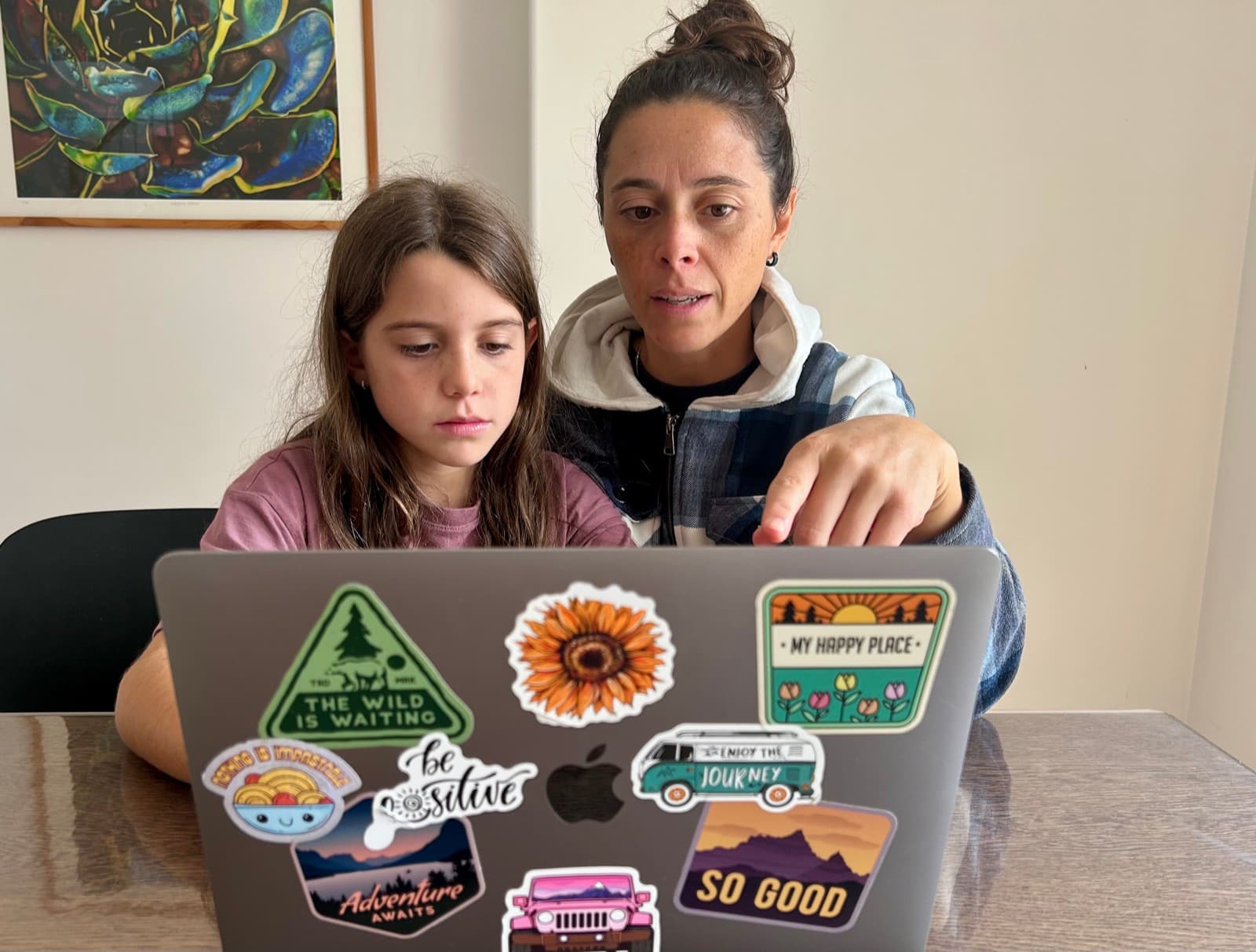
This is the sweet spot for hands-on practice. Sit with your child and let them use an AI tool for a real purpose, researching a topic they’re curious about, brainstorming ideas for a project, or getting help understanding something they’re stuck on. Guide them to refine their prompts: “That answer was too general. What could you add to make it more specific?”
Ages 12+: Independent prompting with verification
Older kids can use AI tools more independently, but with one non-negotiable rule: always check the output. This is where prompting meets critical thinking. They should be asking: “Does this sound right? Can I verify this? Is this the AI’s opinion or an actual fact?” The combination of good prompting and good verification is the real skill set.
The “check the AI’s work” habit
This is the most important habit we’ve built around AI in our family. Every time the kids use an AI tool, they have to check at least one claim against an actual source. Not because the AI is always wrong, but because the habit of verification is what separates a critical thinker from a passive consumer.
My daughter now does this automatically. She’ll read an AI response and say, “Hmm, let me check that.” She’s 9. That habit will serve her for the rest of her life, long after whatever AI tools we’re using today are obsolete. It’s the same critical lens we want kids using everywhere online, which is why we treat media literacy as the other half of digital learning.
Using AI for creative projects (not just answers)
The most exciting use of AI for kids isn’t getting answers; it’s making things. My son uses AI as a brainstorming partner for his video projects. He’ll prompt it for story ideas, then pick and choose and remix. My daughter uses it to generate character descriptions for stories she’s writing, then changes everything she doesn’t like.
The key distinction is that the AI isn’t doing the creating. It’s providing raw material that the child shapes, edits, and makes their own. Think of it like giving a sculptor a block of marble, the tool provides the material, but the vision and the work are entirely human.
When kids use AI this way, they’re developing taste, judgment, and editorial skills. They’re learning what sounds good vs. generic. They’re learning to iterate. These are creative skills that transfer to everything. They also help inoculate kids against the common myths about AI that float around in headlines and group chats.
Want this as a free printable? Grab the 18 AI & Digital Literacy Ideas for Kids, free to read, and the printable version lands in your inbox.
A child who can ask a precise question of an AI is a child who can ask a precise question of a book, a teacher, a search engine, or their own brain. The skill is the thinking, not the tool.
Take turns writing the worst, most vague prompt you can think of. Then work together to upgrade it step by step, watching how the AI’s response improves each time. Kids love this because it’s competitive, silly, and they get to see the direct impact of better thinking. Plus, the before-and-after comparison makes the skill immediately obvious.