- 1What slow travel actually looks like
- 2Depth over breadth: why it matters for kids
- 3The Corcovado vs. Manuel Antonio test
- 4Routines form, and that’s a good thing
- 5The practical side: it’s actually cheaper
- 6What you give up (and why it’s worth it)
- 7Is slow travel right for your family?
- 8Frequently asked questions
When people hear we’ve been traveling for seven months, they usually ask how many countries we’ve visited. When I say four, there’s always a pause. Just four? In seven months?
I get it. When you picture a family trip through Central America, you probably imagine a packed itinerary, ruins on Monday, zip-lining on Tuesday, a new beach town by Wednesday. We did the opposite. We spent roughly one to two months in each place, and honestly, it’s the best decision we’ve made on this trip.
This isn’t a post about how bucket-list travel is bad. Those trips can be incredible. But for our family, two kids, no fixed school schedule, a desire to actually understand where we are, slow travel has been a completely different experience. Here’s what it’s looked like for us. (For the wider context behind learning while traveling, our worldschooling guide lays out the philosophy.)
What slow travel actually looks like
Our seven months broke down like this: Florida from mid-September through early November, Panama from November through mid-January, Costa Rica from mid-January through mid-February, and El Salvador from mid-February through mid-March. Four countries. No rush.
In Panama, we spent nearly ten days in El Valle de Antón, a small town nestled inside a volcanic crater. We hiked multiple trails, found waterfalls, visited the local market, wandered through a butterfly sanctuary, and even momentarily adopted a stray dog named Ray for one of our hikes. None of that would have happened in a two-day stopover.
In Santa Catalina, also in Panama, we stayed four weeks. The kids learned to surf. We spent Christmas on the beach. It wasn’t a highlight, it was just life, happening in a new place. That’s what slow travel feels like.
Depth over breadth: why it matters for kids
Here’s the thing about kids and travel: they don’t need more sights. They need time to get curious and follow that curiosity somewhere.
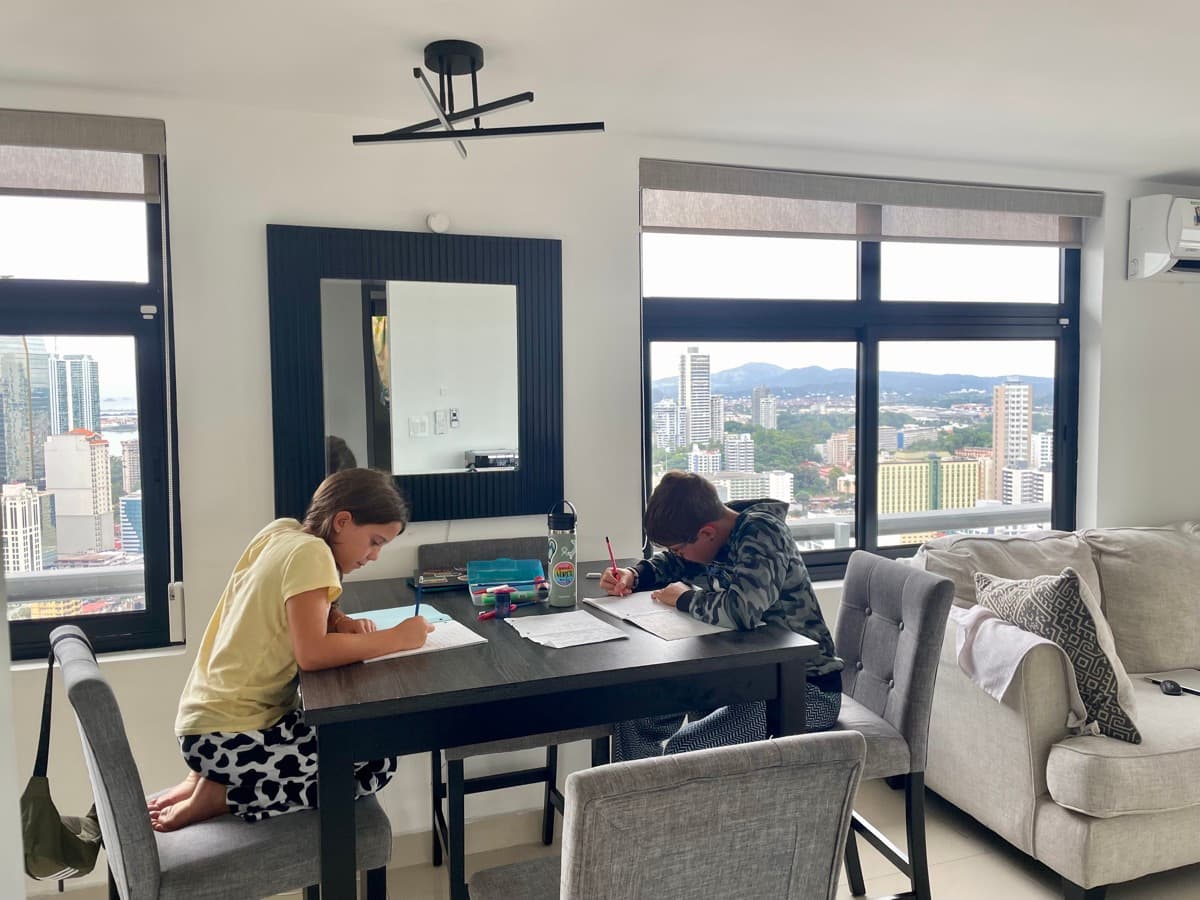
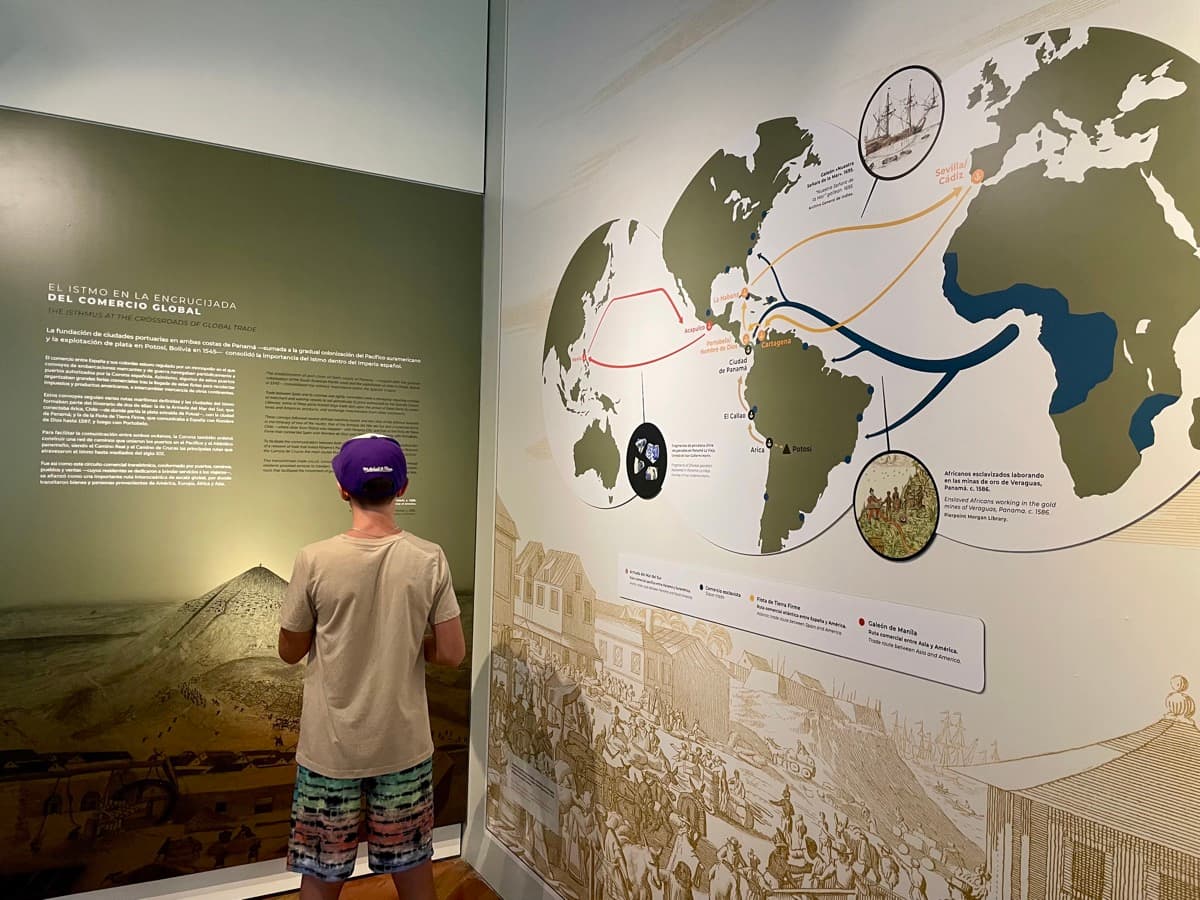
After we visited the Miraflores Locks in Panama City, my son got fascinated by the Panama Canal. Not in a “that was cool, what’s next” kind of way. He spent a full week researching it, how it was built, why the locks work the way they do, the history behind it. He made notes, drew diagrams, watched documentaries. That kind of deep dive needs time. It doesn’t happen when you’re in a new city every two days.
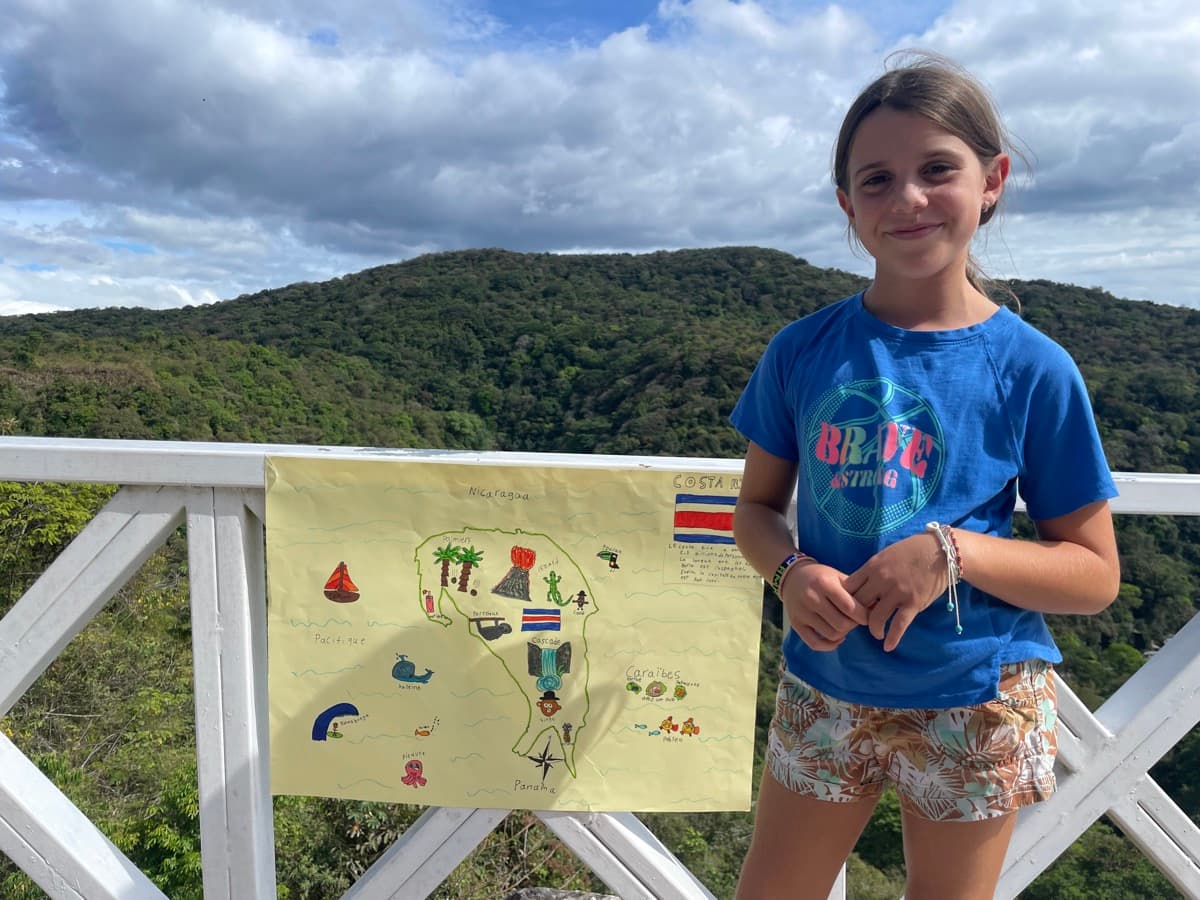
My daughter did the same thing in Florida with panthers and hurricanes. She’d come back to a topic for days, pulling at threads, asking better questions each time. In Costa Rica, they both made a poster about the country, researching wildlife, geography, and culture, then putting it all together visually. These projects need breathing room, the kind you only get when your schedule isn’t packed with transfers and check-ins.
Kids don’t need more sights. They need time to get curious and follow that curiosity somewhere.
The Corcovado vs. Manuel Antonio test
This contrast says everything about slow travel versus the bucket-list approach.
Manuel Antonio National Park is one of the most famous parks in Costa Rica. It’s on every “must-visit” list. We went, and honestly, it was my son’s least favorite national park of the whole trip. It was crowded, touristy, and we didn’t see many animals. The beach was nice, but the experience felt like being shuffled through an attraction.
Compare that to Corcovado. Getting there took a one-and-a-half-hour boat ride from Uvita. On the way, we watched whales jumping right in front of us. The park itself was wild and real, actual wildlife, almost no other tourists, the kind of place that feels like a discovery rather than a destination.
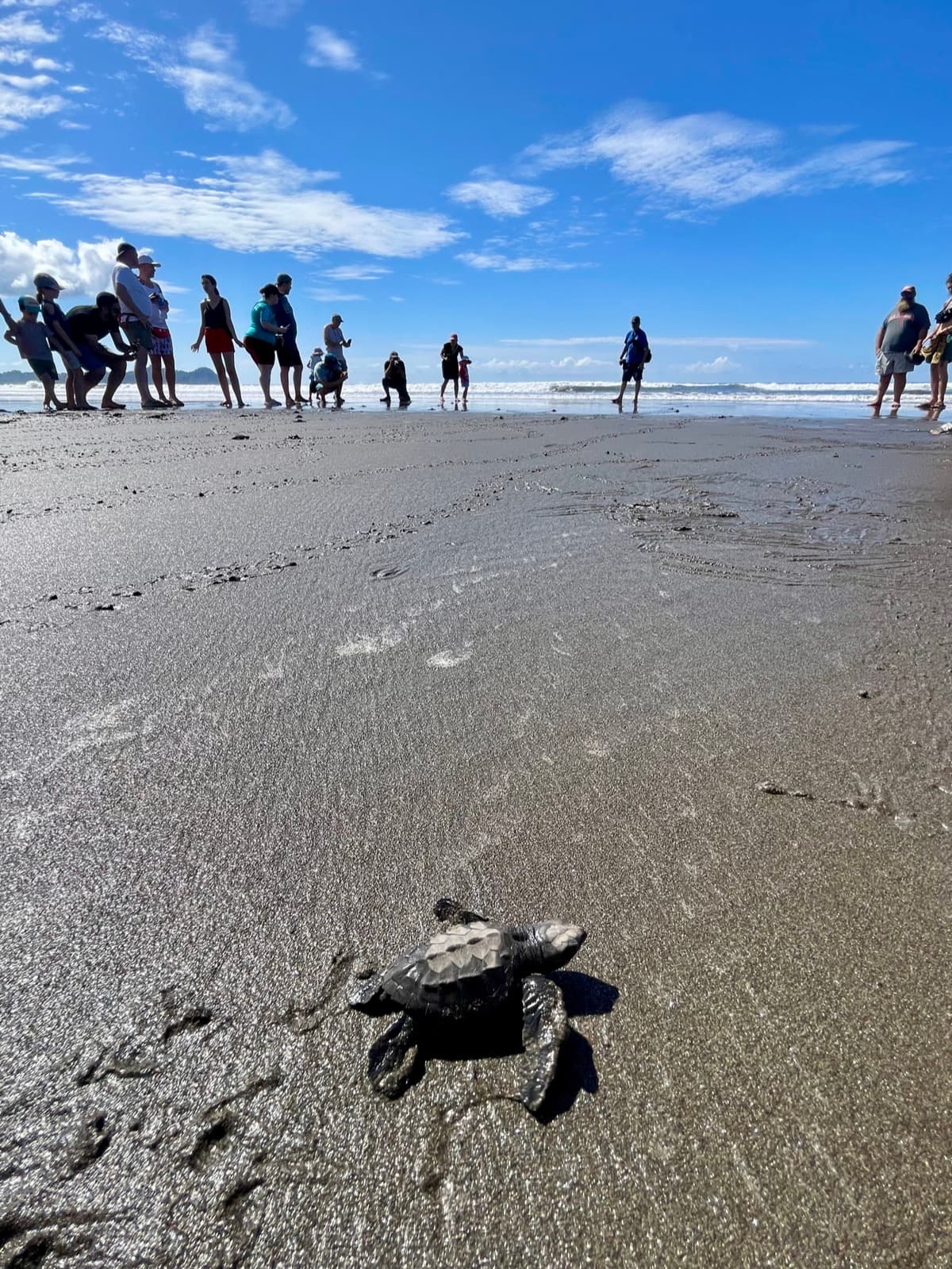
Because we had a full month based in Uvita, we visited three national parks. Corcovado, Marino Ballena, and Manuel Antonio, and had time to actually compare them, talk about what made each one different, and go back to the places we loved. We went to Los Mozas waterfall twice because the first time was so good, cliff jumping, swimming in the current. You can’t do that on a tight schedule.
In the Membership
Trail Guide Creator
Outdoor writing for kids ages 6-14: write a guide to a local trail or walking path. Nature and writing in one project.
Routines form, and that’s a good thing
One of the unexpected gifts of slow travel is that routines form naturally. People think of routine as the opposite of adventure, but for kids, having familiar rhythms in an unfamiliar place is grounding.
In Uvita, we had a favorite bakery where the kids would get these caramel-filled rolls. My son found a basketball court he’d go back to. When my parents visited, we had real quality time with Papi et Mamie because we weren’t scrambling between attractions, we were just living our life and sharing it with them.
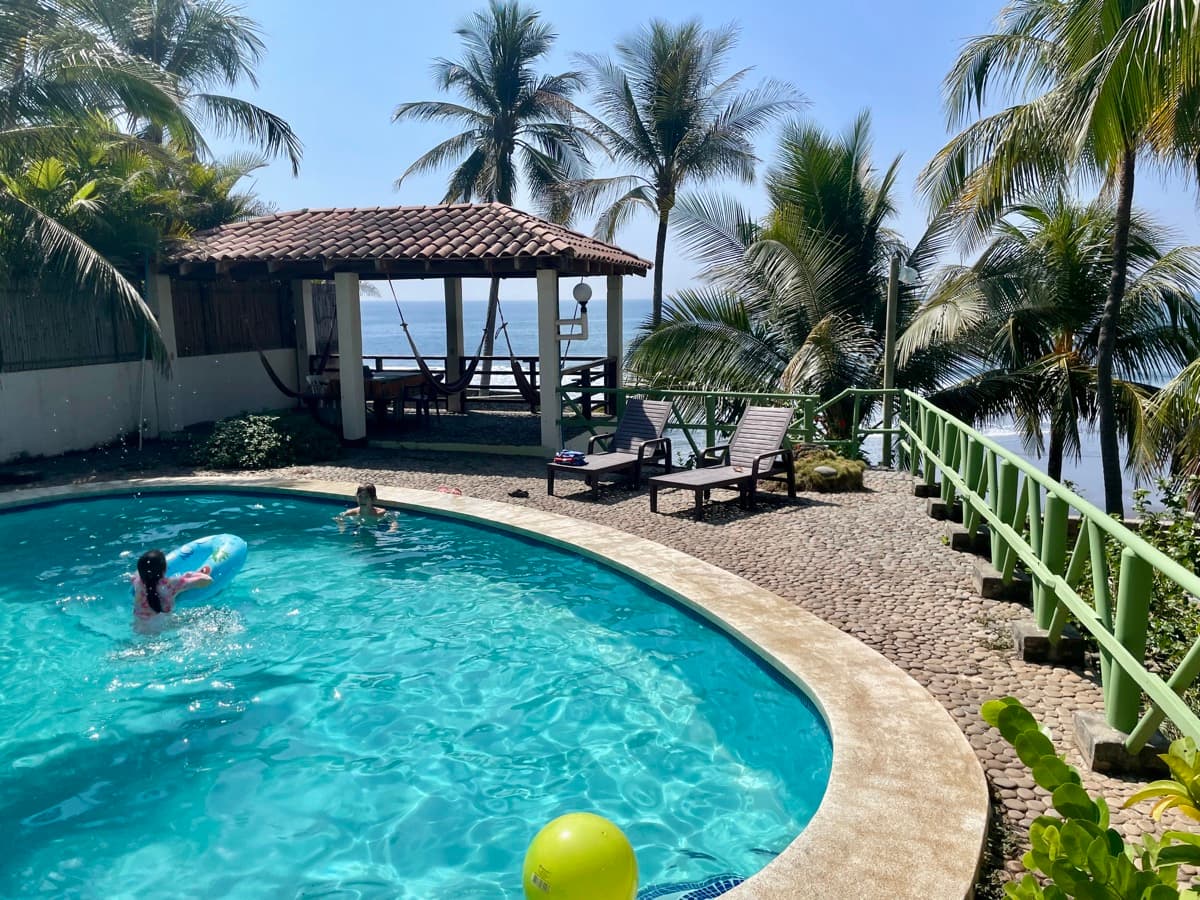
In El Zonte, El Salvador, the kids have daily Spanish lessons, surf sessions, and a tienda they walk to where they practice ordering in Spanish. They help cook meals, do the dishes, and have unstructured beach time every afternoon. It sounds ordinary, and that’s the point. The learning happens inside the ordinary, as we wrote about in what worldschooling actually looks like from El Salvador.
When you arrive somewhere new, let the first few days be unstructured. Your family will naturally find the places they want to return to, the park, the café, the trail. Build your rhythm around those anchors instead of imposing a schedule from day one.
The practical side: it’s actually cheaper
I should mention this because it matters: slow travel is significantly more affordable than hopping between cities.
When you stay for a month, you get monthly rental rates instead of nightly hotel prices. We cook most of our meals at home because we’re living in these places, not visiting them. We shop at local markets. We don’t pay for taxis between airports every few days. The savings add up fast. (Picking the right place matters too; here is how we chose where to worldschool.)
Always message hosts directly on Airbnb or local rental sites and ask about monthly discounts. We’ve consistently gotten 30–50% off nightly rates by committing to three weeks or more. Some hosts will also negotiate outside the platform for longer stays.
What you give up (and why it’s worth it)
I’m not going to pretend there aren’t trade-offs. In seven months, we’ve seen four countries. A family doing a classic Central America backpacking trip could cover twice that. We skipped Guatemala, Honduras, Nicaragua, and Belize entirely. There are ruins we haven’t seen, beaches we’ll have to save for another trip.
But here’s what we got instead: My son can explain how the Panama Canal locks work from memory. My daughter can identify three species of Costa Rican monkeys by their calls. Both kids can order food in Spanish, navigate a local market, and feel at home in a country that isn’t theirs. They still talk about Ray, the stray dog who joined us on a hike through a volcanic crater town in Panama.
They didn’t just see these places. They lived in them. And I think that’s worth more than a longer list of countries.
Is slow travel right for your family?
Maybe. It depends on what you’re after. If you have two weeks of vacation and want to see as much as possible, a packed itinerary makes sense. No judgment there; we’ve done those trips too, and they’re fun.
But if you have the flexibility, whether you’re homeschooling, worldschooling, working remotely, or taking a sabbatical, consider going fewer places and staying longer. The learning that happens when kids have time to settle in, get curious, and follow their own questions is something no guided tour can replicate. (And if you’re trying to figure out how to actually pull it off, see how we homeschool while traveling.)
Four countries in seven months. Honestly, it could have been three and I wouldn’t have felt like we missed anything.
Want this as a free printable? Grab the 22 Travel & Worldschool Activities for Kids, free to read, and the printable version lands in your inbox.