When we decided to worldschool for seven months, the first question after "are we really doing this?" was "where do we go?" I spent weeks on blogs, forums, and Facebook groups trying to figure out the perfect destinations. Spoiler: there’s no such thing. But there are smart ways to narrow it down, and some things that matter way more than I expected.
Our route ended up being Florida, Panama, Costa Rica, and El Salvador. Some of those choices were researched. Some were word-of-mouth. Some were money-wise. Here’s what actually went into the decisions, and what I’d tell someone making the same choices today. If you’re still figuring out the bigger picture, our worldschooling guide covers the why behind all of this.
Start with what you want your kids to experience
Before you open Google Flights, ask yourself: what do we actually want from this trip? For us, the answers were Spanish immersion, outdoor life, a slower pace, a cost of living that wouldn’t eat through our savings, and reliable internet, my husband needed it to work remotely. Time zone mattered too, because he still had meetings and clients to manage. Those things eliminated half the world immediately and pointed us toward Central America.
Other families might prioritise different things: proximity to grandparents, a specific language, access to a worldschooling community, a climate their kids can handle, or visa rules that make long stays possible. There’s no universal "best destination." There’s just the best destination for your family right now. (Once you’ve picked a place, see what we packed for seven months on the road for the practical side.)
What actually mattered (more than we expected)
Reliable internet and time zone
This was non-negotiable. My husband works remotely, so we needed solid internet everywhere we stayed, not just for the kids’ schoolwork and our Google Sites blog, but for his actual job. We also needed to stay in a time zone that made sense for his meetings. Central America is on Central or Eastern time, which lined up perfectly. We always confirmed internet before booking accommodation, and honestly it was never a problem, we got lucky, but we also did our homework.
Walkability and independence
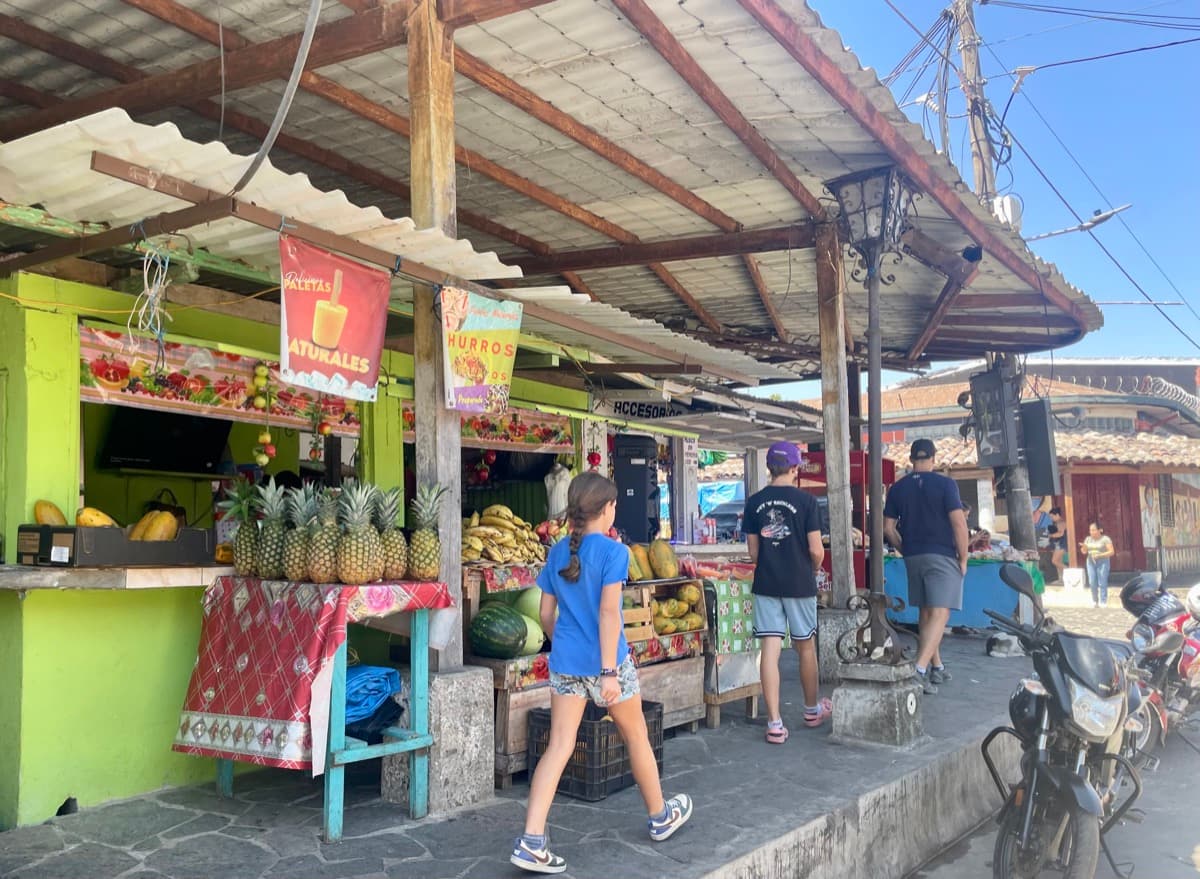
Some of our best experiences happened because the kids could walk to the tienda on their own, or we could stroll to the beach without needing a car. Places where everything required driving felt more like regular life in a new location. Places where we could walk, to the market, to the beach, to a restaurant, felt like an adventure. Slow travel works best when you can actually live in a place, and walkability is a huge part of that.
A community of other families
I didn’t think this would matter as much as it did. In Santa Catalina, Panama, there was a community of traveling families. The kids had other kids to surf with and hang out with. I had other parents to talk to. We shared tips, recommended restaurants, and watched each other’s kids at the beach. In places where we were the only traveling family, the experience was lonelier, richer in some ways, but harder.
Access to Spanish lessons
We wanted the kids to learn Spanish while we traveled, so we looked for places where lessons were available and affordable. In El Zonte, we found a local school that offered one-on-one lessons after lunch every day. In Costa Rica, options were everywhere. In some towns, there was nothing. If language learning is a priority, research this before you commit to a destination.
Safety (but not the way you think)
Every time I mentioned El Salvador, someone brought up safety. And yes, we researched it. But "safe" doesn’t mean the same thing everywhere, and the perception of a country often doesn’t match the reality on the ground. El Zonte felt safer than most places I’ve been, a small surf town where everyone knows everyone. We used common sense, asked locals, and trusted our instincts. The same way you would anywhere.
What actually mattered for day-to-day safety with kids: well-lit streets for evening walks, a close community where people look out for each other, and rentals in neighbourhoods where other families lived. Those details matter more than a country’s reputation on the news.
The best worldschool destination isn’t the most exotic one. It’s the one where your family can settle into a rhythm and actually live.
In the Membership
Play the World
Worldschooling activity for kids ages 6-14: learn and play a real local game while travelling, and read what it reveals about the culture.
Our route and why
Florida: the easy start
We started in Florida because it was easy and cheap. My husband’s parents have a condo there, so we had no rental costs. The complex had a swimming pool, pickleball, shuffleboard, ping-pong, billiard, the kids never got bored. We went to Disney, saw music shows, and the kids got to experience Halloween in a hot climate for the first time. It was the perfect way to ease into travel life before going abroad.
Costa Rica: the unexpected favourite
Costa Rica wasn’t on our original list; we’d heard it was more expensive than the rest of Central America, and it is. But it ended up being our favourite stop of the whole trip. We stayed in the same place the entire time: Uvita, which is close to a lot of incredible spots. The kids did basketball, visited an alternative school for six days, and actually made friends. That’s what made it special, they had a community, even if it was temporary.
Panama: four places, four experiences
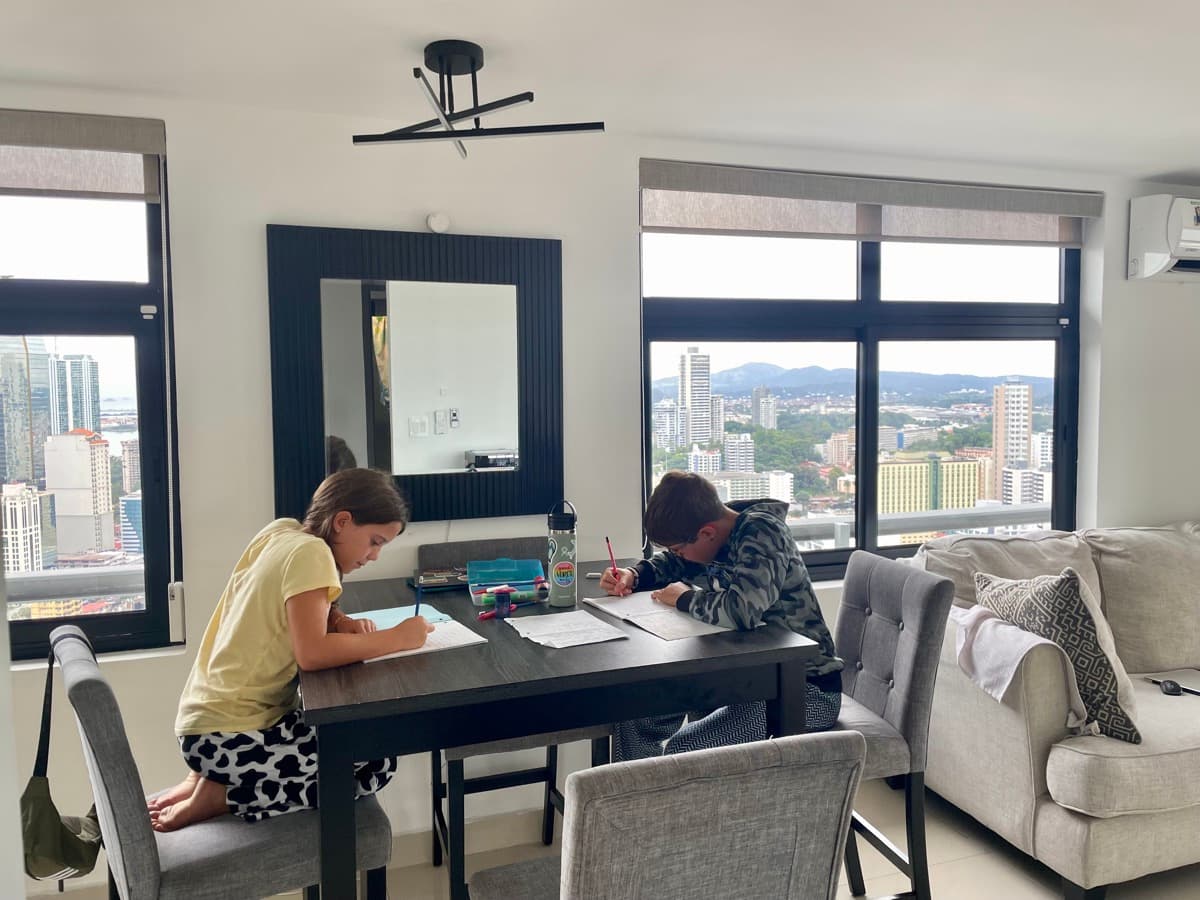
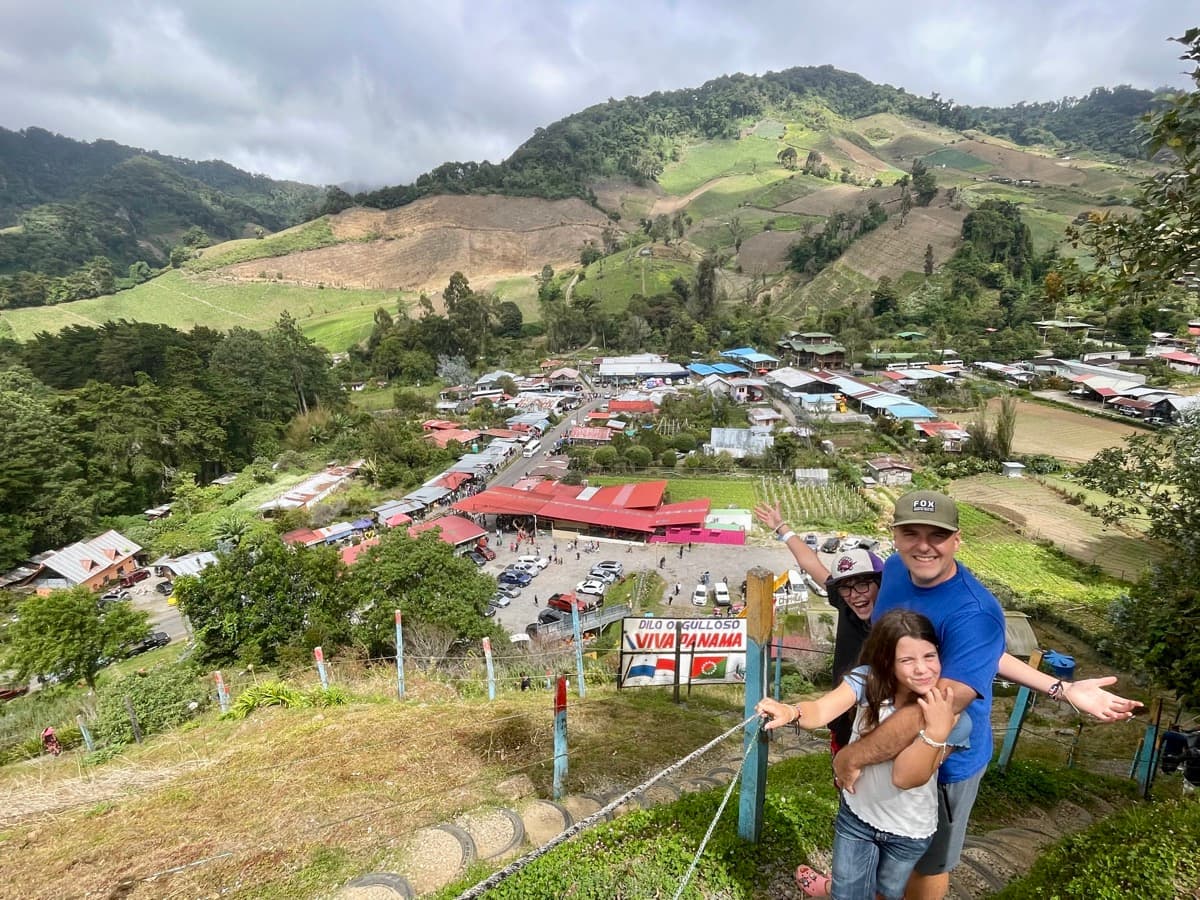
Panama was on our original list and it didn’t disappoint. We stayed in four different places: Panama City, El Valle, Santa Catalina, and Boquete. Each one felt like a different country. Panama City blew the kids’ minds, a modern skyline next to a colonial old town. The canal was a full week of obsession for Zach. Santa Catalina had the traveling family community we’d been craving. Boquete was cool mountain air and cloud forests. And El Valle was quiet and green, a good reset between busier stops.
El Salvador: simple life
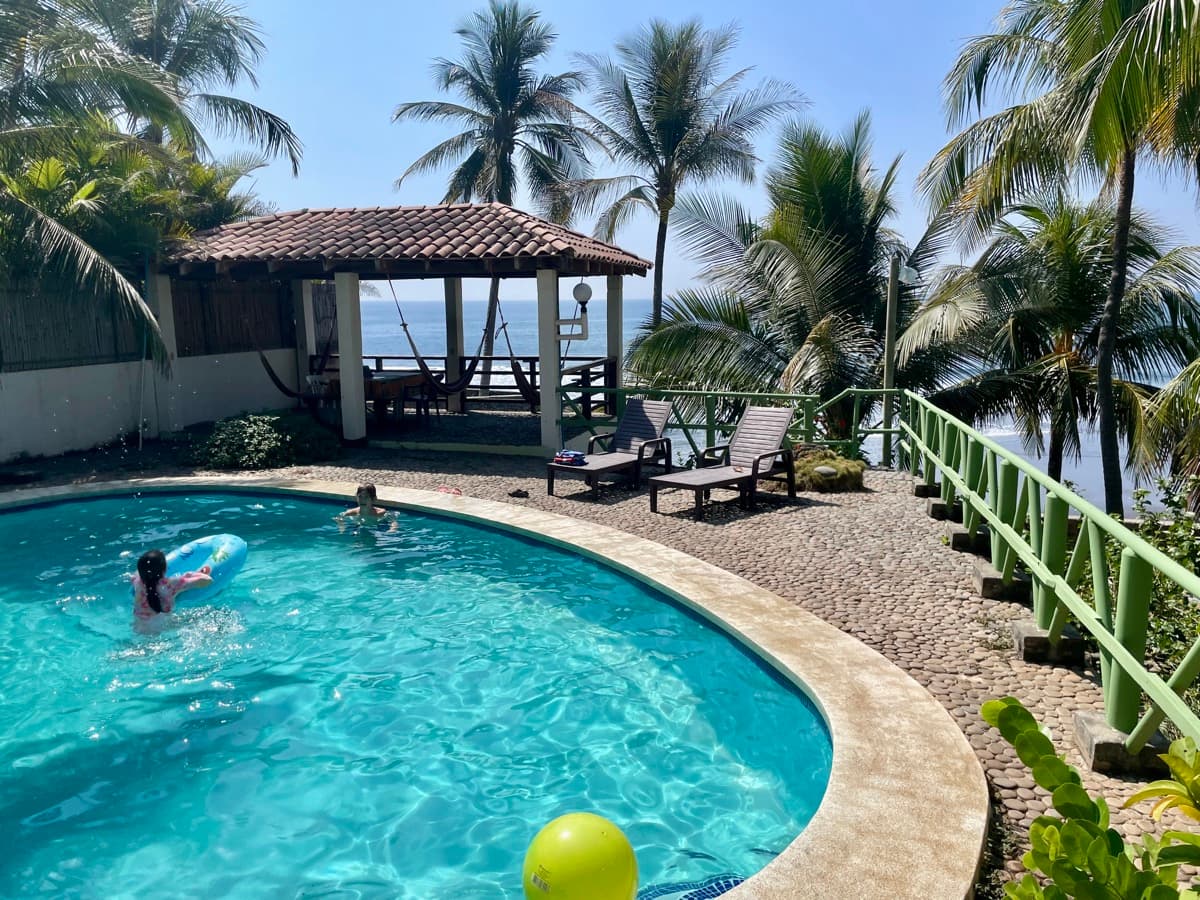
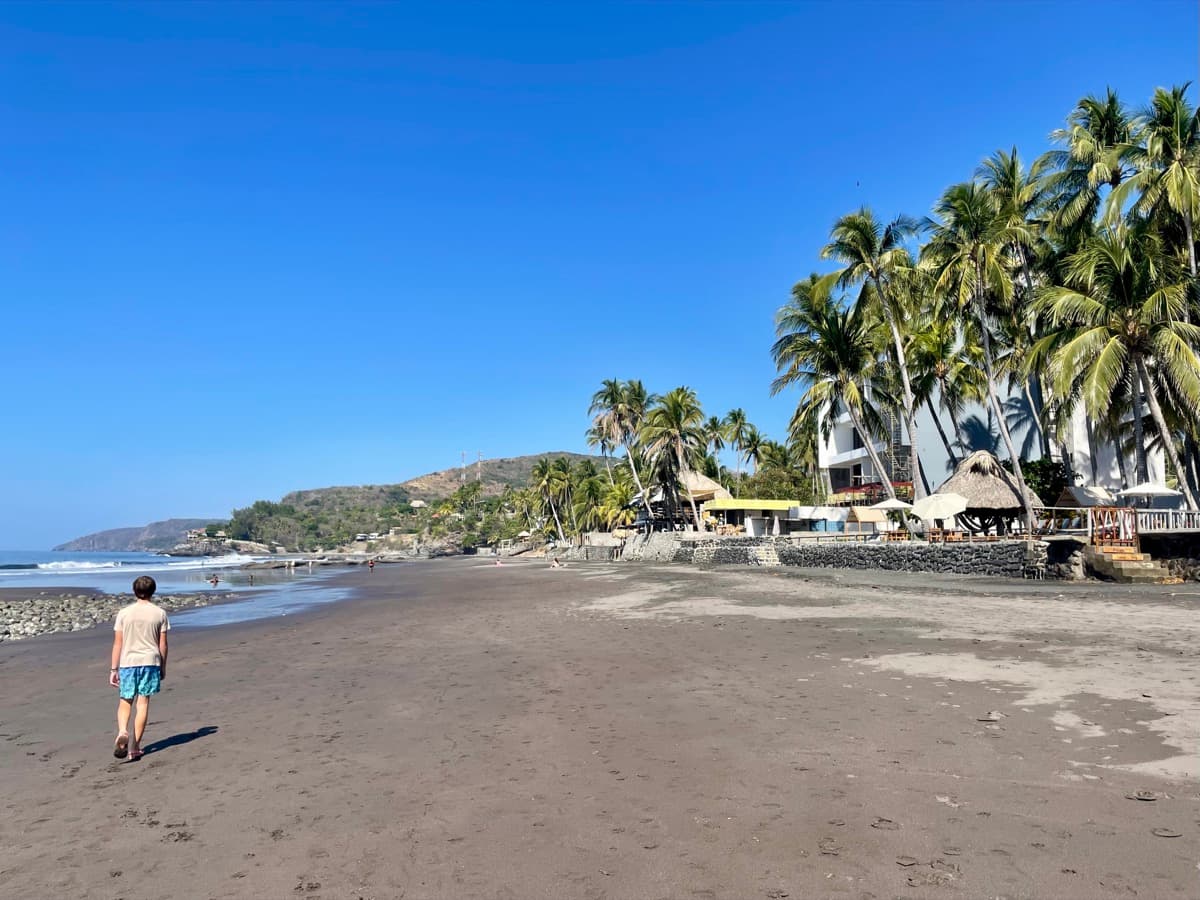
We stayed in El Zonte for one month. One place, simple life. Our rental had the best backyard, right on the beach with our own private pool. The kids had Spanish lessons every day, surfed in the afternoons, deepened their bond as siblings, and paid for everything in Bitcoin. It was stripped down and easy in the best way.
What I’d do differently
- Ask other traveling families instead of travel blogs. The best recommendations came from people actually doing what we were doing, not from tourism websites.
- Don’t over-plan. Our best experiences were unplanned. Leave big gaps in your itinerary for spontaneity.
- Trust your gut about a place. Sometimes a destination looks perfect on paper but doesn’t feel right in person. It’s OK to leave early.
- Next time, we’ll slow travel again, but we’ll make sure there are activities for our teens to do and friends to make. That’s what makes a place stick.
The only wrong choice is waiting for the perfect one
I spent so long researching the "right" destinations that I almost paralysed myself out of going at all. The truth is, every place taught us something. The places that weren’t perfect taught us what we actually needed. And the place we almost didn’t visit. Costa Rica, because of the cost, ended up being our favourite.
Pick somewhere that excites you, book a flight, and figure the rest out when you get there. Your kids don’t need the perfect destination. They just need you to say yes. For a closer look at one specific stop, here’s what a month worldschooling in El Salvador actually felt like.
Want this as a free printable? Grab the 22 Travel & Worldschool Activities for Kids, free to read, and the printable version lands in your inbox.