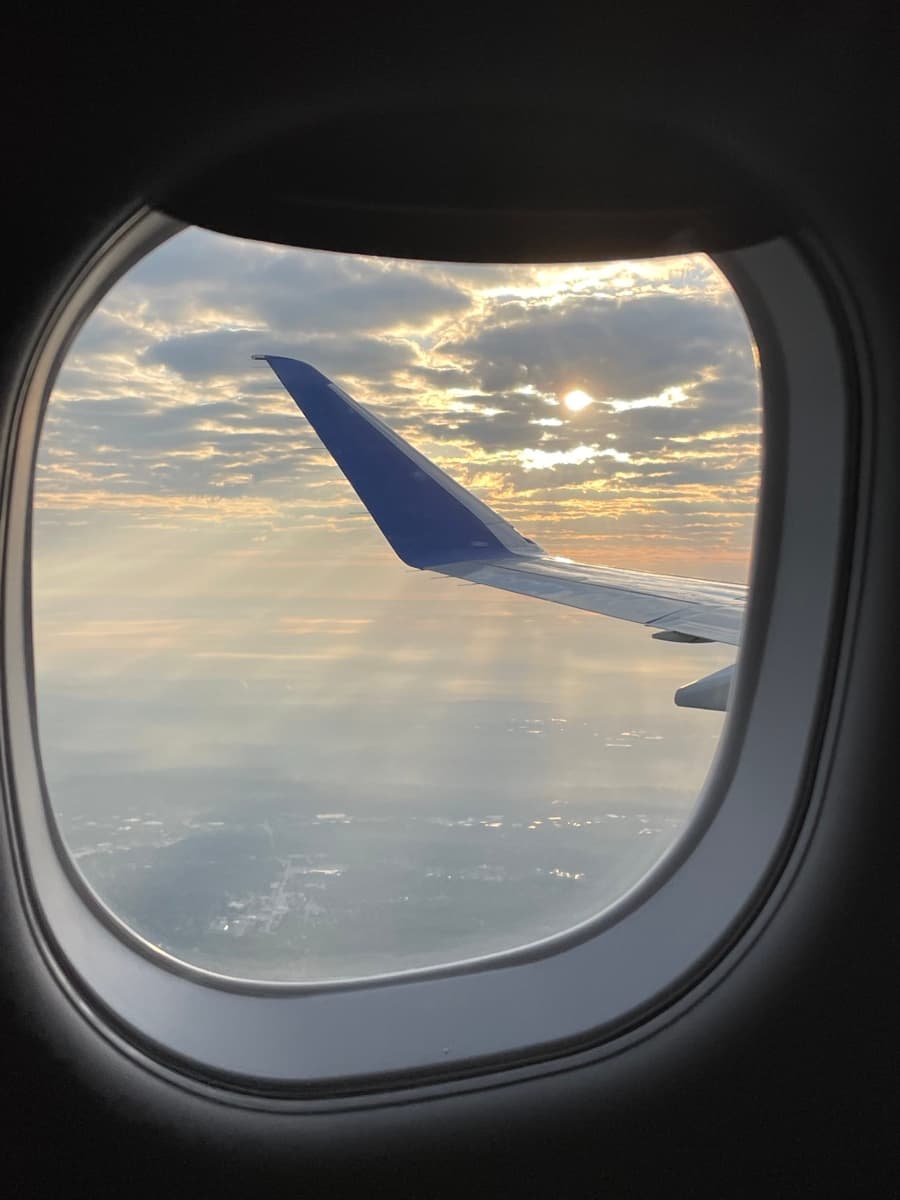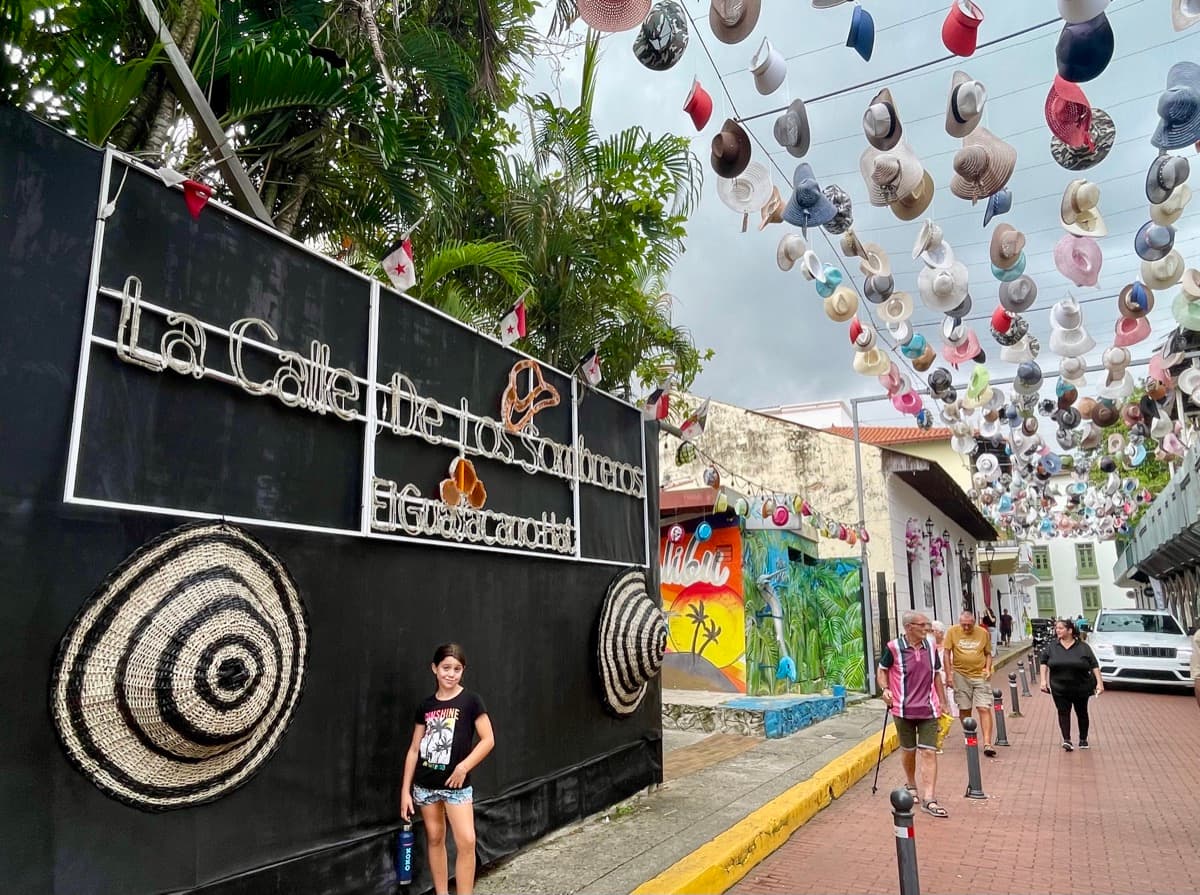
People picture worldschooling as tanned kids journaling on a beach in Bali. And sometimes it is. But mostly it’s navigating a bus system in a language you don’t speak, negotiating screen time in a hotel room, and explaining currency exchange to a 10-year-old who just wants to know why the ice cream costs “so many numbers.”
It’s messy. It’s exhausting. And it’s the best decision we ever made.
I’m not going to sugarcoat it. If you’re considering worldschooling, you deserve the honest version, not the Instagram highlight reel. So here’s what it actually looks like for our family of four. (For the bigger picture before you book flights, our worldschooling guide walks through what this can look like long term.)
What a typical day looks like
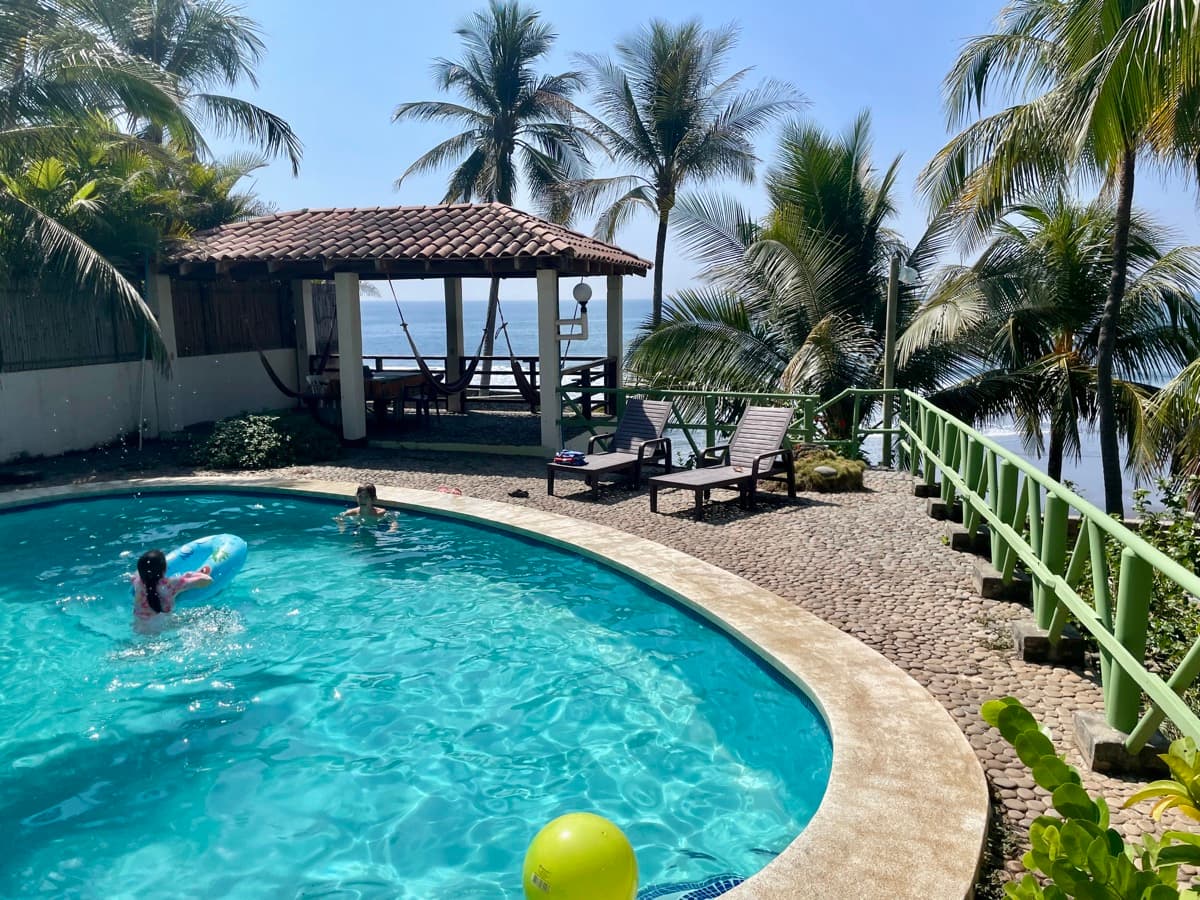
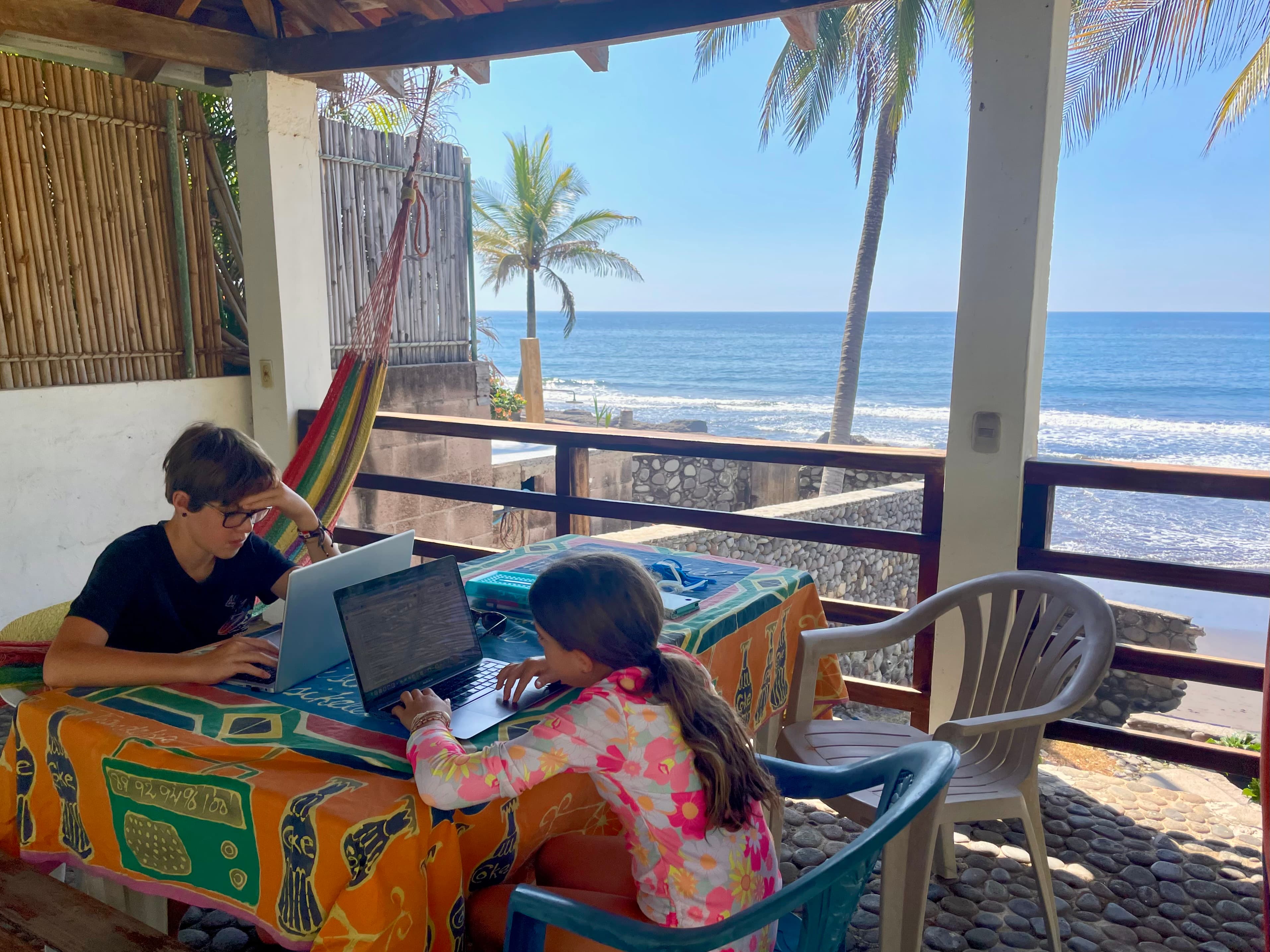
There’s no typical day; that’s the point. But if you want a rough idea: mornings are slow. Reading, drawing, sometimes writing for the kids’ travel blog. In El Salvador, afternoons start with a one-hour Spanish lesson, then the kids might go surf or we’ll walk to the tienda where they practise ordering in Spanish. In Costa Rica, we spent afternoons at waterfalls or hiking national parks. Evenings we cook together, the kids do the dishes, and we talk about what we saw.
Some days are rich and magical. Some days are Netflix in a hotel room because everyone’s had enough. Both are okay. The learning happens across weeks and months, not in individual days. Once I accepted that, I stopped panicking about the “wasted” days. (We go deeper on this in how we structure our worldschool day, spoiler: we don’t.)
The honest downsides
Nobody talks about this part enough. Worldschooling is lonely sometimes. You miss your community. Your kids miss their friends. The novelty of a new city wears off faster than you’d expect, and jet lag with kids is nobody’s idea of fun.
There’s also the invisible labour: finding accommodation, navigating healthcare in foreign countries, managing money across currencies, and being “on” all the time. You don’t get to clock out when you’re the parent, the teacher, and the travel planner.
Travel doesn’t replace education. Travel is education. Every new city is a living textbook.
The secret: low expectations, high curiosity
If you expect your kids to sit still and write a report, you’ll be disappointed. If you expect them to watch, ask a million questions, and then come home wanting to make a poster about it, you’ll be thrilled.
The biggest shift for us was letting go of what learning “should” look like. My daughter got obsessed with sea turtles after we volunteered at a conservation project in Costa Rica, the nesting cycles, the survival rates, why light pollution matters. Nobody assigned that. She just wanted to know. That’s the kind of learning that sticks. (For a closer look at one specific country in the rotation, here’s what worldschooling actually looked like in El Salvador.)
Start a “family meeting” ritual at the end of each travel day. Ask three questions: What surprised you? What did you learn? What do you want to know more about? This takes 10 minutes and turns experiences into lasting memories.
Use what’s already there
Every place you visit has something to teach your kids, you just have to look for it. We don’t plan a “curriculum” for each destination. We look at what’s around us and say yes to it.
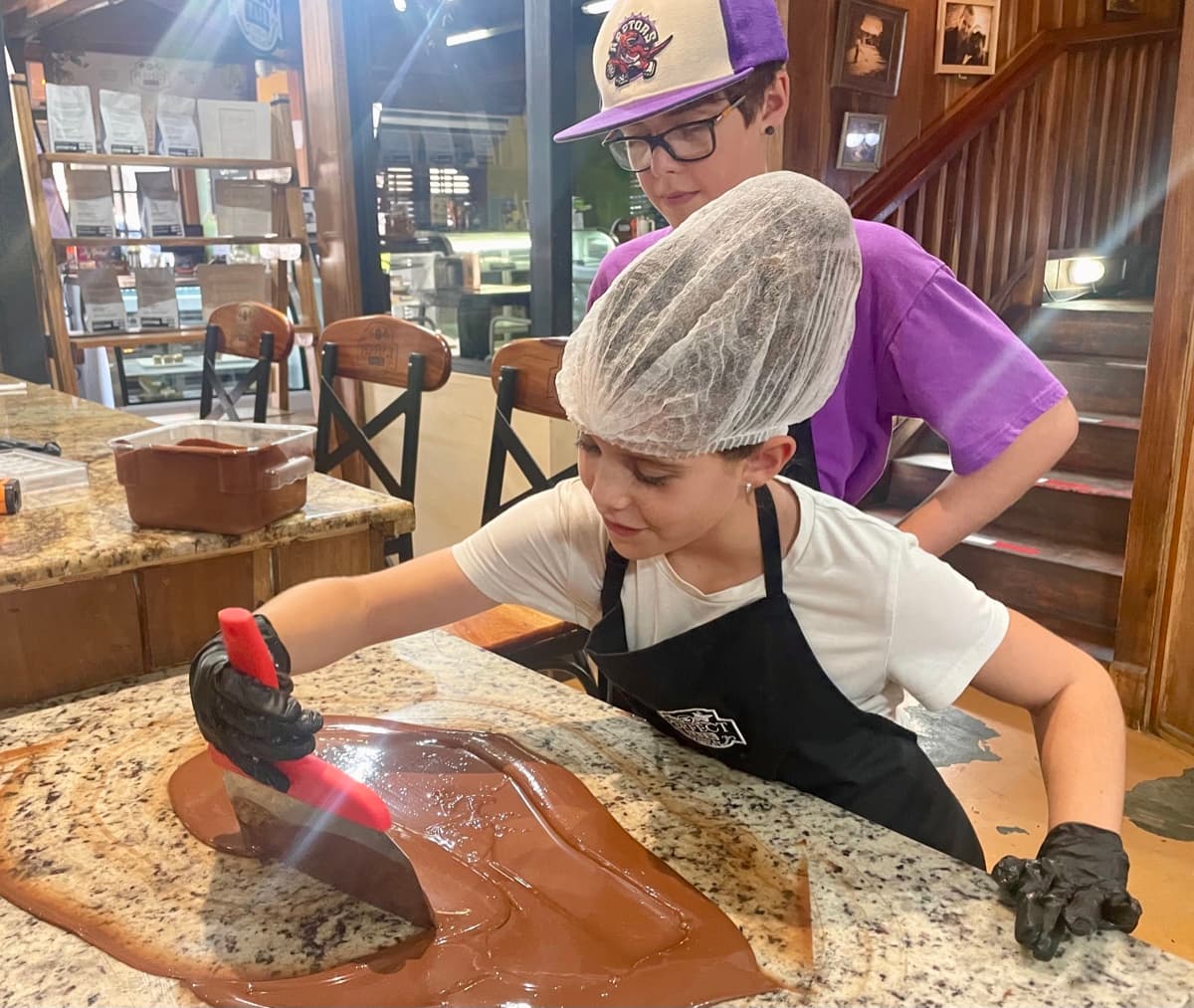
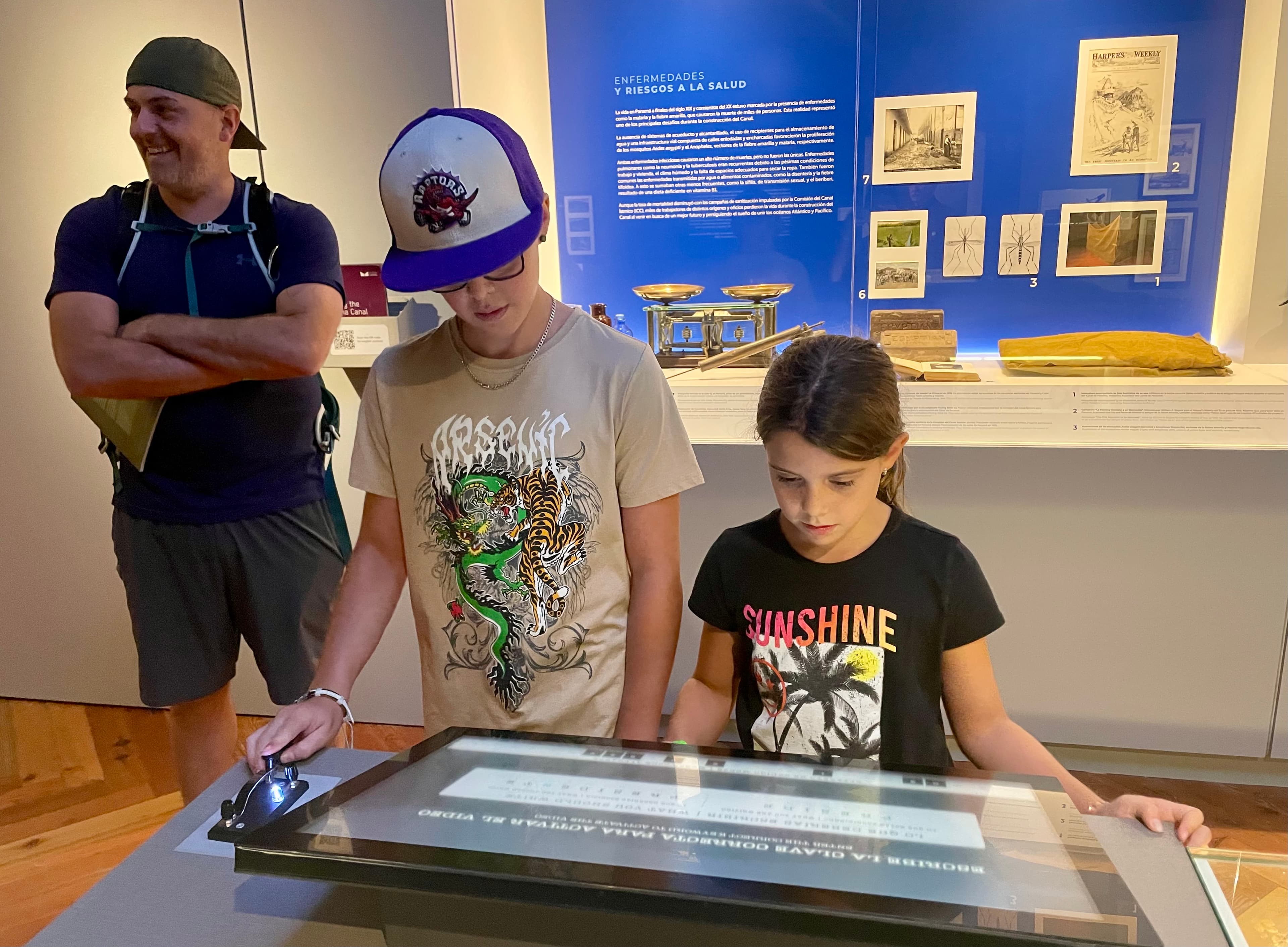
In Panama, the kids did a chocolate-making workshop where they learned about cacao farming, fermentation, and tempering; that’s agriculture, chemistry, and food science in one sticky afternoon. In El Salvador, they paid for mangoes in Bitcoin at the tienda and that alone sparked a conversation about cryptocurrency, digital wallets, and why a whole beach town runs on it. In Costa Rica, a coffee farm tour turned into a deep conversation about global trade, fair pricing, and why their morning hot chocolate costs what it costs.
Look for museums and nature centres, even small-town ones are often brilliant and rarely crowded. Find local parks and nature reserves where the landscape itself is the lesson. Ask around for workshops and classes: cooking, weaving, pottery, surfing, language. Many communities offer these to visitors, and they’re almost always the highlight of a trip. And don’t forget kids’ activities. My kids joined a local basketball group in Uvita, Costa Rica, and within a week they had friends, a routine, and a whole lot of Spanish they didn’t learn from a textbook.
The best part? Your kids remember these experiences. Years later, they won’t recall a single worksheet. But they’ll remember tempering chocolate in a workshop in Bocas del Toro, or releasing baby sea turtles on a beach in Costa Rica. That’s the kind of learning that becomes part of who they are.
In the Membership
Teach It to Learn It
Communication activity for kids ages 6-14: master a skill by teaching it, planning a real lesson and delivering it to a live student.
Resources that travel well
- Digital activity guides (download before you go, use on any device)
- A small nature journal per kid
- A world map they can mark up with stickers
- Library books from each new city
- A simple camera or phone for photo journals
- Conversation: the most underrated learning tool
The less stuff you carry, the better. We learned this the hard way after lugging a suitcase full of workbooks through three airports. Now we travel with digital activity guides on a tablet, books, and whatever the kids need for their travel blog. Everything else, we find along the way.
Answering the hard questions
People will ask about socialisation, about “gaps,” about university. Here’s what I’ve learned: worldschooled kids are some of the most socially capable humans I’ve met. They’ve navigated foreign cultures, made friends across language barriers, and learned to adapt to new environments constantly. That’s not a socialisation problem. That’s a superpower.
You don’t have to travel full-time
Worldschooling isn’t just for nomad families. A weekend trip to a nearby town, a visit to a cultural festival, or even cooking a meal from another country, it all counts. The mindset is “the world is the classroom.” The location is optional.
Start where you are. Explore your own neighbourhood with fresh eyes. Visit the part of your city you never go to. Try a restaurant from a cuisine you’ve never had. Worldschooling is a way of seeing, not a passport stamp.
Want this as a free printable? Grab the 22 Travel & Worldschool Activities for Kids, free to read, and the printable version lands in your inbox.