- 1What a typical day actually looks like
- 2A week of real learning (no curriculum required)
- 3The learning you can’t plan
- 4What about the hard parts?
- 5What our kids are picking up along the way
- 6You don’t have to travel the world to worldschool
- 7How to start (even if you’re not traveling)
- 8Frequently asked questions
I’m writing this from a hammock in El Zonte, El Salvador. The kids are somewhere between the beach and the tienda, I can hear them ordering something in Spanish. It’s not perfect, but they’re trying, and the lady at the counter is patient with them.
This is worldschooling. Just our actual life, messy, sunburned, full of small moments that add up to something real. (For the wider context behind this approach, see our full worldschooling guide.)
What a typical day actually looks like
There is no typical day. That’s the whole point. But if you pushed me, a day here might look something like this:
Most of our meals happen at home. The kids help cook and do the dishes, and that’s non-negotiable. When we go out, they order in Spanish. They have to. Nobody in El Zonte is going to switch to English for them. We pay with Bitcoin and nobody bats an eye. That alone sparked a conversation about cryptocurrency, digital wallets, and why an entire beach town decided to build its economy around it.
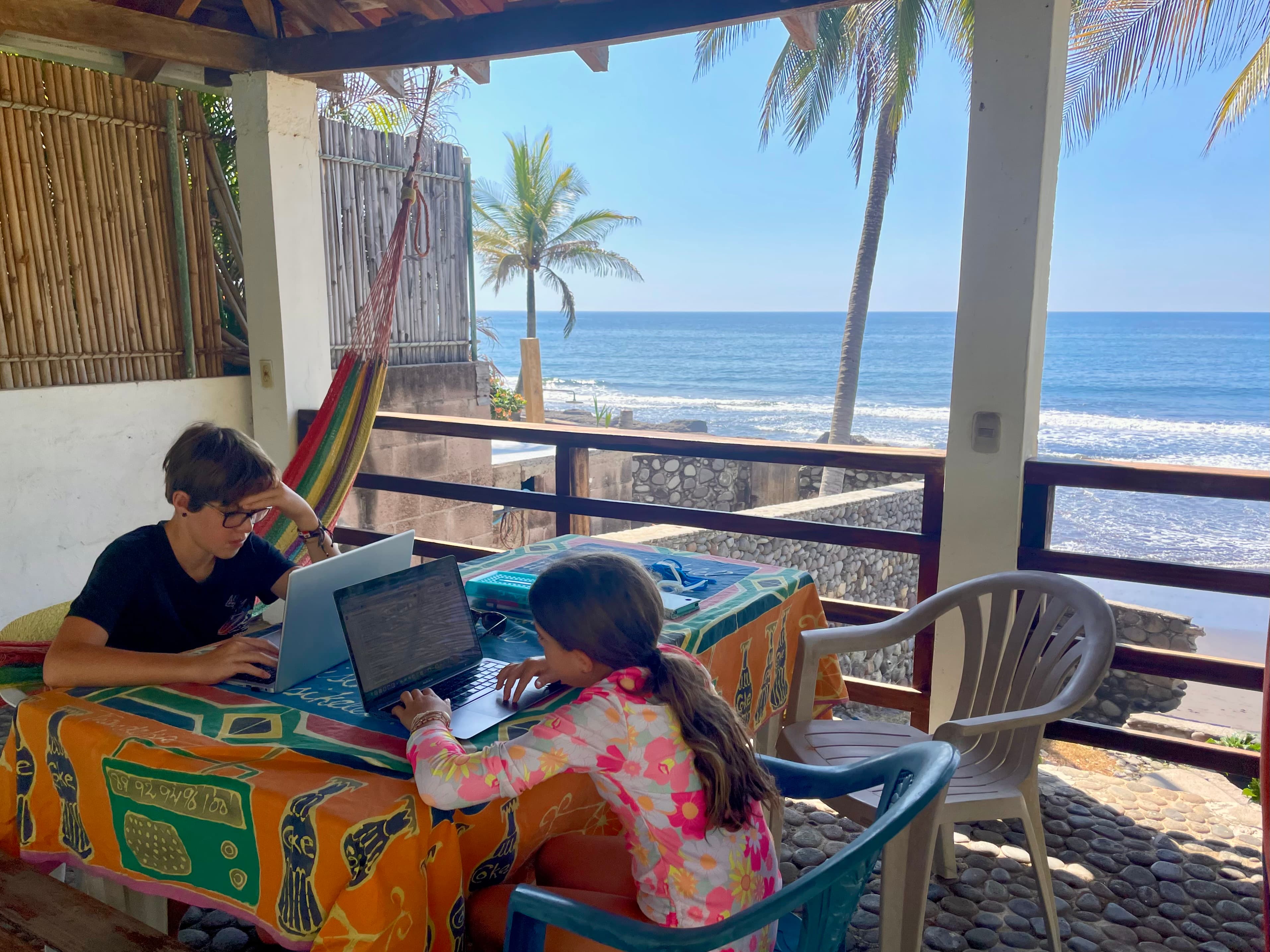
The kids do Spanish lessons, and they practise every time they go to the tienda, every time we eat at a restaurant, every time we have a Spanish-speaking guide. They took one surf lesson and now they rent boards and go practise on their own. They’re wiping out constantly but they keep going back.
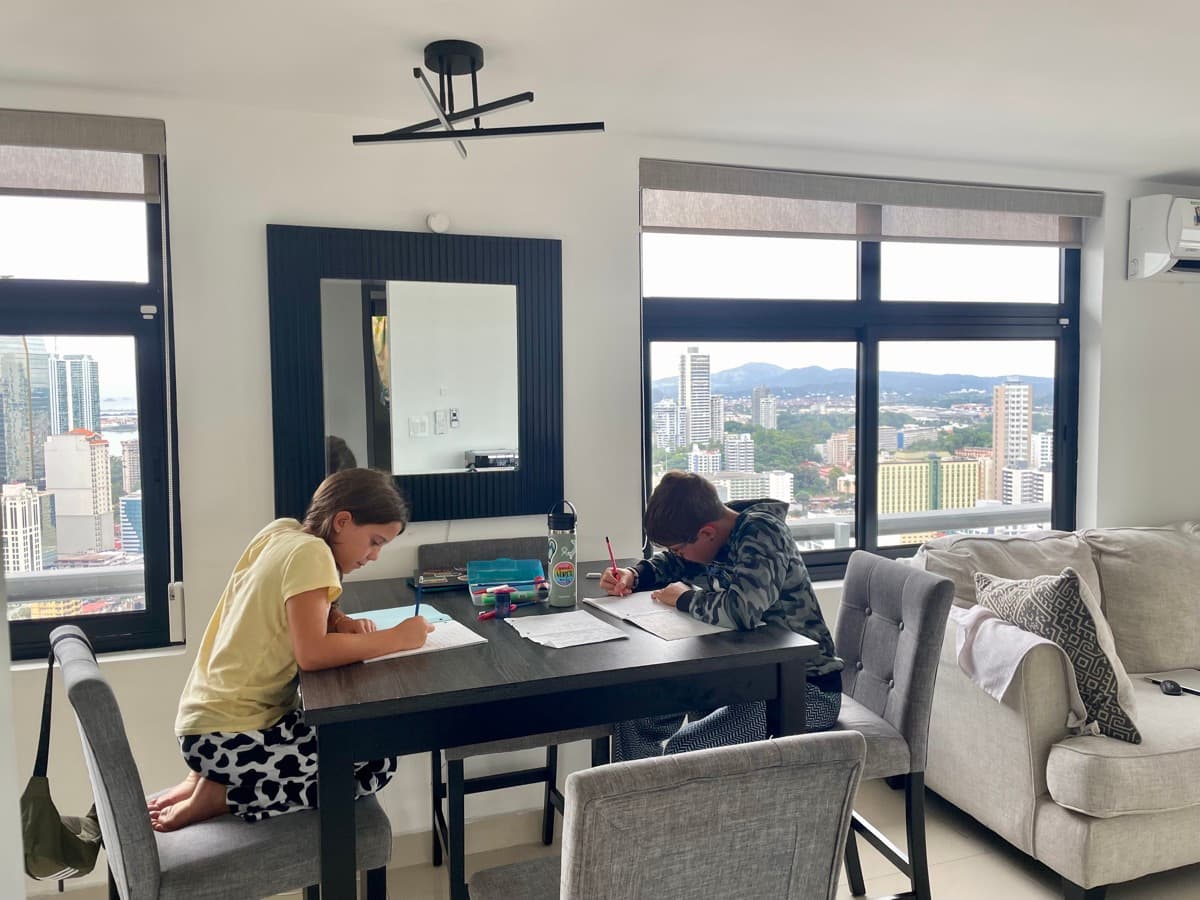
Some days are slower. Reading, drawing, a lot of conversations. If we don’t know the answer to something, we look it up. Sometimes we pull out an activity guide. Sometimes we explore. We took a pupusa-making class with a local family. The kids learned to mix the masa, fill and press the dough, and cook them on the plancha. They ate about twelve each.
The world doesn’t organise itself into subjects. Why should learning?
A week of real learning (no curriculum required)
Here’s what last week actually looked like for us. None of this was planned:
- Monday: Beach in the morning. My daughter spent most of it building sand animals and castles, she’ll do that for hours if you let her. Spanish lesson after lunch. Later the kids went to the tienda and practised ordering, buying fruit, asking prices, counting change in a new language.
- Tuesday: Hiked to a waterfall. The kids asked about the rock formations and why the water was so cold despite the heat. Walking along the beach that evening, we noticed the erosion on the cliffs and talked about how it happens.
- Wednesday: Surf day. The kids rented boards and practised for a couple hours. Afternoon Spanish lesson, then downtime.
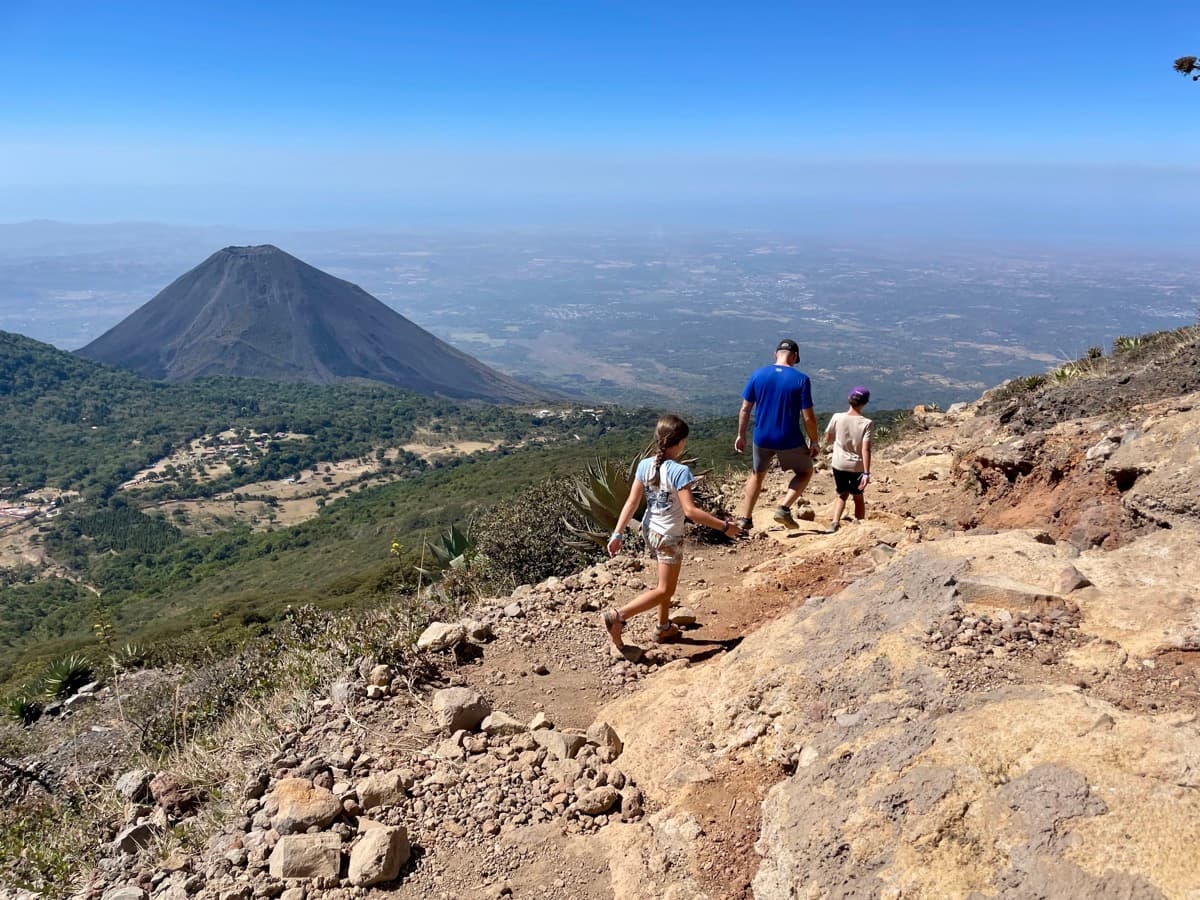
- Thursday: Visited a volcano. The drive up was incredible, elevation changes, cloud forests, coffee plantations on volcanic soil. At the crater, my son wanted to know why the water inside was so green. We didn’t know, so we looked it up together.
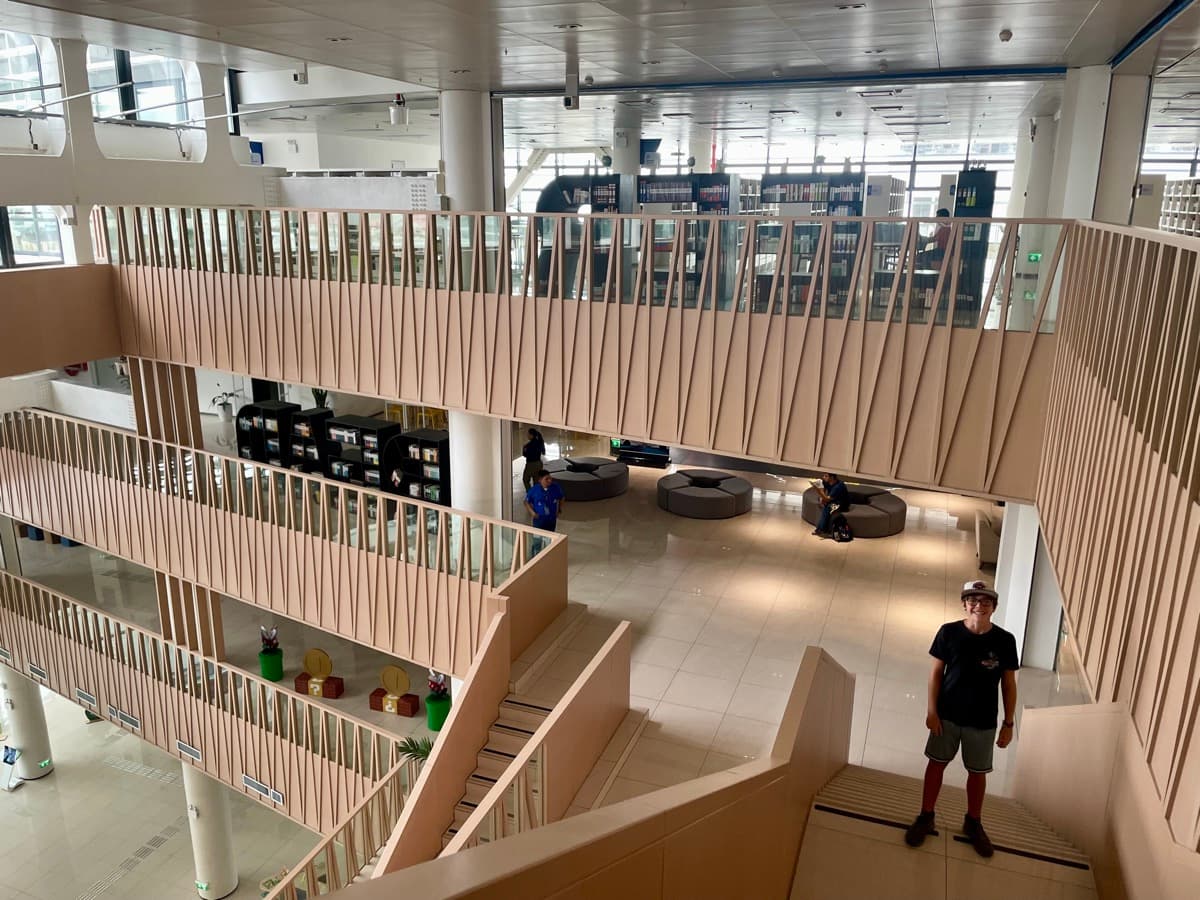
- Friday: Explored the new San Salvador library and the presidential palace. My son wanted to know why some countries have presidents and some have prime ministers. That became the evening’s conversation.
- Weekend: Another waterfall, more surfing, and a lazy afternoon where the kids read books in hammocks. Not every day needs to be a field trip.
No worksheets. No lesson plans. No tests. And yet, look at that list. Language, science, geography, history, maths, physical education, cultural studies, and social skills. All in one week. All because we showed up and paid attention. (We break down the loose framework behind days like this in how we structure our worldschool day.)
The learning you can’t plan
The best moments are always the ones I didn’t see coming.
The Spanish lessons happen every weekday after lunch, one hour. But the real practice happens outside. At the tienda, at restaurants, chatting with other kids at the beach. The classroom gives them the grammar. The street gives them the confidence. You need both.
Or the volcano trip, my son staring into the crater asking why the water was so green. We didn’t know. So we sat down and looked it up together. That’s the thing about worldschooling, you can’t plan for those moments. You can only create the conditions where they’re possible. And those conditions are surprisingly simple: slow down, stay curious, and let your kids ask questions.
What about the hard parts?
I’m not going to pretend this is all golden-hour hammock photos. There are hard days. Days when the Wi-Fi doesn’t work and we need it. Days when the kids miss their friends. Days when I question whether I’m giving them enough structure, enough academics, enough of whatever it is that schools provide.
But then I watch my kid order lunch in Spanish, explain to me why volcano water is green, and help his sister figure out how much mangoes cost at the tienda, all in the same day, and I think: okay. We’re doing alright.
Worldschooling doesn’t mean your kids are learning 24/7. Some days they’re just bored at the beach. That’s fine. Boredom is where creativity starts. Don’t feel pressure to turn every moment into a lesson.
What our kids are picking up along the way
- Adaptability: new country, new language, new food, new routines. They’re learning to be comfortable with discomfort.
- Cultural awareness: from making pupusas with a Salvadoran family and hearing their story.
- Resourcefulness: when you can’t just Google everything or run to a familiar shop, you figure it out with what’s available.
- Real communication: ordering food in Spanish, making friends without a shared language.
- Perspective: understanding that their normal isn’t everyone’s normal. That there are many ways to live a good life.
You don’t have to travel the world to worldschool
I want to be clear about something: worldschooling isn’t about the passport stamps. It’s a mindset. It’s the belief that the world, your town, your neighbourhood, your kitchen, is a pretty great place to learn.
You can worldschool from your backyard. Visit a local factory. Talk to the baker about yeast. Walk through a cemetery and do history. The point isn’t where you are. It’s how you see.
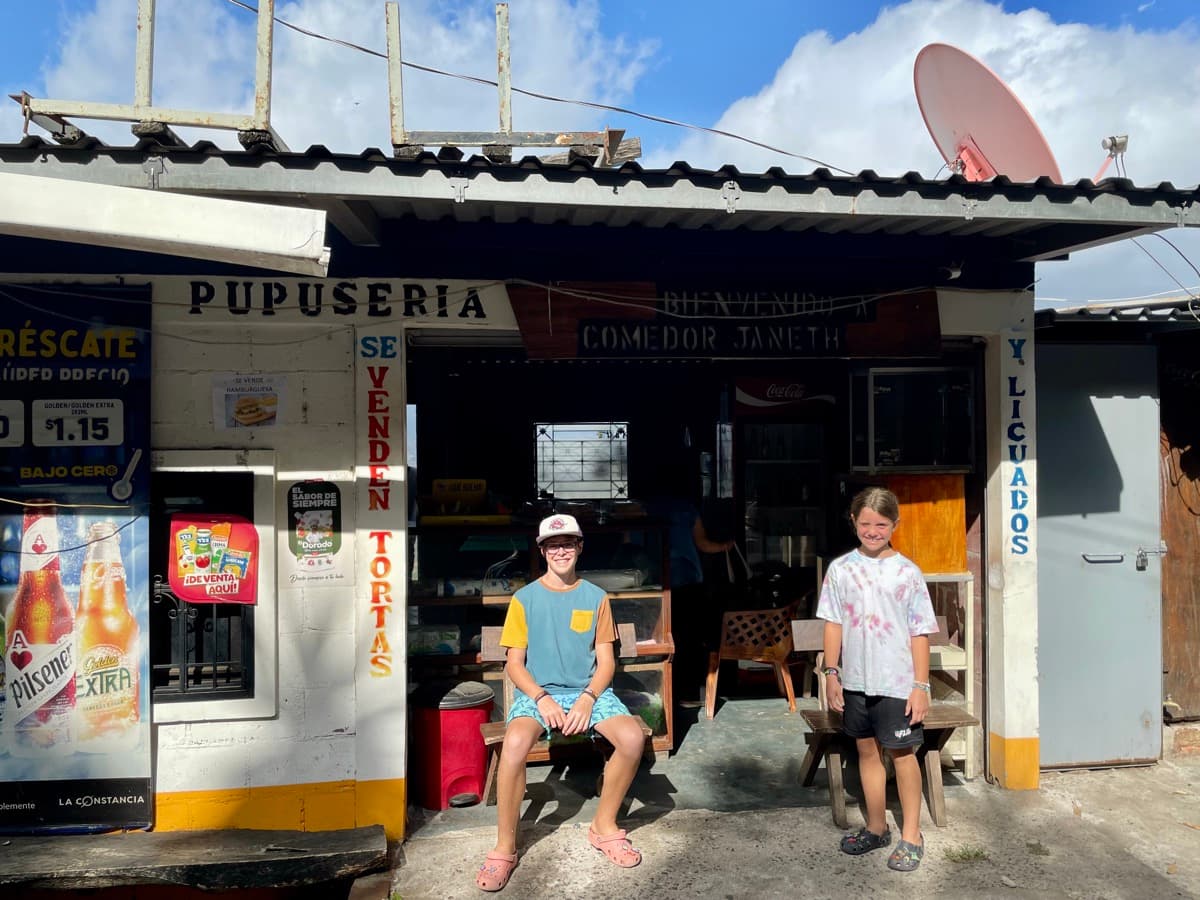
El Salvador just happens to be where we are right now. Next month it might be somewhere else. But the approach stays the same: slow down, pay attention, follow the curiosity. We make the deeper case for slow travel over bucket-list travel here.
How to start (even if you’re not traveling)
- 1Pick one day this week and leave the curriculum at home. Just go somewhere, a market, a park, a workshop, and let your kids lead.
- 2Ask questions instead of giving answers. "What do you notice?" and "Why do you think that is?" are your two best tools.
- 3Let the messy, unplanned moments happen. The best learning rarely looks like learning.
- 4Keep a family journal. Write down the questions your kids ask, the things they discover, the conversations you didn’t expect. You’ll be amazed what adds up.
My daughter just came back from the tienda. She ordered in Spanish, paid in Bitcoin, and is now sharing mango with her brother on the beach. Nobody assigned that. Nobody graded it. But it’s real, and it’s hers, and I’ll take it. (If you’re weighing the move to learning on the road, see our practical notes on how to homeschool while traveling.)
Want this as a free printable? Grab the 22 Travel & Worldschool Activities for Kids, free to read, and the printable version lands in your inbox.