The question I get asked more than any other is: "What does your day actually look like?"
People want a schedule. A timetable. Something they can pin to a fridge and follow. I get it. I wanted that too when we started. I’m a former teacher. I love a good plan.
But the honest answer is: we don’t have a schedule. We don’t have a set curriculum. We don’t have "school hours." And it took me a while to stop feeling guilty about that. If you want the wider context, our worldschooling guide explains the philosophy behind why a rhythm beats a schedule.
Why we stopped trying to schedule learning
When we first started worldschooling, I made a beautiful weekly plan. Morning lessons, afternoon activities, reading time before bed. It lasted about a month. Not because we gave up, because the best learning kept happening outside the plan.
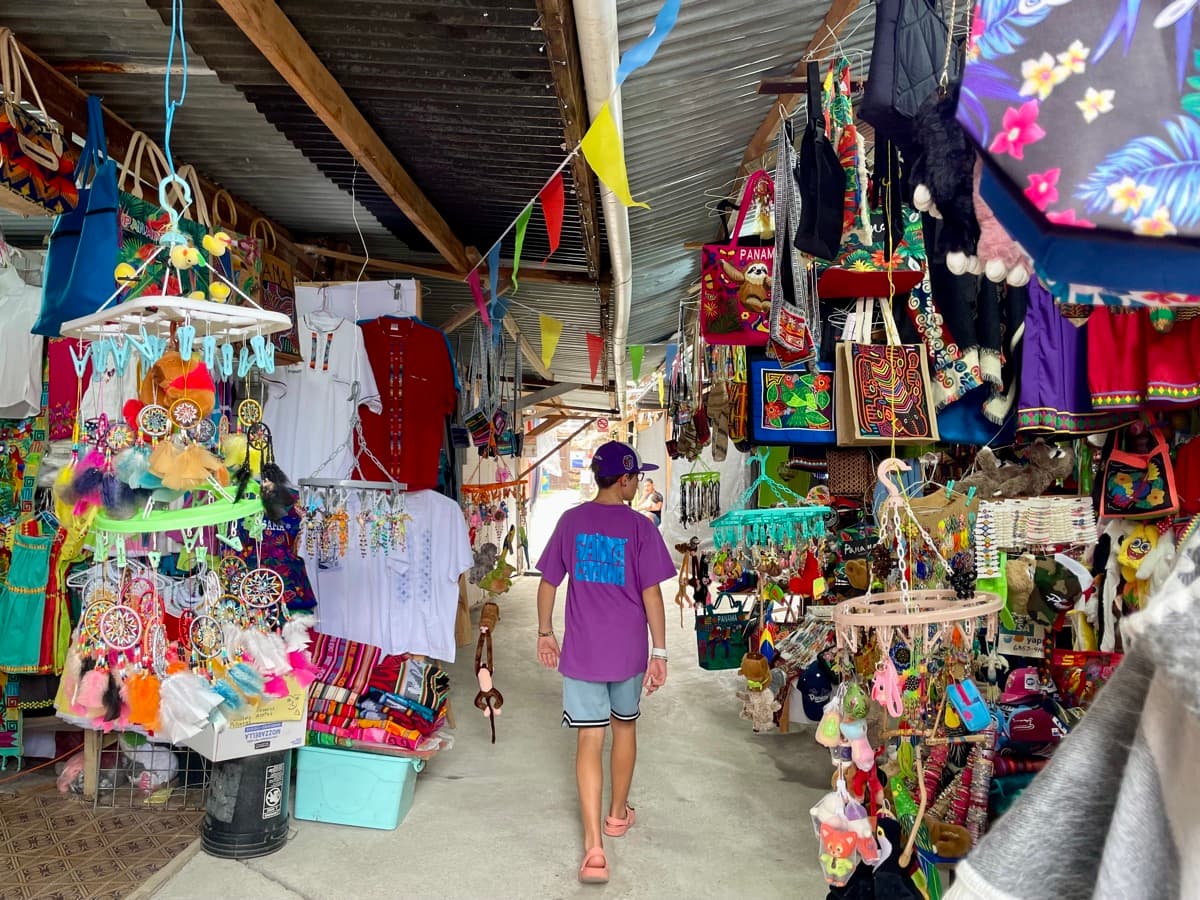
The problem wasn’t discipline. The problem was that the best learning kept happening outside the plan. We’d be at a market and my daughter would want to calculate the exchange rate on every item. Or we’d pass a construction site and my son would want to understand how concrete sets. And I’d either have to pull them away to stick to the schedule or let them follow it. I kept choosing the schedule. And it kept feeling wrong.
Every time I pulled them away from something real to do something I’d planned, I was interrupting actual learning to do pretend learning. Once I saw that, I couldn’t unsee it.
What we have instead: a rhythm
We don’t have a schedule, but we’re not totally chaotic either. We have a loose rhythm that shapes our days, and it just flexes depending on where we are, what’s happening, and what the kids are into.
Morning: slow start
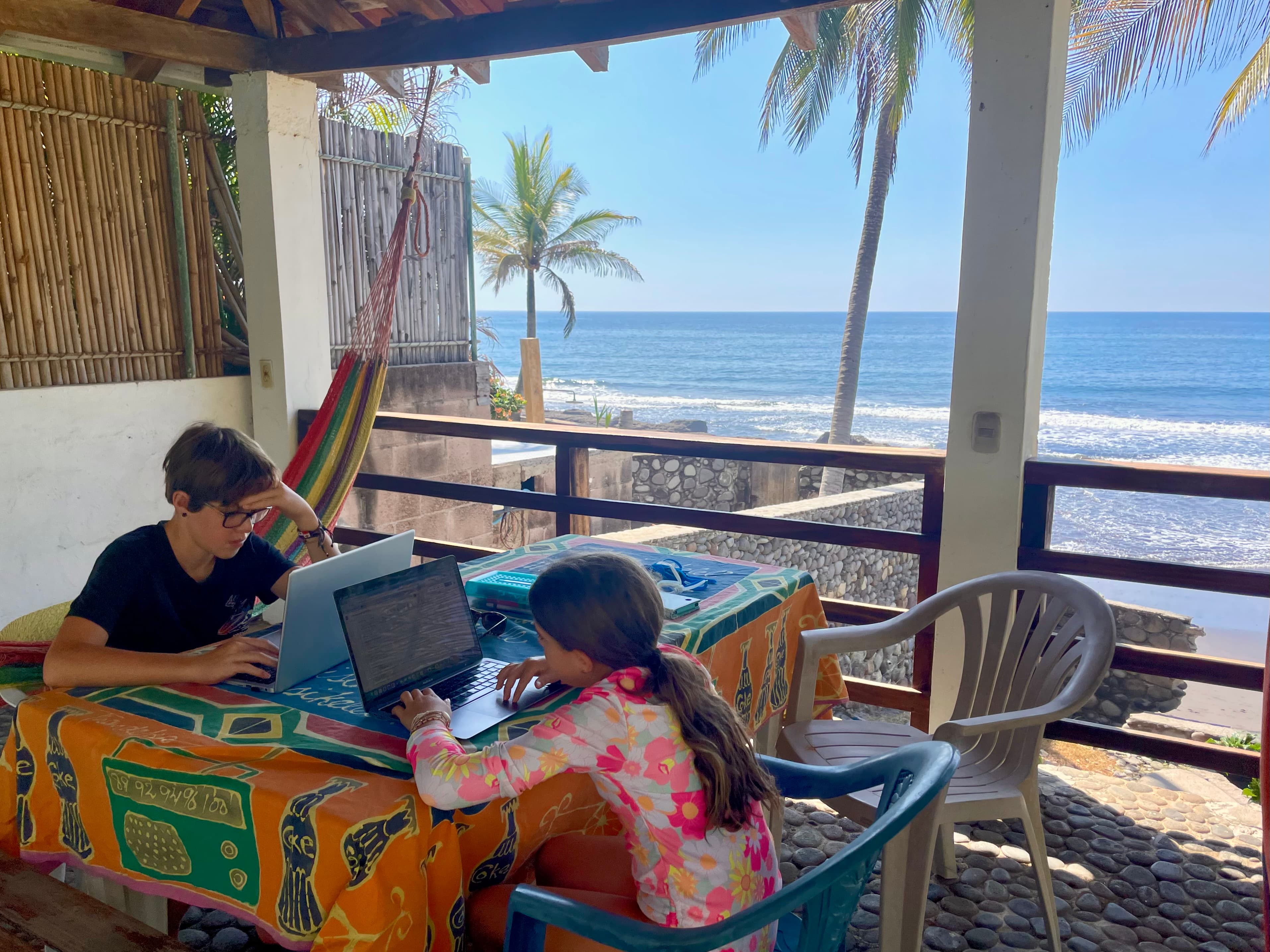
No alarm. The kids wake up when their bodies are rested, we had AC, so it’s not the heat pushing them out of bed. I’m usually up around 6 for a run, then a cold shower and some quiet time in my hammock before they’re up. When they wake up, we eat breakfast at home, they do the dishes, and then it’s reading, writing, and math. Nothing rigid, just the things we do every morning before we go anywhere.
After lunch: Spanish and the afternoon
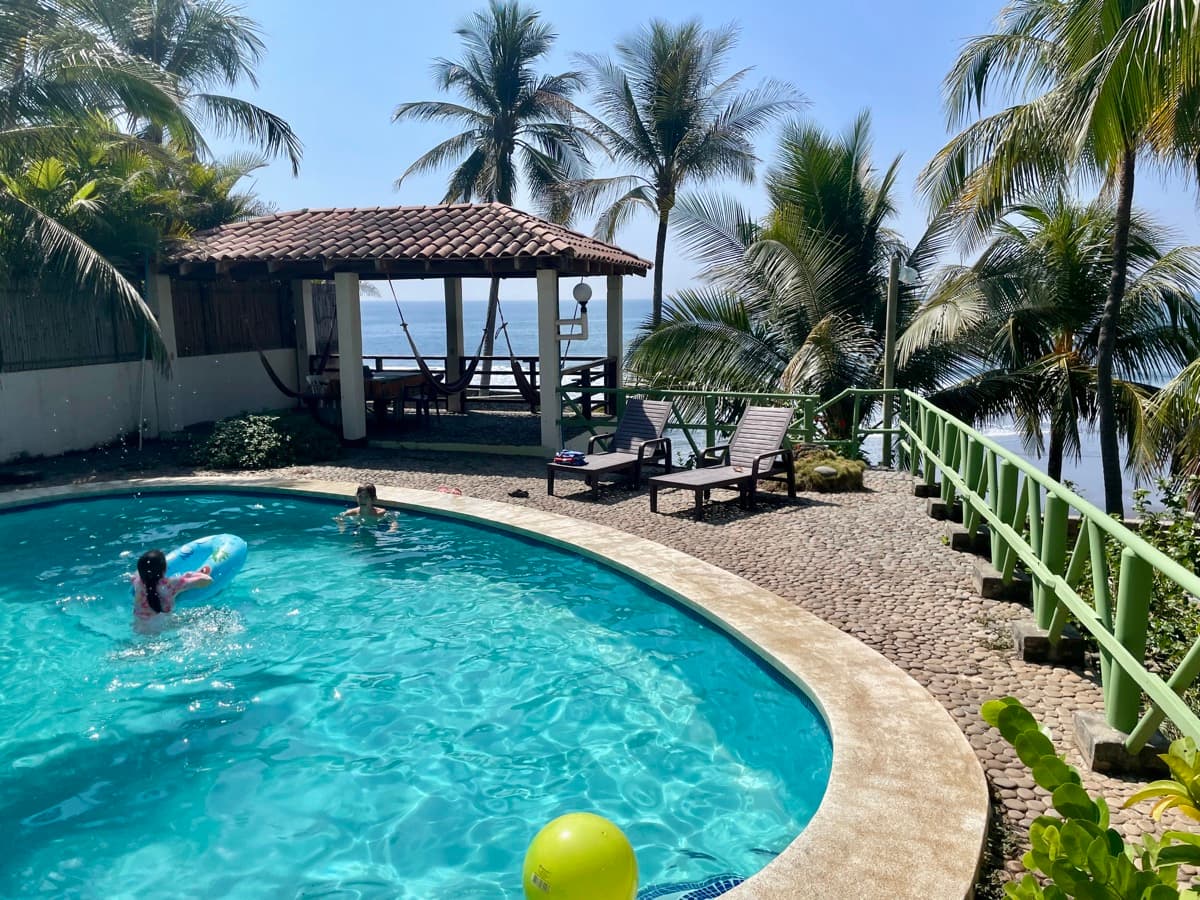
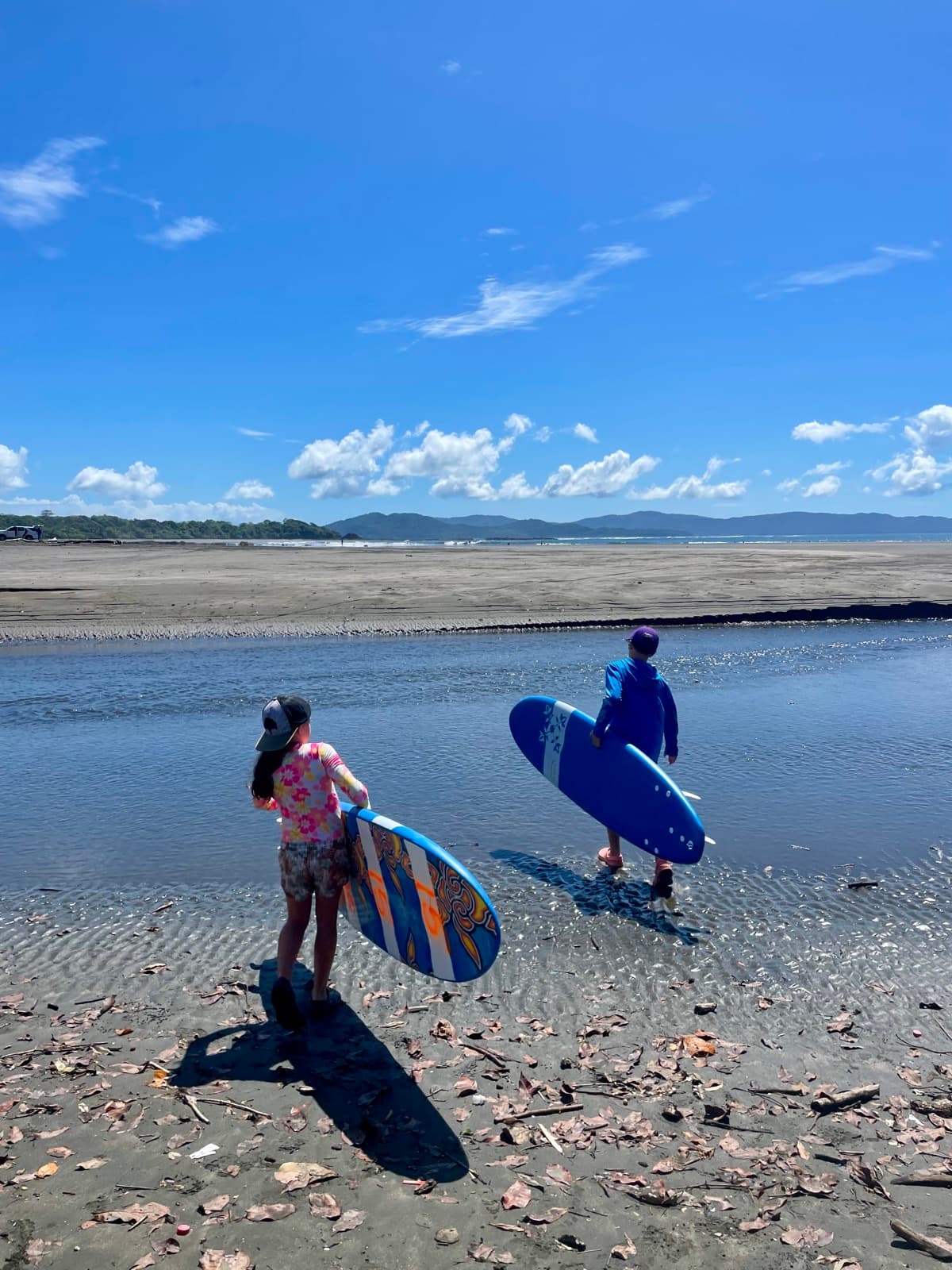
After lunch, the kids have their Spanish lesson. Once that’s done, the afternoon is theirs. Beach or pool time, surfing, walking around town, exploring a neighbourhood we haven’t been to yet. Some days we go to a market, a museum, or a hike. Some days they just hang out.
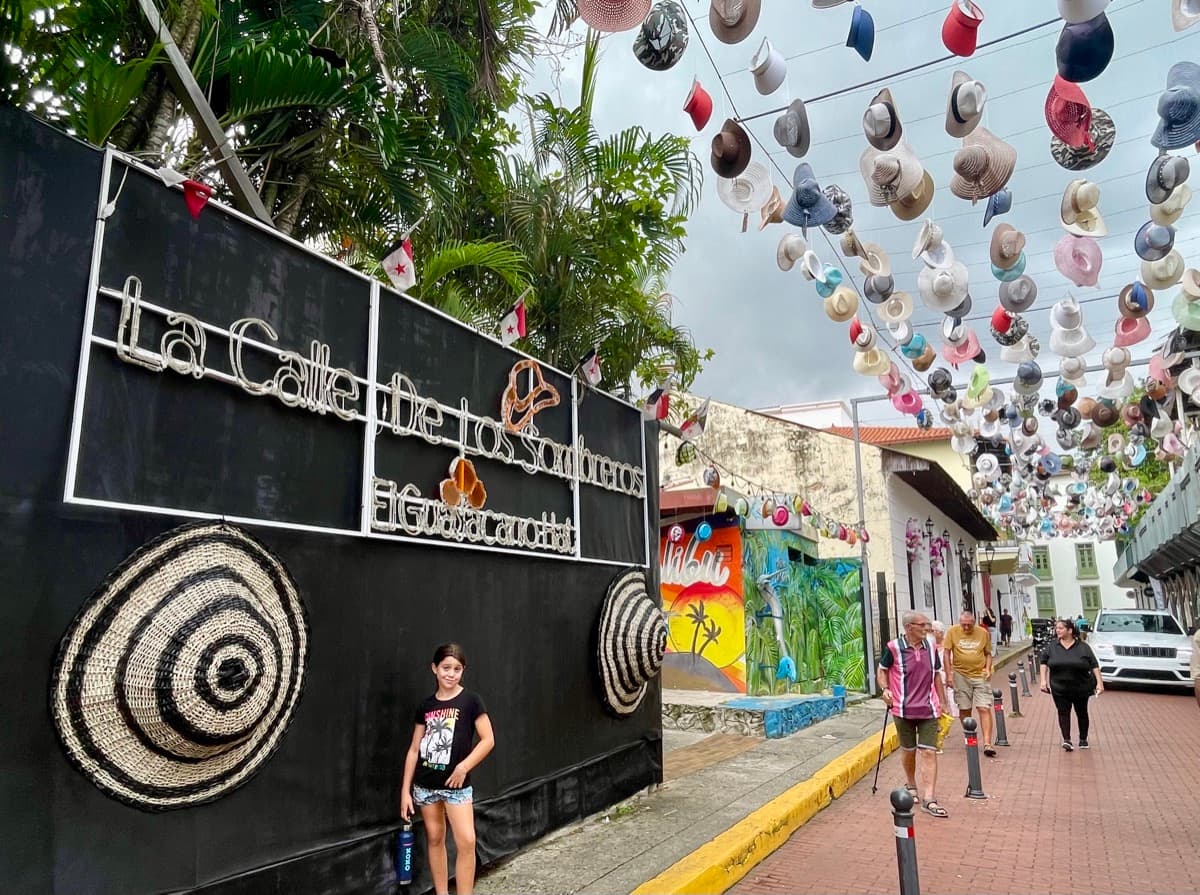
The learning isn’t planned, but it’s not random either. I’m always looking for moments. A menu in another language is a reading lesson. A street vendor making change is maths. A conversation about local history is, well, history. I don’t always point these out, sometimes I do, sometimes I just let it happen. (For a deeper look at this in one specific place, here’s what a month of worldschooling in El Salvador looked like.)
Evening: together time
We cook most of our meals at home, and dinner is usually our best conversation of the day. We talk about what we saw, what was weird, what was cool, what we want to do tomorrow. The kids help cook and do the dishes, and that’s non-negotiable. Sometimes we read aloud after. Sometimes we play a game. Sometimes we just eat and are tired and that’s fine too.
The best learning days are the ones that don’t feel like learning days. They just feel like good days.
A real day, unfiltered
Here’s what last Tuesday actually looked like. Not a highlight reel, just a regular day in El Zonte.
- 1I was up at 6 for a run, then a cold shower and some time in the hammock with my coffee. The kids woke up on their own around 8.
- 2Breakfast at home. Kids did the dishes. Then reading, writing, and a bit of math, just the morning rhythm we’ve settled into.
- 3Lunch at home. After lunch, Spanish lesson.
- 4Beach time. The kids went surfing, then walked to the tienda and practised ordering snacks in Spanish.
- 5Walked to a part of town we hadn’t explored yet. Found a mural, tried a fruit from a vendor that none of us could name.
- 6Cooked dinner together at home. Kids helped chop and did the dishes after. Talked about our favourite part of the day. Read before bed.
Was it "enough"? I used to worry about that constantly. Now I look at that day and see: language practice, physical activity, independence, maths, writing, exploring, cooking. None of it from a textbook.
But what about the "real" subjects?
I’m not going to pretend we never do anything structured. We do. The kids take Spanish lessons. They work through maths on their own. They read every day, though what they read is entirely their choice. And writing? They write for a real audience about things they actually care about, that beats a grammar worksheet every time. When we can lean into something real, visiting the San Salvador library, volunteering at a turtle conservation project, exploring a local market, we do.
But these structured bits aren’t the core of our education. They’re supplements. The core is living in the world and learning from it directly.
The "what about socialisation" thing
I’ll keep this short because it comes up every time. Our kids talk to adults, other travellers, local kids who don’t speak their language, shopkeepers, guides, other families. It’s different from a school environment, not necessarily better. Just different kinds of social experience.
That doesn’t mean it’s always easy. Making friends on the road is hard sometimes. Leaving friends behind is harder. There are tradeoffs. But they’re learning to adapt, to be comfortable with strangers, to communicate across cultures, and those are skills we’re glad they’re building.
What I’d tell someone just starting out
- Throw away the schedule. Or at least hold it very loosely. A rhythm is better than a routine.
- Trust the slow days. Not every day needs a field trip or a big experience. Some days are quiet. That’s when the processing happens.
- Stop counting hours. If you’re tracking "school hours" you’re still thinking in school terms. Learning doesn’t punch a clock.
- Follow their lead more than you think you should. The things they choose to explore will stick longer than anything you assign.
- Write things down, for yourself, not for anyone else. I keep a simple journal of what we did and what came up. Not as proof of learning. Just because it helps me see how much is actually happening on the days that feel like "nothing."
- Forgive yourself for the messy days. Some days nobody learns anything notable and everyone argues and the whole thing feels like a mistake. Those days are part of it. They pass.
The point isn’t the structure
People want to know our schedule because they want permission to do it differently. So here it is: you have permission. There is no right way to structure a worldschool day. There’s your way, and it’ll look different from mine, and that’s the whole point.
The best education I can give my kids isn’t a perfect plan. It’s the confidence to figure things out without one. For the practical side of making this work on the road, see our notes on how to homeschool while traveling without losing your mind.
Want this as a free printable? Grab the 22 Travel & Worldschool Activities for Kids, free to read, and the printable version lands in your inbox.