Before we left for our seven-month trip, my son and daughter were textbook siblings. They loved each other somewhere underneath, but most days it looked like eye-rolling, door-slamming, and "she’s looking at me" from the back seat. Normal stuff. Age-gap stuff. They had their own friends, their own screens, their own corners of the house. They coexisted more than they connected.
I didn’t expect travel to fix that. I wasn’t even thinking about their relationship when we planned the trip. But seven months later, something had shifted, quietly, without any grand intervention. They were choosing each other. Not because they had to. Because they wanted to. (For the bigger picture on what this trip looked like as a family of four, see how we worldschool with two kids.)
When your sibling is the only constant
At home, kids have their school friends, their neighbourhood friends, their activity friends. There’s always someone else to hang out with. On the road, that changes. Your sibling is the one person who’s always there, at every new rental, every new beach, every new country.
At first, this felt like a risk. I worried they’d get sick of each other. That being forced together would make things worse. The first few weeks had some rough patches, a lot of bickering in close quarters, fights over who got the better bed in our rental, the usual.
But then something shifted. They stopped waiting for someone else to show up and started turning to each other. My son would ask his sister if she wanted to walk to the tienda. My daughter would sit next to her brother on the couch and watch him edit a video without being asked. Small things. But they added up.
Shared experiences do what lectures can’t
No amount of "be nice to your sister" ever worked. What worked was hiking a volcano together and being equally terrified of the steep descent. What worked was both of them wiping out on surfboards and laughing about it after. What worked was getting lost in a town where neither of them spoke the language and figuring it out together.
Shared experiences, especially ones that are a little hard, a little scary, a little outside their comfort zone, create a bond that ordinary daily life just doesn’t. They have inside jokes now from things that happened in Costa Rica. They reference moments from Panama that nobody else in the world was part of. That’s theirs.
They stopped being kids who happened to live together and became people who’d been through something together. That’s different.
The age gap stopped mattering
At home, three years between kids feels enormous. A 12-year-old and a 9-year-old want completely different things. Different music, different shows, different energy levels. At school, they’d never even cross paths.
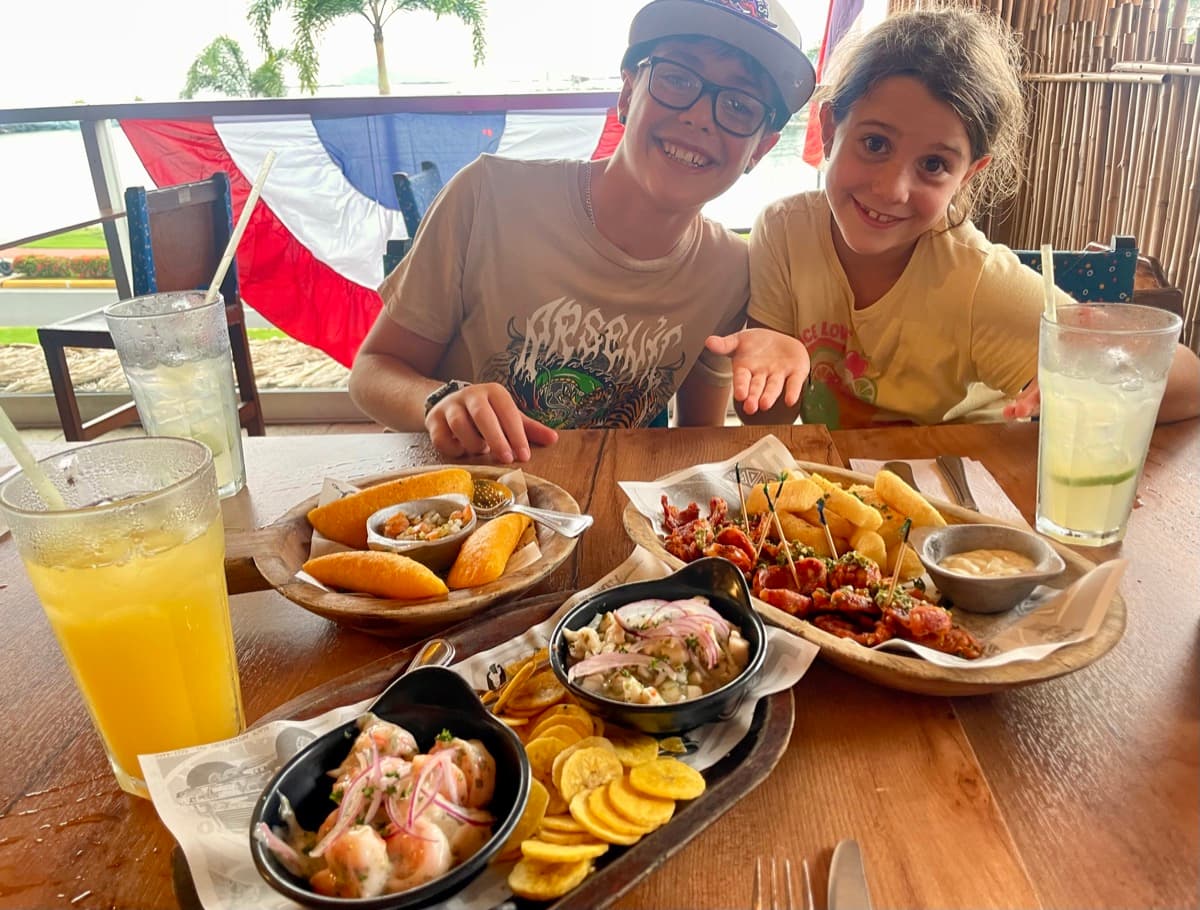
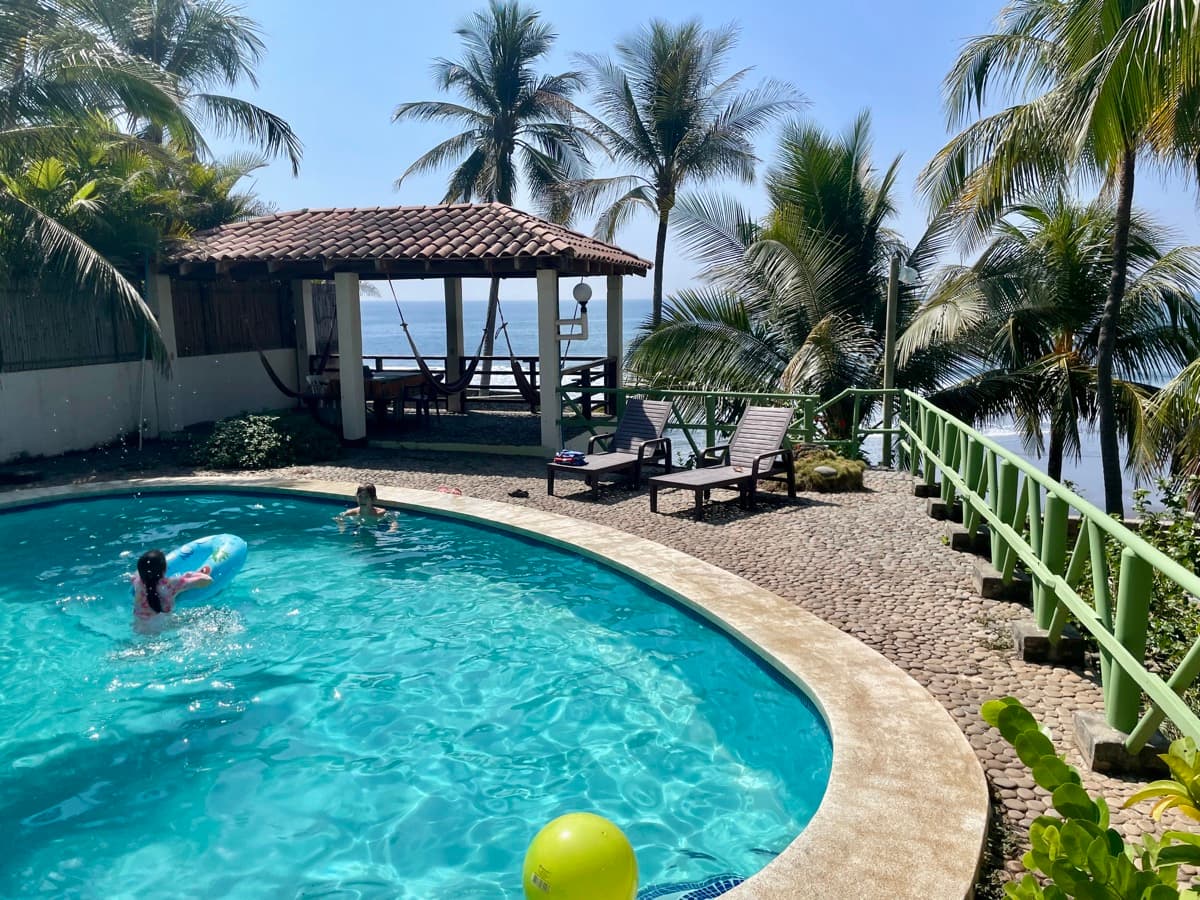
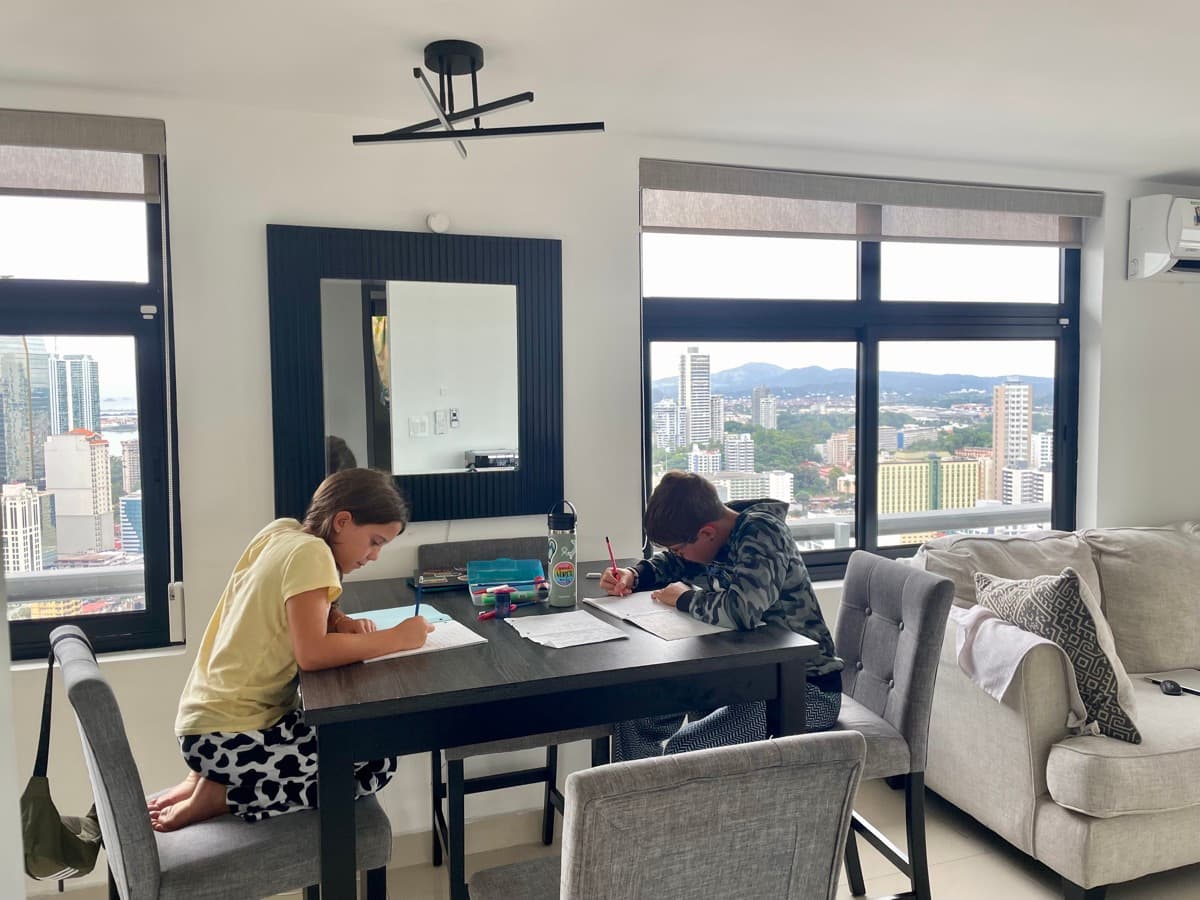
On the road, the age gap dissolved. They’d spend a whole afternoon at the pool together. They’d both get excited about the same street dog. They collaborated on videos for our travel blog. My son editing in iMovie while my daughter directed the next shot. They found a rhythm that had nothing to do with age and everything to do with proximity and shared purpose.
I think school creates artificial age separation. Kids only interact with kids born the same year. Travel blows that up. My kids had to navigate the world together, regardless of age, and it turned out they were a pretty good team. (Our worldschooling guide explains why this kind of mixed-age, real-world learning environment tends to work for families.)
The hard parts made it stronger
I’m not going to pretend it was seven months of hand-holding and harmony. They fought. Sometimes badly. There were days when I seriously questioned everything, stuck in a small rental with two kids who couldn’t stand the sight of each other.
But here’s the thing: they couldn’t escape to their separate friend groups after a fight. They had to work it out. They had to sit with the discomfort and figure out how to move past it. At home, a fight means retreating to separate rooms and separate screens until everyone forgets about it. On the road, there’s no separate room. There’s no distraction. There’s just: we’re still here, and we still need each other.
That forced resolution taught them more about conflict, empathy, and forgiveness than any parenting strategy I’ve ever tried.

In the Membership
The Conflict Fix
Conflict resolution for kids ages 6-14: a real script for fights with siblings and friends. Cool down, speak it, fix it.
What it looks like now
The moments that get me aren’t the big ones. It’s the small stuff:
- My son saving a seat for his sister without being asked
- My daughter asking her brother to teach her something on the laptop
- The two of them walking ahead of us in town, deep in conversation about something we’re not part of
- My son defending his sister to another kid at the beach, immediately, without thinking
- My daughter bringing her brother a snack from the tienda because she "thought he’d want one"
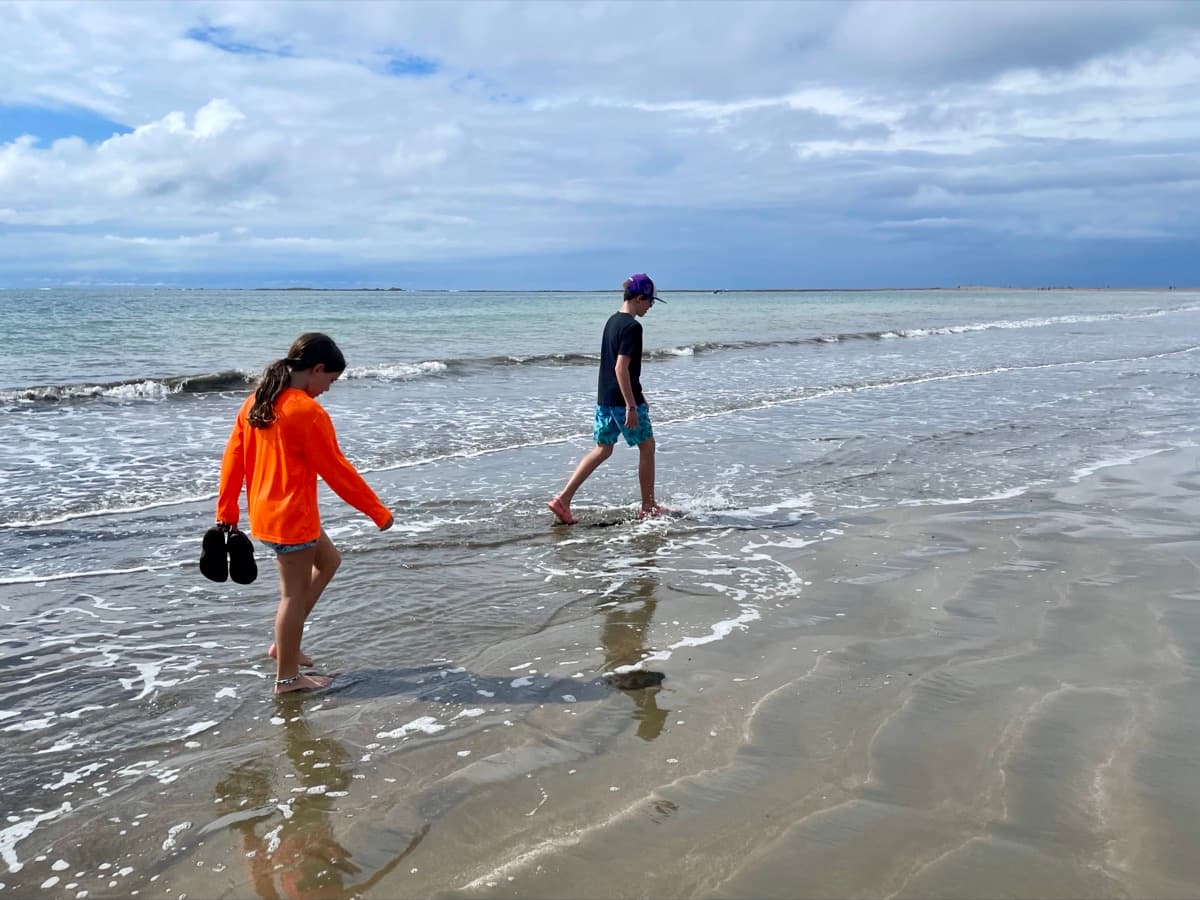
None of this happened before the trip. Not like this. They were fine siblings before. Now they’re actual friends.
What helped (and what didn’t)
Things that helped their bond:
- Giving them shared projects: like writing posts on our Google Sites travel blog and editing videos together
- Letting them figure things out without jumping in: ordering food in Spanish, navigating to the store, solving a problem with a broken boogie board
- Staying in places long enough that they built routines together, not just tourist memories
- Not forcing togetherness: they each had alone time and it made their together time better
- Treating them as a team, not as individuals competing for attention
What didn’t help: telling them to get along, comparing them to each other, or expecting the bond to happen on my timeline. It happened on theirs.
You don’t need seven months
I know not every family can take a seven-month trip. But the principle isn’t about the length; it’s about removing the alternatives. When kids don’t have other friends available, other screens to retreat to, other activities pulling them apart, they find each other. A two-week trip with one sibling and no WiFi can do more for their relationship than a year of scheduled playdates.
The gift of travel isn’t just what your kids learn about the world. It’s what they learn about each other. And that’s the part I didn’t expect and will never forget. (For more on what our days actually looked like, here’s how we structure our worldschool day.)
Want this as a free printable? Grab the 22 Travel & Worldschool Activities for Kids, free to read, and the printable version lands in your inbox.