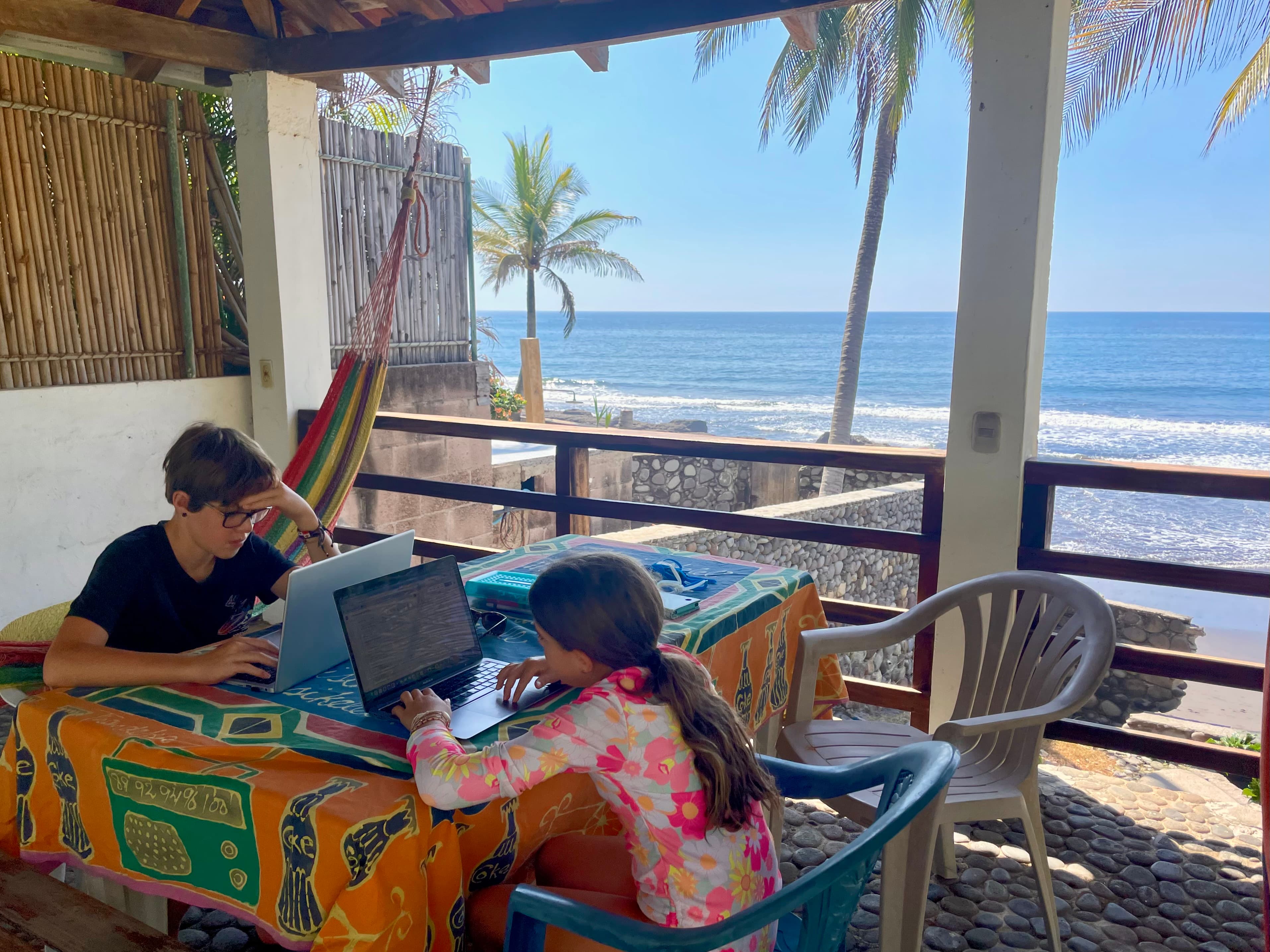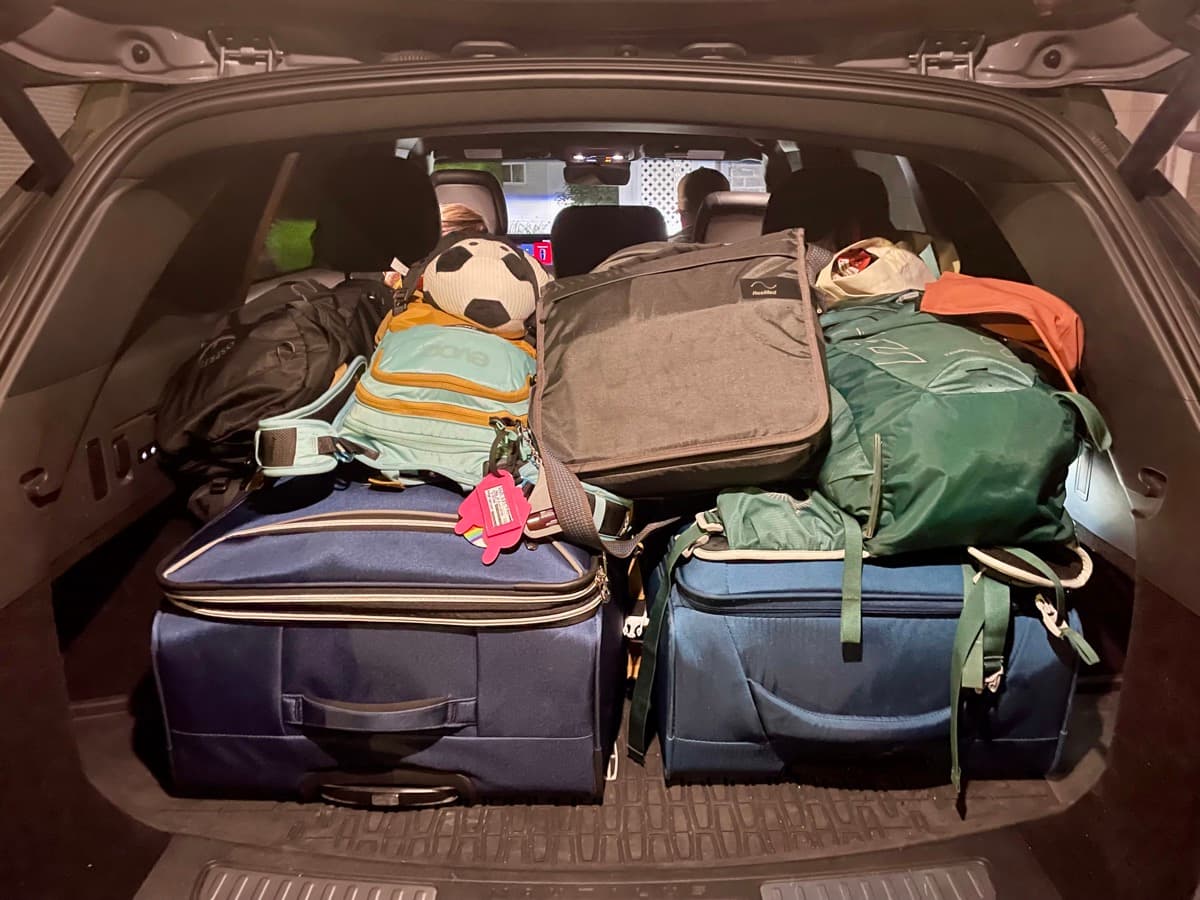
Before we left Florida last September, I put together two binders, one for each kid. Each one had a math workbook, a grammar workbook, and a writing booklet. Two pencil cases: one with pencils, erasers, scissors, the basics, and the other with markers. A stack of extra white sheets, a laminated world map, and their e-readers. Zach had his laptop, Julia had her iPad, and when she needed a real keyboard, she’d borrow mine.
That felt reasonable at the time. Seven months and four countries later? If I packed again tomorrow, the binders wouldn’t make the cut. Not even close.
If you’re planning a worldschooling trip with your kids, whether it’s three weeks or a full year, this is the honest version. What we actually brought, what earned its place, and what I’d do differently.
The learning gear that actually came with us
We started with two binders full of workbooks and writing booklets. The kids used them for a while, but as the weeks went on, we reached for them less and less. The real world was offering so much more than a grammar page ever could. By the end, we’d barely touched them.
Both kids write posts on our Google Sites travel blog and edit their own videos with iMovie. Zach (12) does longer write-ups and more detailed edits. Julia (9) makes shorter, punchier videos with her own style. So the non-negotiables were:
- A laptop for Zach (for blogging, video editing, and research)
- An iPad for Julia (and she’d borrow my laptop when she needed a real keyboard)
- Two e-readers, these were worth their weight in gold. No heavy books to carry, and the kids read constantly.
- Two pencil cases: one with pencils, erasers, scissors, the basics, and the other with markers
- Extra white sheets (we’ve restocked this twice, poster-making is serious business)
- A laminated world map that lived on whatever kitchen table we had
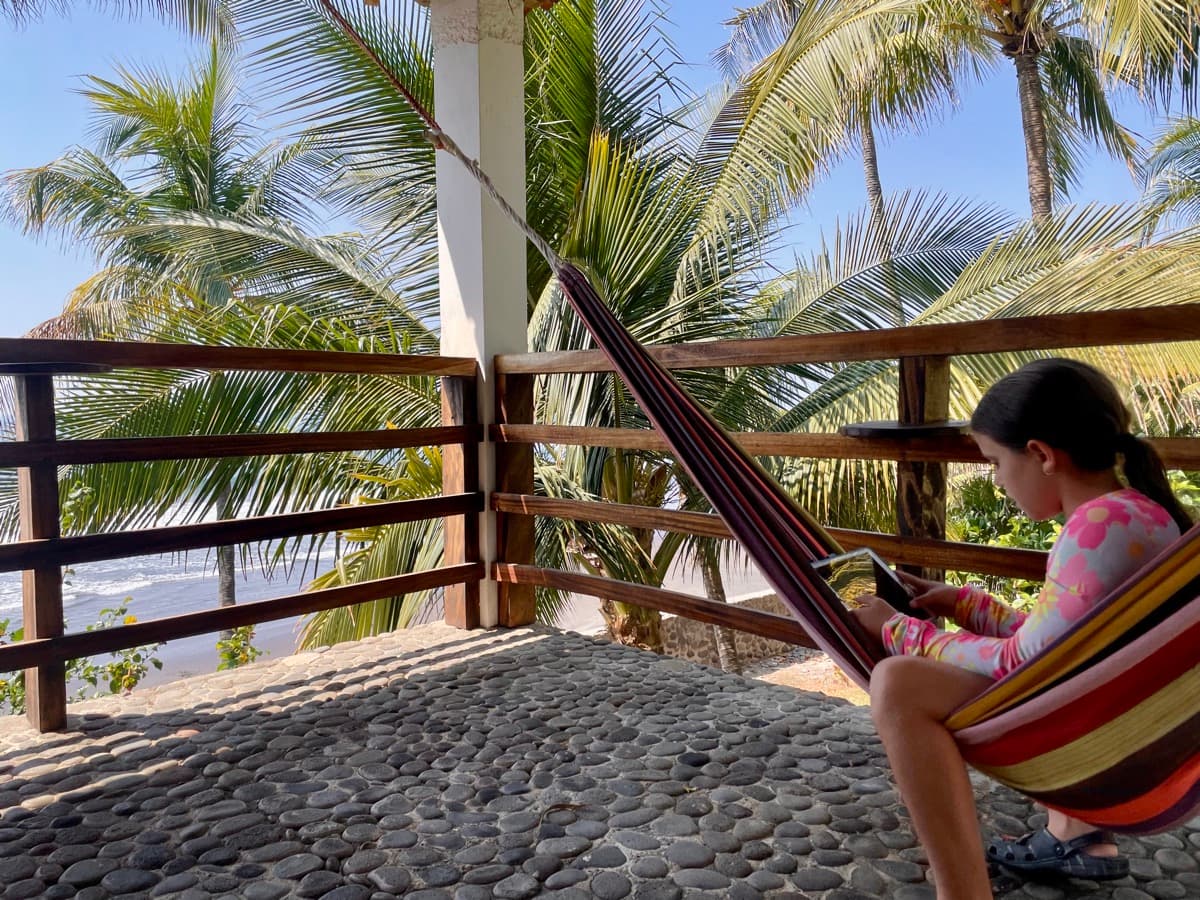
If I packed again? I’d skip the binders entirely. Just something to write in, a few pencils and pens, their e-readers, and their devices. That’s it. You can buy pretty much anything you need on the go.
Each kid having their own device was the right call for us. Zach uses his laptop for blogging and video editing, Julia uses her iPad for the same plus reading and research. When she needs a real keyboard, she borrows mine. If your budget is tight, one shared device plus an e-reader can work, but start with what you have and adjust.
Tech and practical gear
Beyond the learning stuff, here’s what’s been genuinely useful:
- Insulated metal water bottles: one for each person. This is a must. In tropical heat, a regular bottle turns lukewarm in twenty minutes. Ours keep water cold for hours and we use them every single day, everywhere we go.
- A portable power bank, buses in Central America don’t always have outlets, and a dead device mid-journey is rough
- A small Bluetooth speaker for audiobooks and music during downtime
- Waterproof phone pouch: essential for waterfall hikes and beach days
- Headlamp for each person: power outages happen, and they’re great for evening hikes
- Dry bags: we use these constantly for hikes near water and boat trips
Clothing: the less-is-more philosophy
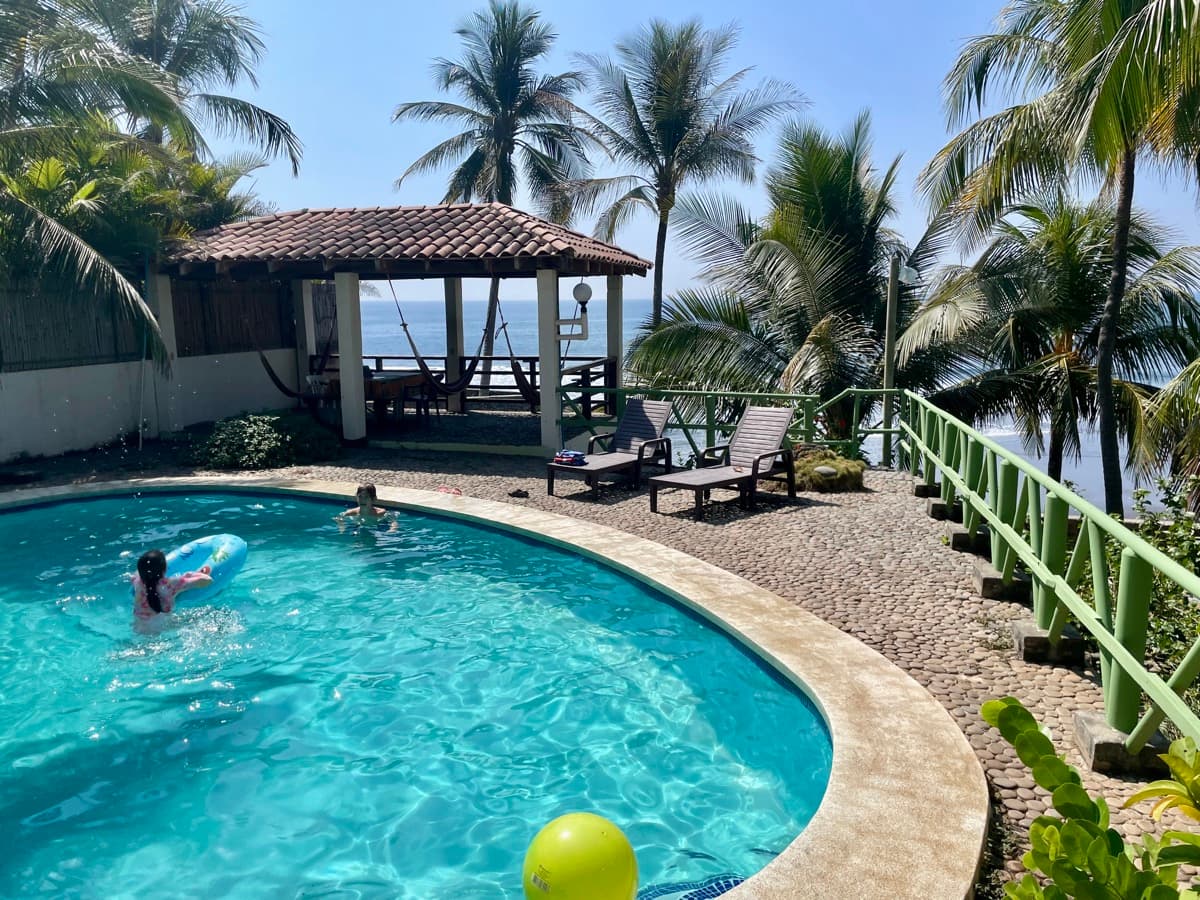
We traveled through Florida humidity, the cool mountain air in Boquete, steamy Pacific coast towns in Costa Rica, and the year-round heat of El Salvador’s surf coast. That sounds like it requires a huge wardrobe. It really doesn’t.
Each person had about four days’ worth of clothes: t-shirts and shorts, two bathing suits, one hoodie, and one pair of long hiking pants. No jackets, even when it rained, it was too hot for a rain jacket. For shoes: good hiking shoes, crocs (which we wore about 80% of the time), and water shoes for waterfall hikes. That’s it. We do laundry every few days, hand wash or a local lavanderia, and it’s fine.
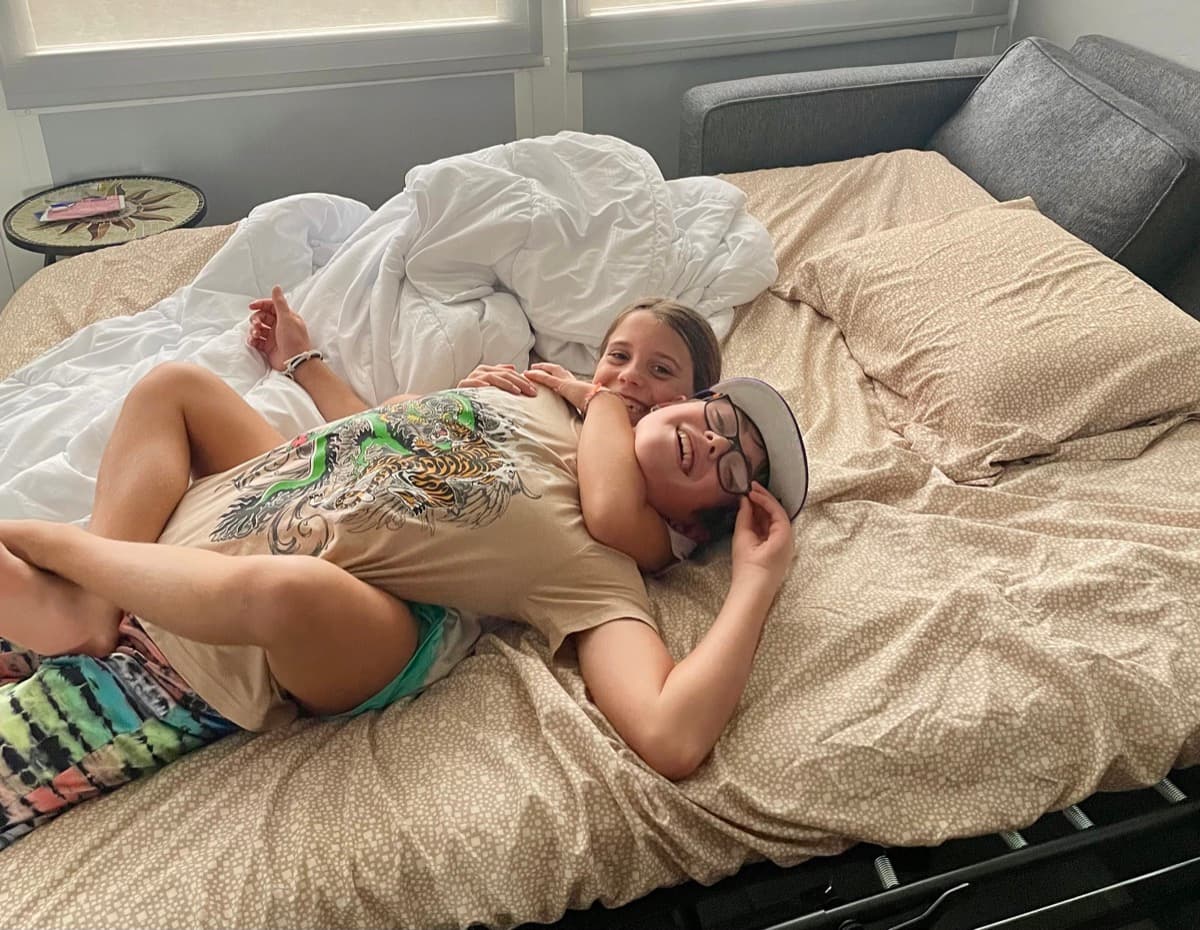
The hoodie was the surprise MVP. Boquete gets cool at night, buses blast air conditioning like it’s a competition, and even beach towns get breezy after sunset. I almost left the hoodies behind because I thought, “we’re going to the tropics.” Thank goodness I didn’t.
The best learning gear we packed wasn’t in our bags at all. It was the willingness to say yes to whatever showed up, a volcano hike, a pupusa-making class, a conversation in broken Spanish at a corner shop.
Activity-specific gear: what we brought vs. what we rented
Zach has gotten really into surfing. We started renting boards in Panama, and he’s still surfing almost daily here in El Salvador. We’ve rented every single time, and it’s been the right call. Boards are cheap to rent in surf towns, and traveling with a surfboard and two kids sounds like a punishment.
We did bring our own masks and snorkels, but honestly, we wouldn’t next time. They take up space and you can rent them anywhere you’d actually need them. The only activity-specific things we actually carry are:
- Good water shoes (for rocky waterfalls and river hikes; we’ve done a lot of these)
- A compact daypack for each person (the kids carry their own water and snacks on hikes now, which is a life skill in itself)
- Rash guards for sun protection in the water
- Zach’s basketball, yes, we travel with a basketball. He finds courts everywhere. Panama City, small towns in Costa Rica, the park in El Zonte. It’s heavy and awkward to pack, and it’s worth it.
Julia’s thing is building at the beach, sand animals, castles, elaborate villages with moats. Her gear is whatever beach she’s standing on. Zero packing required.
What we ditched along the way
This is the part I wish someone had told me before we left. Here’s what got donated, left behind, or mailed home within the first two months:
- Workbooks: I packed two binders with math, grammar, and writing booklets. The kids used them at first, but less and less as the months went on. The real world was teaching everything those pages were trying to cover, and more naturally. Next time: no workbooks at all.
- Extra shoes: I packed dress shoes for myself “just in case.” I wore crocs and hiking shoes for seven months straight. The dress shoes never left the bag.
- A bulky first aid kit, we pared it down to basics and bought anything else locally when needed.
- Fancy rain gear: we packed proper rain pants. Nobody wore them. When it rains in the tropics, it’s too hot for rain gear anyway. You just get wet and dry off.
- Masks and snorkels: we brought our own, but they just take up space. You can rent them anywhere you’d actually use them. Not worth the bag real estate.
What we wish we’d brought
- More ziplock bags in various sizes, for wet swimsuits, sandy shoes, snacks, organizing small items.
- A packable cooler bag, we cook most of our meals at home and bringing cold stuff back from the market in tropical heat is a race against time.
- A small clothesline with clips, not every place has a good spot to hang laundry.
Pack a small roll of duct tape. We’ve used it to fix a backpack strap, patch a hole in a mosquito net, and seal a leaky water bottle lid. It’s the most useful thing in our bag by weight.
The bigger point about packing for worldschooling
When I was planning this trip, I thought packing for worldschooling meant packing for school and for travel. Two separate things crammed into one set of luggage. But that’s not how it works in practice.
The learning and the travel aren’t separate. Zach practiced fractions figuring out tip percentages at restaurants in Costa Rica. Julia learned about marine ecosystems by actually seeing tide pools, not reading about them. Both kids are picking up Spanish here in El Salvador by ordering their own food and chatting with the neighbors, no flashcards required.
The point is: you don’t need to pack a classroom. You need a device for creating, some paper and pens for the analog moments, and the willingness to let the world be the curriculum. Everything else, you figure out as you go. Wherever you are, there’s always a shop nearby where you can buy what you need, markers, notebooks, sunscreen, whatever. Don’t overpack out of fear. You’re not heading into the wilderness. You’re heading into a place where people live.
Want this as a free printable? Grab the 22 Travel & Worldschool Activities for Kids, free to read, and the printable version lands in your inbox.