- 1Observe (10 ways to look harder)
- 2Collect (5 ways to bring it home)
- 3Experiment (5 ways to test something)
- 4Create and document (4 ways to make something from the walk)
- 5Slow down (5 ways to use the walk for something other than science)
- 6What to bring (almost nothing)
- 7What about bad weather?
- 8Frequently asked questions
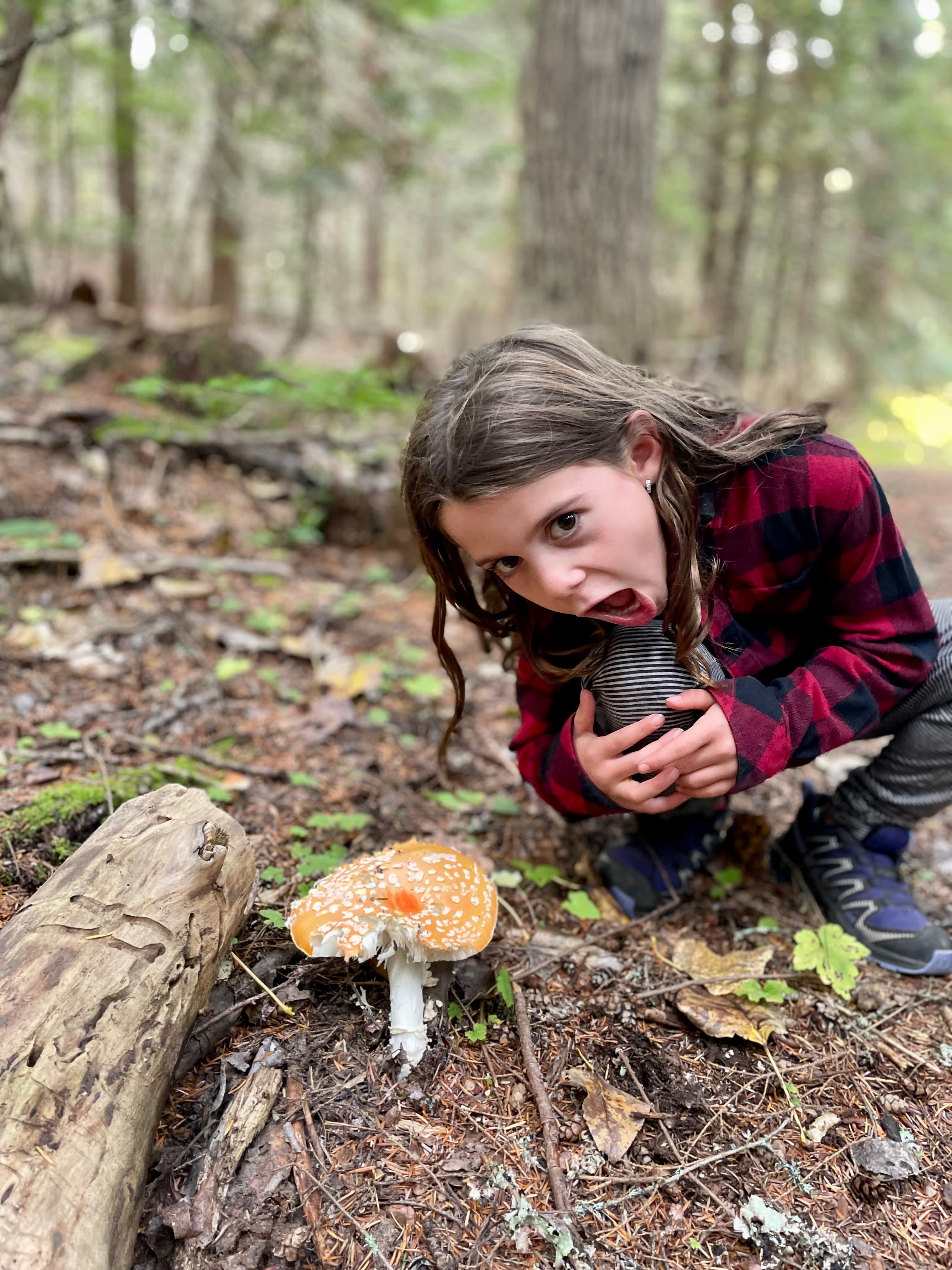
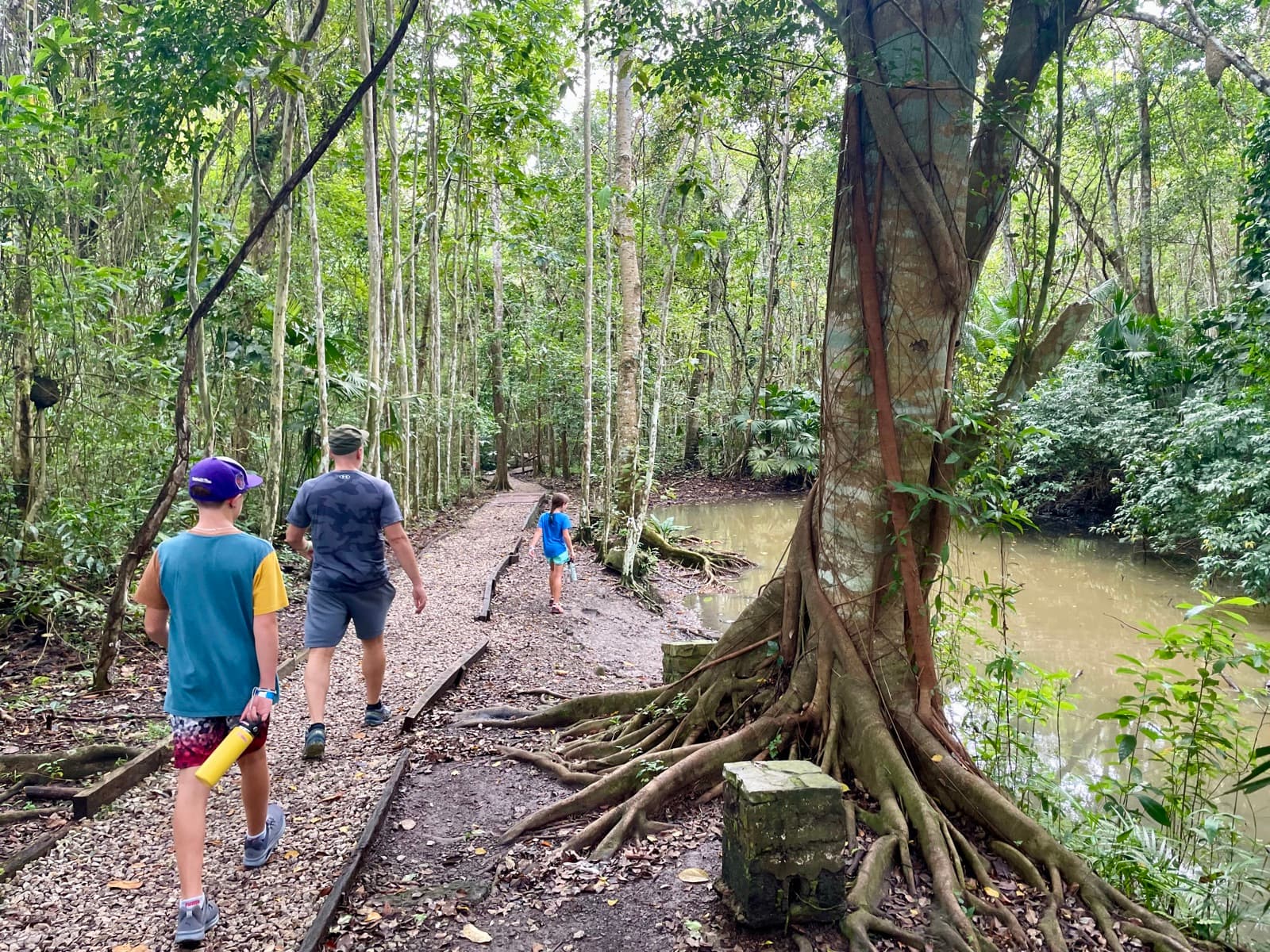
In Costa Rica, the kids spotted a crocodile on a trail in Corcovado. In El Salvador, we walked the beach and noticed the cliffs were crumbling, erosion, right there in front of us. In Panama, my son spent an entire boat ride identifying different species of monkeys. None of this came from a lesson plan. You just need to be outside. Our full guide to nature-based learning covers the bigger framework if you want to lean into this as a way of life.
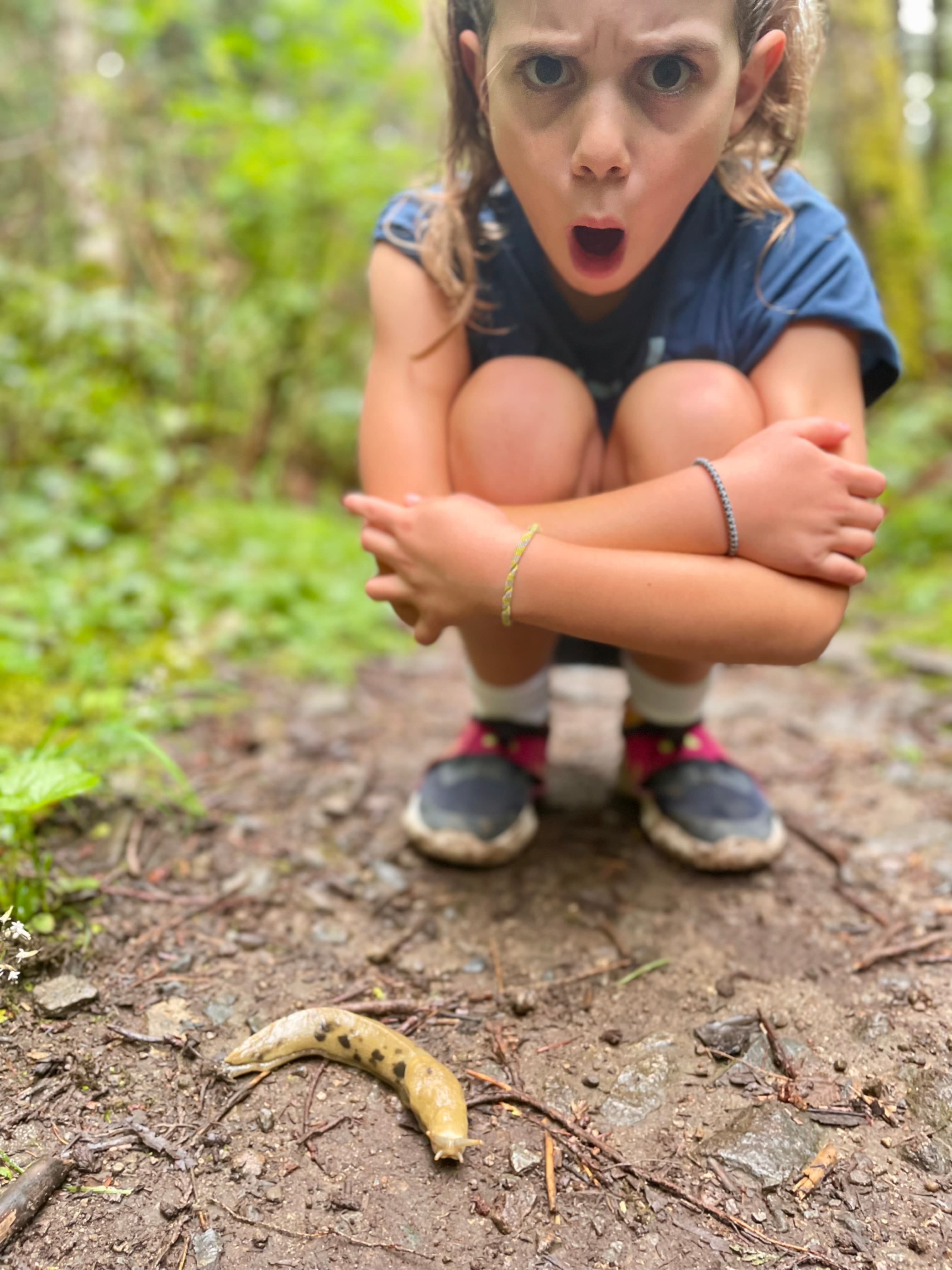
This is what real outdoor learning looks like. Not a fill-in-the-blank worksheet about ecosystems, but a real, living creature that sparks genuine wonder. And it costs nothing.
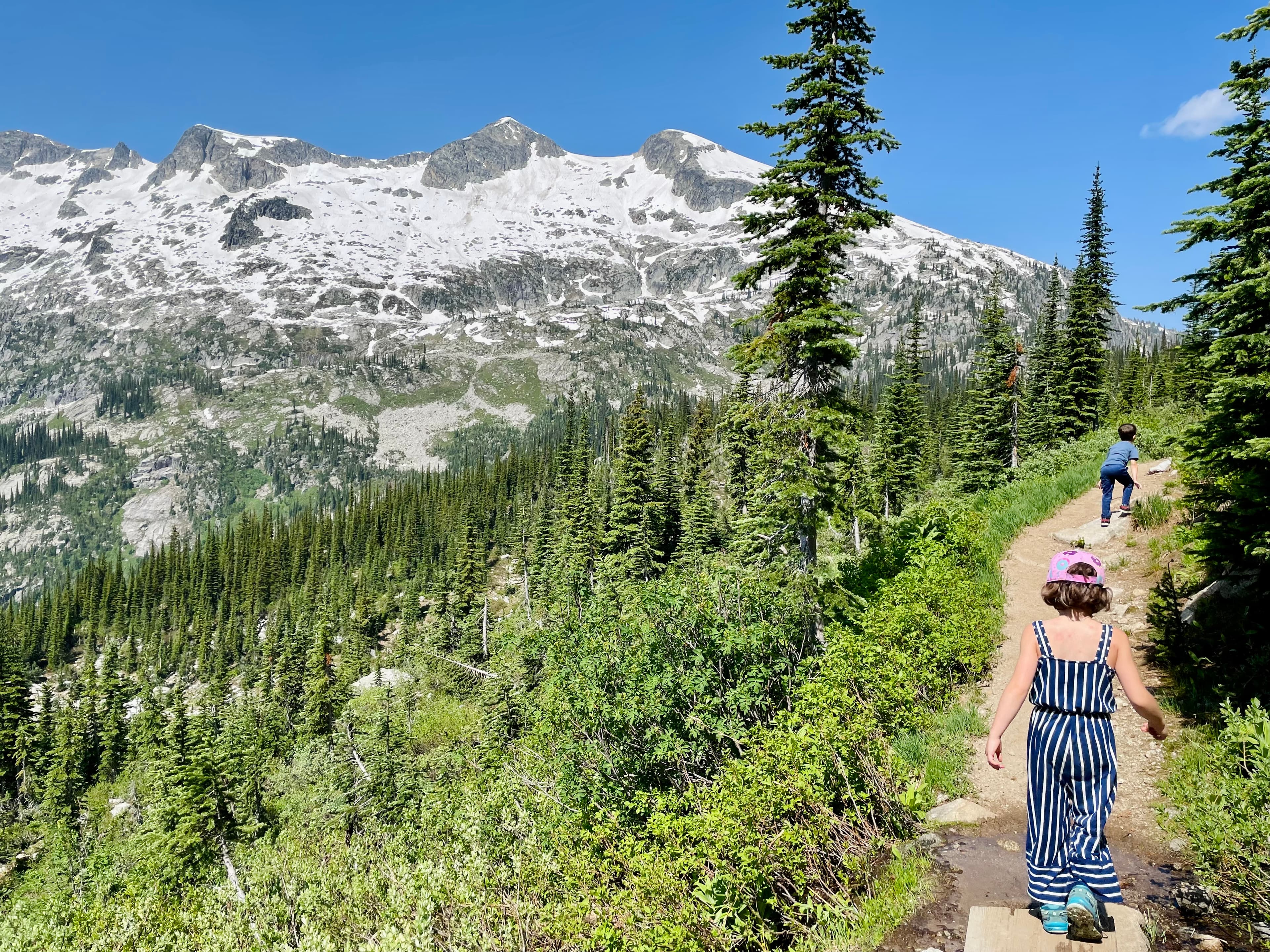
The trick to making walks feel rich is having a deep bench of things to actually DO on them. Below are 30 nature walk activities, organized by mode: observe, collect, experiment, create, document, slow. Pick one or two before you head out. Or print the list and let your kid pick. And when the walk ends in the garden, the backyard science experiments pick up where the walk left off.
Observe (10 ways to look harder)
The skill of observation is the foundation of every science. These activities sharpen what a kid notices on a walk they have done a hundred times.
1. Find five different leaf shapes
Simple, lobed, compound, needle-like, heart-shaped. Compare them. Why might one tree have small leaves and another have huge ones? This is taxonomy without the word.
2. Count bird calls
Stand still for two minutes. How many distinct bird sounds can you count? Try to identify one new one each walk. Apps like Merlin help.
3. Spot patterns in nature
Spirals in shells and pinecones. Symmetry in flowers and butterflies. Branching in rivers and trees. Patterns are everywhere once you start looking.
4. Compare textures
Smooth bark, rough bark, fuzzy leaves, waxy leaves, gritty stones, slippery moss. Touch and describe. Vocabulary expands fast outdoors.
5. Notice what changed since last time
Walk the same route weekly. What is new? What is gone? Which buds opened, which leaves dropped? This is phenology, the study of seasonal change, and it is genuine field science. In autumn it moves fastest; these fall nature activities turn it into twelve things to count and predict.
6. Spot signs of life you cannot see
Nibbled leaves, broken twigs, footprints, droppings, holes in trees. Animals leave evidence everywhere. Reading sign is what trackers and biologists do.
7. Watch a single thing for five minutes
A bird, an ant, a flower, a cloud. Just watch. What does it do? Where does it go? Sustained attention is the rarest skill in modern childhood and the most useful for science.
8. Find three things smaller than a dime
Forces them to slow down and look at the ground. A magnifying glass turns this into a one-hour activity.
9. Find three things bigger than a car
Look up. Trees, hills, clouds, buildings. Scale awareness is part of how kids understand the world.
10. Find five colours of the same colour
Five different greens. Five different browns. Forces visual discrimination and quietly teaches them that "green" is not one thing.
In the Membership
My Nature Journal
Nature journal for kids ages 6-14: guided prompts for sketching, writing, and outdoor observation. Any season, any trail.
Collect (5 ways to bring it home)
Bringing things back gives the walk a tangible product. Just check local rules: most parks ask you to leave living things in place.
11. Build a found-object collection
A small bag, a few rules: no living things, nothing that another animal needs. Bring back what catches the eye. Sort it on the kitchen table.
12. Press flowers and leaves
Two heavy books, a paper towel, two weeks of patience. The result is a small herbarium your kid will keep for years.
13. Make a colour palette from what you find
Tape small finds (petals, bark, leaves, pebbles) to a piece of cardboard in a colour gradient. Instant nature art and a record of where you walked.
14. Photograph instead of taking
Hand them a phone or camera. The constraint of "you can only photograph" forces them to look closer than if they could pocket the find.
15. Collect questions, not things
Carry a small notebook. Write down every question that comes up on the walk. Look up the answers later. Most walks generate 5 to 10 questions.
Experiment (5 ways to test something)
Walks are mobile science labs. These activities turn observation into hypothesis and test.
16. Test what floats
Find a stream or puddle. Drop a leaf, a stick, a pebble, a feather. What floats? What sinks? Why? Density without the word.
17. Race two leaves down a creek
Pick two different leaves. Drop them at the same point. Which gets to the next rock first? Why? Real-time current observation, plus a great game.
18. Time how long water disappears
Pour a small puddle on a hot rock or sidewalk. Time how long it takes to evaporate. Try again on a cool day. The variable changes everything.
19. Build a tiny dam
Find a trickle of water. Use sticks, leaves, and pebbles to redirect it. Hours of engineering. Real understanding of erosion, flow, and water pressure.
20. Test which surfaces hold heat
Touch a sun-warmed rock, a shaded rock, the soil, the bark of a tree. Which is hottest? Why? Bonus if they predict before touching.
21. Drop different objects from the same height
A pinecone, a maple seed, a small stick, a feather. Which lands first? Galileo, in a parking lot.
In the Membership
Nature Walk Task Cards
Nature walk task cards for kids ages 6-14: turn any walk into focused outdoor learning. Low-prep, any trail, any season.
Create and document (4 ways to make something from the walk)
Walks turn into a record when you bring back something to make. These activities extend the walk for hours after you get home.
22. Build a land art piece
Stones, leaves, sticks, petals, arranged in a spiral, a mandala, or a sculpture. Photograph it. Leave it for the next walker. Andy Goldsworthy, but with snacks.
23. Sketch one thing per walk
Not the whole scene, just one thing. A single leaf. One mushroom. The bark of one tree. A nature journal full of one-thing sketches becomes a remarkable record.
24. Make a found-sound recording
A phone voice memo of a stream, wind in trees, birds, footsteps on gravel. Layer them at home into a one-minute audio postcard of the walk.
25. Map the route by hand
Back home, draw the walk from memory. Where did the trail bend? Where was the big tree? Maps from memory build spatial reasoning fast.
Slow down (5 ways to use the walk for something other than science)
Not every walk needs a learning agenda. These five are the ones that quietly do the most for kids who feel overstimulated.
26. Walk in silence
Five minutes, no talking. What do you notice that you would have missed?
27. Walk barefoot on safe ground
Grass, sand, smooth stones, soft moss. Different textures wake up parts of the brain that screens never reach.
28. Climb something safe
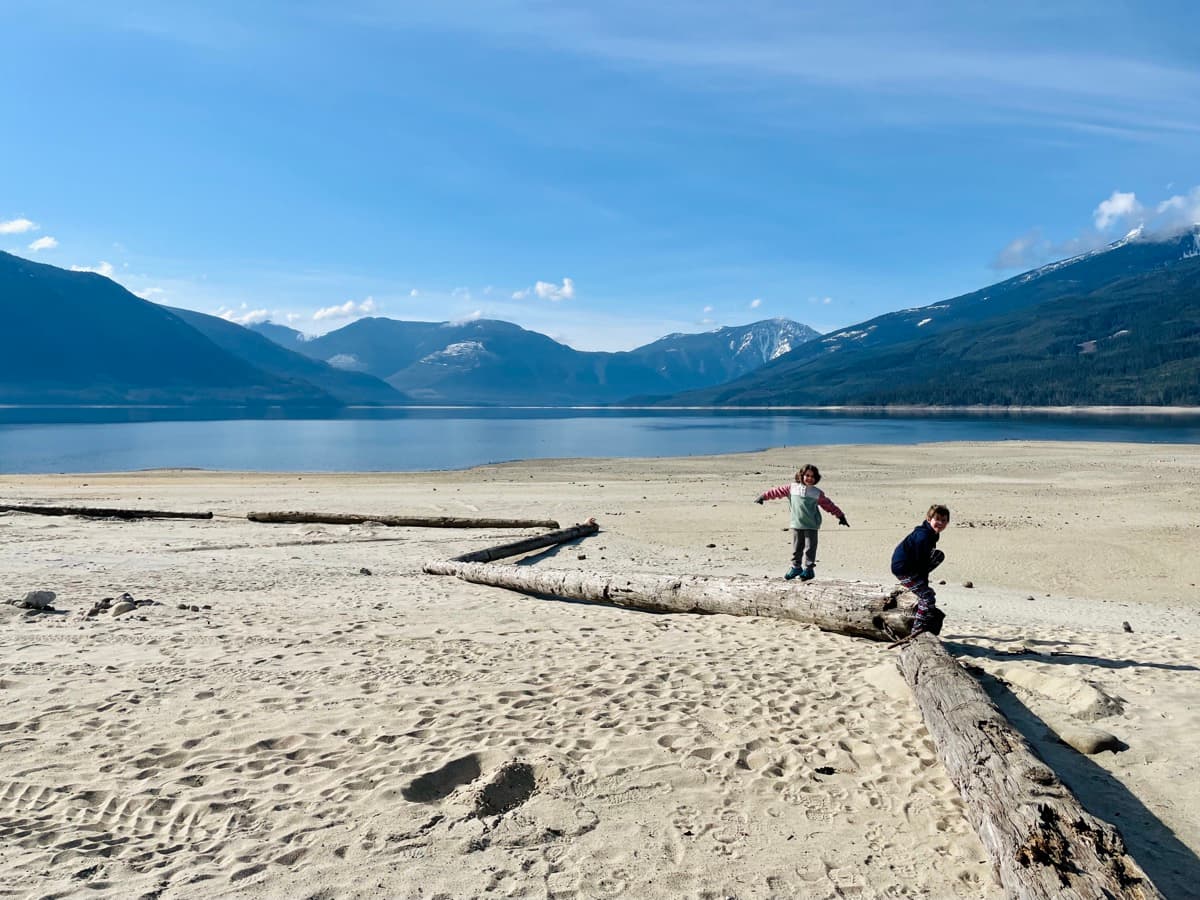
A boulder, a low tree, a fallen log. Climbing builds risk assessment, balance, and confidence. None of these come from a worksheet.
29. Make up a story about a creature you spot
Where does that squirrel live? Who is it running from? Imagination beats identification for a 5-year-old.
30. Just sit
Find a log, a rock, a hill. Sit. Stay 10 minutes. The walk is not the point. The pause is. This is the activity adults need too.
You do not need a microscope to do science. You need a curious kid and an open door.
What to bring (almost nothing)
- A small notebook or nature journal
- A pencil (works in the rain)
- A magnifying glass if you have one
- A phone for photos and identification apps
- That is it.
The less you bring, the more they notice. When kids do not have devices to distract them, they start paying attention to the world around them. That shift, from consuming to observing, is where the magic happens. If you want a starter list for getting kids outside again, our roundup of screen-free activities for kids is a good companion to a nature walk habit.
Keep a "wonder journal." Every time your kid asks a question on a walk that you cannot answer, write it down. Then look it up together later. You will be amazed how many genuine research projects grow from a simple walk.
What about bad weather?
Go anyway. Some of the best nature walks happen in the rain. Worms come out. Puddles form. The light changes. Everything smells different. Kids do not melt in the rain. Dress for it and embrace it.
The Scandinavians have a saying: "There is no bad weather, only bad clothing." It is the same philosophy behind forest school, where kids learn outside in all weather year-round. When you want a more structured outing, try a seasonal scavenger hunt or layer in some outdoor STEM challenges that turn the same walk into a science lab.
Want this as a free printable? Grab the Nature Walk Checklist: 50 Ideas for Kids, free to read, and the printable version lands in your inbox.