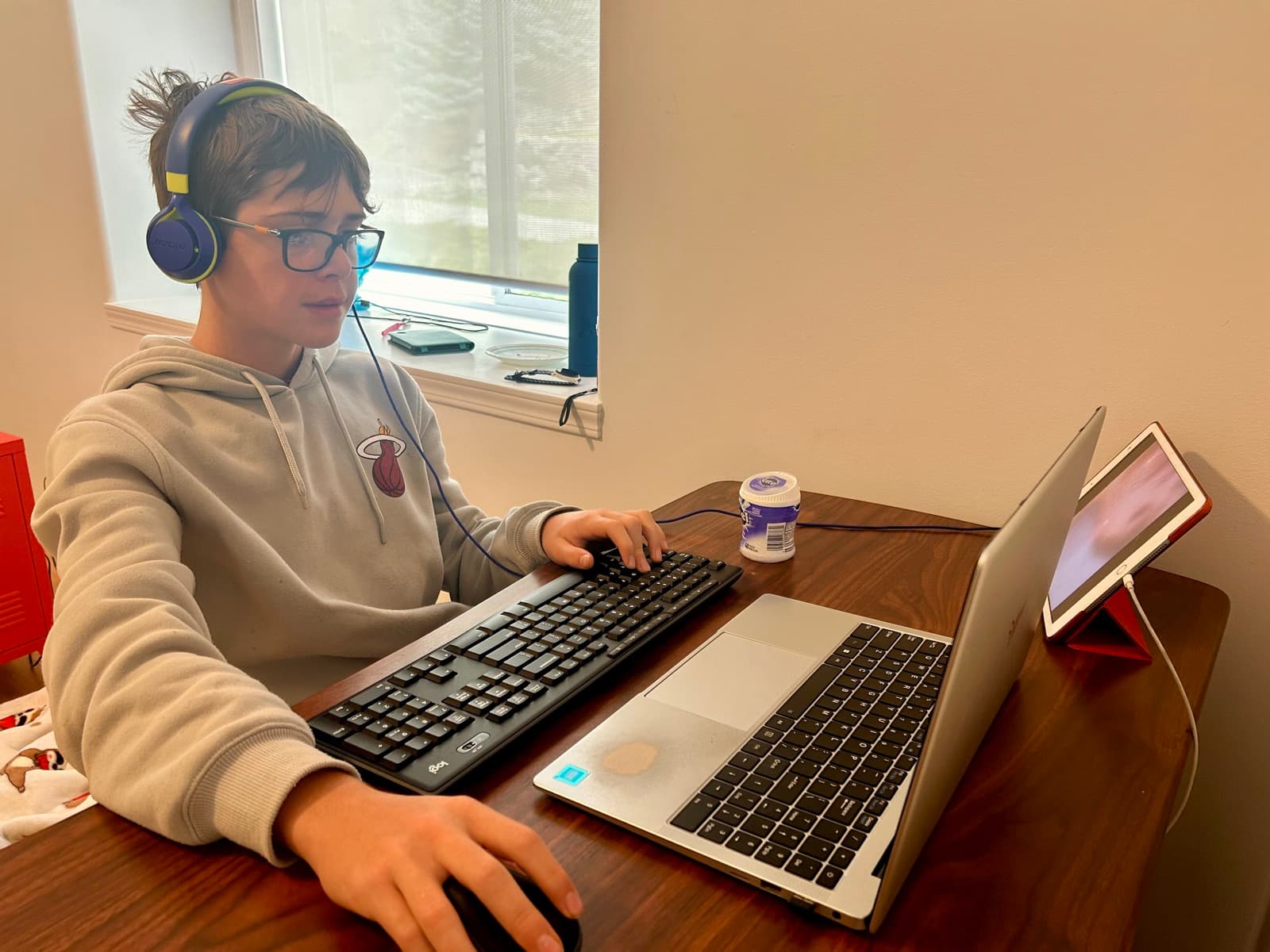
The problem with most screen-free activity lists is that they read like a chore. "Help with laundry." "Organize your drawers." Kids see right through it. Screen-free doesn’t have to feel like a punishment or a consolation prize. It should be a genuinely appealing alternative.
The trick isn’t to have one good idea ready for a meltdown moment. It’s to have a deep enough bench of options that your kid starts picking screen-free things on their own, because they’re actually fun, not because you told them to put the iPad down.
Below are 30 activities that actually work for kids ages 6–14. None of them need a Pinterest-perfect setup. Most of them need nothing at all. Treat this as a menu your kids can pick from, not a checklist you have to run.
Quick reference by age band
Every activity below works across the full 6–14 range with light adjustment, but here’s the rough fit if you want to grab one fast for the age in front of you.
- Best for ages 6–8 (lots of structure, parent nearby): #2 comic, #5 marble run, #8 origami, #11 fort, #12 scavenger hunt, #13 obstacle course, #18 chalk mural, #19 bug hunt, #21 reading, #23 puzzle, #28 audiobook plus drawing, #30 daydream
- Best for ages 9–11 (sweet spot, mostly independent): #1 cardboard machine, #3 cook a meal, #4 sew, #7 paper plane, #9 draw from real life, #10 bird feeder, #14 themed walk, #16 bike with a mission, #20 physical skill, #22 journal, #24 card game, #25 letter, #29 garden
- Best for ages 12–14 (real responsibility, real projects): #1 cardboard machine, #3 cook a meal, #6 start a business, #15 climb a tree, #16 bike with a mission, #20 physical skill, #22 journal, #24 magic or juggling, #25 letter, #26 family game night, #29 garden
This list pairs with our honest guide on screen time and phones. The real goal isn’t fewer screens, it’s kids who can set down a screen because they have something better to do.
Creative and maker activities
These activities turn your kid into the author of something, not just the audience. Messy is fine. Imperfect is better.
1. Build a cardboard machine
Give them a pile of cardboard, tape, and scissors and ask them to build a contraption: a pinball machine, a maze for marbles, a claw arcade, a working robot arm. The best ones take a full afternoon and end up on the kitchen counter for a week.
2. Write and illustrate their own comic
Blank paper, pencil, done. Bonus if they staple the finished comic together and "publish" it for the family. For tweens, suggest they build a continuing series with recurring characters.
3. Cook a full meal from a recipe they choose
Not helping. Running the whole thing. Reading the recipe, measuring, cooking, plating. This is also real kitchen math and budgeting practice disguised as dinner.
4. Sew or stitch something tiny
A pouch, a patch for a backpack, a felt keychain, a small stuffed animal. A needle, thread, and a YouTube-free demonstration from you is enough to get them started. The first one will look terrible. The third one won’t.
5. Build a marble run from household stuff
Paper towel rolls, cardboard, tape, marbles. They’ll iterate through ten bad versions before landing on one that works. That’s the whole point: failure, redesign, win.
6. Start a pretend (or real) business
A lemonade stand, a garage sale, a dog-walking service, a custom bracelet shop at the kitchen table, or walk them through a full micro-business project if they want the whole playbook. Making and selling a thing, even for $4, builds more real skills than most worksheets ever will.
7. Paper plane design championship
Design three different planes. Measure how far each one flies. Modify the design, test again, log results. Quiet engineering with one piece of paper.
8. Origami or paper crafts
A book from the library or a printed guide is enough. Cranes, jumping frogs, boats, dragons. Hands-busy, mind-quiet, no cleanup.
9. Draw, paint, or sketch something real
Not from a template, not from a screen. A pet, a plant, a scene out the window, a still life of what’s on the kitchen counter. Real observation beats another app-based "drawing tutorial."
10. Build a bird feeder, bug hotel, or creature habitat
A plastic bottle, some twine, a handful of seed or a stack of sticks, or a full creature habitat design project for kids who want to build a home for a specific animal. Hang it outside. Check it every day. This is nature science, engineering, and patience all at once.
In the Membership
Build a Rube Goldberg Machine
STEM engineering project for kids ages 6-14: build an absurdly complicated machine to do something simple. Design thinking, cause-and-effect, and creativity meet.
Outdoor and physical activities
The fastest reset for almost any screen-stuck kid is outside air. These work in a backyard, a park, or a sidewalk in front of your house.
11. Build a shelter or fort
Inside with blankets, outside with sticks and tarps. A fort is half the fun of being a kid. Let it stay up for days.
12. Nature scavenger hunt or outdoor mission
A printed list, or a list they write themselves, or grab a set of pre-built outdoor missions with clear objectives and reflection prompts. Find five leaves of different shapes. Something rough, something smooth, something yellow, something alive. Works in any backyard, park, or trail.
13. DIY obstacle course
Chairs, pillows, chalk lines, hula hoops, a timer. Let them design it, test it, and time themselves against their own best run. Physical problem-solving that also exhausts them.
14. Take a "themed" walk
Find ten things that are yellow. Ten things older than you. Ten shapes that look like letters, or use a set of structured nature walk task cards to rotate a new theme every time out. A normal walk becomes a hunt, and suddenly your 10-year-old notices the world again.
15. Climb a (safe) tree
With permission and a spotter. Climbing builds balance, confidence, and risk assessment in ways no app can simulate. The view from the branch is half the reward.
16. Bike or scoot with a mission
Not just "go ride your bike," but "ride to the corner store and buy a single apple." A destination and a small task transforms transit into an adventure.
17. Invent a sport
Rules, scoring system, equipment made from whatever’s around. Kids are wildly better at this than adults give them credit for, and if they want a structured push, the Invent a Sport project gives them the whole framework. Let them make the rules.
18. Chalk the driveway
Not a hopscotch grid. A full mural, a giant map, a time capsule message, a rocket ship they can stand inside. Washes away in the next rain, which is part of the charm.
19. Dig for earthworms or find bugs
A shovel, a magnifying glass, a curious eye. Identify what you find. Put it back. This is real field science for kids that costs nothing.
20. Practice a physical skill
Swimming, skating, skateboarding, handstands, cartwheels, jumping rope, shooting hoops. Twenty minutes a day for a week and they’ll be visibly better, which is a feeling no scroll-feed can replicate.
In the Membership
Outdoor STEM Challenge Cards
20 outdoor STEM challenges for kids ages 6-14: build, test, and engineer using what nature provides. Low-prep.
Quiet, slow, and thinking activities
Not every screen-free moment needs to be high-energy. Some of the most important ones are slow on purpose.
21. Read a chapter book or graphic novel
The oldest screen-free activity and still the best. A library card solves a surprising amount of your parenting challenges. Let them pick what they want, even if it’s not "edifying."
22. Keep a journal or sketchbook
Drawings, lists, story fragments, questions they want answered, rants, observations. No adult should ever read it without permission. It’s theirs.
23. Solve a slow puzzle over several days
A 500- or 1,000-piece puzzle on a side table, worked on a bit at a time. Something to come back to. A reason to sit next to another human for a few minutes at a time.
24. Learn a card game, magic trick, or juggling
Spite and Malice, solitaire, a coin trick, three-ball juggling. A skill they can pull out at the next family dinner is worth more than a hundred passive scrolls.
25. Write a letter to a grandparent or pen pal
By hand, on paper, in an envelope, with a stamp. The response that comes back in the mail is a bigger thrill than any notification. Builds a real human tie no algorithm can compete with.
26. Family game night (or design their own)
Not a screen with the family around it. An actual game on a table. Strategy games (Catan, Ticket to Ride), word games, or even a deck of cards. Repeat weekly until it’s a ritual. For kids who want to design their own game from scratch, try the Board Game Studio project.
27. Build a reading fort and disappear
Pillows, blankets, a flashlight, a book. The solo retreat of a reading fort is one of the only places in a modern kid’s life that’s fully offline. Protect it.
28. Audiobook plus drawing
An audiobook while they doodle, color, or draw is one of the few things that keeps kids content for two hours. It’s also secretly a literacy activity dressed up as downtime.
29. Start a garden or tend a windowsill seed
A pot of soil, a seed, a sunny windowsill. Or a full garden bed outside. The slowness is the point. Watching something grow over weeks teaches patience in a way nothing else can.
30. Daydream on purpose
Lie on the floor. Stare at the ceiling. Watch clouds. Sit on the porch. The boredom-is-actually-good research is real. Unstructured nothing is where original ideas come from. Protect it fiercely.
The best screen-free activities aren’t rescues from boredom. They’re the default your kid turns to before the boredom kicks in.
When nothing on the list works
You will have days when you suggest ten things in a row and your kid hates all of them. That’s not a failure of the list. That’s a kid who needs to be bored.
Boredom is not a crisis. It’s the doorway to self-directed play, the space where kids invent their own ideas instead of consuming someone else’s. You don’t have to rescue them from it. Hand them this list, tell them to pick or not pick, and walk away.
The long game isn’t "entertain my kid without a screen." It’s "raise a kid who knows what to do with themselves when nothing is scheduled." That skill pays compounding dividends for the rest of their life.
Print this list and tape it to the fridge, or paste it inside a kitchen cabinet. Next time you hear "I’m bored," point at the fridge instead of answering. Nine times out of ten, the problem solves itself.
Want this as a free printable? Grab the 26 Creative & Maker Ideas for Kids, free to read, and the printable version lands in your inbox.