- 1Screen time recommendations by age (a quick reference)
- 2Our rule isn’t a number. It’s a goal.
- 3What our actual limits look like
- 4What about phones?
- 5The shift: from our limits to their limits
- 6The thing no one admits: it’s still hard
- 7Creating vs. consuming: the distinction worth teaching
- 8The skills we’re actually trying to build
- 9So how much screen time is OK? Here’s my honest answer.
- 10What to actually do this week
- 11Frequently asked questions
“How much screen time is OK for kids?” It’s one of the most-asked parenting questions on the internet, and the official answers aren’t super useful. The American Academy of Pediatrics gives you a bracket: one hour a day for kids 2–5, “consistent limits” for kids 6 and up, and leaves you to figure out the rest. Other guides will tell you to ban screens entirely. Or that two hours is fine. Or that it depends on the content, or the child, or the weather.
Screen time recommendations by age (a quick reference)
If you just want a starting bracket to think about, here's the rough by-age guide most pediatric and homeschool sources land on, and what we actually use in our house:
- Under 18 months: avoid screens except for video calls with family. The AAP's strongest recommendation, and the easiest to follow.
- Ages 2–5: up to 1 hour per day of high-quality content, ideally co-viewed with an adult so you can talk about what they're seeing.
- Ages 6–9: "consistent limits" per the AAP. In practice, most families land between 30 minutes and 1 hour of recreational screen time on school days, with more on weekends. No devices in bedrooms.
- Ages 10–12 (tweens): the negotiation years. Many families do 0–1 hour weekdays and 1–2 hours weekend days, with creating (coding, video editing, writing) treated separately from consuming (YouTube, scrolling, games someone else made).
- Ages 13–18 (teens): the goal shifts from external limits to internal self-regulation. Total time matters less than: screens out of the bedroom at night, no phones during meals, awareness of social media's effect on mood, and active media literacy.
These are starting points, not prescriptions. The number on the timer matters less than what's on the screen, whether they're creating or consuming, and whether they're building the muscle to put it down.
All of that is technically true. None of it tells you what to actually do Tuesday at 4pm when your 10-year-old is asking for the iPad again.
So let me tell you what we do. This isn’t the right answer. It’s ours, and the thinking behind it is what I’d actually trust if I had to start over.
Our rule isn’t a number. It’s a goal.
We have a 12-year-old (Zach) and a 10-year-old (Julia). We’ve never banned screens. From the time they were little, we’ve had limits, but the limits were never the point. The point was always: we want them to learn to manage screens themselves, before they’re old enough that we can’t.
Because here’s what no one tells you: at some point, your kid will be 15 with their own phone, then 17 in a dorm, then 22 in a job where they get to decide what to open and close. The self-regulation muscle either gets built while you’re there to coach it, or they build it alone, sometimes painfully, when they’re already adults.
We figured: better to practice now.
What our actual limits look like
This is the part people want. Fair enough.
Julia, age 10
Monday through Thursday, no personal screen time: no games, no YouTube, no tablet. Friday, Saturday, and Sunday she gets one hour a day.
Zach, age 12
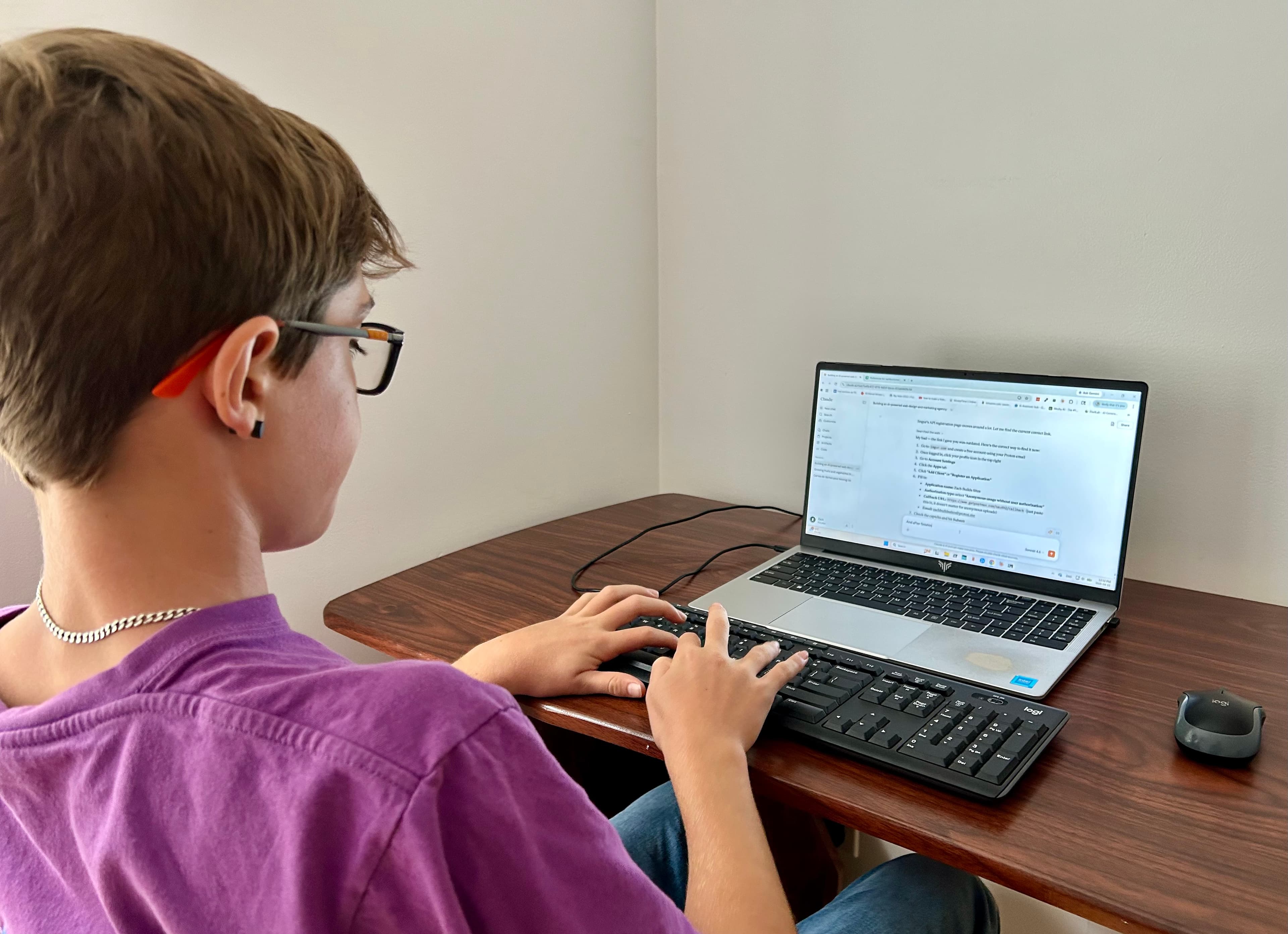
Same on the personal side. But if he finishes what he needs to during the week, he’s allowed to work on his business: he builds websites for small businesses that don’t have one yet. That counts as purposeful screen use, not entertainment.
Both of them
No devices in the bedroom at night. Not negotiable. Not now, not ever, or at least not before they live somewhere that isn’t our house.
Family TV is different
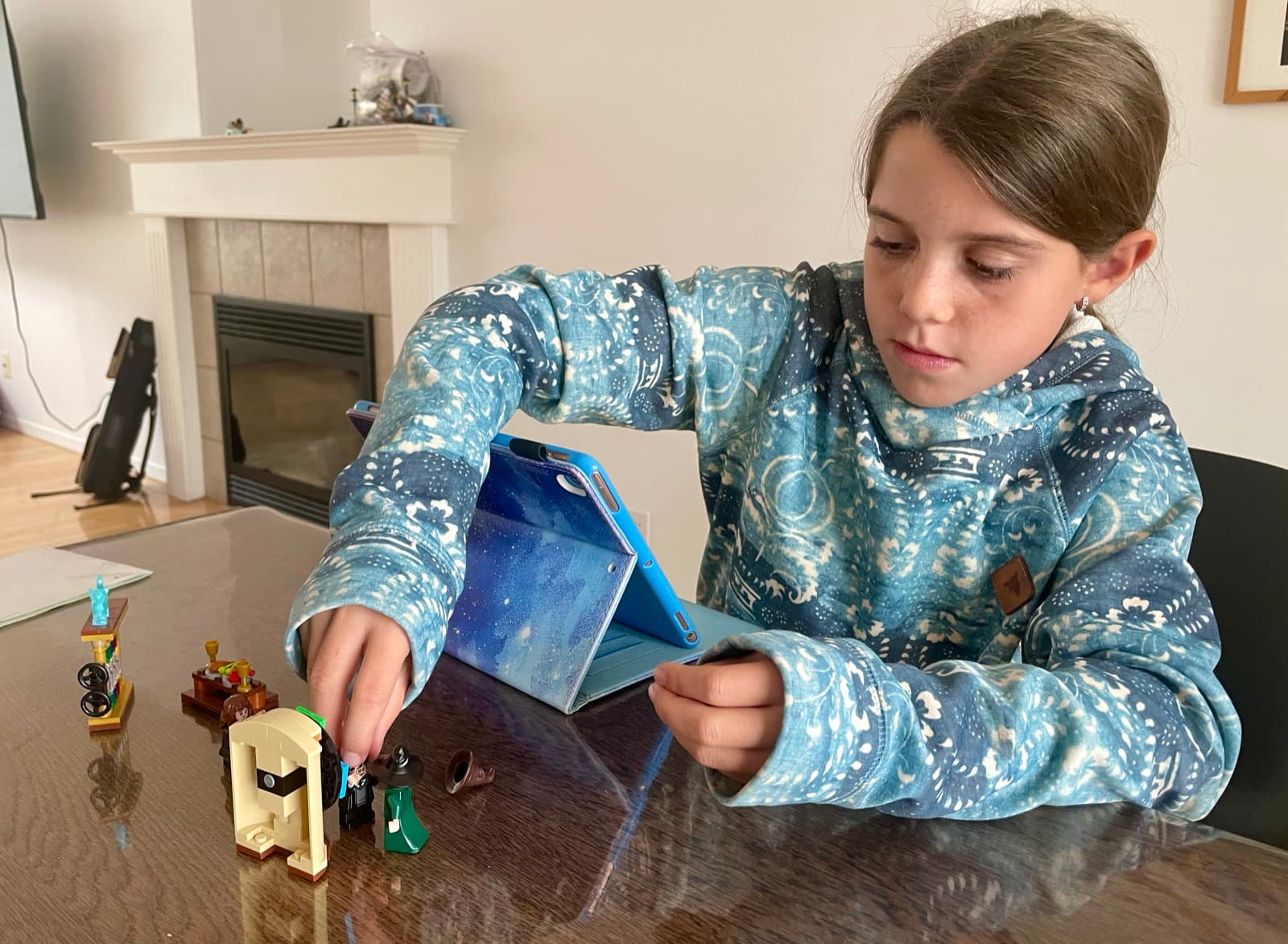
We watch movies together, sometimes a show. On a rainy afternoon or a slow Sunday, the kids might watch TV for a while. We’re not purists. If the weather’s terrible and everyone needs a break, screens are fine. The rule is: be honest about when it’s the right call and when it isn’t.
What about phones?
No phone until they can pay the monthly bill themselves.
That’s our rule, and it’s holding, for now. Zach is 12, Julia is 10, and neither of them owns a phone. We’re not trying to prove a point. We just haven’t found a version of “giving a kid a phone at 10 or 12” that serves them more than it complicates things.
What we do instead is lean on old-fashioned communication. As the kids have gotten more independent, walking somewhere, going to a friend’s house, heading out for something without us, we talk through the plan in advance. Who they’re with. Where they’ll be. What to do if the plan changes. Where to go if they need help. How to ask a trusted adult to borrow a phone if they really need to reach us.
It’s basically the way we grew up in the 90s. Live and learn. Figure it out. Ask when you need to. That feels radical now, which is itself a sign of how far the baseline has shifted.
We’re not anti-phone forever. When one of them wants one badly enough to take on the actual cost, not just “I want one,” but “I’m willing to earn the money every month to keep it”, that’s a real signal. It means the phone matters enough to work for, and it comes with the responsibility of paying for it. That feels like the right moment, whenever it arrives.
Until then: no phone. Communication. Trust. And a generation that doesn’t know what 1996 felt like is getting a tiny taste of it.
The shift: from our limits to their limits
This is the part I’m actually most proud of, and it didn’t happen fast.
Both kids now negotiate their own screen time. They argue for it. They defend their point. Julia will tell me why she thinks she should get extra time on a Friday because she finished a big project. Zach makes the case that his business work isn’t the same as scrolling YouTube, and he’s right.
They don’t always win. Sometimes their argument falls flat. But they’re making the argument, which means they’re thinking about what’s fair and why, not just waiting for me to hand down a ruling.
And every once in a while, they’re the ones who say “I’ve had enough” and close the laptop before the timer is up.
Not every day. Not most days, honestly. But enough that I know the muscle is building.
In the Membership
Healthy Tech & AI Boundaries Plan
Digital wellbeing for kids ages 9-14: create a personal tech boundaries plan for self-regulation and healthy screen time.
The thing no one admits: it’s still hard
If any of this sounds like we figured out a magic formula and now our kids self-regulate on their own, please hear me. That is not true.
Self-regulation is still hard, for them and for us. It’s a constant reminder. It’s the same conversation we’ve had four hundred times about what’s worth their time and what isn’t. It’s the negotiation on the nights when they’re tired and would rather just scroll, and I’m tired and would rather just let them.
And, this is the part I didn’t expect, a huge piece of it is modeling. Kids watch what adults do with their phones way more than they listen to what we say about theirs. If I’m mindlessly scrolling while I tell Julia to put the tablet down, we both know which signal she’s actually learning from.
Some of the work isn’t really about their screens. It’s about mine.
Creating vs. consuming: the distinction worth teaching
The single most useful concept we’ve introduced in our house is the difference between creating on a screen and consuming on one.
Consuming: watching YouTube, scrolling TikTok, playing a game someone else designed, bingeing a show.
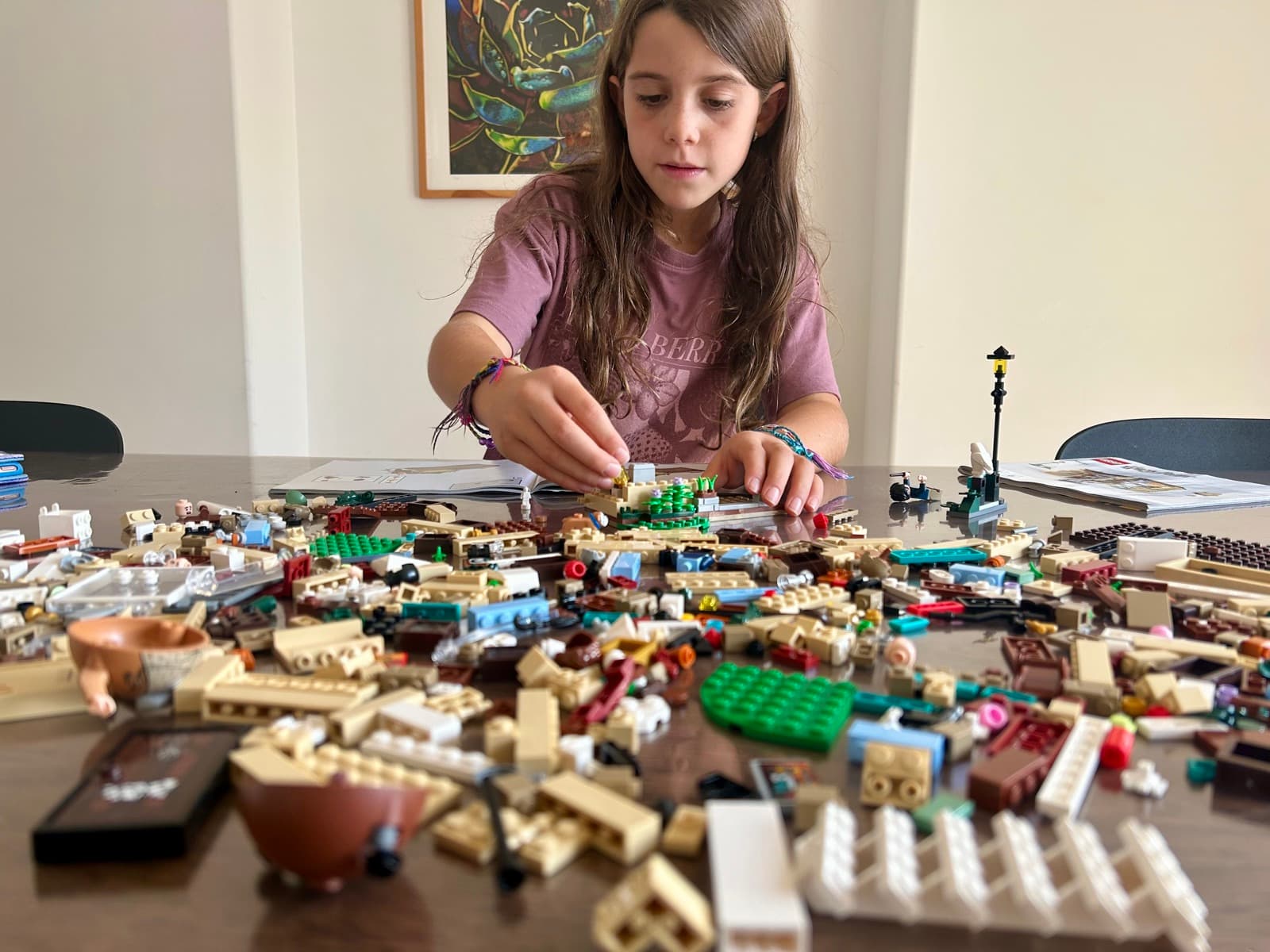
Creating: building a website, writing a script, editing a video, designing a Minecraft world, coding, researching something they’re actually curious about, making music.
Both use a screen. Both can be fun. But they’re not the same activity, and pretending they are is how screen time conversations go sideways.
Zach’s business is an example of creating. He sits at the same laptop, but what he’s doing is the opposite of passive: he’s making a thing, solving real problems, talking to real people who might pay him for it.
This isn’t about banning consumption. Julia loves her Friday hour of games and I’m not going to pretend that’s a moral failing. It’s about making sure the ratio in your house leans toward making things, not just watching them.
Instead of asking “what do you want to watch?” try “what could you make today?” Same amount of screen time, totally different outcome. Naming the creating-vs-consuming split out loud shifts your kid’s default choice over weeks, not overnight.
The skills we’re actually trying to build
Beyond the time limits, there are a few things we try to teach explicitly:
- 1How to use a screen on purpose. Open it for a reason, close it when the reason is done. That’s the whole skill, and adults are worse at it than kids.
- 2How to tell a good source from a bad one. The internet is a landfill with treasures in it. Knowing the difference is one of the most important skills a kid will ever build.
- 3Critical thinking about what they see. Why is this video designed to keep you watching? Why did the algorithm show you this? Who paid for this to be made? Every video, ad, or AI-generated image is a chance to practice asking those questions.
- 4How to stay safe. Privacy basics. Not sharing where they live. Screenshots are forever. Real people can look different from their profiles. People online can lie about their age. It’s not a one-time talk; it’s hundreds of little ones.
- 5Moderation as a value, not a rule. We want them to understand that moderation feels better, not just that it’s required. That’s a long game. Some days they get it. Some days they don’t.
Most of this overlaps with the deeper media literacy work, learning to read screens, not just look at them, and with the broader AI literacy conversations every family needs to have in 2026.
The question to ask isn’t “how long were they on the screen?” It’s “are they getting any better at putting it down?”
So how much screen time is OK? Here’s my honest answer.
There isn’t a number. There’s a direction.
Less screen time is generally better than more. What’s on the screen matters almost as much as how long. Creating beats consuming. A 30-minute family movie is different from 30 minutes of solo TikTok. A kid who gets two hours and hands the tablet over when it’s time is doing better than a kid who gets 30 minutes and then melts down when it ends.
The question to ask isn’t how long they were on the screen. It’s whether they’re getting any better at putting it down.
If the answer is yes, even slowly, even imperfectly, you’re doing the work.
What to actually do this week
If you want a place to start:
- Pick one no-screen window and protect it. We chose Monday–Thursday for personal screens; yours could be after 7pm, or during meals, or weekend mornings. The specific window matters less than having one.
- Get devices out of bedrooms at night. If you change one thing, change this one.
- Name the difference between creating and consuming out loud. Kids don’t automatically see it.
- Model it. Be honest when your own phone use is getting away from you. “I’ve been on this too long. I’m putting it down” is one of the most powerful things your kid can hear you say.
- Let them negotiate. Within reason. Let them make the case for more time; let them lose sometimes and win sometimes. That’s how they practice.
- Reconsider your default phone age. “Everyone else has one” isn’t a reason. Decide what you think the right trigger is: age, responsibility, ability to pay, real need. And name it out loud so your kids know the goalposts.
You are not going to get this perfectly right. I have not. No one has. But the goal isn’t perfect. The goal is a kid who, eventually, can do this without you.
That’s what we’re actually building.
Want this as a free printable? Grab the 18 AI & Digital Literacy Ideas for Kids, free to read, and the printable version lands in your inbox.