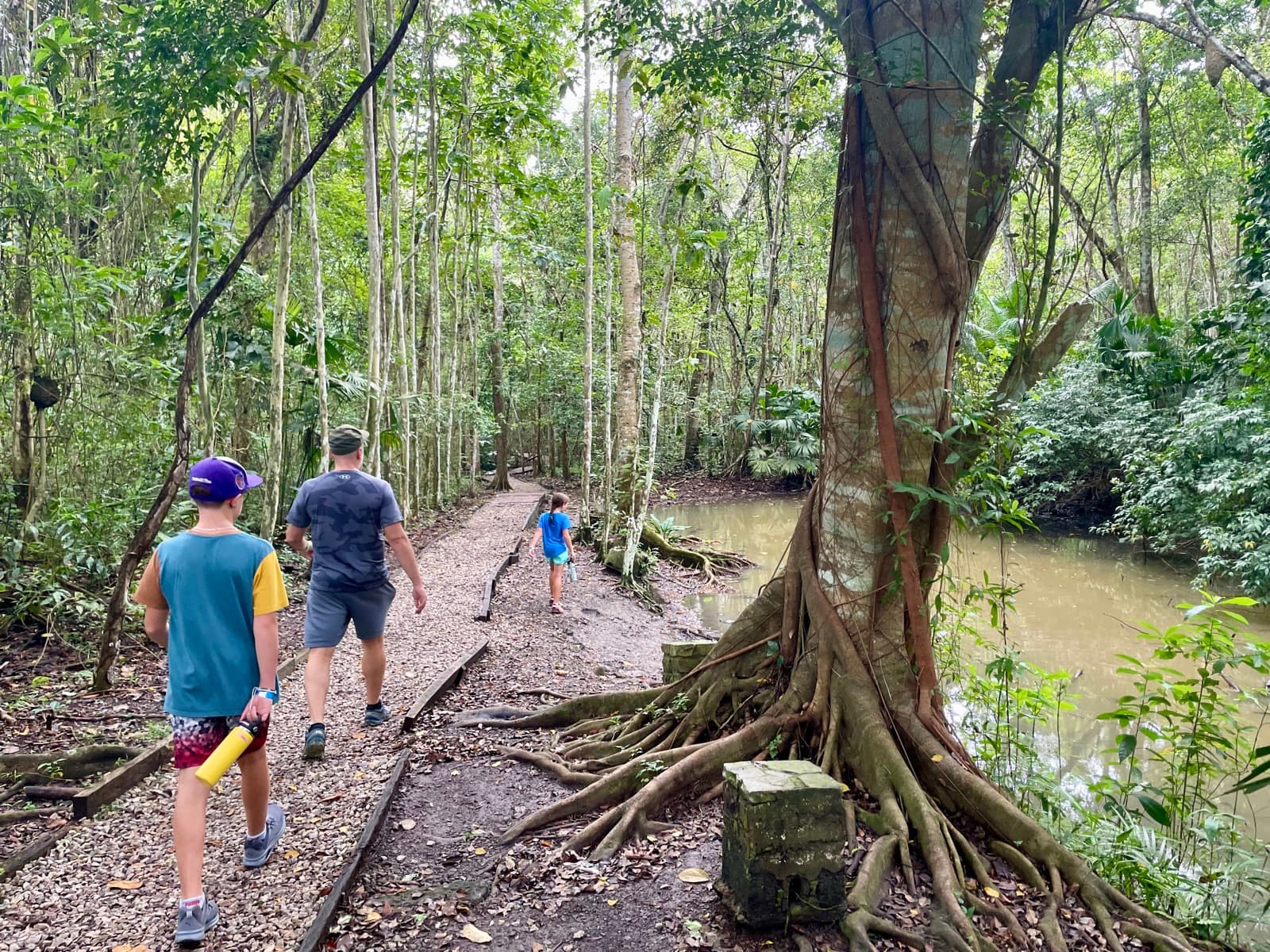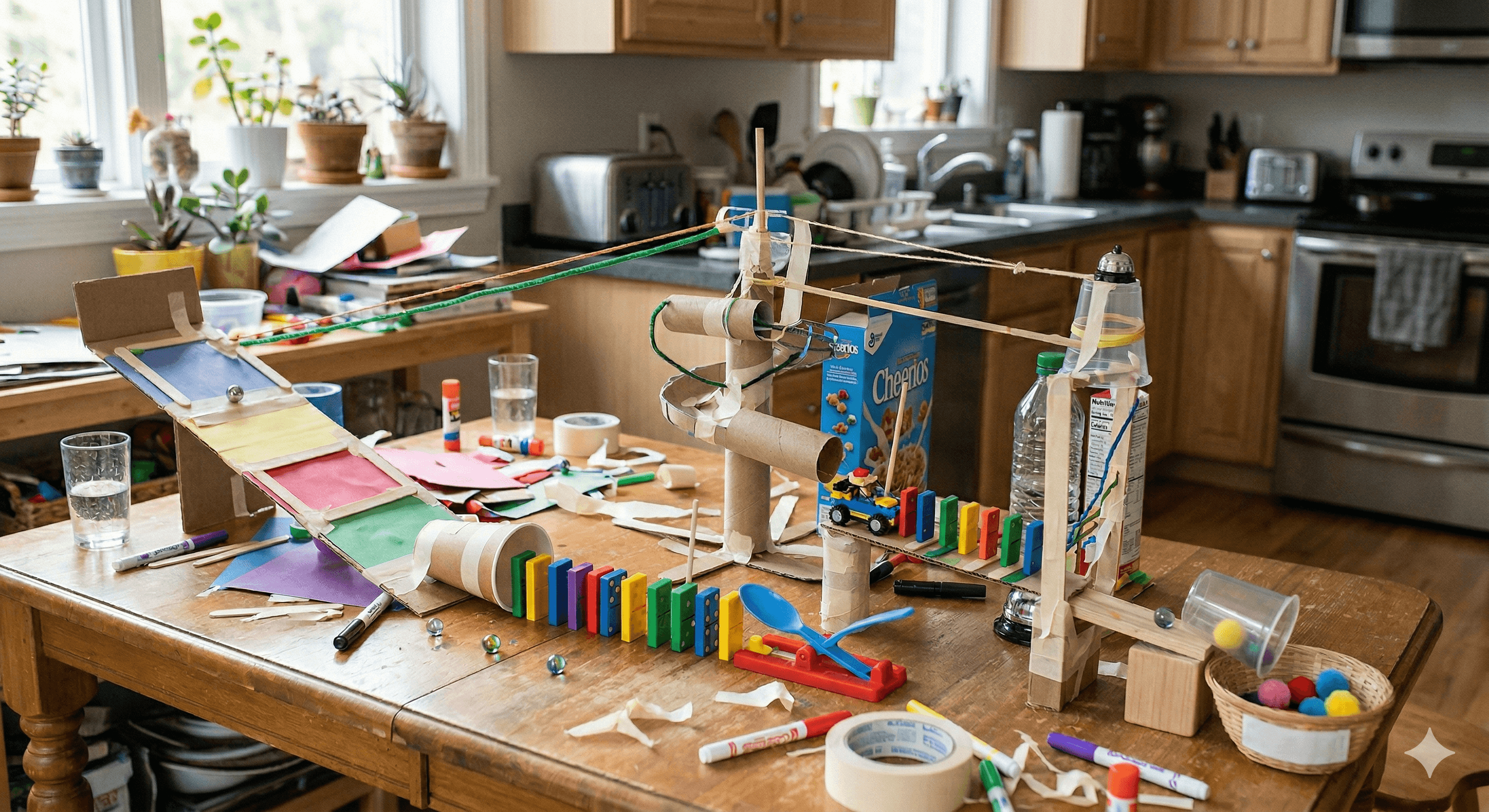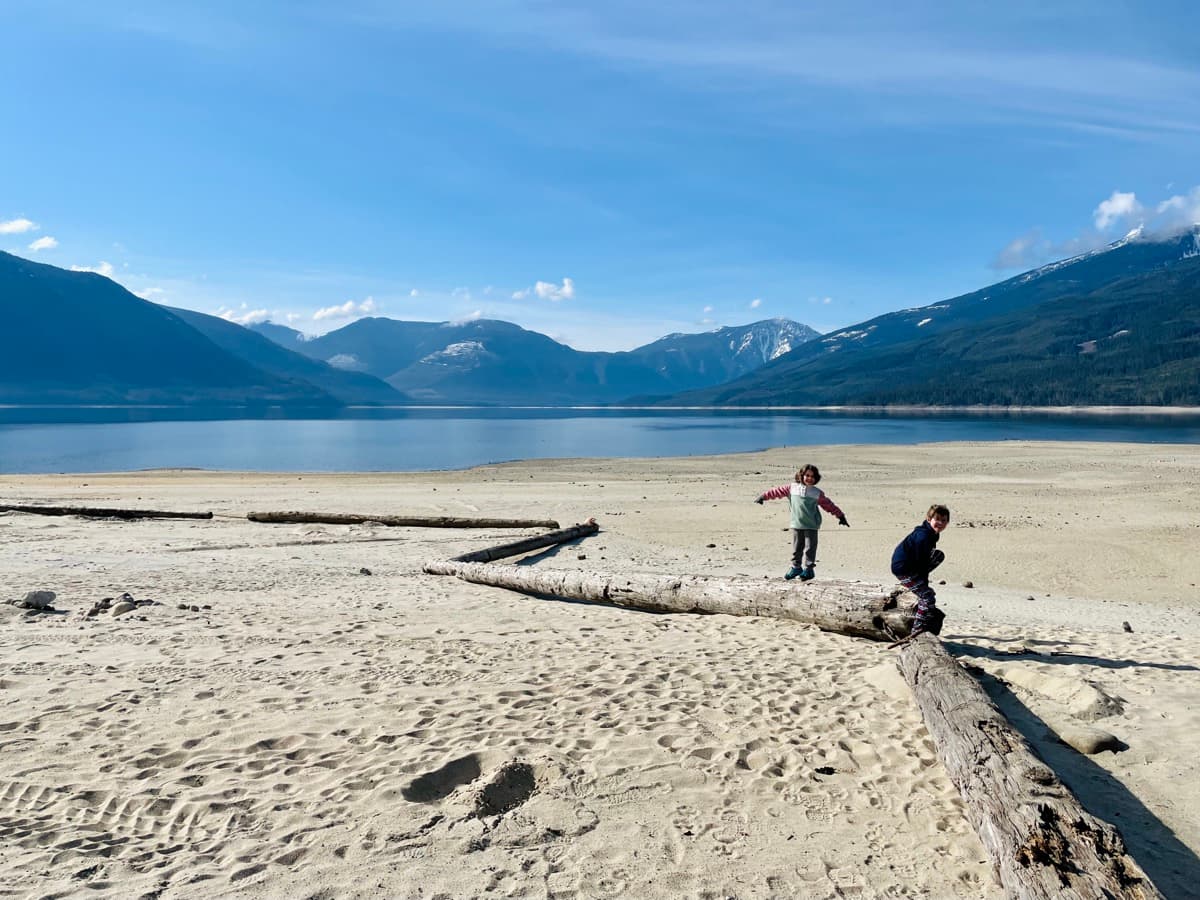
Some of the best learning happens when kids have a pile of sticks, a creek, and a challenge. Build a bridge. Make it hold something heavy. They test, fail, try again, argue about the design, and eventually figure it out. Nobody needs to call it “engineering”, it just is.
That’s the thing about outdoor STEM: it doesn’t feel like school. There’s no worksheet, no right answer, no teacher at the front. There’s just a problem, some materials, and a kid who wants to solve it. And that’s exactly how real scientists and engineers work.
Here are 15 outdoor challenges that cover engineering, physics, biology, and environmental science, all using materials you can find in your garden, a park, or a hiking trail. (If you want the broader framework, our nature-based learning guide covers why outdoor learning sticks the way classroom science rarely does.) If you want the bigger picture first, the STEM for Kids guide explains what a STEM challenge is and how to run one at home. If you would rather start with the woods themselves, forest school activities is the companion list, and for the indoor version see engineering for kids, LEGO STEM challenges and Rube Goldberg machines. If you would rather start closer to home, the backyard science experiments post has 15 that run on water, dirt and sunlight in a garden or on a balcony.
Engineering challenges
1. Build a bridge that holds weight
Find a small gap (between two rocks, two logs, or the edges of a path) and build a bridge using only natural materials: sticks, stones, bark, vine. Test it by placing progressively heavier objects on top. This teaches load distribution, structural design, and iterative testing.
2. Create a water channel system
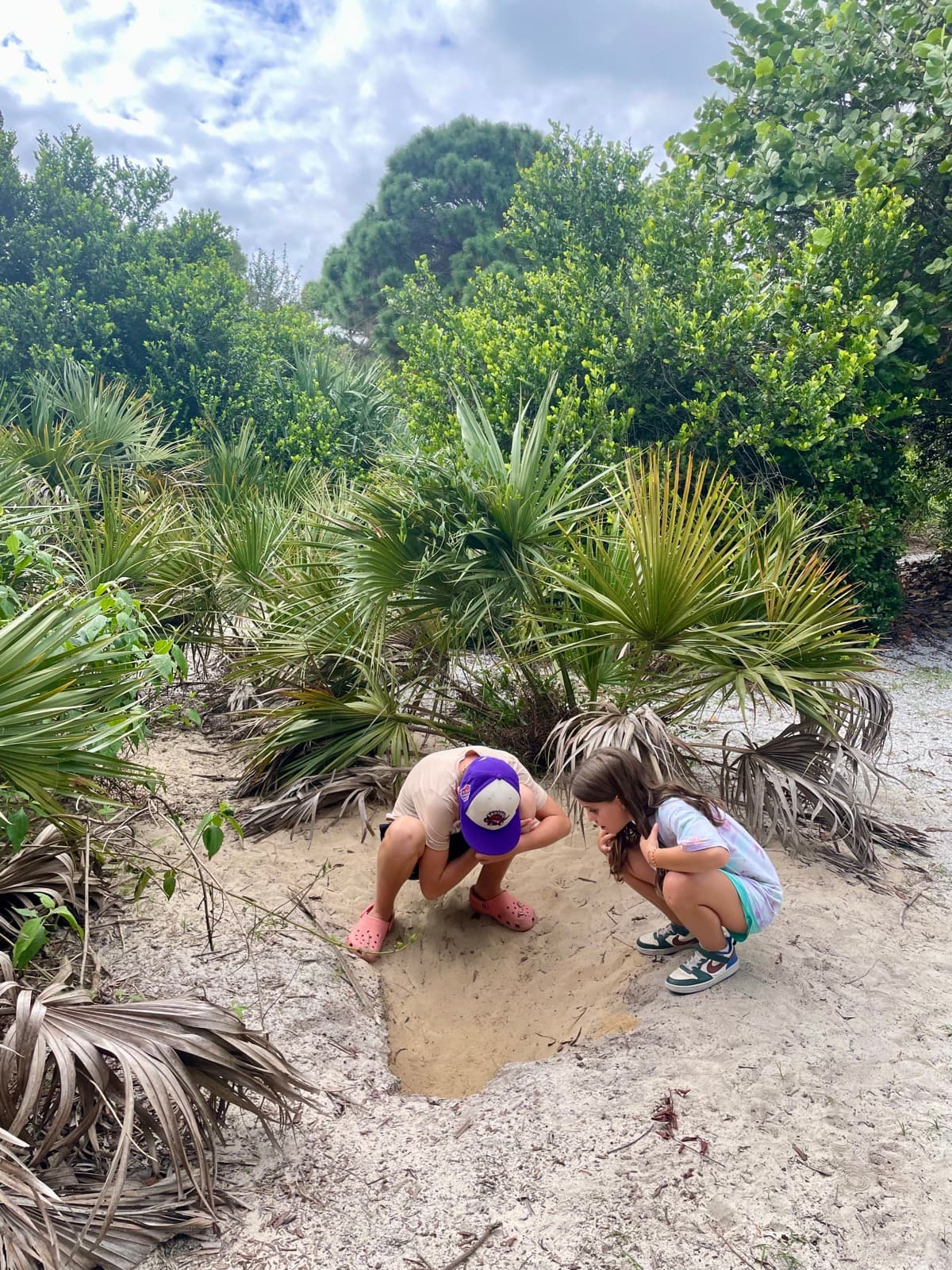
In sand, dirt, or mud, dig channels to move water from one point to another. Add dams, reservoirs, and junctions. This is fluid dynamics and civil engineering in miniature. Kids will naturally discover slope, pressure, and the path of least resistance.
3. Design a shelter for a toy
Give them a small toy (action figure, stuffed animal) and a challenge: build a shelter that protects it from wind and rain using only found materials. Then test it. Pour water over it, blow on it, see if it survives. Redesign. This is the engineering design cycle in action.
Have kids photograph each version of their design, especially the ones that collapsed. Reviewing what went wrong is where the deepest learning happens. Engineers call these “iterations”; kids call them “fails,” but both lead to better designs.
4. Build a raft that floats
Using sticks, leaves, bark, and string (or vine), build a raft that can float across a puddle or pond while carrying a small cargo. This combines buoyancy, material science, and structural design. It’s also incredibly satisfying to watch.
5. Construct a catapult
A Y-shaped stick, a rubber band or piece of flexible bark, and a projectile. Physics in action: force, trajectory, elasticity, and energy transfer. Challenge them to hit a target at increasing distances.
Physics and earth science
6. Map the shadows
Place a stick in the ground and trace its shadow every hour. By the end of the day, you’ve demonstrated Earth’s rotation, the concept of sundials, and directional orientation. Ask: “Why does the shadow move? Where will it be in an hour?” This is astronomy with a stick.
7. Erosion experiment
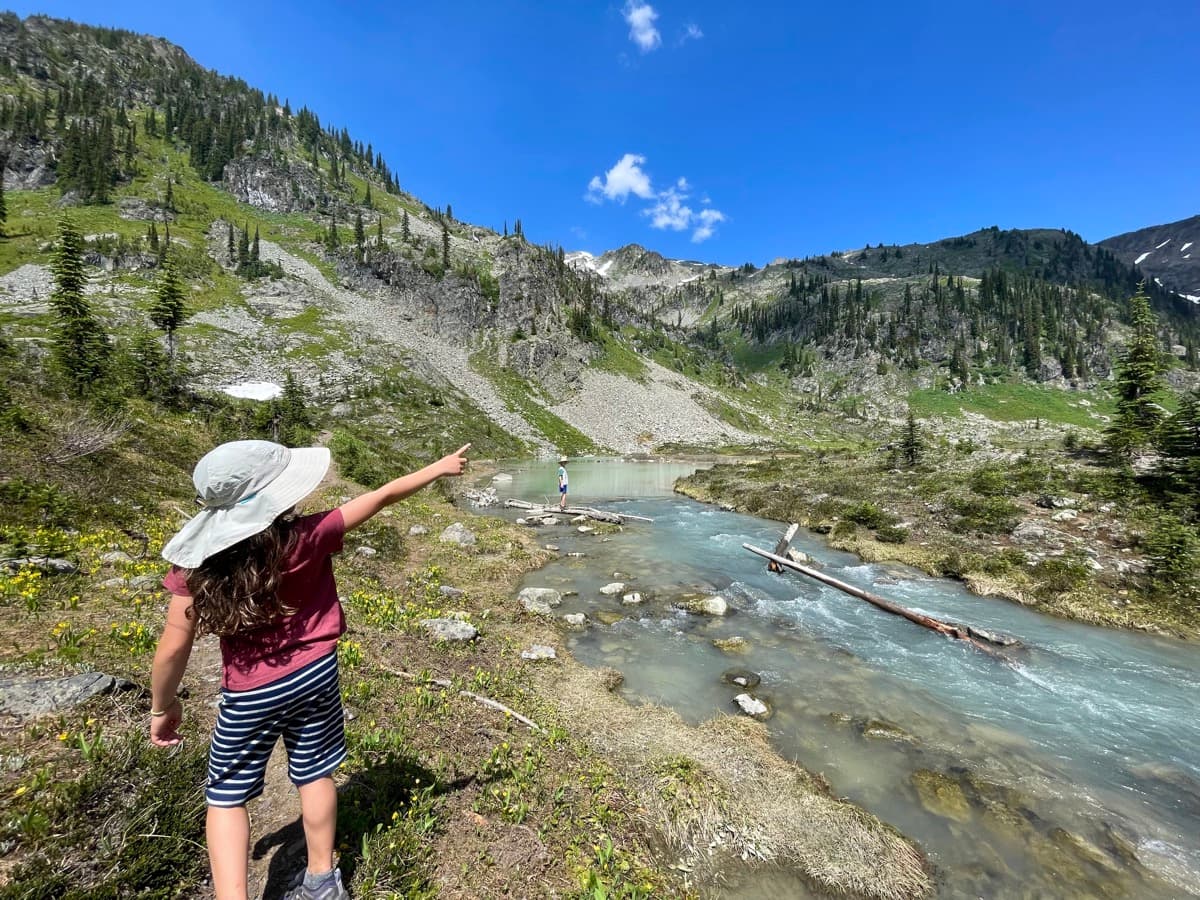
Build two small hills, one bare dirt, one covered with leaves/grass. Pour water over both. Which one washes away faster? This is a visual, tactile demonstration of erosion and why plant roots matter. Connect it to real-world deforestation and landslides.
8. Sound mapping
Sit in one spot for 10 minutes with eyes closed. Draw a map of every sound you hear, placing them in the direction they came from. This teaches spatial awareness, observation, and the physics of sound (direction, distance, volume, pitch). It’s also a great mindfulness activity.
9. Ramp and roll
Find a slope and roll different objects down it: rocks, sticks, leaves, pinecones, balls. Which goes farthest? Fastest? Why? This is friction, gravity, mass, and surface area, without a single formula.
10. Weather station
Build a basic weather station: a rain gauge (jar with measurements), a wind vane (stick with lightweight pointer), and a thermometer placed in shade. Record data daily for a week. This is data collection, measurement, and pattern recognition, the foundation of scientific method.
In the Membership
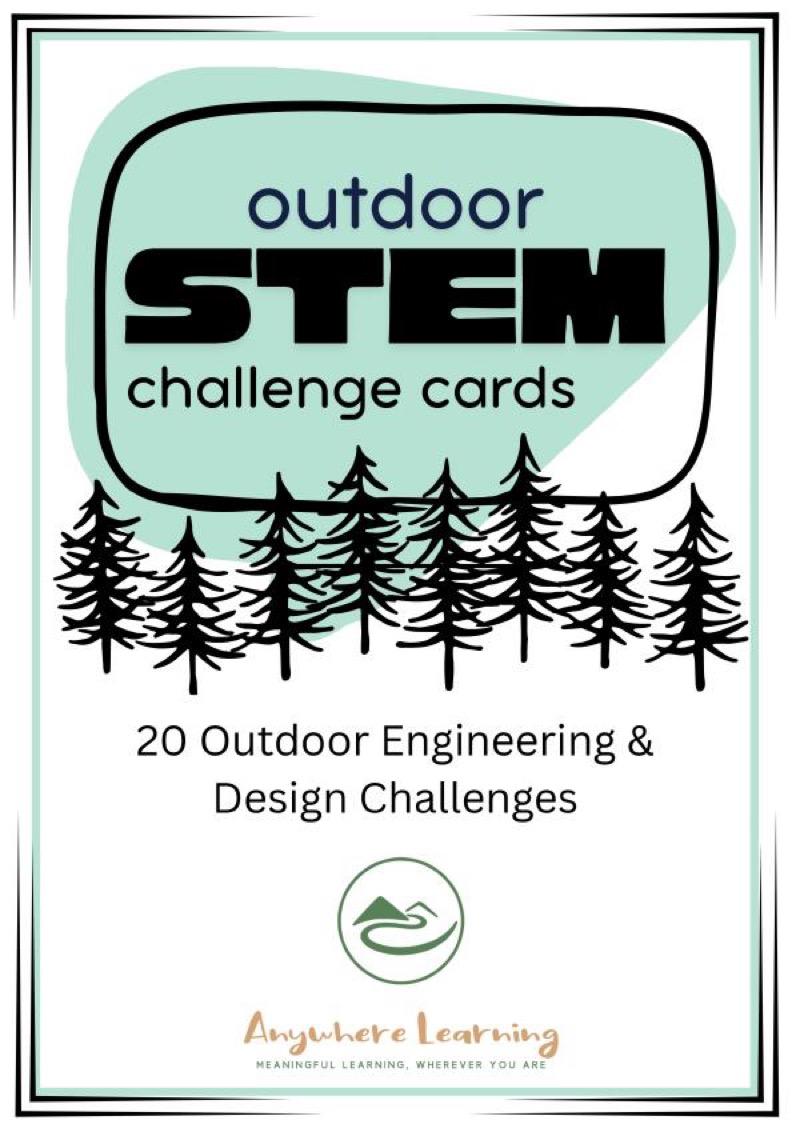
Outdoor STEM Challenge Cards
20 outdoor STEM challenges for kids ages 6-14: build, test, and engineer using what nature provides. Low-prep.
Biology and ecology
11. Mini ecosystem in a jar
Collect soil, small plants, and a bit of water in a clear jar. Seal it and observe for weeks. You’ve created a closed ecosystem: water cycles, photosynthesis, and decomposition happening in miniature. Ask: “Where does the water go? Why don’t the plants run out of air?”
12. Invertebrate census
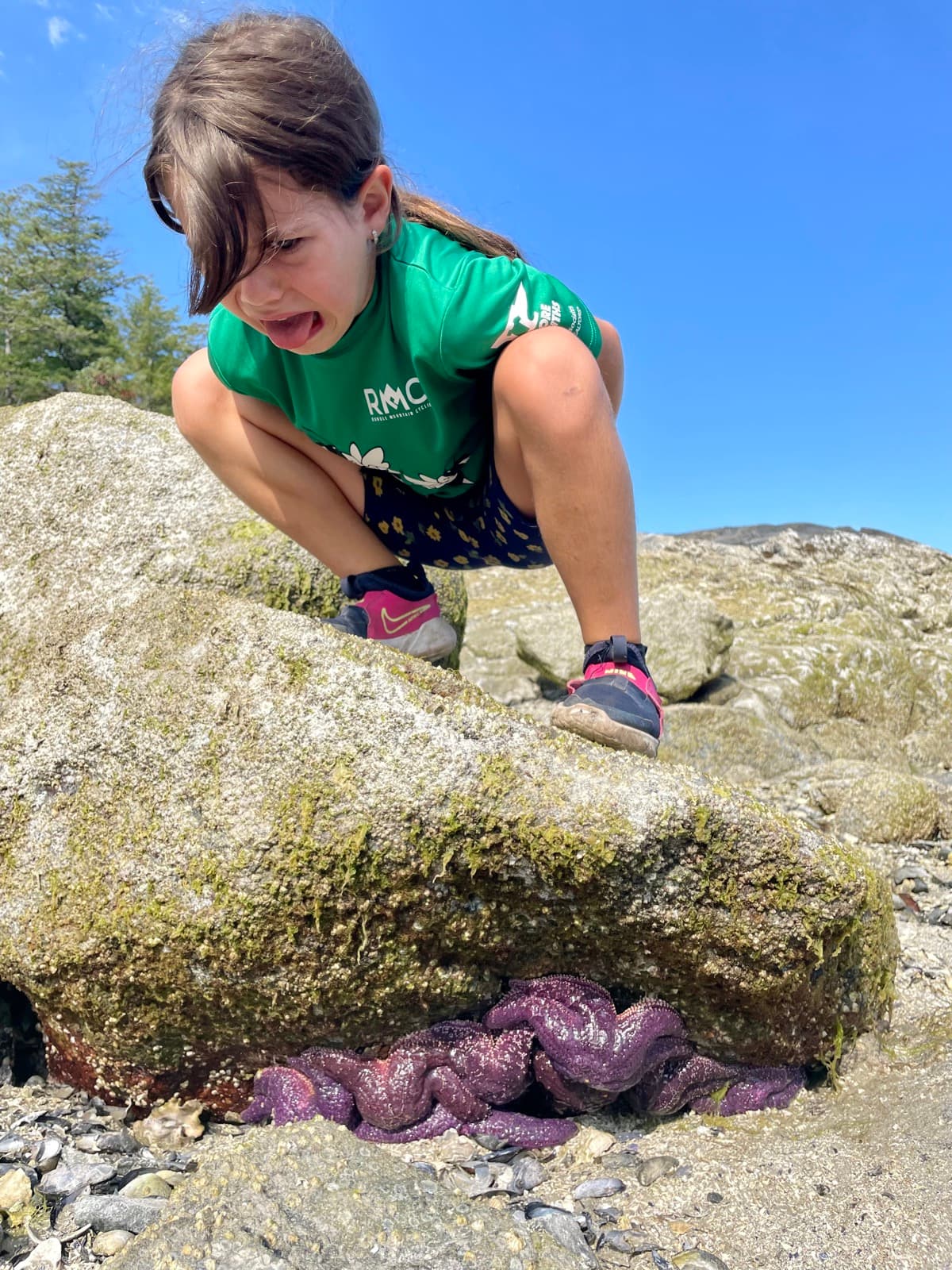
Mark out a one-metre square of ground. Count and identify every living creature you can find: insects, worms, spiders, snails. This is real field biology. Record your findings and compare different habitats (grass vs. under a log vs. near water).
13. Seed dispersal investigation
Collect as many different seeds as you can find and sort them by how they travel: wind (dandelion), animal (burrs), water (coconut-type), explosion (touch-me-not). This teaches adaptation, evolution, and classification through hands-on discovery.
14. Decomposition timeline
Bury five different items: a leaf, a banana peel, a piece of paper, a plastic wrapper, and a piece of fabric. Check them weekly. Which breaks down fastest? This is ecology, microbiology, and environmental science, plus a powerful visual lesson about waste.
15. Bird behaviour study
Pick one bird species visible from your garden or park. Observe it for 15 minutes a day for a week. What does it eat? Where does it go? How does it interact with other birds? This is genuine ethology, the study of animal behaviour, and it builds patience, attention, and scientific observation skills.
Real science doesn’t happen in a textbook. It happens when a curious kid gets muddy trying to figure something out.
Making it work for different ages
Every challenge above works across ages with simple adjustments. Younger kids (4–6) do the building and observing. Older kids (7–9) add measurement and recording. Tweens (10–13) add hypothesis, controlled variables, and written conclusions. Same activity, different depth.
The key is to resist turning it into a lesson. Don’t explain the science before they do the activity. Let them discover it. Ask questions instead of giving answers. “What do you think will happen? Why did that one fail? What would you change?”
Give each child a small notebook dedicated to outdoor experiments. Sketches, measurements, observations, questions. Over time, this becomes a portfolio of genuine scientific thinking, and it’s far more impressive than any worksheet.
You don’t need a lab or a curriculum to teach STEM. You need a garden, a creek, a park, or a trail, or a kitchen counter. The materials are free. The learning is real. And the best part? Your kids will ask to do it again tomorrow.
Want this as a free printable? Grab the STEM Challenges for Kids: 24 No-Kit Builds, free to read, and the printable version lands in your inbox.