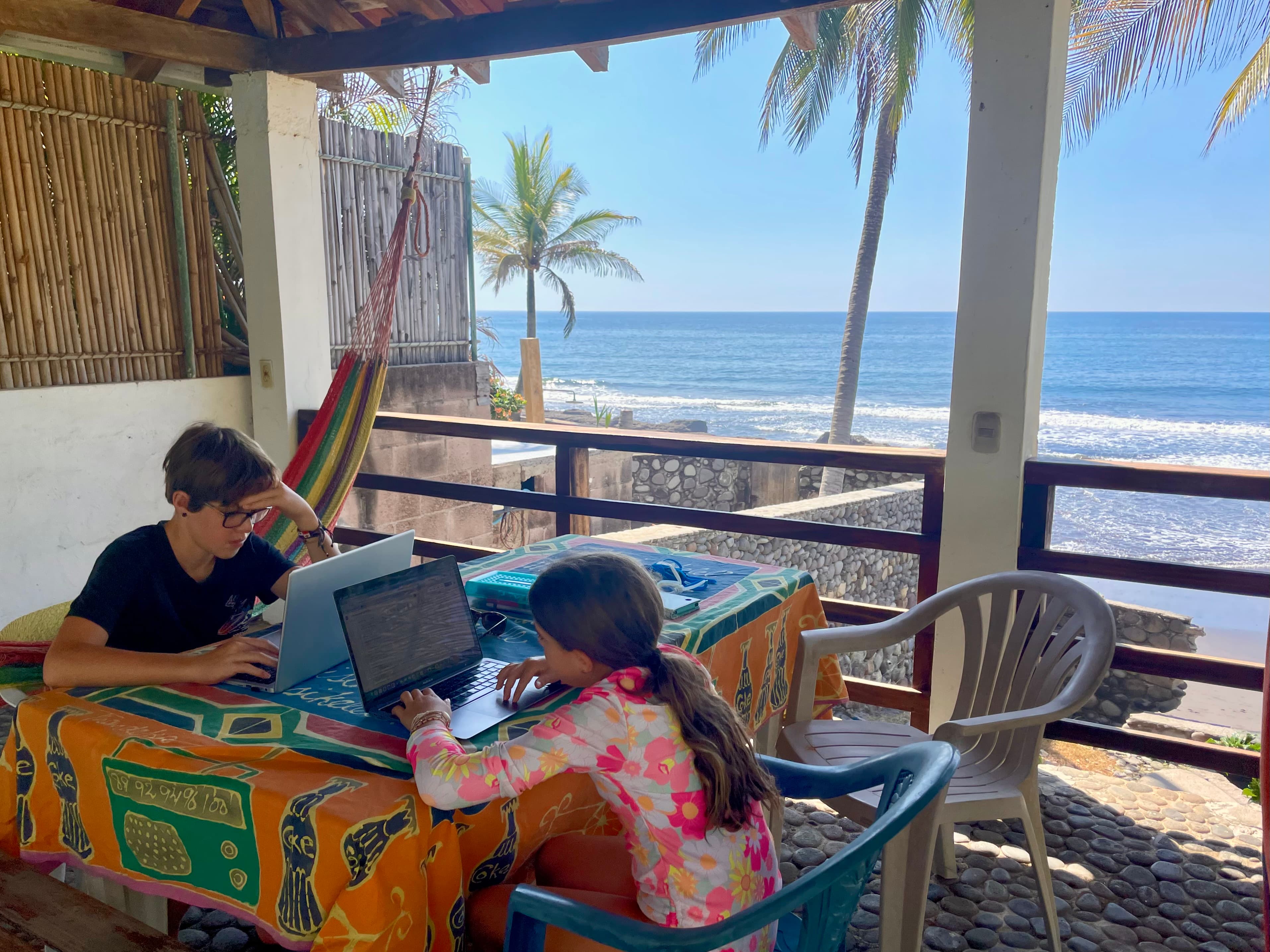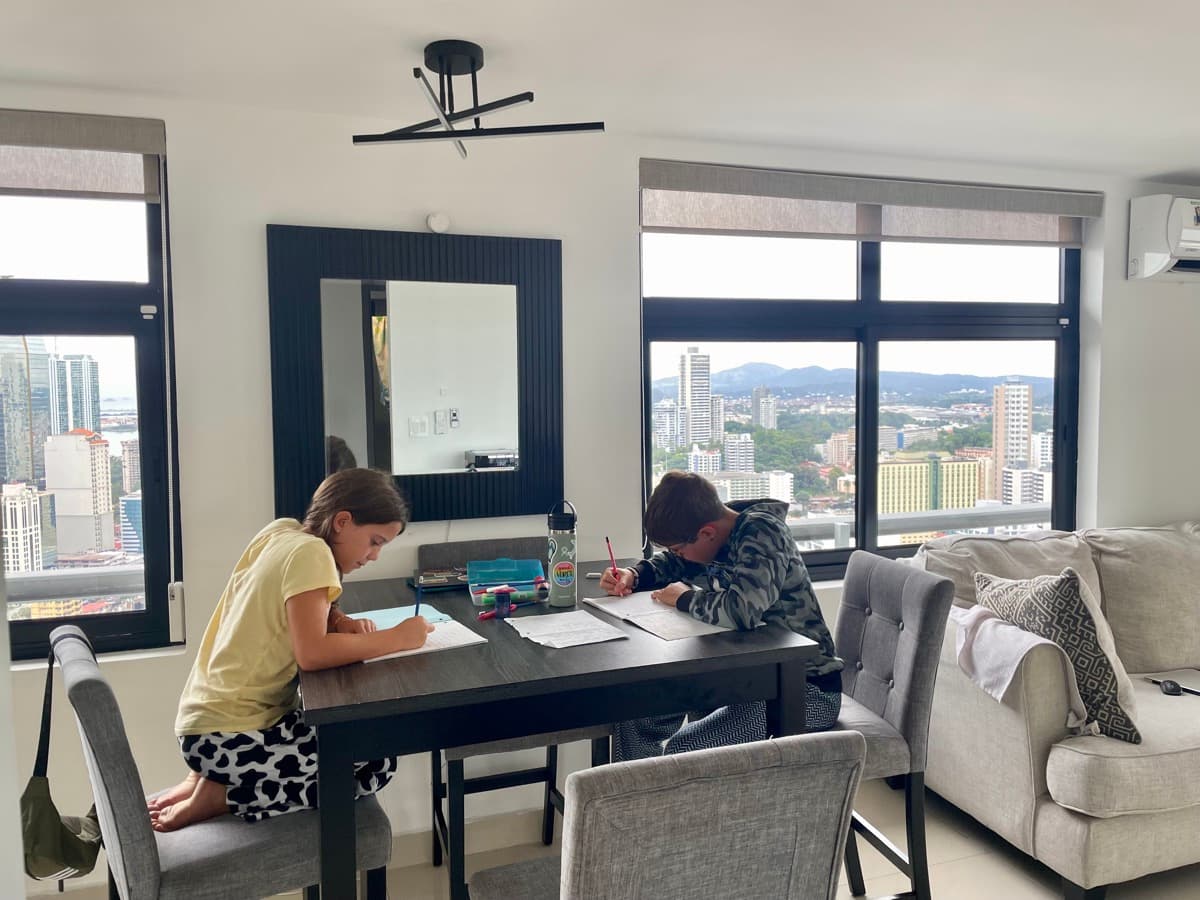
When I told my parents we were pulling the kids out of school for seven months to travel through Central America, their response was supportive but cautious. The kind of “we believe in you” that also means “we have questions.”
So when they offered to fly to Costa Rica and spend a month with us in Uvita, I said yes immediately. Partly because I missed them. Partly because my kids missed them. And partly because I wanted them to see it, to actually see what our days look like, how the kids are doing, what this whole thing really is.
What I didn’t expect was how much richer the learning became with Papi et Mamie there. (For the bigger picture on how we approach learning on the road, our worldschooling guide covers the philosophy.)
A different kind of teacher
My parents bring something I can’t: a different generation’s perspective. Different opinions. Different ways of seeing the world. When we visited a national park and spotted a macaw, I told the kids what species it was. My mom, who’s obsessed with bird photography, pulled up her own shots on her iPad and started comparing beak shapes, colours, habitats. She had the kids identifying species for the rest of the trip. Same moment, completely different layer.
Grandparents aren’t teachers. They’re something better; they’re a different lens on the world. They see things you don’t point out, ask questions you wouldn’t think of, and care about things that aren’t on your radar. And when you travel together, those differences come alive in ways they never do over a video call.
What our days looked like
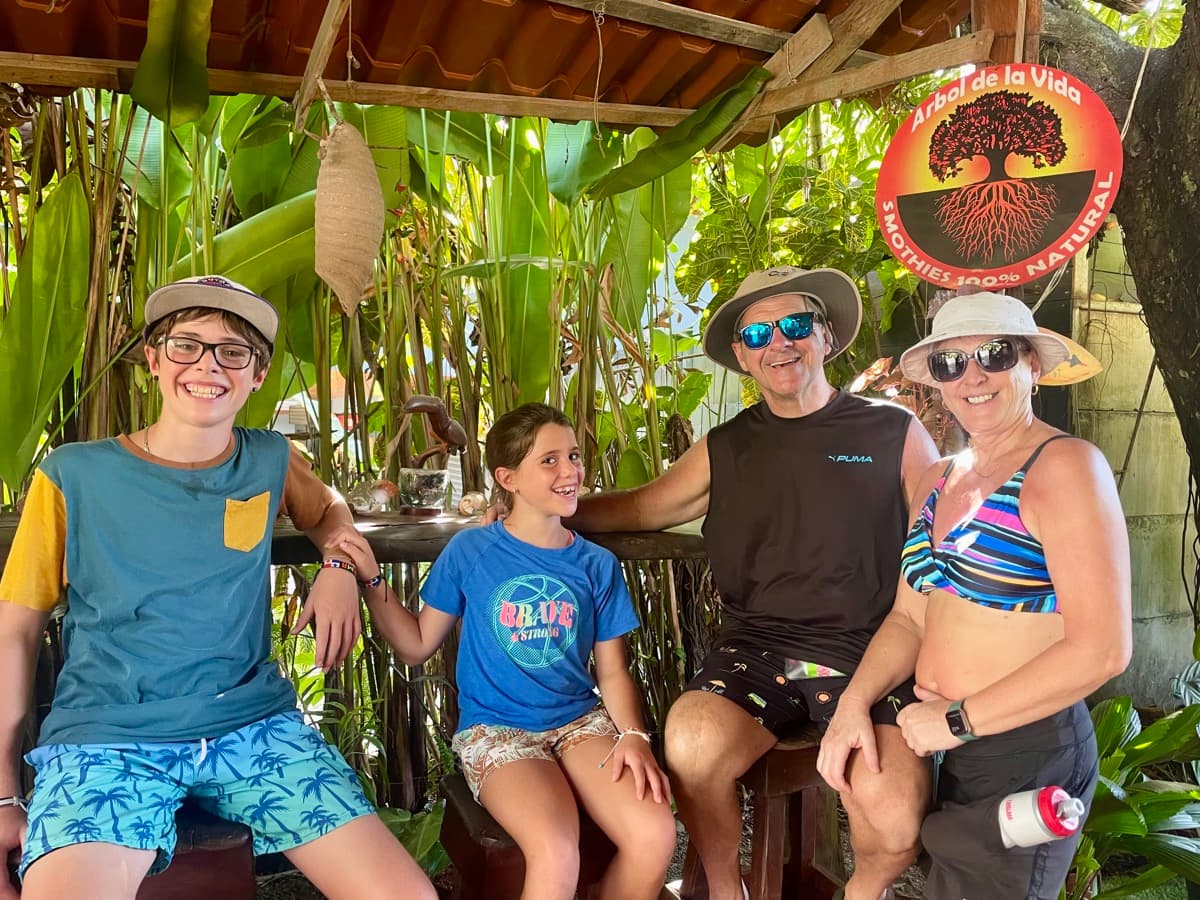
Costa Rica with four adults and two kids was, honestly, pretty great. Here’s what a typical day in Uvita looked like with Papi et Mamie:
- Morning: hiking, chasing waterfalls, or a trip to a national park, my parents kept up with everything
- Afternoon: volleyball in the pool, swimming, and walking to the panadería with Papi for local treats
- Evening: long conversations over dinner, then cards or dice games until someone got too competitive
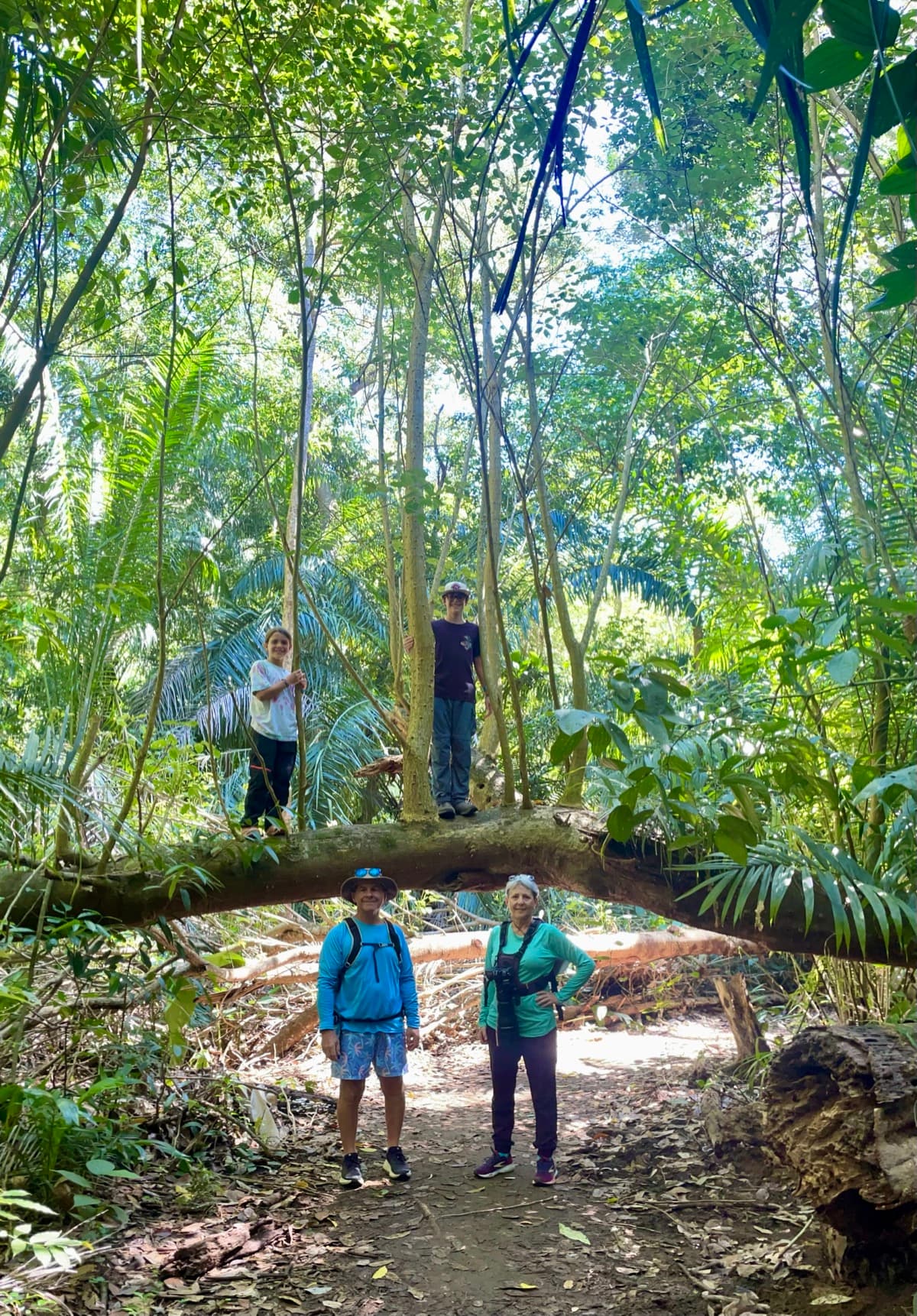
The panadería became a daily ritual. Papi, Mamie, and the kids would walk there every afternoon, 15 minutes each way. Some of their best conversations happened on that path. They’d come back with caramel-filled rolls and stories about what they saw along the way.
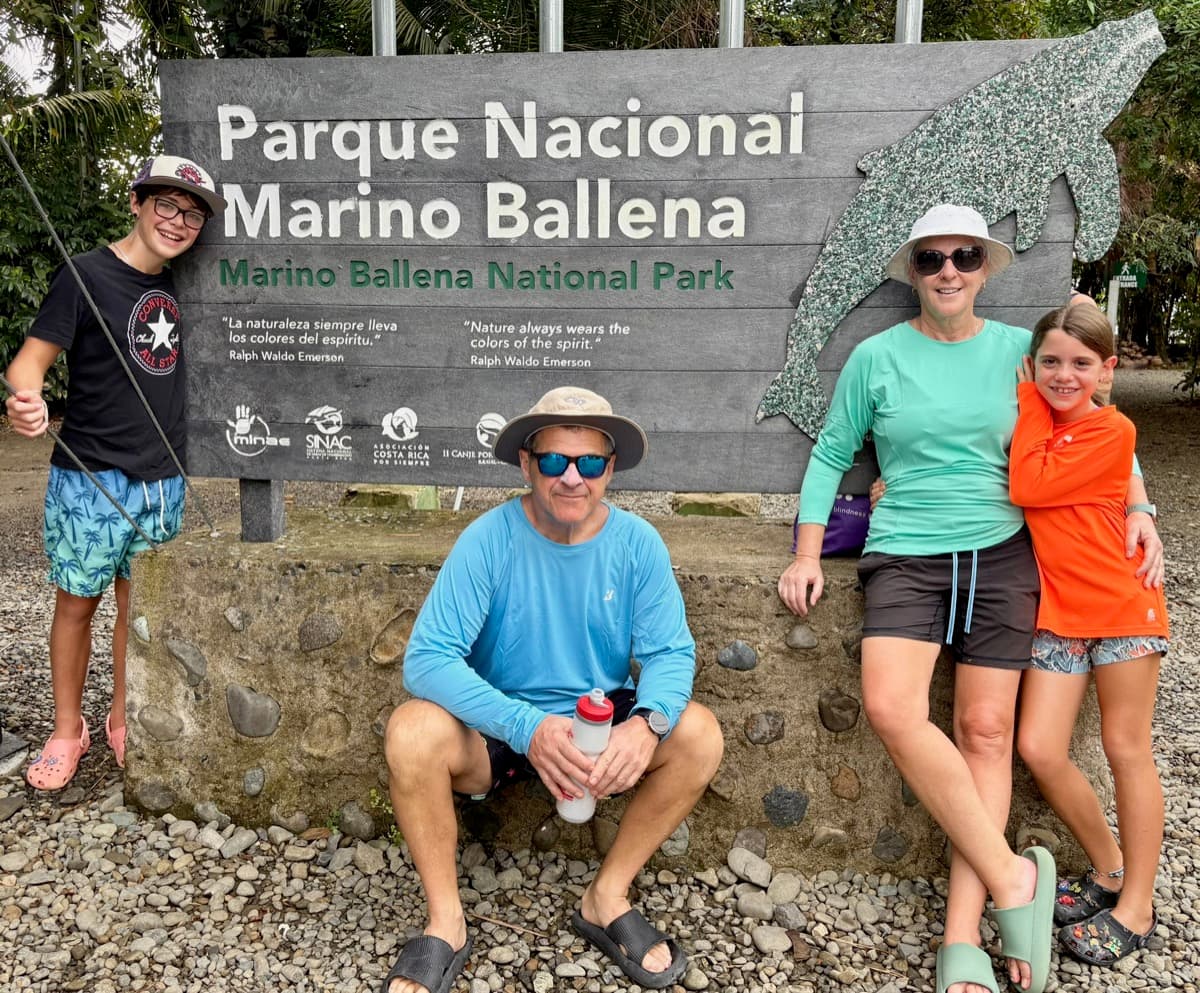
Grandparents aren’t teachers. They’re a different lens on the world. And travel brings that out in ways video calls never can.
The unexpected learning
I thought the “educational” parts of the visit would happen at national parks and museums. Instead, most of the learning happened in the small moments:
Card and dice games
My parents take games seriously. Cards after dinner became a nightly thing, and the competitiveness was real. The kids played more strategic games in that month than they had all year. Patience, planning, losing gracefully, winning without gloating. You can’t teach those things with a lecture. You teach them across a table with people you love.
Bird spotting with Mamie
My mom is a bird photography enthusiast; she’s got a better camera and more patience than most professionals. She had the kids identifying toucans, macaws, and hummingbirds within days. She’d share facts about migration patterns, how beaks are adapted for different foods, why certain birds only live in certain places. The kids started keeping a bird count. That’s real biology, sparked by a grandmother who genuinely loves what she’s sharing.
Conversations over dinner
This was the biggest one. My parents see the world differently than we do, not better or worse, just different. They grew up in a fully francophone Quebec. My kids are growing up bilingual, on the opposite side of the country. Those two realities bump into each other in the most interesting ways over dinner. Different opinions on independence, on risk, on what kids should know at what age. The kids got to hear adults they love and respect disagree thoughtfully with each other. That’s a skill most adults don’t even have.
In the Membership
Family History Detective
Communication activity for kids ages 6-14: interview an elder, build a family timeline and tree, and save the stories in writing.
What the kids got from it
Beyond the obvious (quality time with grandparents they adore), here’s what I noticed my kids gaining from the multigenerational experience:
- A sense of family continuity: understanding where they come from, not just where they are
- Exposure to different viewpoints: hearing adults they love see the world through a different lens
- French language immersion. Papi et Mamie speak French, so everything naturally switched between languages
- Real-world biology. Mamie’s bird photography hobby turned every walk into a field lesson
- Different problem-solving styles: watching how grandparents approach challenges differently than parents
- Deeper relationships: seeing their grandparents as real, full people, not just faces on a screen
My son later wrote a whole blog post in French about the Costa Rica portion of our trip. The parts about Papi et Mamie were the most detailed sections. He didn’t write about the waterfall slide or the whale sighting first, he wrote about playing volleyball in the pool with his grandfather. (We share more about this kind of family dynamic in how we worldschool with two kids.)
Making it work (logistics and honesty)
I’m not going to pretend it was seamless. Traveling with extended family requires some adjustment. Here’s what helped:
- Separate spaces: we rented a place with enough room that everyone could retreat when needed
- Built-in alone time: mornings were flex time, and nobody was expected to be “on” 24/7
- Shared meals, shared planning, my parents helped cook, helped plan, helped supervise. It wasn’t a performance for their benefit. They were part of the team
- Honest conversations: I told them upfront that our days don’t look like school, and to trust the process. They did
- Flexibility on pace: some days my parents wanted to rest while the kids wanted to hike. That’s fine. We split up when we needed to
Start with a shorter overlap, a week or two instead of a month. Pick a location with easy logistics (good walkability, medical access, things to do at various energy levels). Have the conversation about what your learning style looks like BEFORE they arrive, so nobody is surprised when there’s no workbook at the breakfast table.
Why I’d do it again in a heartbeat
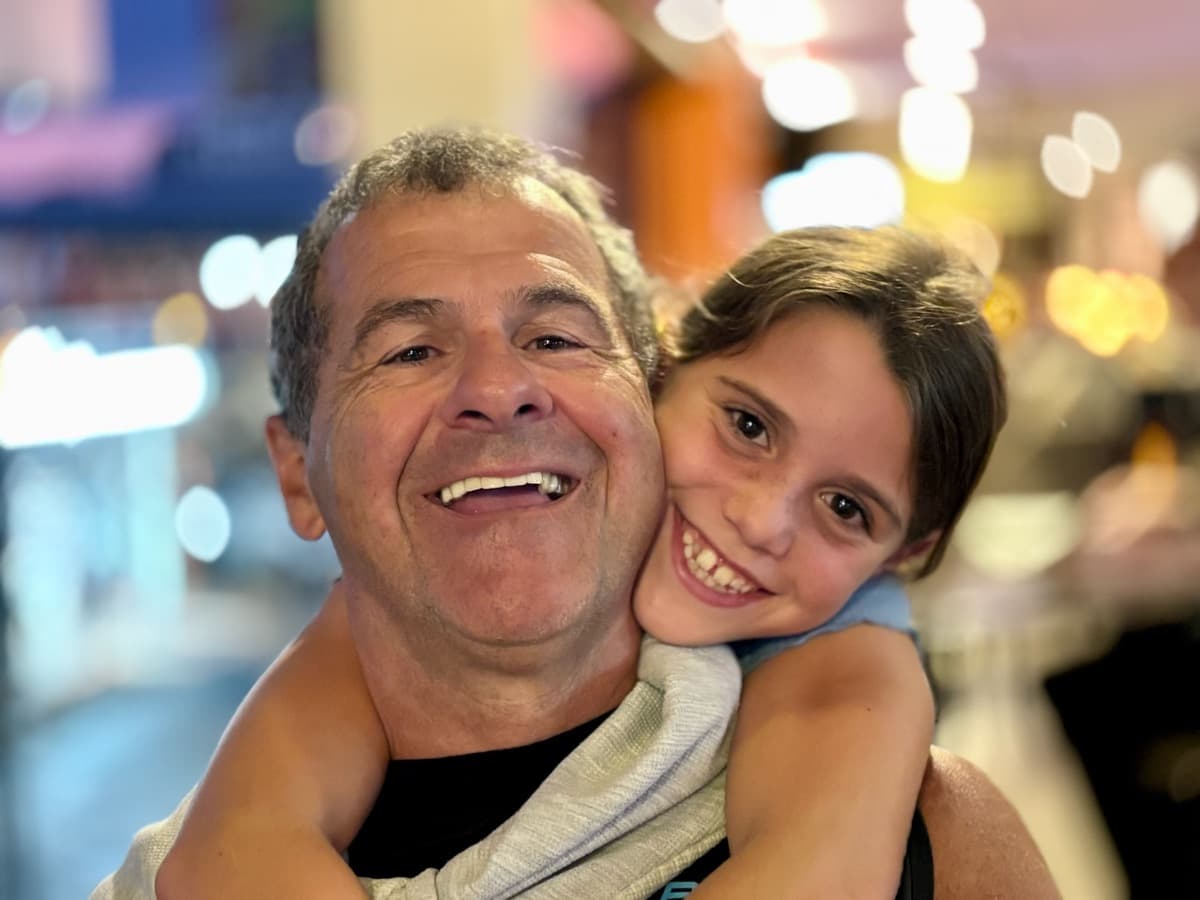
My parents flew home after a month. The kids were gutted. Like, genuinely sad in a way that surprised even me. Something had shifted during that month, they understood Papi et Mamie differently. Not as the grandparents who visit at Christmas, but as people with opinions, hobbies, humour, and a completely different way of moving through the world. And my parents understood our life differently. They’d seen it. They’d lived in it. The cautious “we believe in you” turned into genuine “we get it now.”
If you have the chance to include grandparents, or aunts, uncles, family friends, anyone from a different generation, in your homeschool or worldschool journey, take it. The learning that comes from spending real time with people who see the world a bit differently is irreplaceable. No app, no curriculum, no field trip can match what a grandparent brings to the table. (For more on the practical side of family travel, see how to homeschool while traveling.)
Literally to the table, in our case. Those caramel-filled rolls from the panadería will always taste like Uvita and Papi et Mamie to us.
Want this as a free printable? Grab the 22 Travel & Worldschool Activities for Kids, free to read, and the printable version lands in your inbox.