First: breathe. You made a brave choice. Whether you pulled your kids out of school because it wasn’t working, because you want to travel, or because you just know there’s a better way; you’re in the right place. And you don’t need to have it all figured out today. (Still weighing whether to homeschool at all? Start with our honest Should I Homeschool? checklist, then come back here.)
I remember the feeling. The excitement mixed with terror. The 47 open browser tabs. The curriculum comparison spreadsheet that somehow made everything less clear. If that’s you right now, close the tabs. You don’t need them yet.
The first week: do nothing (seriously)
This might sound counterintuitive, but the best thing you can do in your first week is... nothing structured. Let your kids decompress. Let them be bored. Let them rediscover what they’re actually interested in when nobody’s telling them what to study. This process is called “deschooling” and it’s essential.
Deschooling is the period where everyone, kids and parents, unlearn the idea that learning only happens in a classroom, on a schedule, with a teacher directing. It might take a week. It might take a month. It might feel like nothing is happening. But underneath the surface, something important is shifting.
How long does deschooling take?
You’ll often hear a rule of thumb of one month of deschooling for every year your child was in school. Hold it loosely: it’s permission to slow down, not a schedule. In practice most families land somewhere between a few weeks and a few months, and kids who were in school longer usually need more room than parents expect. But rushing it leads to the exact dynamic you’re trying to leave behind: resistance, power struggles, and resentment.
Deschooling isn’t a break from learning. It’s the beginning of real learning.
You don’t need to recreate school at home
This is the biggest mistake new homeschoolers make. You set up a desk, buy a whiteboard, create a timetable, and try to run 5 hours of structured lessons. By Wednesday, everyone’s miserable. You didn’t leave school to build another one. You left to do something different.
Kids don’t need 5 hours of instruction a day. Research on classroom time use consistently shows that a meaningful portion of the school day is lost to transitions, waiting, and off-task time. By some estimates, 10 to 30 percent of potential learning time evaporates before instruction even begins. At home, with no transitions and no crowd control, you can do more in 2 focused hours than a classroom manages in 6.
What you actually need to start
- 1A library card (free and endlessly useful)
- 2Access to the outdoors (a garden, a park, a trail)
- 3A few open-ended activities or prompts
- 4The willingness to follow your child’s lead
- 5That’s genuinely it for the first month
Keep a “learning journal” for yourself (not for your kids). Each evening, jot down 3 things your child learned today. After a week, you’ll realise learning is happening everywhere, you just weren’t trained to see it.
The first month plan
If you need a gentle framework (and most new homeschoolers do), here’s what worked for us:
- 1Week 1: Do nothing structured. Read aloud. Go outside. Play.
- 2Week 2: Start noticing what your kids gravitate toward. Write it down.
- 3Week 3: Introduce one or two open-ended activities related to their interests.
- 4Week 4: Establish a gentle rhythm (not a schedule). Morning reading, afternoon exploration, evening reflection.
That’s it. No curriculum. No workbooks. Just attention, presence, and trust. You can add more structure later if you want it. But start simple.
In the Membership
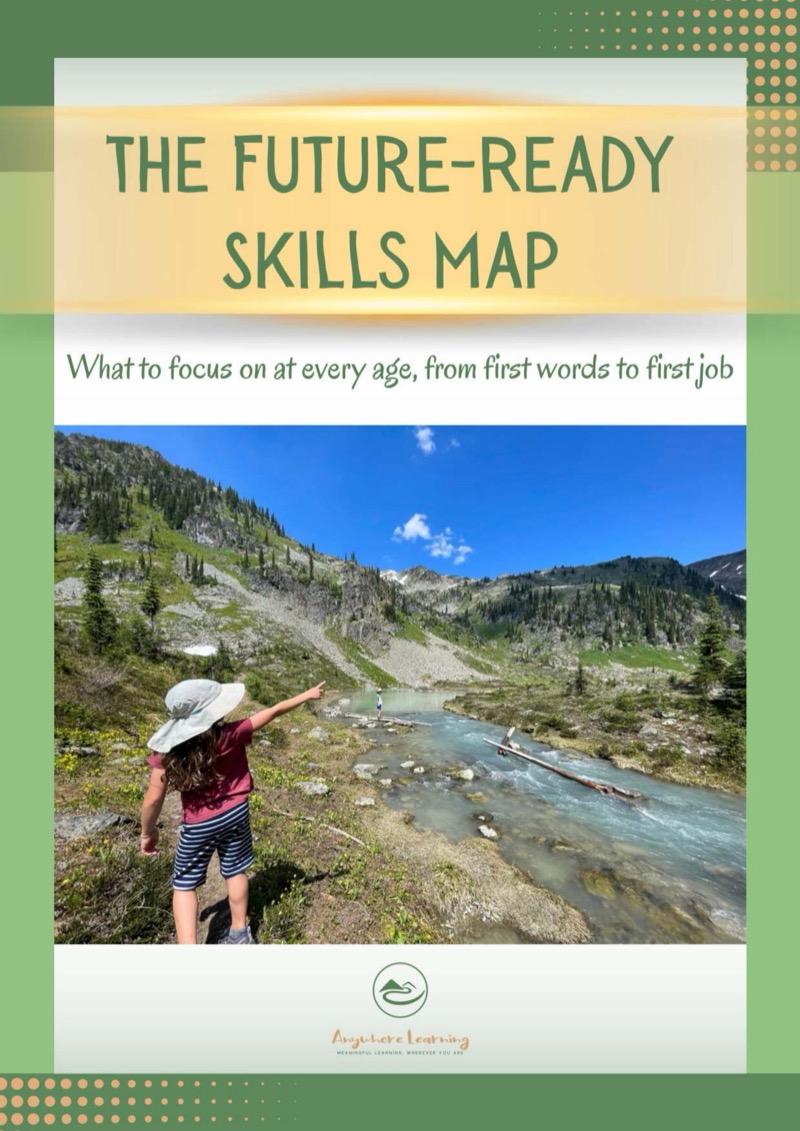
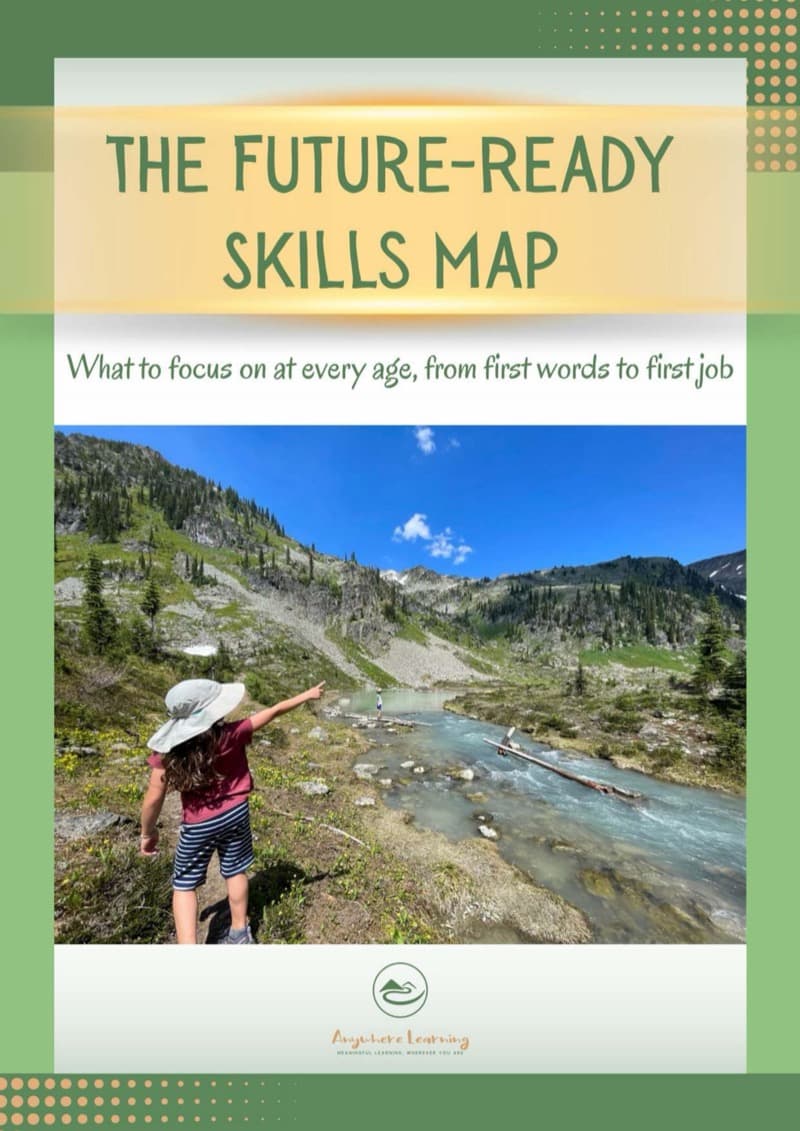
The Future-Ready Skills Map
44-page parent guide to 12 future-ready skill areas for kids ages 0-16+: milestones, hands-on activities, and sample weeks.
Finding your style
Charlotte Mason, Montessori, Unschooling, Eclectic, Classical, the labels can wait. For now, just pay attention. What does your child gravitate towards? What makes their eyes light up? Follow that thread. The philosophy will reveal itself.
Most families end up “eclectic”, a mix of approaches that evolves over time. That’s not a failure to commit. It’s wisdom. Your kids are unique. Your family is unique. Your approach should be too. (For the bigger picture of how a homeschool year actually unfolds, see our homeschool journey guide.)
When you’re ready to explore styles more deeply, our comparison of homeschool methods walks through Charlotte Mason, Montessori, Unschooling, and more, side by side. And if you’re curious about the most relaxed end of the spectrum, unschooling vs homeschooling explains the difference plainly.
The socialisation question
Yes, people will ask. No, it’s not a real problem. Homeschooled kids socialise through co-ops, sports, community groups, neighbourhood play, and the simple fact that they interact with people of all ages, not just 30 kids born in the same year.
In fact, the socialisation in most schools is... not great. Forced proximity with same-age peers in a competitive environment doesn’t teach social skills. It teaches survival. Homeschooled kids learn to talk to the elderly neighbour, the librarian, the shopkeeper, and the toddler next door. That’s richer socialisation than any playground.
The questions you’re afraid to ask
“What if I’m not smart enough to teach them?” You’re not teaching; you’re facilitating. You’re learning alongside them. You don’t need to know all the answers. You just need to help them find them.
“What about university?” Homeschooled kids get into university all the time. Many universities actively recruit them because they’re self-directed, curious, and used to managing their own learning. This is a solvable problem, but it’s not a problem for today.
“What if they fall behind?” Behind whom? Behind the arbitrary grade-level benchmarks designed for an industrial-era factory model? Your kids are on their own timeline. Trust it.
“What if I burn out?” It happens to most homeschool parents at some point. The good news: it’s recoverable. Here’s what homeschool burnout looks like and how to recover without quitting.
“What if my partner isn’t on board?” This is more common than people admit. Real strategies for getting on the same page when your partner isn’t fully convinced yet.
“What if we’re mid-school-year?” You can absolutely start homeschooling mid-year. The first month is mostly deschooling anyway, so the timing matters less than you think.
Not sure what to do first? Our free guide gives you real-world activities to try this week: no planning, low prep.