Let me paint the picture: it’s 10am and you’ve already broken up three arguments, cleaned up a spilled smoothie, answered 47 questions, and the “morning routine” that was supposed to take 20 minutes took 90. You haven’t started “school” yet. You’re not even dressed.
If that sounds familiar, you’re not failing. You’re burned out. And you’re not alone. Homeschool burnout is possibly the most under-discussed issue in the home education community, because admitting it feels like admitting that you can’t handle the thing you chose.
But here’s the truth: burnout isn’t a character flaw. It’s what happens when output exceeds input for too long. And homeschooling parents, especially the ones who care deeply about doing it well, are uniquely vulnerable to it.
10 signs of homeschool burnout
Burnout isn't always dramatic. Sometimes it's subtle: you stop enjoying the activities you used to love. You feel resentful when your kids ask for help. You scroll your phone during read-aloud because you can't focus. You fantasise about putting them on the school bus.
- 1Dreading mornings and counting the hours until bedtime
- 2Snapping at your kids over minor things, then feeling crushing guilt
- 3Losing all motivation to plan, prep, or look at the curriculum
- 4Feeling resentful when your kids ask you a basic question
- 5Comparing yourself to other homeschool families and feeling like a fraud
- 6Avoiding the books, the desk, or the room where school happens
- 7Losing patience faster than usual on otherwise good days
- 8Feeling joyless around the kids you actually love
- 9Physical symptoms: headaches, poor sleep, constant exhaustion
- 10Questioning whether you should keep homeschooling at all
If you ticked three or more, this post is for you. Take a breath. Let's work through this together.
Why homeschool parents burn out
The core issue is that you are simultaneously teacher, parent, administrator, social coordinator, curriculum designer, and emotional regulator, with no breaks, no backup, and no one to hand the kids to at 3pm.
Homeschool burnout has its own particular shape. There’s no clear end to the school day, no colleague to tag in, no quiet hour after the kids leave the building. You’re also carrying the emotional weight of being the one responsible for your children’s education, development, and social lives, while also being their parent. It’s a kind of heavy that’s hard to describe to anyone who hasn’t done it.
Add in the isolation (homeschooling can be lonely), the lack of external validation (no one hands you a performance review that says “you’re doing great”), and societal pressure (“are you sure about this?”), and it’s a recipe for exhaustion.
You chose this life because you wanted something better for your kids. Don’t let the pursuit of better destroy you.
What doesn’t help
Pinterest-perfect planners. More curriculum. A stricter schedule. Guilt. Comparing your Tuesday to someone else’s highlight reel. Being told to “practise self-care” by someone who doesn’t have two kids hanging off them.
Most burnout advice is for people with jobs they can leave at the end of the day. Your “job” lives in your house, eats your food, and needs you to regulate their emotions while you can barely regulate your own.
What actually helps
1. Lower the bar, way down
Whatever you think “good homeschooling” looks like, cut it in half. Then cut it again. You don’t need five subjects a day. You need your kids to read, be curious, and feel safe. Everything else is a bonus.
On the hardest days, sometimes all you can manage is reading aloud for 30 minutes and going outside. That’s it. And that’s okay. Kids are more resilient than we give them credit for. They don’t need a full day of structured learning, they need a parent who’s present and not running on empty.
2. Drop the guilt about screens and workbooks
If you need a morning where the kids watch documentaries while you stare at a wall, that is a valid educational choice. I’m serious. A burned-out parent is a worse “curriculum” than any screen. Take the break without the shame.
3. Get out of the house every single day
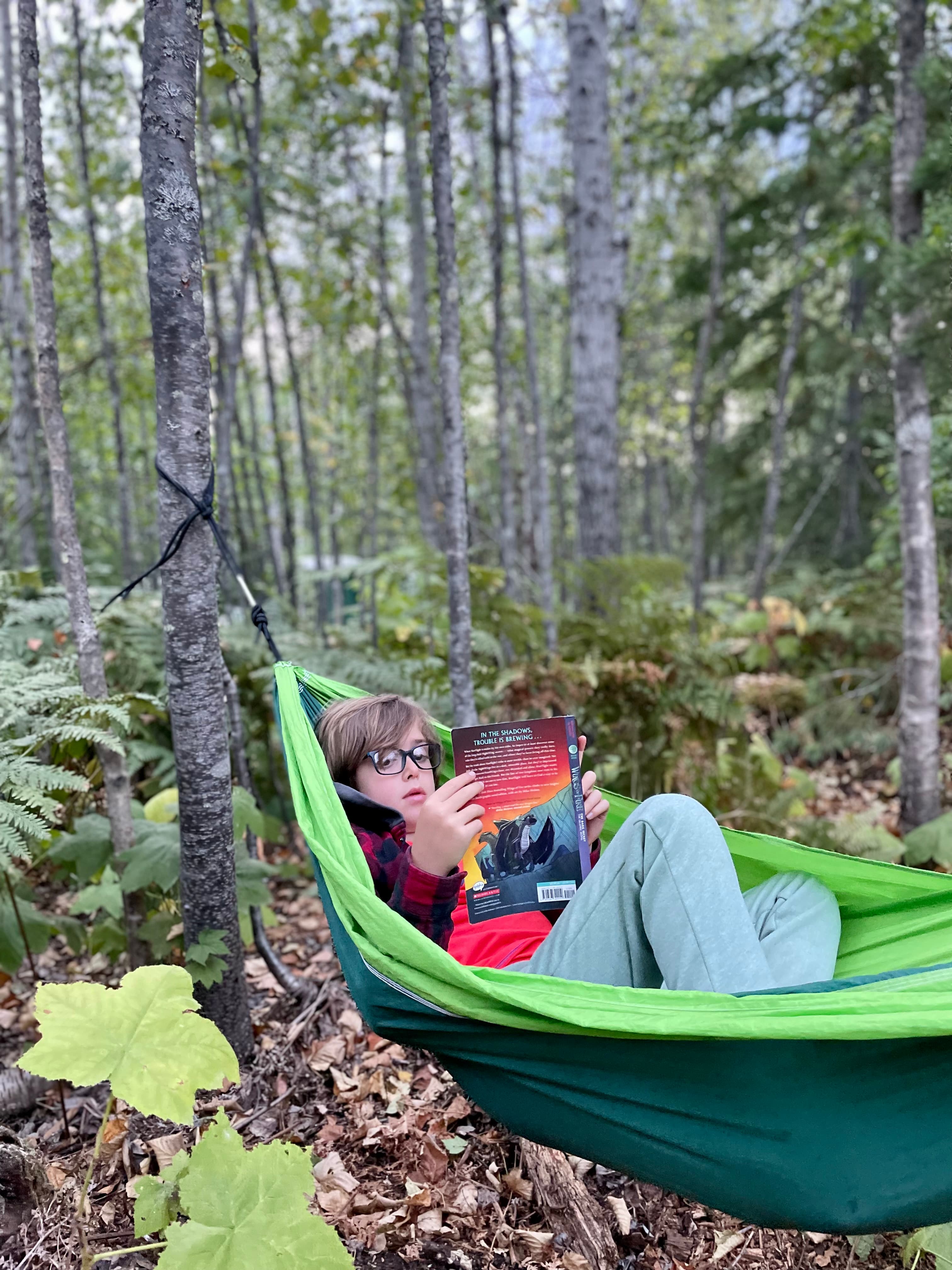
Walk, park, library, coffee shop. Anywhere. The house becomes a pressure cooker when you’re always in it. Fresh air isn’t self-care cliché; it’s a literal neurological reset. Walk for 20 minutes and notice how different you feel.

Some of our best learning happens in the car: audiobooks, conversations about big questions, mental maths games. If the house feels suffocating, drive somewhere. The change of environment can break the burnout cycle even for a few hours.
4. Find your people (and be honest with them)
Online groups help, but nothing replaces one or two parents who actually get it. Find a co-op, a homeschool park day, or even one other family you can be brutally honest with. “I’m not okay” is a sentence that needs to be said out loud sometimes.
5. Outsource something, anything
A co-op class. A tutor for the subject you hate teaching. An online course. A grandparent who takes the kids for two hours. Activity guides that are genuinely low prep. You don’t have to do everything yourself. That was never the deal.
When it’s more than burnout
Burnout and depression can look similar. If you’ve been in this state for more than a few weeks, if you’re unable to enjoy anything, or if you’re having dark thoughts, please talk to someone. A doctor, a counsellor, a trusted friend. Homeschooling is not worth your mental health, and getting help isn’t giving up.
The permission you’re looking for
You’re allowed to have a bad week. You’re allowed to take a break. You’re allowed to do less. You’re allowed to use workbooks and documentaries and activity guides and whatever gets you through.
You started homeschooling because you wanted a better life for your family. If the way you’re doing it is destroying you, change the way you’re doing it. Change whether you’re doing it. The method is flexible. You are irreplaceable.
A few things that often help when you're ready: drop the curriculum guilt once and for all, revisit the deschooling stages (yes, you might need to deschool yourself again), and if your partner isn't carrying the load with you, here's how to handle it when your partner doesn't support homeschooling.

Running on empty? Our free guide is designed for days like this: ten low-energy activities that don’t need planning, prep, or enthusiasm.