It's the question that never dies. You could be raising the most confident, articulate, socially engaged kid on the planet, and someone at a family gathering will still tilt their head and say: "But what about socialization?"
If you homeschool long enough, you’ll hear it everywhere. At birthday parties. From relatives. From strangers who notice your kids are out during school hours. The first few times, most of us stammer through it. But there are good answers. Here they are.
First: what do they actually mean?
When people ask about socialization, they usually mean one of three things, and each one deserves a different response.
- 1"Does your child have friends?" They're worried about isolation. Fair concern, easy answer.
- 2"How will they learn to deal with difficult people?" They're thinking about conflict resolution and resilience.
- 3"How will they function in the real world?" They're imagining your child as a socially awkward adult who can't hold a conversation.
Most of the time, it's #3, wrapped in genuine concern or thinly veiled judgment. Either way, the answer is the same: homeschooled kids are not locked in a house. And the research backs this up.
What the research actually says
This is where it gets interesting, because the data doesn't just say homeschooled kids are fine socially. It says they often do better. Here's what the published research actually shows:
- A 2013 literature review in the Peabody Journal of Education (Medlin) found that homeschooled children tend to have higher quality friendships, better relationships with parents and other adults, advanced moral reasoning, and less emotional turmoil and behavioural problems than their conventionally schooled peers.
- Research compiled by the National Home Education Research Institute shows that homeschooled adults are more civically engaged than privately-schooled peers (and equally as engaged as public-schooled peers), with long-term homeschoolers more likely to do unpaid volunteer work.
- The same body of research, summarised in NHERI's socialization fact sheet, shows homeschooled children regularly interact with a wider age range of people than traditionally schooled kids, who spend most of their day with same-age peers in an artificial grouping that doesn't exist anywhere else in life.
Think about it: when in adult life are you ever in a room with 25 people born in the same 12-month window as you, doing the same task at the same time? Never. That's school. That's not the real world.
The real world doesn't sort people by birth year. Homeschooled kids already live in the real world.
What homeschool socialization actually looks like
In our family, a typical week includes:
- Meetups with other homeschool families: mixed ages, unstructured play, real friendships
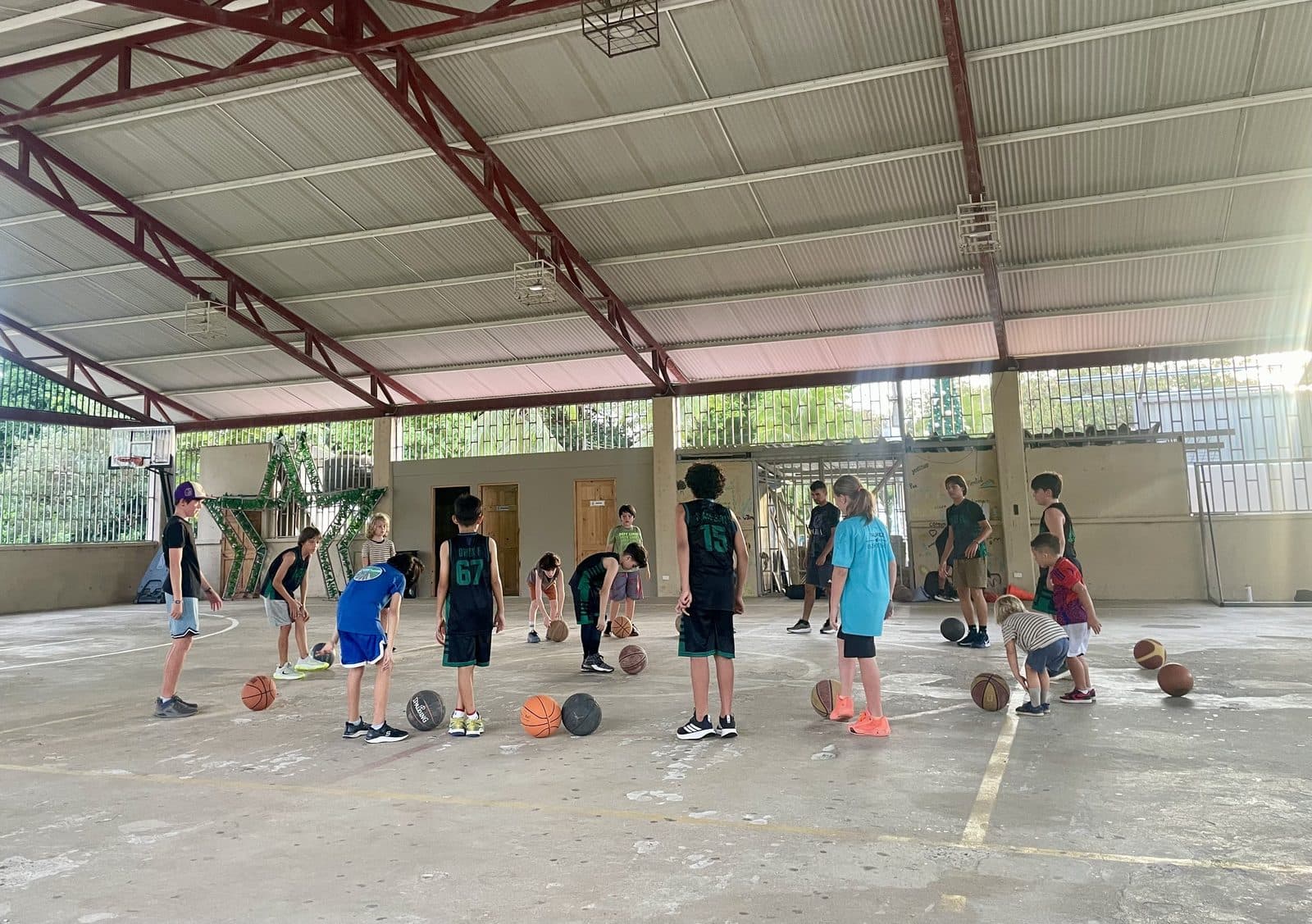
- Sports, outdoor activities, swim lessons, drama club, with kids from every kind of schooling background
- Library programmes, museum visits, and community events
- Conversations with shopkeepers, neighbours, and adults of all ages
- Free play with neighbourhood kids after school hours
- Travel experiences where they navigate new cultures and communicate across language barriers
My kids don't lack social interaction. They have more of it, and it's more diverse, more authentic, and more representative of how the real world actually works. They talk to 4-year-olds and 74-year-olds. They resolve conflicts without a teacher stepping in. They learn to read social cues in actual social situations, not in a controlled classroom.
Scripts for the most common versions
Here are word-for-word responses you can use, adapted for different situations. Keep them warm but confident. You don't owe anyone a defence of your parenting, but having a ready answer removes the stress.
The concerned relative
"I appreciate you caring about the kids. They're actually incredibly social; they're in [sports/co-op/community activities] and spend time with kids and adults of all ages. We've found they're more confident talking to adults than most kids their age, probably because they're not only around same-age peers all day."
The stranger making small talk
"They're doing great! They have a really active social life through [activity]. Homeschooling gives us more flexibility for playdates and community stuff, not less." Then smile and change the subject. You don't owe a stranger your educational philosophy.
The person who won't let it go
"I understand the concern. I had it too before we started. But the research actually shows homeschooled kids often develop stronger social skills because they interact with a wider range of ages and in more authentic settings. We're really happy with how it's going." Then you're done. You've stated your position with evidence. You don't need to argue.
In the Membership
Community Impact Project
Project for kids ages 9-14: pick a real neighbourhood problem, design a solution, and make it happen. Leadership in action.
The real socialization problem no one talks about
Here's what I wish more people understood: school socialization isn't always positive. Bullying, peer pressure, social hierarchies, cliques, exclusion. These are all "socialization" too. And for many kids, school is where they learn to mask who they are, suppress their interests, and prioritise fitting in over being themselves.
I'm not saying every school experience is bad. But the idea that putting 30 kids in a room for 6 hours produces healthy social development is an assumption, not a fact. Homeschooled kids get to develop their social skills in lower-stakes, more supportive environments, and they get to do it at their own pace.
If your kid is shy, they don't have to perform extroversion in front of 30 peers every day. If your kid is intense, they don't get labelled "too much." If your kid just needs to play, they can, without being told to sit still and be quiet.
Keep a running list of your child's social activities for a month. When someone asks about socialization, you'll have a concrete answer: "Last month they had 14 social activities across 6 different groups." Numbers shut down vague concerns fast.
When the question comes from inside the house
Sometimes the hardest version of this question isn't from a stranger; it's from your own brain at 2am. "Am I isolating my kids? Are they missing out? Will they be weird?"
If you're worried about it, you're already solving it. The parents who worry about socialization are the same ones signing their kids up for clubs, scheduling playdates, and dragging everyone to the park even when they'd rather stay home. The guilt is a sign you care, not a sign you're failing.
Watch your kids. Are they happy? Do they have friends? Can they talk to adults? Do they resolve conflicts? If yes, they're fine. Better than fine. They're thriving.
And if you're still in the early days of homeschooling and the socialization worry is loud, that's normal. Read how to start homeschooling for the wider context, and remember: real social skills are also life skills, built through real-world practice, not seat time.
Your homeschooled kids are socialised. They’re just socialised differently. And different isn’t deficient.
Real socialization happens in the real world. Our free guide gives you real-world activities that get your kids talking to neighbours, shopkeepers, and strangers. No co-op required.