Kids argue all day anyway. About bedtime, about whose turn it is, about why they should get to stay up for the end of the movie. Most of it is volume. Whoever says it louder, longer, or with the saddest face usually wins.
A family debate night takes that energy and gives it rules. Everyone gets a turn, a time limit, and reasons instead of whining. Same kids, same opinions, but now they have to build a case, listen to everyone else’s, and answer them. That is persuasive writing, public speaking and critical thinking, and nobody has to call it a lesson.
Below: how to run one, what a short round sounds like, topics by age, and the part that makes it stick, which is letting kids debate things that actually matter in your house.
Why a family debate night works
A good debate asks a kid to do something most of us find hard as adults: hold an opinion, back it up, and still hear the other person. Here is what is going on underneath the fun:
- Persuasion: building a case out of reasons and evidence instead of "because I want to."
- Writing: older kids draft an opening statement, and a good one has a claim, three reasons and a closing line. That is a persuasive paragraph with a reason to exist.
- Thinking on your feet: no research, no phones, just what you already know and why you believe it. Kids find out fast that a reason they can explain beats a fact they half remember.
- Listening: the rebuttal only works if they heard what the others said. You can see it click the first time a kid answers your actual point.
- Emotional regulation: hearing that your favourite argument was the weak one, and saying so about someone else’s without being mean. Both are practice.
It is the same reason communication skills and critical thinking grow faster at the kitchen table than in a lecture: the kid has something to win.
How to run a family debate night
Keep the first one short. Twenty to thirty minutes is plenty, and you can stretch it once everyone knows the rhythm.
- 1Pick the question. Make it a real question, not a theme: "Should kids get paid for chores?" works better than "chores and money." It can be yes or no, or wide open, like "What should we do on Saturday?" or "What is the best pizza topping?", with as many opinions as there are people at the table.
- 2Everyone picks their own opinion. When you are starting out, kids argue what they actually think. That is where the motivation is.
- 3Prep time. Five to ten minutes is more than enough to write down your reasons. No research needed. Younger kids can draw their reasons or tell them to a parent who writes them down.
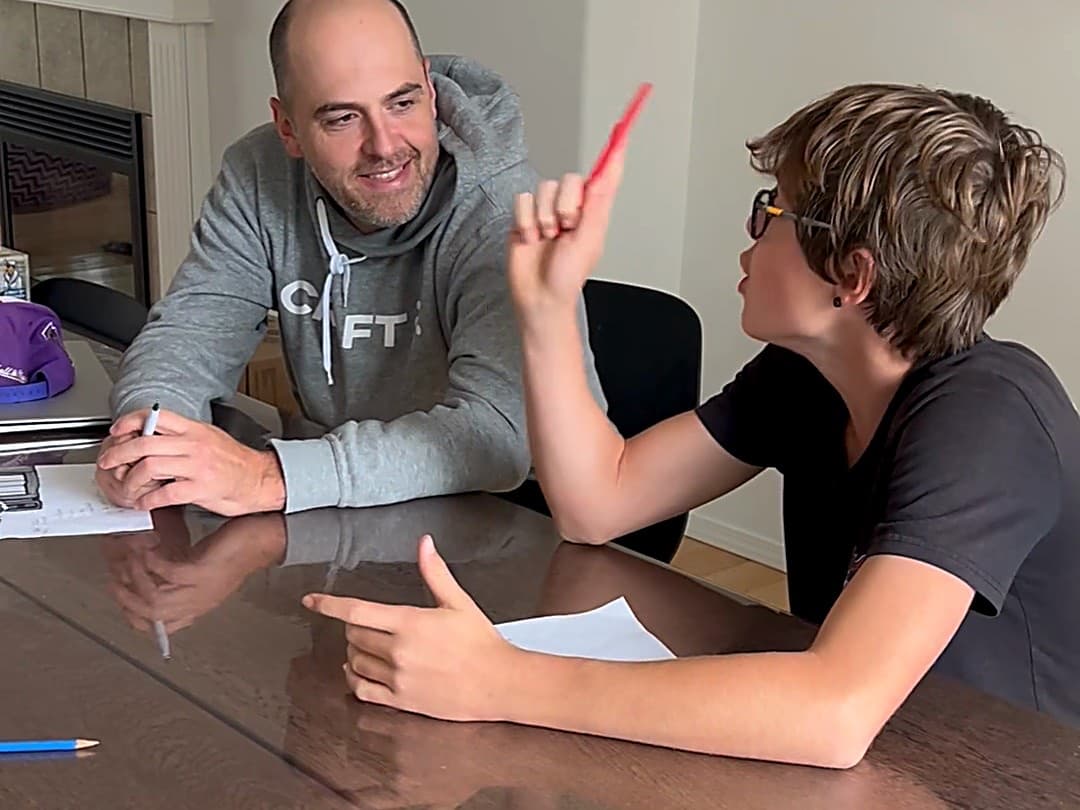
- 4Opening statements. One to two minutes each. No interrupting, even when it hurts.
- 5Rebuttal. Each person answers the best point they heard from someone else. Not "you’re wrong," but "you said X, and here’s why that doesn’t hold up."
- 6Closing. Thirty seconds: the one reason that matters most.
- 7Talk it through together. Which arguments were the strongest? Which ones did not hold up, and why? For a "best this or best that" topic, that conversation is the whole point and nobody needs to win. For a real decision, keep going until the family agrees. Either way, finish with each person naming the strongest point they heard from someone else.
Argue the idea, not the person. "That reason doesn’t work because..." is fair. "You always..." ends the round. Say it before the first debate, and anyone can call it.
What a short round sounds like
Here is the kind of exchange to aim for, with a 9-year-old arguing yes on "Should kids pick their own bedtime on weekends?" and a parent arguing no.
- Kid, opening: "Kids should pick their weekend bedtime because we don’t have to be up early, because we know when we’re tired, and because practising choosing is how we learn to do it on our own."
- Parent, opening: "No, because tired kids are grumpy the next day, because the whole family has plans on Sunday, and because nine-year-olds are not great at noticing when they’re tired."
- Kid, rebuttal: "You said we’re grumpy the next day. If I’m grumpy on Sunday, then the next weekend you get to pick. So it’s a test, not forever."
- Talking it through: everyone agrees the test was the strongest point, because it answered the grumpy argument, and the parent never answered the practising one. So the family tries it for a weekend.
Notice what happened in that rebuttal: the kid took the parent’s strongest point and turned it into a deal. That is the skill. It is also, for the record, how real negotiations work.
Family debate topics by age
Start with topics that are a little silly and have no right answer, so nobody’s feelings are on the line. Some are yes or no, and the open ones get as many answers as there are people. Move to real ones once the format feels safe.
Ages 6 to 8
- Should pets be allowed to sleep on the bed?
- What is the best animal to have as a pet?
- Is breakfast for dinner a good idea?
- Would it be better to fly or to breathe underwater?
- Should kids get to choose the family movie every Friday?
- Is summer better than winter?
- Should toys belong to one kid or to the whole family?
At this age, keep it to one reason each and let them say it out loud rather than write it. The goal is speaking in turn and listening to the answer.
Ages 9 to 11
- Should kids get paid for chores? (Our allowance vs commission post has ammunition for every opinion.)
- Is a hot dog a sandwich?
- Where should we go for our next day out?
- Should every kid learn to cook before age 12?
- Are zoos good for animals?
- Should kids be allowed to quit an activity halfway through the season?
- Is it better to live in the city or the country?
- Should our family get a dog?
Now they can handle three reasons and a real rebuttal. Give them a sheet of paper for prep and watch how much they write when it is about something they care about.
Ages 12 to 14
- Should kids have a phone before they can pay for it?
- Should video games count as a sport?
- What is the most useful thing a person can learn before 18?
- Should museums return objects to the countries they came from?
- Is it ever right to break a rule?
- Should students be allowed to use AI for homework?
- Should tourist places charge visitors more than locals?
Older kids can add an example or a fact they already know, if they want to. It is a bonus, not homework. If a topic makes them curious enough to go look something up afterwards, that is a win, and our media literacy post has a few ways to practise telling a good source from a weak one.

In the Membership
Family Debate Night
Our Family Debate Night guide has the full structure, topic cards by age, an argument prep framework and reflection prompts, so you can open it and run the first round tonight.
Debating things that actually matter in your house
Practice topics are where kids learn the format. Real topics are where they learn it matters. The moment a debate can actually change something, a bedtime, a rule, a family plan, kids prepare like they mean it.
In our house, the screen limit is one of the things the kids are allowed to argue. We have one limit, and it can move depending on what the screen is for. If my son can make the case that he needs extra time to work on his website business, that is creating, not consuming, and sometimes he wins. Sometimes he doesn’t. Either way he has to bring reasons, not just ask again. The one thing that is never up for debate is devices in the bedroom at night, and the kids know that list is short on purpose.
And most of what we argue about is small. What we are doing today. What we are eating this week. Whose turn it is for the dishes. The best pizza topping, the best movie, the best day of the summer. None of those need a timer and a judge, but the habit is the same: say what you want, give a reason, and listen to everyone else’s reasons. A kid who gets heard on whose turn it is for the dishes is practising for the bigger ones.
The debate my daughter won
This fall we are leaving for six months of travel, and we did not know where we would spend March 2027. So we debated it. Everyone got five minutes to write down their arguments. No research, no phones, just what you think and why. Then we each read our case out loud.
My daughter won. Not because she was the loudest or because we wanted to make her happy, but because we all agreed her arguments beat everyone else’s. Her case made more sense and it met what our family actually needs for that month better than any of ours did, mine included. So March 2027 was decided by a ten-year-old’s five minutes of writing.
Five minutes with a pencil is enough when the decision is real. Kids get to the point fast when the answer actually changes something. And nobody needed a judge. When everyone can see which arguments are strongest, agreeing is easy. Losing to a better argument is a very different thing from losing to a parent who just decided.
You do not need a trip to do this. Where to go for a day out, what to cook for a birthday dinner, how to spend a family budget for a weekend: any decision you would have made anyway can go to debate first. Keep a veto if you need one, but tell them up front, and use it rarely. A debate they can never win is not a debate.
When someone gets upset
It will happen, especially with the younger ones or with a topic that touches something real. A few things that help:
- Pause the clock, not the debate. A minute to breathe, then back in.
- Separate the idea from the reason: "Your idea isn’t bad. That one reason just didn’t hold up. Want to find a better one?" Kids hear criticism of an argument as criticism of them until you show them the difference.
- If a sibling round gets personal, switch to parent versus kid for a while. Parents can show what it looks like to hear "that reason was weak" and shrug it off.
- Talk about the arguments, never the people. "That reason was weak because..." is fair. "You always lose these" is not.
- End with the debrief, even after a rough round. "What was their best point?" turns a fight back into a conversation.
If debate keeps tipping into hurt feelings, spend a week on empathy first, then come back. Arguing well and caring about the other person are really the same skill.
Want the age-by-age version? The Capable Kid Guide lays out what kids can actually do from 6 to 14, and how to hand each skill over. Free, from a former teacher.
Making it work with different kids
- Big age gap: give the younger kid a parent as a teammate, so they hear how a case is built before they build one alone.
- Only child: parent versus kid works fine, and a grandparent on a video call makes a great third voice.
- Shy kid: let them write the opening statement and read it. Speaking off the cuff can come later.
- Ready for an upgrade: assign the opinions. Write them on slips of paper and draw one each. Arguing an opinion you did not choose is where the hardest thinking happens, because you have to find reasons you had not considered. Save it for when the format feels easy.