Every parent has done it: watched their kid do something unkind, crouched down, and delivered the "how would you feel if someone did that to you?" speech. And every parent has watched that speech bounce right off. The kid nods, says sorry, and does the same thing an hour later.
That is because empathy is not something you can talk a kid into. It is not a fact to memorize or a rule to follow. It is a capacity that gets built, slowly, through experience, example, and a thousand small moments. The good news is that it absolutely can be built. Empathy is one of the most important life skills a kid can develop, and while some kids are naturally more attuned than others, every child can grow it. This is how.
What empathy actually is
Empathy gets used as a fuzzy feel-good word, but it is actually three distinct things, and kids develop them at different rates:
- Cognitive empathy: understanding what someone else is feeling or thinking. This is perspective-taking, the ability to imagine yourself in someone else’s position.
- Emotional empathy: actually feeling something in response to another person’s emotion. Your chest tightens when you see someone cry.
- Compassionate empathy: being moved to do something about it. You do not just understand and feel, you act to help.
A whole person needs all three. Understanding without feeling is cold. Feeling without acting is just distress. The goal is a kid who can notice how someone feels, be moved by it, and choose to do something kind about it. And empathy is not about raising a pushover who ignores their own needs. Real empathy includes the self; it is about connection, not self-erasure.
Can you actually teach empathy?
Yes, but not the way we usually try. If you have ever searched how to teach empathy to a child, you have probably found a lot of scripts that bounce right off. Developing empathy in children is less about words and more about experience. The research is clear that empathy is both inborn and shaped by environment: kids come wired with the beginnings of it, and then it grows, or does not, depending on what they experience and see modeled around them.
Which means the single most powerful thing you can do is not a lesson at all. It is to be empathetic yourself, visibly, in front of your kid, including toward them. Children absorb empathy far more from watching how you treat people, the waiter, the tired sibling, them when they are melting down, than from anything you say about it. Empathy is caught at least as much as it is taught. Everything below works better when you are living it too.
15 real-life ways to teach empathy
If you are looking for how to teach kids empathy in practice, these are it. None of them are lessons or worksheets. Think of them as empathy activities for kids and everyday kindness activities for kids, woven into ordinary life, and together they build the real thing over time.
1. Model it out loud
When you feel empathy, narrate it. "That man looked upset, I hope he is okay." "Your brother is having a hard day, let us be gentle with him." Kids cannot see the empathy happening inside you, so say it out loud and make it visible.
2. Name feelings, all of them
A kid who cannot name emotions cannot recognize them in others. Build a rich feelings vocabulary: not just happy and sad, but frustrated, disappointed, nervous, left out, embarrassed. Name their feelings and other people’s. This is the raw material of empathy, and it overlaps with emotional regulation, which is its foundation.
3. Validate their feelings first
This is the one most parents miss. A kid whose own big feelings are consistently met with understanding learns what empathy feels like from the receiving end, and then offers it to others. A kid whose feelings are dismissed ("you are fine, stop crying") learns that feelings do not matter. You cannot teach a skill you are not giving them. Meet their emotions first.
4. Ask perspective-taking questions
Instead of telling them how someone felt, ask. "How do you think she felt when that happened?" "What do you think he was needing right then?" Questions make them do the imagining, which is the actual muscle. Telling them does the work for them.
5. Read fiction and talk about it
Stories are empathy gyms. Getting inside a character’s head, feeling their fear or hope, is perspective-taking practice with the training wheels on. Read together and ask about the characters: why did they do that, how do you think they felt, what would you have done?
6. Point out feelings in the real world
At the park, in a store, on a walk: "See that little one crying? What do you think happened?" You are training their attention to notice other people’s emotional states, which is the first step of empathy and the one that fades when kids are buried in screens.
7. Give them someone or something to care for
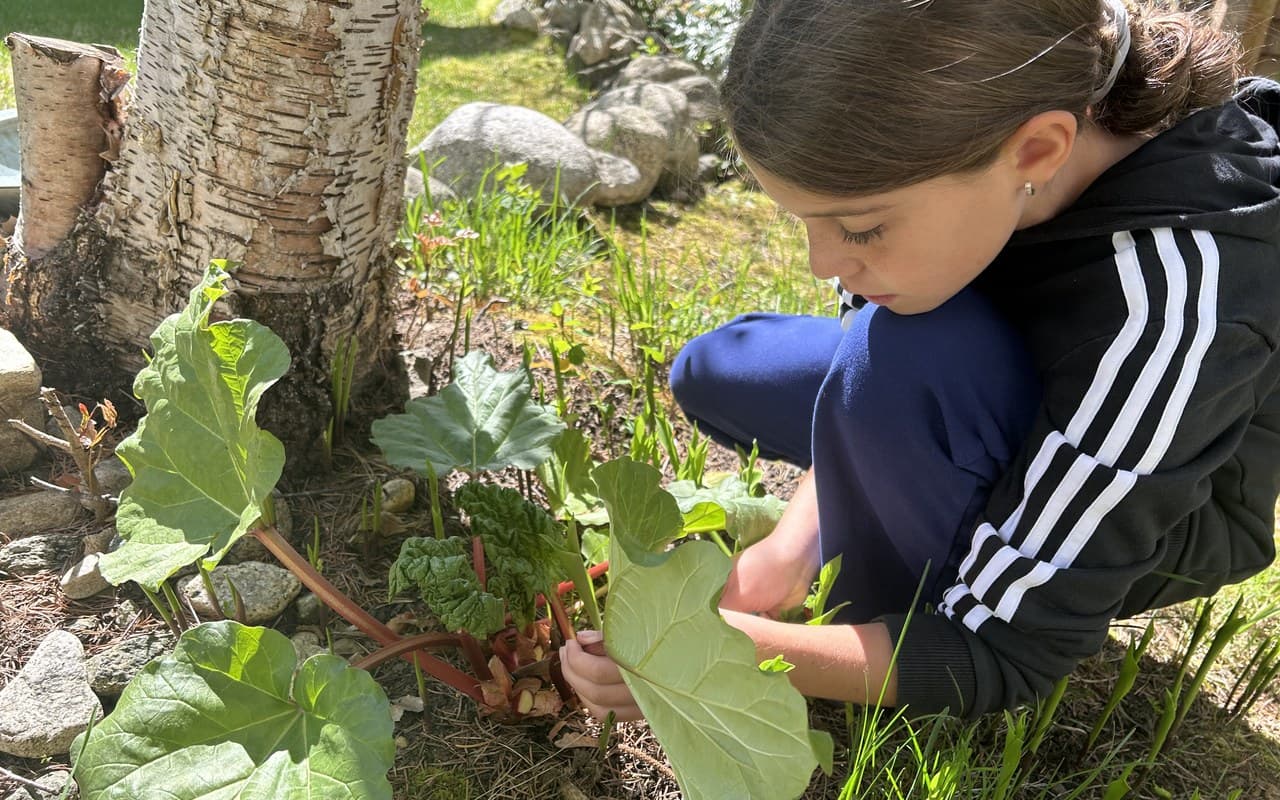
Caring for a pet, a plant, a younger sibling, or a garden puts a kid in the role of the one responsible for another living thing’s wellbeing. Nothing builds compassionate empathy like being needed by something that depends on you.
8. Do real acts of kindness together
Not a lecture about kindness, but doing it: baking for a neighbor, writing a card for someone lonely, helping a struggling friend. Empathy grows through action. When kids repeatedly do kind things and see the effect, the value moves from their head into their hands.
9. Teach repair, not just apology
A forced "say sorry" teaches compliance, not empathy. Real repair asks: how do you think they feel, and what could you do to make it a little better? Fixing the block tower they knocked down, getting the hurt friend a tissue. Repair connects the action to the other person’s feelings in a way that "sorry" never does.
10. Do not force sharing or apologies
Counterintuitively, forcing these often backfires. A kid made to share on demand learns resentment, not generosity. A kid made to apologize insincerely learns that the words are a way to end trouble, not a repair. Coach the genuine version instead, even when it is slower and messier.
11. Expose them to different lives
Empathy is easiest for people like us. Stretch it by exposing kids to people whose lives, abilities, ages, and circumstances differ from theirs, through friendships, books, travel, volunteering, and real conversations. The wider their sense of who counts as "us," the wider their empathy.
12. Debrief conflicts afterward
Not in the heat of the fight, but later, when everyone is calm: "What do you think that was like for her?" Replaying a conflict from the other person’s side, once the emotion has cooled, is one of the most powerful perspective-taking exercises there is.
13. Let them see you repair too
When you lose your temper or get it wrong, own it in front of them. "I was frustrated and I snapped at you, and that was not fair. I am sorry." A parent who models genuine repair teaches empathy and humility in a single move, and it lands far harder than any lecture.
14. Build family empathy rituals
Small repeated habits: a dinner-table go-around about who you helped or noticed today, a gratitude moment, a "highs and lows" check-in where everyone listens to each other. Rituals make noticing and caring for each other a normal part of how your family runs.
15. Be patient, and keep going
Empathy develops slowly and unevenly. A kid can be deeply caring one moment and oblivious the next, and that is normal, not a failure. Keep modeling, keep naming, keep giving them chances to practice. The seeds you plant now often do not visibly bloom until later.

In the Membership
The Kindness Missions
A deck of small, real kindness missions that turn empathy into practice, not a lecture. One noticed-and-acted-on moment at a time.
What empathy looks like by age
Empathy is developmental. Expecting an amount a child’s brain cannot yet produce just leads to frustration for everyone. Here is roughly what to expect and encourage at each stage.
Ages 6 to 8: noticing and naming
Young kids are still fairly self-focused, and that is developmentally normal, not selfishness. At this age, empathy looks like starting to notice when someone is sad, being able to name basic feelings, and offering simple comfort with coaching. Keep it concrete: point out feelings, name them, and celebrate small kind acts without over-praising.
Ages 9 to 11: perspective and nuance
This is a big leap. Kids this age can genuinely take another’s perspective, understand that people can feel two things at once, and grasp that their actions affect others’ feelings. This is often when empathy becomes visibly real, a kid comforting a sibling unprompted, noticing a left-out classmate. Give them responsibility and real chances to help.
Ages 12 to 14: values and action
Tweens and young teens can extend empathy beyond people they know to strangers, groups, and causes, and they start to care about fairness and justice. Channel it: volunteering, standing up for others, real responsibility for people who depend on them. This is where empathy matures into character.
The sibling-fight scenario
Since this is where empathy gets tested most, here is how to handle the classic sibling blowup in a way that builds it. In the moment, keep everyone safe and calm first; no one learns empathy mid-meltdown. Once things settle, bring them together and coach perspective-taking, not blame: "You were both upset. What do you think was going on for your sister?" Then move to repair: "What could you do to make things a little better between you?" You are not assigning guilt, you are walking them through noticing the other person and choosing to reconnect. Do this a hundred times over the years and it becomes how they handle conflict for life.
What quietly blocks empathy
A few common patterns that undermine empathy even when parents mean well:
- Dismissing the kid’s own feelings. A child who does not feel understood has little to give. Their empathy is fueled by having received it.
- Shaming instead of coaching. "You should be ashamed" triggers defensiveness, which is the opposite of open-hearted perspective-taking. Guide, do not shame.
- Forcing hollow apologies. It teaches that "sorry" is a magic word to escape consequences, not a genuine repair.
- Over-focusing on the child. Kids whose every want is instantly met can struggle to imagine others’ needs, simply because they rarely have to.
- Too much screen time, too little face time. Empathy is built reading real faces and navigating real relationships. Screens quietly starve that practice.
The long game
Here is the reassuring truth. If you are modeling empathy, meeting your kid’s feelings, and giving them real chances to practice, it is working, even on the days it does not look like it. Empathy is not a switch that flips. It is a slow bloom, and it often becomes unmistakable around age 10, when a kid who used to shrug says something so genuinely kind it stops you in your tracks.
You will not get there with a better lecture. You will get there by being the kind of person you want them to become, and by patiently, repeatedly giving them the experiences that grow a caring heart. Keep going. It adds up to more than you can see.
Want the age-by-age version? The Capable Kid Guide lays out what kids can actually do from 6 to 14, and how to hand each skill over. Free, from a former teacher.
Teaching empathy to kids is not about the perfect words. It is about the daily example, the feelings you name, the perspective you invite, and the real chances you give them to care for someone else. Do that, consistently, and you will raise a kid who does not just know they should be kind, but actually feels it, and acts on it.
And if you want ready-made ways to turn empathy into practice rather than a lecture, that is exactly what the Anywhere Learning membership is built for: real-world, hands-on activities for ages 6 to 14 that grow kindness, connection, and character, done together, with almost no prep.