Most "community service" for kids is a drive. Collect cans, collect coats, hand them over, done. Nothing wrong with a drive. But the kid does not have to notice anything, decide anything or talk to anyone. The adult picked the problem, the adult knows the fix, the kid carries boxes.
A community impact project flips that. The kid picks the problem, and it has to be one they can see from where they live. Then they find out who it actually affects, which means talking to people, and design something that would change it, which means a plan with steps and a date. Your job is to walk alongside: make the introductions, drive the car, ask the questions, and not take over.
That is the whole difference, and it is why these projects teach so much at once. The math shows up because you have to count something before you can claim it is a problem. The writing shows up because somebody has to be asked, in writing, for permission or help. The speaking shows up because the person who owns the corner, the park or the bus stop is a real person with a phone number.
What counts as a community impact project (and what does not)
The test is simple: is something in the neighbourhood different afterwards, and did your kid make the decisions that got it there? A bake sale for a charity is generous, but the kid did not choose a problem and the street is the same on Monday. A hand-painted sign at the crosswalk everyone ignores, put up after your kid counted 40 cars rolling through the stop in ten minutes and wrote to the town about it, is a community impact project. Small is fine. Real is required.
- A real problem your kid noticed, close enough to walk to
- Real people affected, and at least one of them talked to
- Something that exists or happens afterwards that did not before
How to run a community impact project, step by step
Step 1: Walk the block with a notebook
Three walks, at different times of day, and one rule: no fixing yet. Your kid writes down (or tells you, and you write) everything that bugs them or that they notice. The dark corner. The bin that is always full. The bench nobody uses because it faces the wall. Ten items is plenty.
Step 2: Pick one and count it
Turn the complaint into a number. How many, how often, for how long. Ten minutes at the corner with a tally sheet does it. This is the data that makes an adult listen later, and it is the math lesson: tallies at six, averages at ten, percentages at thirteen.
Step 3: Find out who it affects
Three conversations: a neighbour, someone who uses the thing, and someone who is responsible for it (the person who answers the phone at the town office, the parks department, the library). You dial. Your kid talks. Script the first sentence together and let the rest happen.
Step 4: Design the fix, then shrink it
The first idea is always too big. Ask: what is the smallest version that would still change something? Then write the plan as steps, each with a who and a when. A plan with dates is a plan; a plan without them is a wish.
Step 5: Ask for what you need, in writing
Permission, a spot, twenty dollars, a hand on Saturday. A real letter or email, with the count from step 2 in it. This is the writing lesson, and unlike most writing kids are asked to do, it has a reader who will answer.
Step 6: Do it, on the date
The logistics are the point. Someone will not show up. The paint will be the wrong colour. The library will have double-booked the room. Let it be imperfect and finished, which is a skill most adults are still working on.
Step 7: Go back and look
A week later, stand in the same spot. Is it different? Count again. Take the after photo to go with the before. Tell the people who helped what happened, and ask your kid what version 2 would be. That last question is where the learning gets filed.
8 community impact projects a family can actually run
Each one names the age it fits best and the school subjects hiding inside it. Pick the one closest to something your kid has already complained about.
1. The stop sign count (ages 6 to 9)
Ten minutes at the corner, twice, with a tally: cars that stop, cars that roll through. Turn the tally into a bar chart with blocks on the kitchen table. Then a one-paragraph letter to the town with the number in it, and a homemade sign for the lawn while you wait for the answer. Inside it: counting, comparing, a first letter with a reader.
2. The bin that is missing (ages 6 to 10)
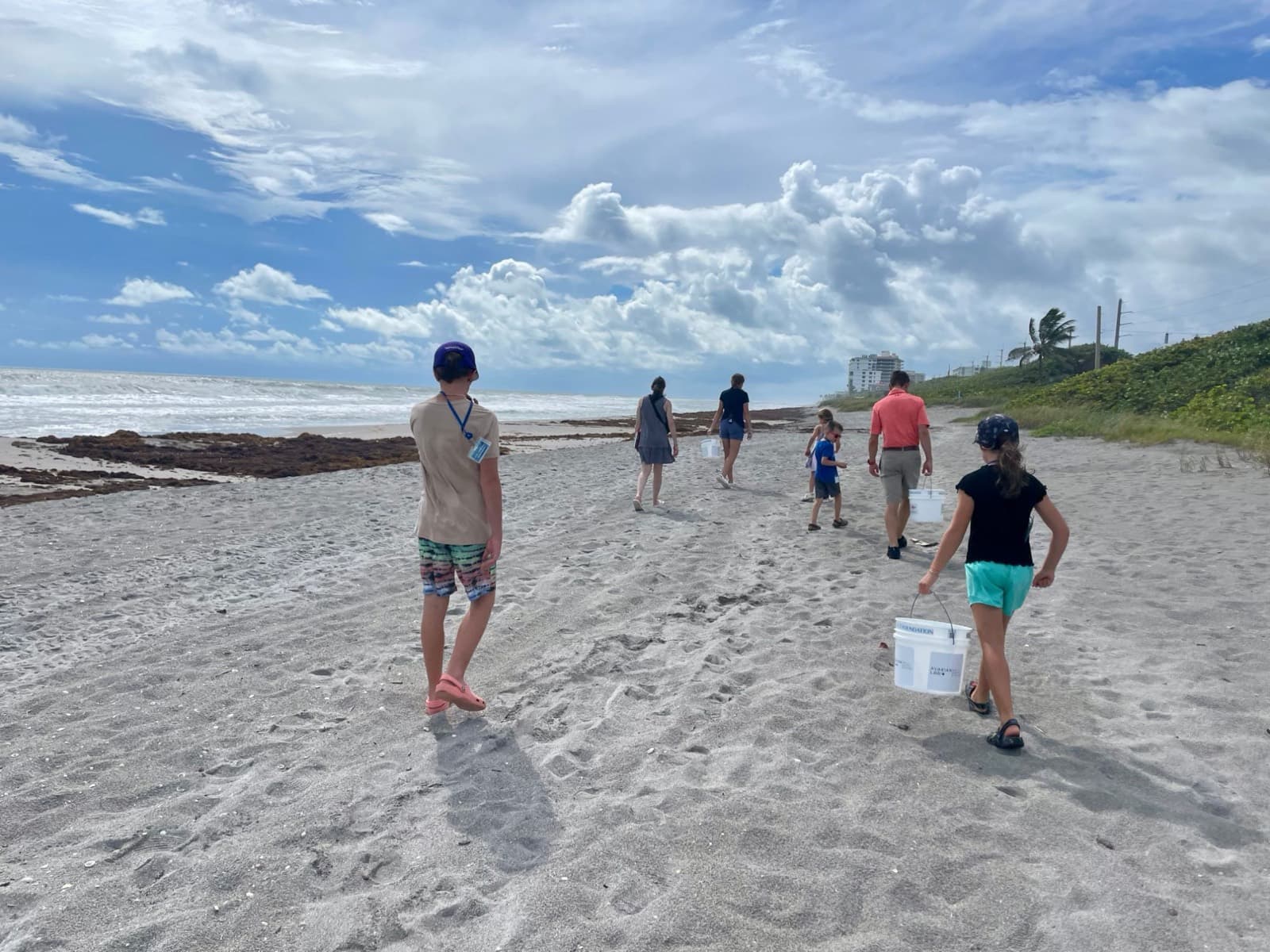
Draw the park as a grid on a sheet of paper. Walk it and mark every piece of litter with a dot. Pick it up, count by type, and look at the map: the dots cluster where the bin should be. Call the parks department to ask for one, and run a Saturday pickup with two neighbours in the meantime. Inside it: mapping, categories, a phone call to a stranger.
3. A book box on the corner (ages 7 to 11)
A small free library from a crate or an old cabinet, on a post or a fence, with the owner of the corner house asked first. Measure the box, work out how to keep the rain out, keep the whole thing under twenty dollars using what is already in the garage, sort the first thirty books by age, and paint the sign. Inside it: measuring, a budget, an ask made in person.
4. The welcome sheet for new neighbours (ages 8 to 12)
One page for whoever moves in next: the nearest playground, library hours, garbage day, the good bakery, who to call for what, and a hand-drawn map. Every fact checked by phone or in person before it goes on the page. Ask two neighbours what they wish someone had told them when they arrived, then deliver it to the next moving truck. Inside it: research, verification, a map, writing for a stranger.
5. Grow it for the food bank (ages 8 to 14)
One raised bed or six big pots, planted for someone else. Call the food bank first and ask what they can actually take and when; the answer shapes the whole plan. Work the planting dates backwards from a delivery date, weigh every harvest, and deliver it with the total written on the box. Inside it: dates and elapsed time, weights, area, and a growing project with a deadline.
6. The tech hour (ages 11 to 14)
A Saturday hour at the library or community room where older neighbours bring their phones and your kid helps: photos, video calls, the bus app. Your kid books the room, writes the notice, makes a one-page how-to for the three most common questions, and runs it. Then a second hour, planned from what people actually asked. Inside it: teaching, scheduling, patience, a how-to written for a real reader.
7. The snow and leaves crew (ages 10 to 14)
Pick the three houses on the street where someone cannot shovel or rake anymore, and ask them. Free, or a fair price agreed with the neighbour, decided by your kid and written down. Then a schedule, and the part that matters: the second storm, when it is cold and nobody feels like it. Inside it: an agreement, money if there is money, and follow-through when the novelty is gone.
8. Fix the bus stop (ages 12 to 14)
Survey twenty people who use the stop: what would make it better, a bench, a shelter, a timetable you can read. Turn the answers into percentages, write a one-page proposal with the survey in it, and send it to whoever runs the buses, with a request to present it in person. Expect a slow answer; that is part of the lesson. Inside it: survey design, percentages, persuasive writing, and how a town actually decides things.
In the Membership
Community Impact Project
If you want the steps laid out with project idea cards, a who-does-this-affect research sheet and the version 2 reflection, our Community Impact guide is this project, written for the parent to run alongside the kid.
Adapting it by age
At 6 to 8, you hold the plan and your kid holds the tally and the ask. Keep it to one afternoon of spotting and counting, one conversation, and one follow-up. The win is that they said the sentence to the adult at the counter.
At 9 to 11, your kid owns the plan on paper and you own the driving and the introductions. A week or two, end to end, with the letter written by them and read by you before it goes.
At 12 to 14, your kid makes the calls and the letter goes in their name. You are the ride and the safety net. Expect at least one no, and treat it as data: what would make the next ask land? That question is worth more than the yes.
Three ways parents accidentally wreck it
- Picking the problem for them. Then it is your project, with a helper.
- Fixing it in an evening so it gets done "properly". Done by you is not done.
- Skipping the count and the conversation and going straight to the poster. The poster is the least important part.
One sentence on the fridge: the count before, the count after, the date. It turns a nice afternoon into evidence, and it is the part your kid will still be able to tell you about next year.
Small is fine. Real is required.
Take it further
If the fix turns out to be a service people would pay for, the snow crew or the tech hour, you are one step from a kid-run business, Shark Tank style. If the hardest part was the phone call, the communication skills post has the practice for that. And if the project stalled at step 4 because they could not choose, decision-making by age is the underlying skill. For the why behind all of it, see teaching empathy to kids: this is empathy with a to-do list.
Want the age-by-age version? The Capable Kid Guide lays out what kids can actually do from 6 to 14, and how to hand each skill over. Free, from a former teacher.