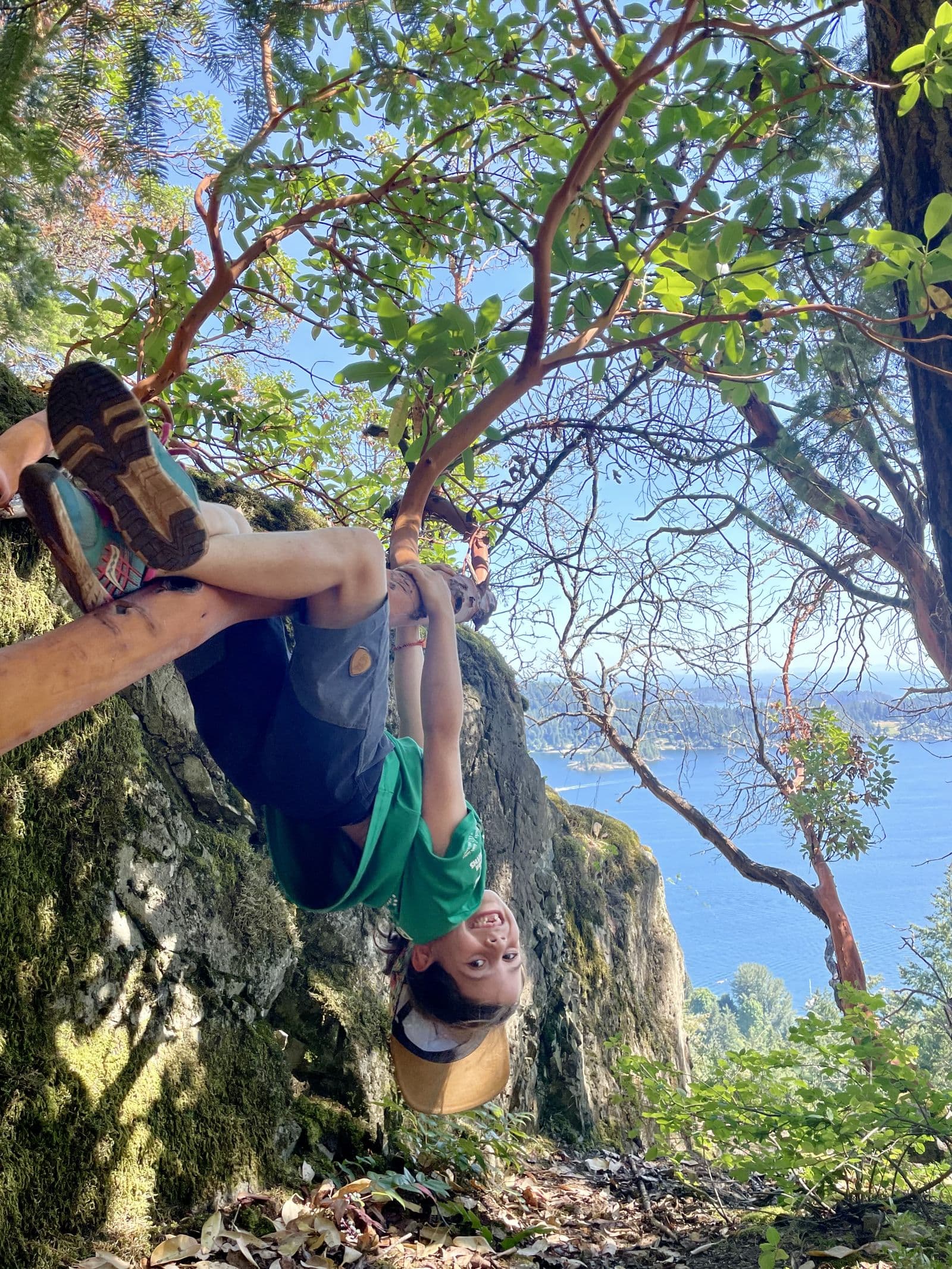
Picture your kid 12 feet up a tree. They are squinting at the next branch, calculating. Your body wants to yell "be careful." Maybe you do. Maybe you bite it down.
Here is what that "be careful" actually does. It breaks their concentration at the exact moment they are running a real-world physics calculation. It tells them you do not trust their judgement. And it teaches them, slowly, that climbing is something that worries adults, not something they get to figure out.
Modern parenting has overcorrected on safety. We have padded the playgrounds, banned the climbing trees, replaced pocket knives with safety scissors, and called it progress. It is not. We have raised a generation of kids who have never been allowed to test their own physical limits, and the data on their anxiety, coordination, and judgement is starting to come in. It is not good.
This post is the case for letting your kid climb the tree. And use the knife. And walk to the corner store alone. (For more on why outdoor, unstructured time matters, our nature-based learning guide covers the research.)
What risky play actually is
Norwegian researcher Ellen Sandseter spent years watching kids in playgrounds and forests and identified six categories of risky play that show up across cultures. They are not arbitrary. Kids gravitate to all six, and each one builds something specific.
- Heights: climbing trees, scrambling rocks, jumping from things, hanging upside down
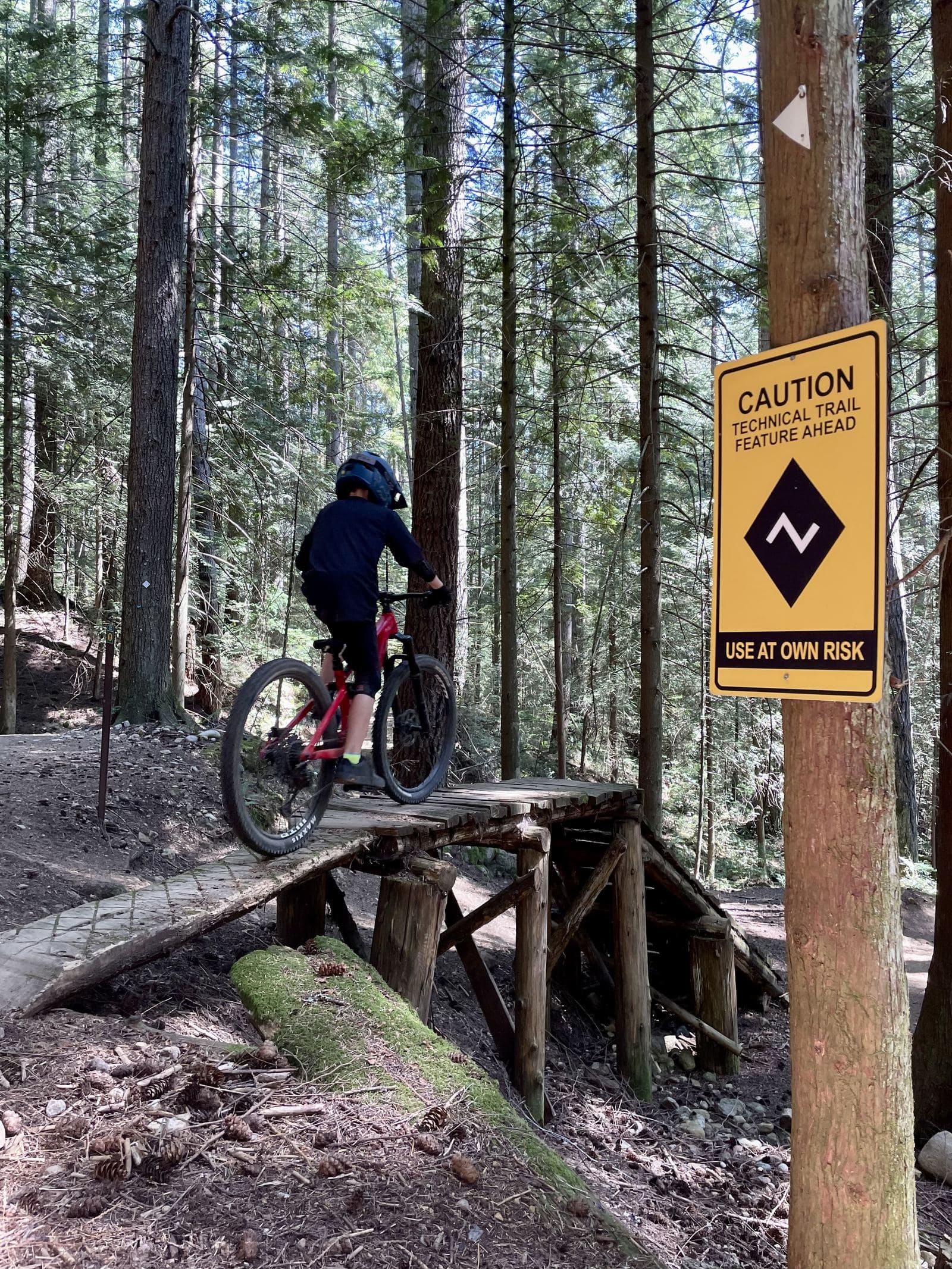
- Speed: running downhill, biking fast, sledding, swinging high, rope swings over creeks
- Dangerous tools: real knives, real hammers, axes, saws, slingshots, fire-starters
- Dangerous elements: fire, deep water, ice, cliffs, anything where the environment itself has bite
- Rough-and-tumble: wrestling, play-fighting, chase games with real physical contact
- Being alone or getting lost: exploring out of sight, wandering, finding their own way back
A kid who is allowed all six grows up calibrated. A kid who is allowed none of them grows up either reckless (because they never built the feedback loop) or anxious (because the world feels full of things they cannot handle).
The injury paradox
The thing that most surprises parents when they look at the research is this: kids who get more risky play do not get hurt more often. They get hurt less. And when they do get hurt, the injuries are usually smaller.
Sandseter and Kennair's 2011 review in Evolutionary Psychology lays out the mechanism. Kids have evolved to seek out risk because pushing into mild danger is how they learn to handle it. The thrill of climbing higher than feels safe is the brain running a calibration: am I capable of this? When the answer comes back yes, the fear gets recalibrated. When the answer comes back no, they learn to stop. That is how risk assessment is built. Not by adults narrating safety rules, but by kids running thousands of small experiments on their own bodies.
The 2018 American Academy of Pediatrics clinical report "The Power of Play" makes the same point from a medical angle. Free, child-directed play (including the rough-and-tumble, climbing, exploring kind) builds executive function, emotional regulation, and physical literacy in ways that no structured activity replicates. The AAP literally recommends pediatricians prescribe play.
The kids who end up in emergency rooms with the bad falls are disproportionately the ones who have never been allowed to climb. They get up too high without the body awareness to come down, freeze, and fall. The regular climbers know exactly where their hands and feet are.
Kids who get risky play are not lucky to escape injury. They are skilled because they got to practice.
The frame that helps: probability of serious harm
Most parental anxiety comes from collapsing every risk into the same category. A scraped knee feels like the same kind of bad as a broken neck, because both involve the word "hurt." It is not the same.
The frame that helps is this: separate every risky activity into low probability of serious harm versus high probability of serious harm. Then act accordingly.
- Climbing a tree in the backyard: low probability of serious harm. The worst plausible outcome is a sprained wrist or a scrape. Allow.
- Whittling a stick with a real knife at the kitchen table: low probability of serious harm. A cut finger is the realistic worst case. Allow.
- Building and tending a small fire with supervision: low probability of serious harm. Allow.
- Walking to the park alone at age 8: low probability of serious harm. Allow.
- Balancing on a railing above traffic: high probability of serious harm. Do not allow.
- Swimming in a river they have never swum in with no adult who knows the current: high probability of serious harm. Do not allow.
- Riding in a car without a seatbelt: high probability of serious harm. Do not allow.
Once you have the two buckets in your head, most decisions get a lot easier. The job is not to remove all risk. It is to remove the kind that can permanently damage a kid, and let the rest stand.
How to actually let your kid climb
"Be careful" is the worst thing you can say. It is too vague to be useful, and it interrupts the very concentration that keeps them safe. A better script:
- Say nothing. Just watch. Most of the time this is the right move.
- If you need to ask something, ask: "What is your plan to come down?" This is specific, it puts the responsibility on the climber, and it forces them to look ahead.
- "Is that branch alive or dead?" Teaches them to check.
- "How does it feel under your foot?" Builds body awareness.
- "You can go higher when you feel ready." Gives back the agency.
Resist the urge to spot them with your arms out. It teaches them that someone else is responsible for catching them, which is the opposite of what we want. If you genuinely think a fall is likely and serious, ask them to come down. Otherwise, sit on the ground and let them work.
When your mouth wants to say "be careful," try "I see you." It signals presence without panic. Your kid does not need a warning, they need to know you trust them to be there.
The other risky things to allow
Climbing is the easy one. The harder ones, for most parents, are the tools and the independence.
- Real knives by age 5 or 6 with brief instruction. Start with a paring knife and a soft vegetable. Most kids can whittle a stick safely by 7. Forest schools across Europe hand kids real knives at 4.
- Real fire-starting and tending by 7 or 8. Teach them how to build a fire, how to tend it, and how to put it out. Then let them do it.
- Real hammers and saws by 6 or 7. A bent nail and a sore thumb is a fair tradeoff for learning to use a tool.
- Walking to a familiar destination alone by 7 or 8. Library, corner store, friend's house. Build the radius slowly.
- Cooking with a real stove by 8 or 9. Cracking eggs, sauteing, flipping. Kids who never use the stove become teenagers who eat cereal.
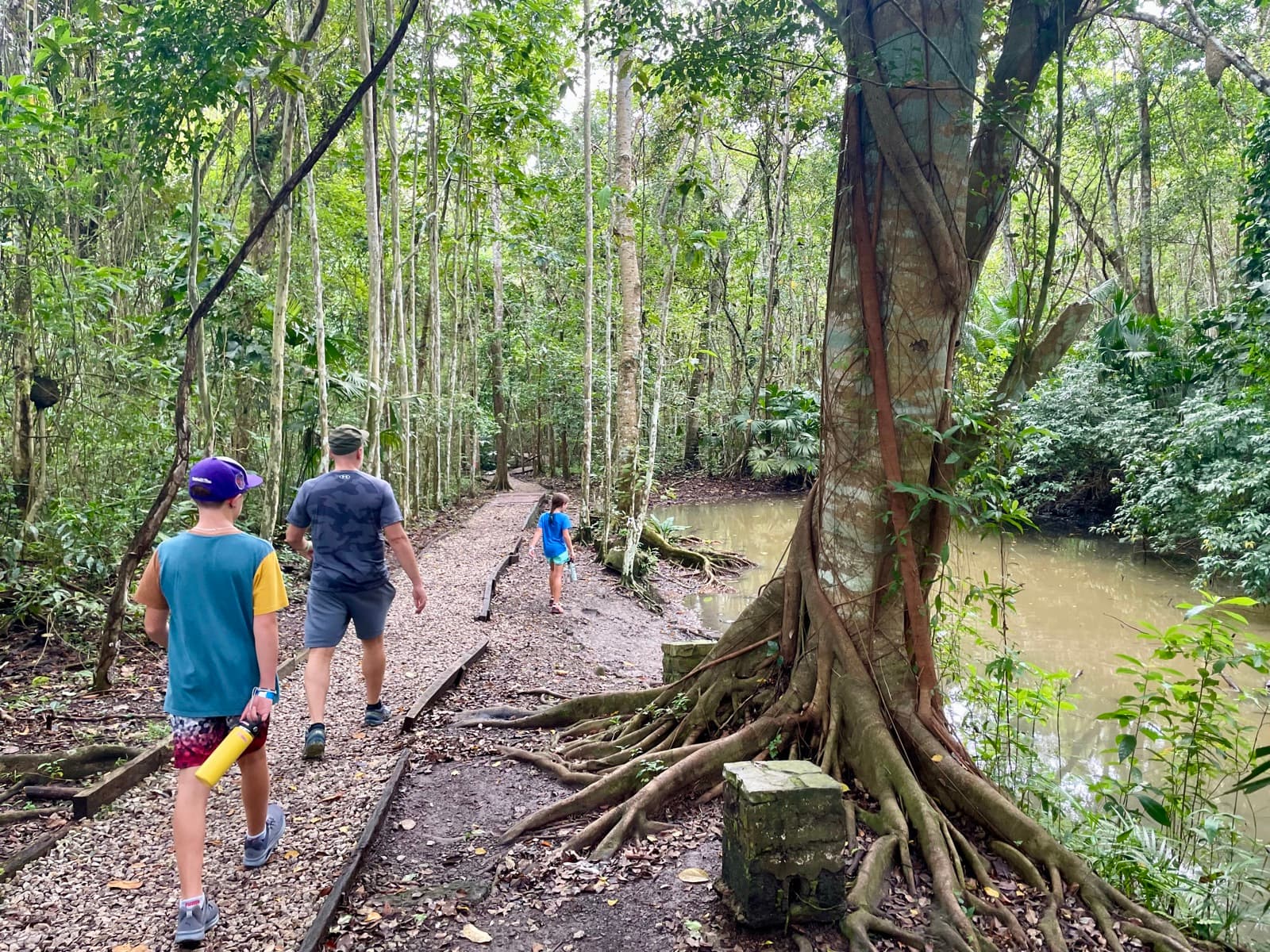
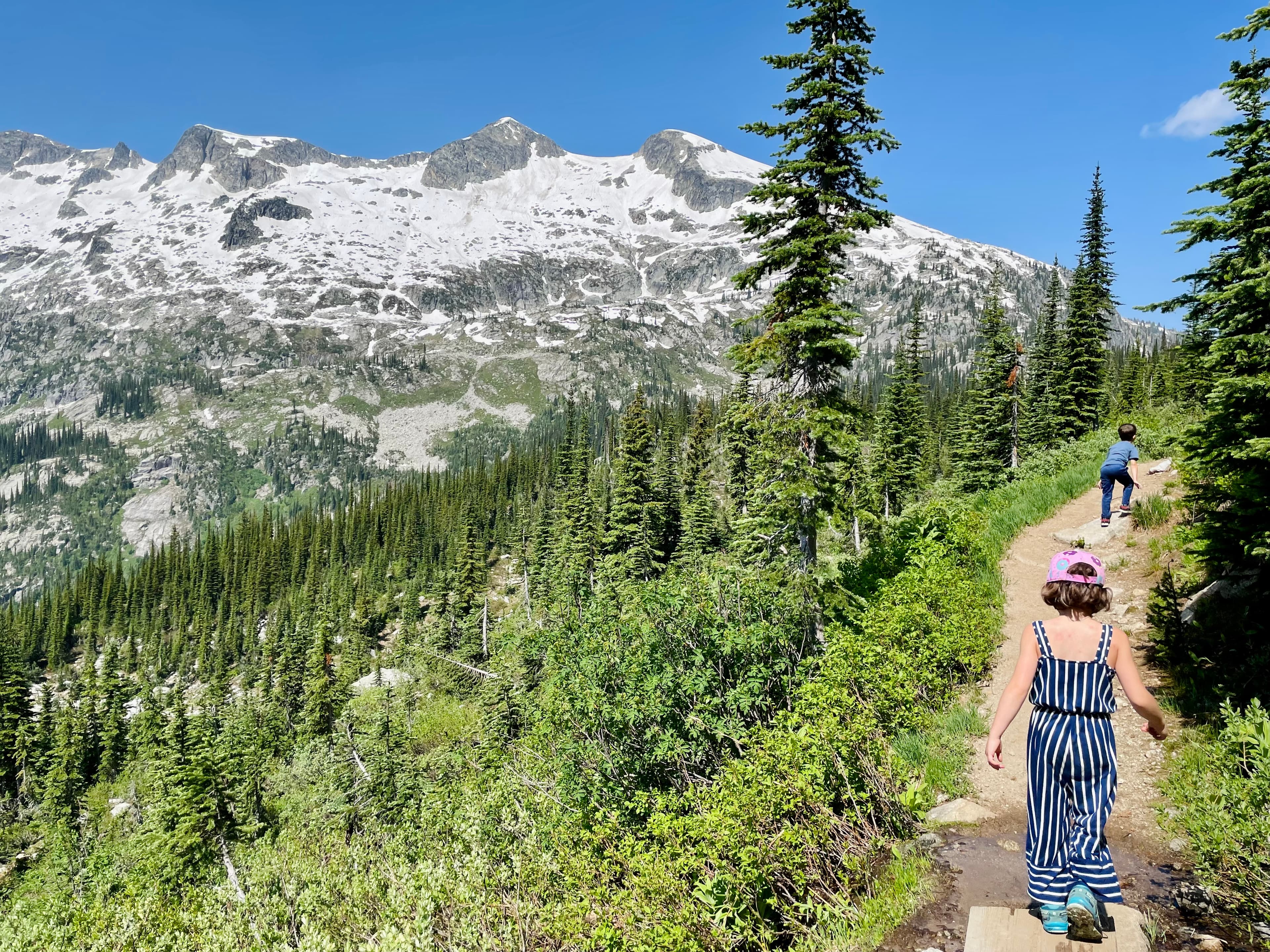
- Spending unsupervised time in nature. A patch of forest, a creek, a backyard. Out of sight is the point.
Every one of these feels scary the first time. None of them are actually high-probability-of-serious-harm activities if the kid has had a few minutes of instruction. The discomfort is yours, not theirs.
Managing your own anxiety
The honest part of this conversation is that letting kids do risky play is harder on the parent than the kid. Your nervous system is going to fire. Your hands will sweat. You will want to intervene.
A few things that help:
- Sit down. Standing close makes you feel like you can catch them, which makes you hover, which makes them less safe. Sit on a log 20 feet away.
- Breathe out longer than you breathe in. Box breathing or 4-7-8. Calms the system enough to stop talking.
- Look at what they are actually doing, not what could go wrong. The worst-case-scenario movie in your head is not the present moment.
- Talk to other parents who do this. The judgement you feel from other adults is real, and the antidote is a few friends who get it.
- Remember the research. The kid who climbs is safer, not less safe. The data is on your side. (For more on letting kids run their own play, see our post on why we should just let them play.)
What this looks like in practice
In our house, the rule is roughly: if it can heal in two weeks, it is yours to figure out. Scrapes, bruises, splinters, the occasional small cut, sore muscles, hurt feelings. All of that is the cost of learning to be a competent human, and it is a fair cost.
The exceptions are head, neck, eyes, and anything involving traffic or deep water. Those get the full attention. Everything else gets a glance and a "you got this."
If you want a structured way to start, point your family at outdoor challenges that have built-in risk: real tool use, fire-building, balancing, navigation. Our forest school activities and outdoor STEM challenges are full of these. The point is to give kids enough real experiences that risk stops feeling exotic and starts feeling like a skill they have.
Want this as a free printable? Grab the Forest School Checklist: 13 Activities, free to read, and the printable version lands in your inbox.