- 1What forest school actually does for kids
- 2Shelter and construction
- 3Nature art and creativity
- 4Sensory exploration
- 5Risk and adventure
- 6Free play and imagination
- 7Practical tips for forest school at home
- 8What about bad weather?
- 9Forest school activities for fall
- 10Forest school through the seasons
- 11Frequently asked questions
Forest school started in Scandinavia, where kids spend entire school days outside in all weather. The philosophy is simple: children learn best through hands-on, self-directed play in natural settings. Risk is managed, not eliminated. And the adult is a facilitator, not an instructor.
The good news? You do not need a forest school practitioner certification to bring this into your family life. If you have access to trees, dirt, and sticks, you already have the classroom. If you are new to nature-based learning, our guide to turning nature walks into science lessons is a great place to start.
What forest school actually does for kids
Forest school is not just fresh air and running around, though those matter more than we give them credit for. A growing body of research links regular forest school sessions to real gains in confidence, social skills, concentration, and physical coordination. A 2023 systematic review of preschool forest school programs found that children who attended showed advantages over their indoor-schooled peers in cognitive function, creative thinking, social skills, and connection to nature.
A 2024 study of seven and eight year olds found that twelve weekly forest school sessions measurably improved the children’s mood and their willingness to cooperate with one another. Other reviews point out that the biggest gains often show up in the kids who struggle most in a traditional classroom, the ones who need to move, take real risks, and learn with their hands before anything sinks in.
The research is still young and most studies are small, so treat the findings as encouraging rather than settled. But the direction is consistent, and it matches what parents notice within a few weeks of going regularly: calmer kids, longer attention spans, and a kind of quiet confidence that no worksheet has ever produced.
Here are 15 forest school activities grouped into five categories. Pick one or two per outing and let your kids lead the rest. Each one ends with the age it works from. Want them on one page to take outside? Grab the free forest school checklist.
Shelter and construction
Building things is where forest school really shines. Kids develop problem-solving, teamwork, and spatial awareness while doing something that feels like pure play.
1. Den building
Find a fallen tree or low fork and lean branches against it to create a shelter. Let your kids figure out how to make it big enough to sit inside. They will experiment with angles, weight distribution, and waterproofing without you saying a word about engineering. Works from about age 4; from 9 up, make the goal a den that stays dry in the rain.
2. Miniature village
Collect sticks, bark, leaves, and pebbles to build a tiny village on the forest floor. This is architecture, storytelling, and fine motor skills rolled into one quiet activity. It works beautifully for kids who need a slower pace. Works from about age 4; older kids can add a map of the village and a job for every house.
3. Bridge challenge
Find a small ditch or stream and challenge your kids to build a bridge strong enough to hold a rock. They will test, fail, rebuild, and test again. That cycle is the scientific method in action, no lab coat required. There are 14 more challenges like this in outdoor STEM challenges. Works from about age 5; from 9, set a weight target and count how many rocks it holds before it gives.
Nature art and creativity
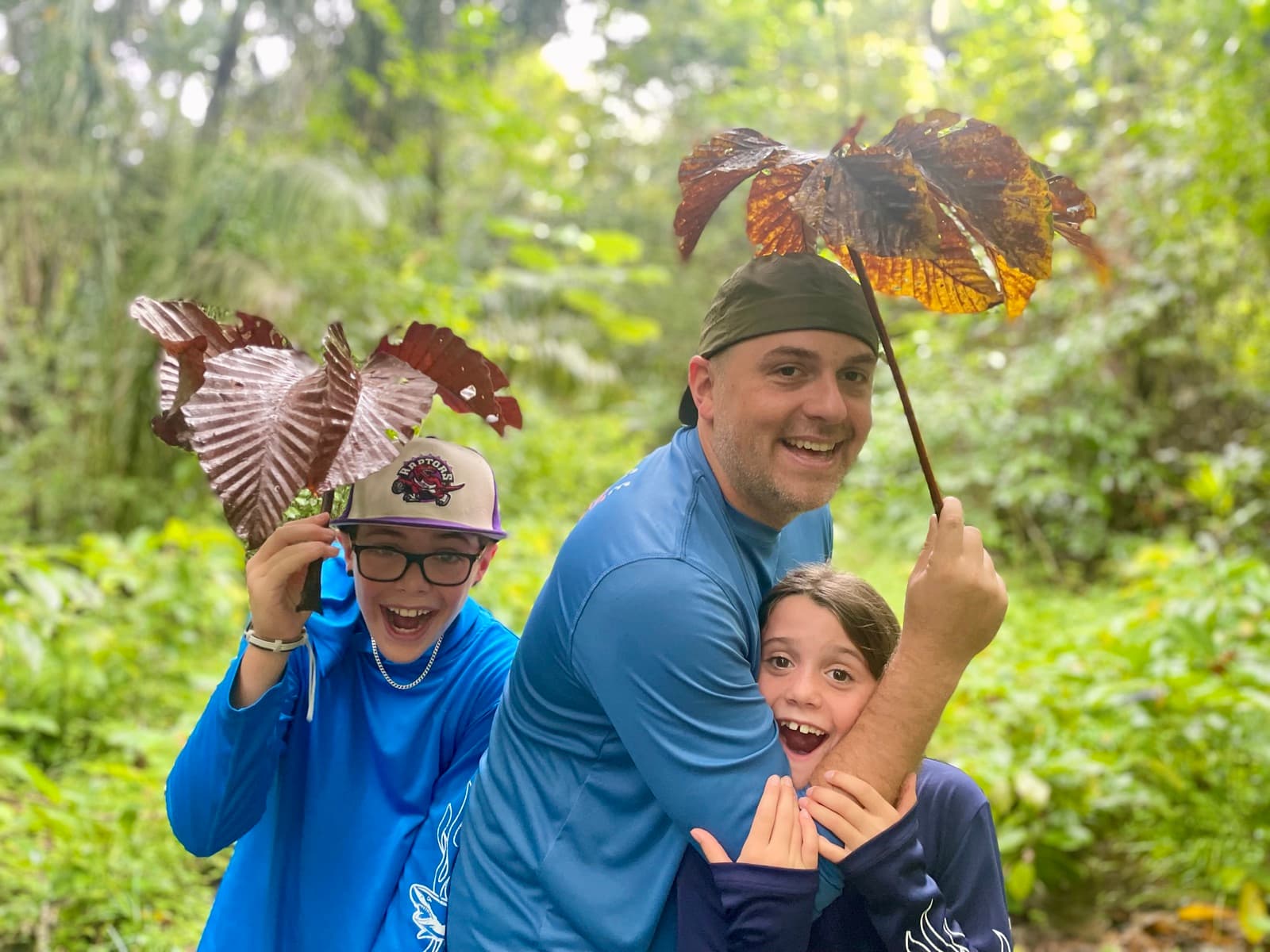
Art in nature uses only what the forest provides. No supplies to pack, no mess to clean up, and the results are often more beautiful than anything made with craft supplies.
4. Land art
Arrange natural materials (leaves, stones, petals, pinecones) into patterns, spirals, or pictures on the ground. Look up Andy Goldsworthy for inspiration. The art is temporary, which is part of the lesson. Works at any age; older kids can try a spiral or a pattern that grows by a rule they set.
5. Nature weaving
Find a forked stick or make a simple frame from two sticks tied together. Weave grasses, long leaves, thin bark strips, and wildflowers through it. This builds patience and fine motor control while producing something genuinely lovely. Works from about age 5 with a frame you make; from 8, they can lash the frame themselves.
6. Mud paint
Mix different soils with water to create paint in shades of brown, red, gray, and ochre. Paint on bark, rocks, or paper with sticks and fingers. Kids learn about pigments, soil composition, and colour mixing without a single tube of acrylic. Works from about age 3; older kids can make a colour chart labelled with where each soil came from.
Sensory exploration
These activities slow kids down and sharpen their observation skills. They are especially good for children who spend a lot of time on screens and need to recalibrate their senses.
7. Blindfold trail
Tie a rope between trees at waist height. Blindfold your child (or have them close their eyes) and let them follow the rope using only touch, sound, and smell. This builds trust, sensory awareness, and a completely different relationship with the forest. Works from about age 5; older kids can rig the rope course for a younger sibling.
8. Sit spot
Each person picks a spot and sits quietly for five to fifteen minutes, just watching and listening. Younger kids can start with two minutes. Over time, they start noticing birds, insects, wind patterns, and sounds they never heard before. This is mindfulness without calling it mindfulness.
9. Nature journal
Bring a small notebook and pencils. Draw what you see, not what you think it should look like. Sketch a leaf, a mushroom, a spider web. Label it if you want. The point is observation, not perfection. If your kid takes to it, our guide to nature journaling for kids has prompts and page ideas to keep it going. Works from about age 4 as drawing only; from 8, add labels, a date, and one question per page.
Risk and adventure
This is the part that makes some parents nervous, and it is also the part that builds the most confidence. Forest school embraces managed risk because children need opportunities to assess danger, make choices, and learn their own limits.
10. Tree climbing
Find a tree with low, sturdy branches and let your child climb. Stay close, but resist the urge to direct. They will figure out which branches hold their weight and which do not. The confidence that comes from reaching the top on their own is worth more than any worksheet. Works from about age 4 on low branches; how high they go is something they earn one branch at a time.
11. Whittling
For kids around age seven and up, a basic whittling knife and a soft wood stick is all you need. Teach the safety rules (cut away from your body, keep your fingers behind the blade), then let them carve a point, a wand, or a little figure. This builds focus, patience, and respect for tools.
12. Fire circle
If you have a safe outdoor space, build a small campfire together. Teach fire safety, how to build a fire lay, and how to extinguish it properly. Even just striking a flint and steel is a powerful experience for a child. Roast marshmallows or make popcorn to make it memorable. An adult job at every age; from about 10, kids can build and light the fire lay with you right beside them.
In the Membership
My Nature Journal
Nature journal for kids ages 6-14: guided prompts for sketching, writing, and outdoor observation. Any season, any trail.
Free play and imagination
Sometimes the best forest school activity is no activity at all. Unstructured time in nature is where the deepest learning happens.
13. Unstructured free play
Set a boundary ("stay where you can hear my voice") and let them go. No agenda, no instructions, no learning objectives. They will invent games, build things, explore, argue, negotiate, and create. This is the heart of forest school. Works at every age, and the older kids need it as much as the little ones.
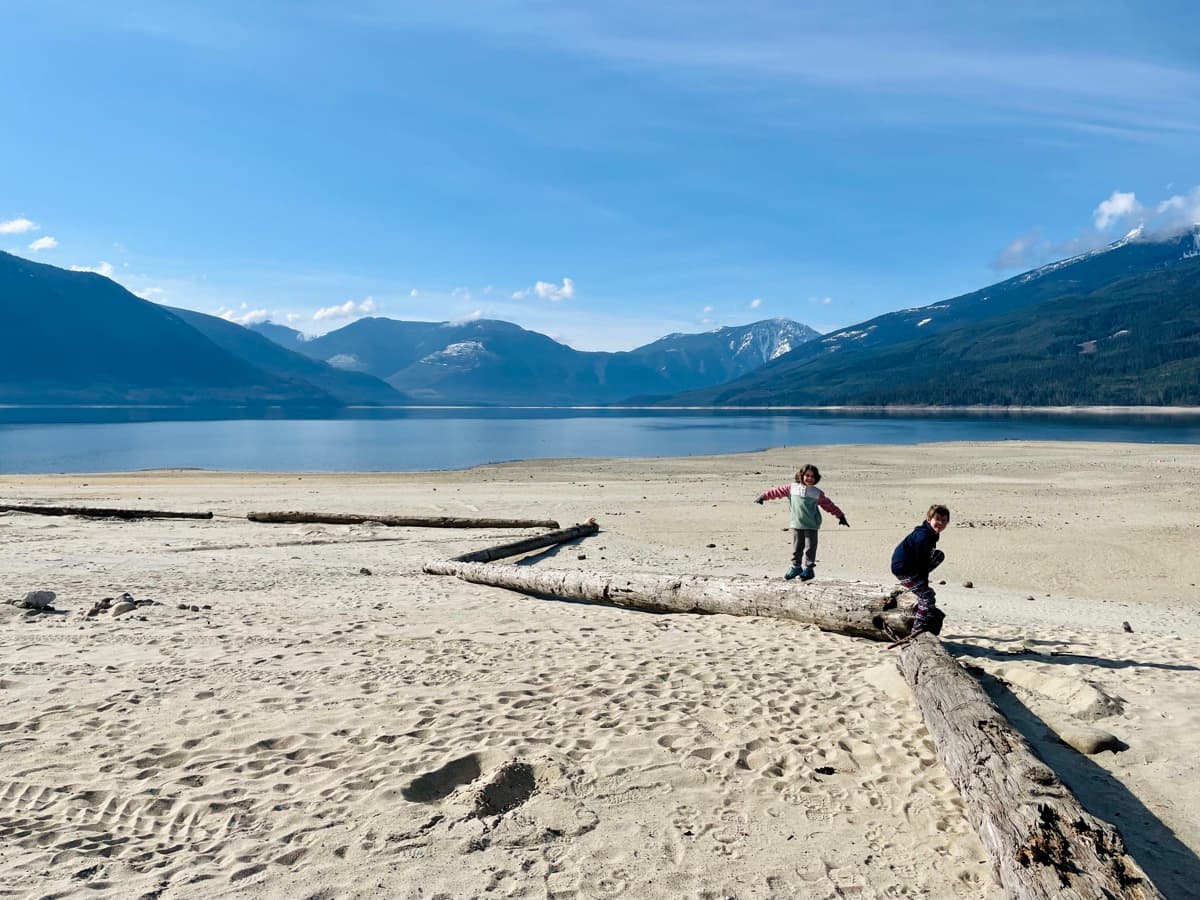
14. Natural obstacle course
Use fallen logs to balance on, rocks to jump between, low branches to duck under, and hills to roll down. Let kids design the course and set the rules. They are learning physics, risk assessment, and gross motor planning while having the time of their lives. Works from about age 3; from 8, time the runs and change one obstacle at a time to see what gets faster.
15. Forest storytelling
Sit in a circle and take turns adding to a story set in the woods around you. Use real landmarks as plot points. "The fox ran past that big oak and disappeared behind the mossy rock." This builds narrative skills, vocabulary, and a sense of place that sticks. Works from about age 4; older kids can write the story down afterward or draw it as a map.
You do not need to spend three hours in the woods on your first try. Thirty minutes at a local park with one activity is a perfect start. Build from there as your kids (and you) get comfortable.
The best forest school session is one where you planned one thing and your kids did something completely different.
Practical tips for forest school at home
You do not need a pristine forest to do this. A local park, a weedy backyard, or a strip of trees along a creek all work. The point is regular, repeated time outside with permission to explore.
- Go to the same spot often. Familiarity breeds deeper observation and more creative play.
- Dress for it. Waterproof layers and boots mean you never have to cancel for weather.
- Bring a small first aid kit and a pocket knife. Leave the activity bin at home.
- Let them get dirty, wet, and cold (within reason). Discomfort is part of the learning.
- Resist the urge to teach. Ask questions instead: "What do you notice?" "Why do you think that happened?"
If you want more structured outdoor ideas to pair with free play sessions, check out our outdoor STEM challenges and these no-prep backyard science experiments, both of which blend science and nature exploration without needing a lesson plan.
What about bad weather?
The Scandinavian saying goes: there is no bad weather, only bad clothing. Rain, wind, and even light snow make forest school more interesting, not less. Puddles become physics experiments. Rain changes the sounds. Mud becomes a building material. If you dress for it, bad weather days often turn into the most memorable ones.
The only weather worth staying inside for is lightning or dangerously high winds. Everything else is an invitation.
Forest school activities for fall
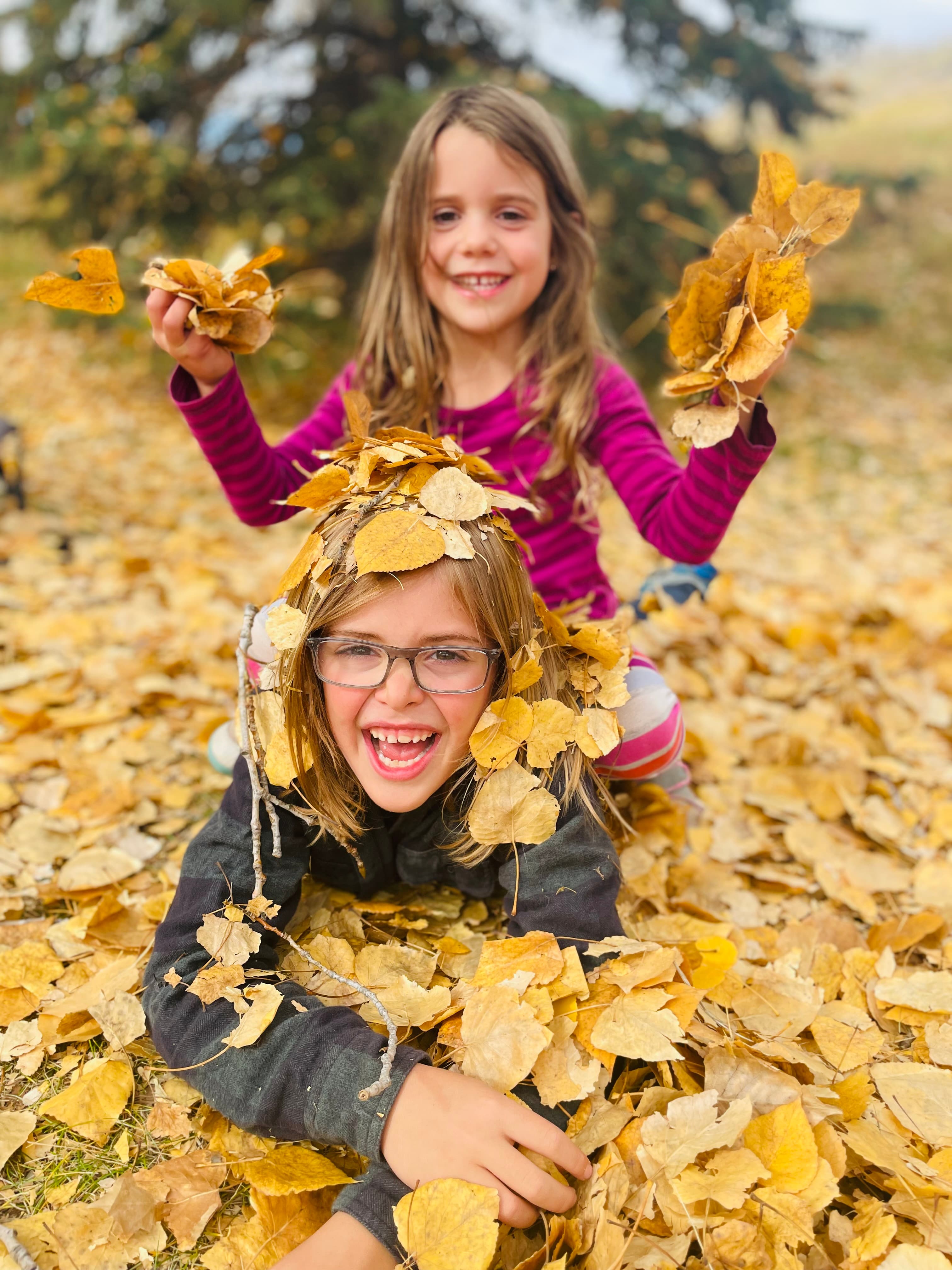
Fall is when most families try forest school for the first time, and it is the easiest season to start. The woods are doing something obvious every week, the bugs have thinned out, and a kid who is bored of the playground is suddenly interested in a stick that snaps differently now that it is dry. These five fall forest school activities need nothing but the season itself.
- Leaf sort and tree match: collect ten different leaves, sort them by shape and edge, then walk back and find the tree each one came from. Kids learn tree identification without anyone calling it that.
- Seed engineering: gather maple keys, acorns, burrs, and dandelion heads, then test how each one travels. Drop them from a height, throw them, stick them to a sleeve. Ask which design would you copy if you were building a glider.
- The decomposition patch: mark a square of ground with four sticks and photograph what is in it. Come back every week through November and watch the leaves turn to soil. It is the slowest and most convincing science lesson there is.
- Mushroom spotting, hands off: fall is fungus season. Count how many kinds you can find in twenty minutes, photograph them, and look them up at home. The rule is look, never touch, never taste, and kids follow it better when they are the ones enforcing it.
- Cold-weather shelter test: build a den in September, then visit it in a cold October wind and find out where it leaks. The rebuild teaches more about insulation and structure than the first build did.
Layer up, bring a thermos, and plan on shorter sessions as the light goes. A forty-minute fall walk that ends before anyone is cold beats a two-hour one that ends in tears, and it is the one your kids will ask to repeat.
Forest school through the seasons
One of the quiet gifts of forest school is that the same patch of woods becomes a completely different classroom four times a year. Returning to one spot across the seasons teaches kids more about change, cycles, and observation than any unit study could. Here is a season-by-season starting point, beginning with fall, since that is where most families land when they first head out.
- Fall: collect and sort leaves and seeds, race to spot which trees drop first, build shelters out of fallen branches, and press a few leaves into a nature journal. Pair it with a seasonal scavenger hunt to give younger kids a mission.
- Winter: read animal tracks in snow or mud, test which materials keep a hand warmest, notice which trees hold their needles, and watch your own breath while you talk about why you can see it.
- Spring: watch buds open week by week on the same branch, hunt for the first insects, plant a few seeds and mark the spot, and listen for birds coming back.
- Summer: pond dipping, mapping where the shade falls at different times, longer free-play adventures, and berry identification with a firm never-eat-anything-without-an-adult rule.
The magic is in the return trips. A child who visits the same tree in October, January, and April builds a relationship with a place, and that relationship is where the deepest science and the calmest attention come from.
Frequently asked questions
Do I need forest school training to do these activities?
What age is forest school appropriate for?
What if we do not live near a forest?
Is forest school the same as outdoor education?
How often should we do forest school?
What are the benefits of forest school?
What do you need to start forest school at home?
What is the difference between forest school and forest kindergarten?
Want this as a free printable? Grab the Forest School Checklist: 13 Activities, free to read, and the printable version lands in your inbox.