- 1Before you start
- 2Month 1: Deschool, breathe, set up
- 3Month 2: Notice, don't plan
- 4Month 3: A gentle rhythm (not a schedule)
- 5Months 4-6: Build community
- 6Months 7-9: Stretch and adjust
- 7Months 10-12: Reflect and plan year 2
- 8The "no one tells you" list
- 9What you can safely ignore in year one
- 10Frequently asked questions
The first year of homeschooling is mostly about figuring out what your family actually needs, not about delivering a curriculum. Most "homeschool first year checklists" out there are written by curriculum companies, and somehow they always end with you needing to buy curriculum. Suspicious.
This is a different kind of checklist. It’s the things future-you will be glad you did, organised by month, with no curriculum-store affiliate links waiting at the end. Less "what to buy" and more "what actually matters." (Pairs well with our broader homeschool journey guide if you want the wider picture, not just the checklist. And if homeschooling is still a maybe for you, our honest Should I Homeschool? checklist comes first.)
Save this. Screenshot it. Print it if you really want to. Then forget about it for a few weeks at a time and come back when you need a nudge.
Before you start
- Find out what your state, province, or country requires (letter of intent, annual assessment, portfolio, or nothing at all). In the US, most states require very little, though some require more. In Canada, requirements are set provincially: BC, Alberta, and Ontario each have their own process, and they are generally homeschool-friendly. Search "[your state or province] homeschool laws" and trust official provincial or state homeschool associations over random Facebook advice.
- Tell the school you’re withdrawing, in writing, if you're leaving a public or private school. Keep a copy of the letter and any reply.
- Decide your "why" in one sentence. Not for anyone else. For the days when someone tilts their head and asks if you're sure about this. (Hint: the socialisation conversation is coming.)
- Lower your expectations once. Then lower them again. The first year is about the family, not about output.
Month 1: Deschool, breathe, set up
This is the month most people ruin by trying too hard. Don't.
- Do nothing structured for at least the first week. Read, walk, play, bake, sleep in. Resist the urge to "start school."
- Read the 5 stages of deschooling so you understand what's happening when nothing is "happening."
- Get a library card if you don't have one. It's the most powerful homeschool tool that costs zero dollars.
- Set up a small, specific space where books and supplies live. Not a recreated classroom. A corner, a shelf, a basket. Calm, not Pinterest.
- Start a parent journal. Five minutes most evenings: what your kid did, what they asked, what they noticed. You'll need this in month four when you're sure nothing is happening.
Tell yourself out loud: "We are not starting school. We are starting a year of learning together." Different framing. Same kid. Different year.
Month 2: Notice, don't plan
You're past the relief stage but probably not past the "am I ruining them?" stage. That's normal.
- Watch your kids without trying to direct them. What do they pick up when no one is telling them what to do?
- Read aloud daily. One book. Together. Not for educational reasons. For atmosphere.
- Get outside every single day, even for 15 minutes. The house becomes a pressure cooker if you're always in it.
- Resist buying a curriculum yet. The urge will be loud. Wait it out.
- Find one homeschool meetup, park day, or co-op to try. You don't have to commit. Just try one.
Month 3: A gentle rhythm (not a schedule)
A schedule says "9:00 maths, 9:30 reading." A rhythm says "mornings are for the brain, afternoons are for the body." Pick rhythm.
- Try a simple morning structure: a read-aloud, one focused thing, one creative thing, one body thing. Adjust as you go.
- Add one outing a week that's deliberately educational (museum, farm, hardware store, community garden, library event).
- Start one tiny shared project. A garden plot, a recipe book, a short film. Anything that takes more than one day to finish.
- If you want to add a maths workbook or reading programme, this is when. Pick the gentlest one. Use it 3 days a week, not 5.
- Read a comparison of homeschool methods without committing to one. You're information-gathering, not deciding.
Months 4-6: Build community
Months 4-6 are where most families either find their people or start to wobble. Lean into the first.
- Commit to one regular community thing. Co-op, sports, art class, scout group, anything weekly that gets you out of the house and into other humans.
- Find one parent who actually gets it. Not Instagram. A real person. Coffee, voice notes, occasional meltdowns. You need this.
- Notice your own patterns: when do you snap? When do you feel proud? When are the kids actually happy? Write it down.
- If something isn't working, change it. The freedom to change without shame is the whole point of homeschooling.
- Read how to recognise homeschool burnout before you need it, not after.
In the Membership
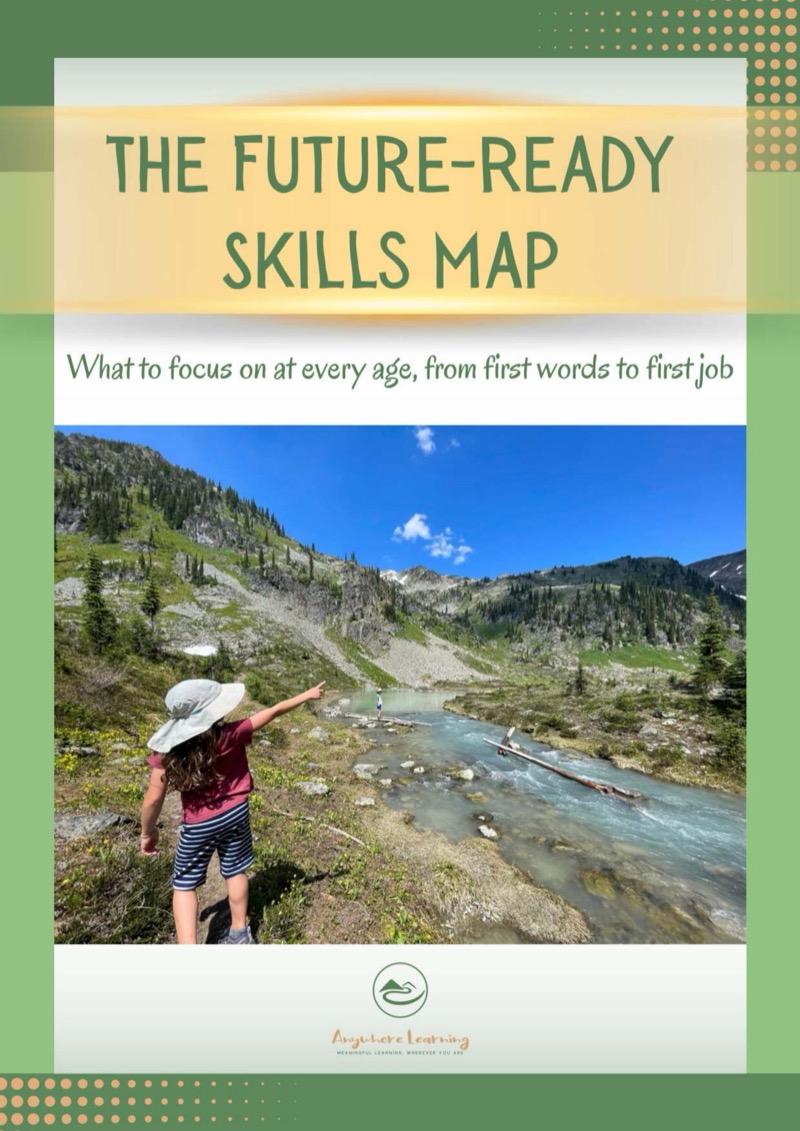
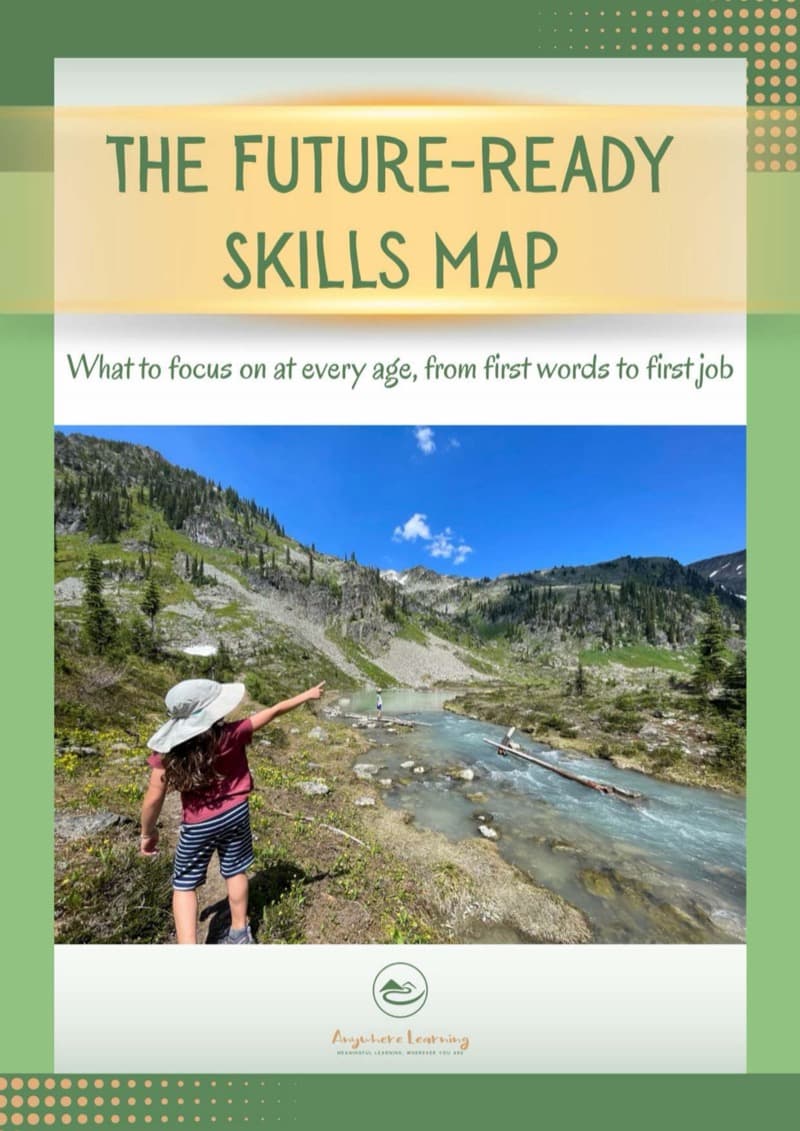
The Future-Ready Skills Map
44-page parent guide to 12 future-ready skill areas for kids ages 0-16+: milestones, hands-on activities, and sample weeks.
Months 7-9: Stretch and adjust
- Try one project that scares you a little. A multi-week build. A trip. A real-world challenge. Stretch the family.
- Have a "state of the union" with your kids. Ask: what's working? What's not? What do you wish we did more of? Write down their answers.
- If you have a partner, do the same conversation with them. If your partner isn't fully on board, this conversation matters more, not less.
- Drop something. Most homeschool parents are doing too much by month 7. Pick the thing that drains you and let it go.
- Take a real break. A whole week off. Watch what your kids choose to do in that week. (Spoiler: it's usually learning.)
Months 10-12: Reflect and plan year 2
- Pull out the parent journal from month one. Read it. Cry a little. You did more than you thought.
- Make a simple portfolio: photos, a few writing samples, a list of books read, projects completed, places visited. This doubles as your records and a year-end celebration.
- Decide what to keep, what to drop, and what to try next year. Specifically. Out loud. Written down.
- Take a real break before year two. The summer (or winter) is part of the rhythm, not a failure to school.
- Revisit your "why" sentence. Update it if it has changed. (It probably has.)
The first year is not the year you become a great homeschool parent. It's the year you become the parent your specific kids actually need.
The "no one tells you" list
A few things every honest first-year homeschool parent learns the hard way:
- You will buy curriculum you don't use. It's tuition for the lesson "I needed to feel in control." Move on.
- Your kid will plateau and you will panic. They'll come out the other side fine. Trust the parent journal.
- Some of your most "school-y" days will go badly. Some of your "we did nothing" days will be the most important ones.
- You will lose some friends and gain others. The mums who don't get it will quietly pull back. The mums who get it will feel like family.
- You will feel like a fraud at least once a week. Everyone does. It's not data.
- The kids are watching how you handle the hard parts more than what you teach them. That's the actual curriculum.
What you can safely ignore in year one
- Grade-level standards. Your kid is not behind. Behind whom?
- The need for a "school room." A kitchen table is fine. A rug is fine. The library is fine.
- Themed planners, daily schedules colour-coded by subject, and anything else marketed at homeschool moms on Instagram. Pretty is not a method.
- Long debates about which philosophy is best. Pick the one that matches your energy. You can change later.
- Anyone's opinion who has never homeschooled. Including, gently, your own pre-homeschool self.
Want a few low-prep, real-world activities to start with this week? Our free guide gives you seven, one a day, ages 6-14.