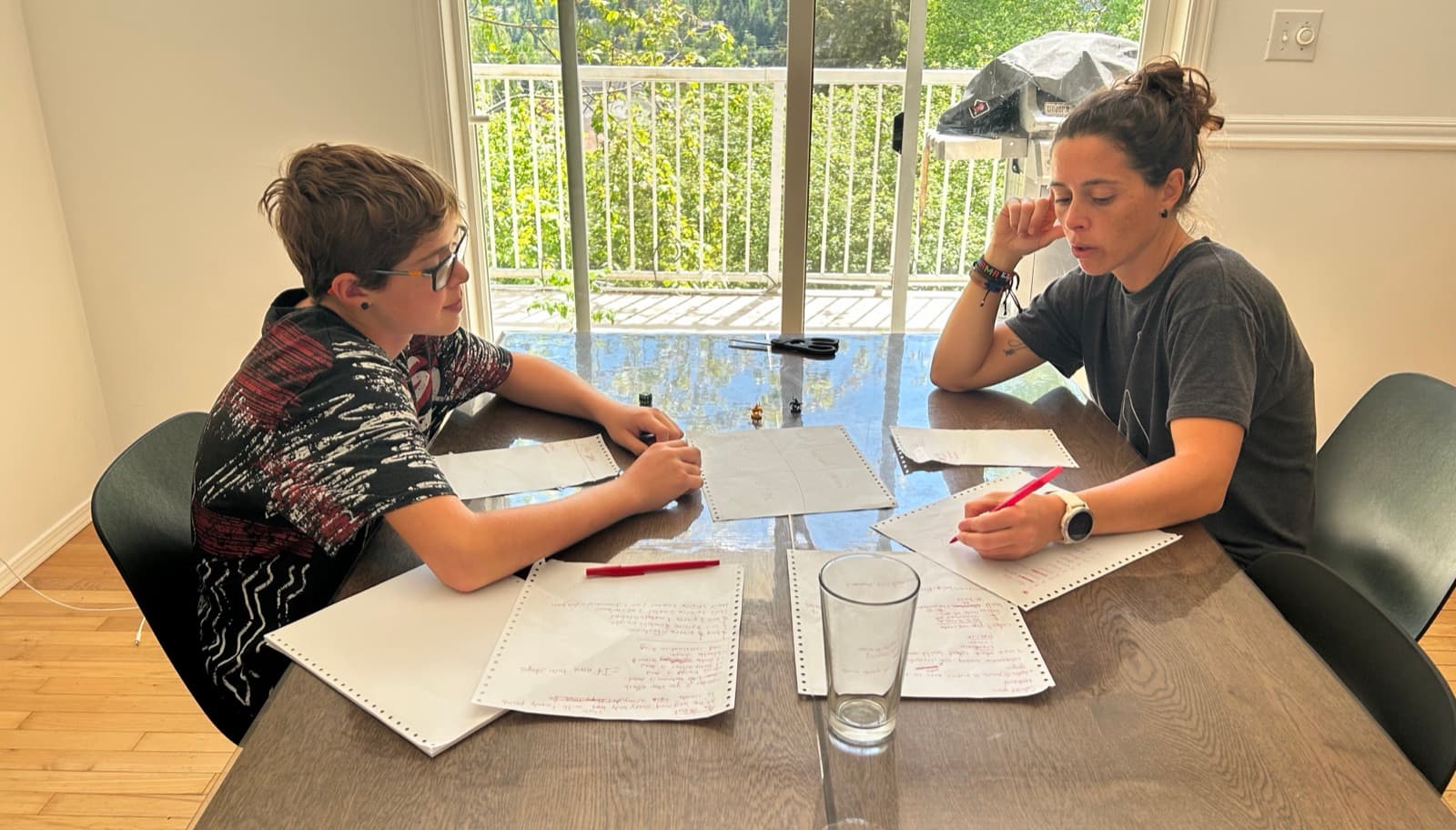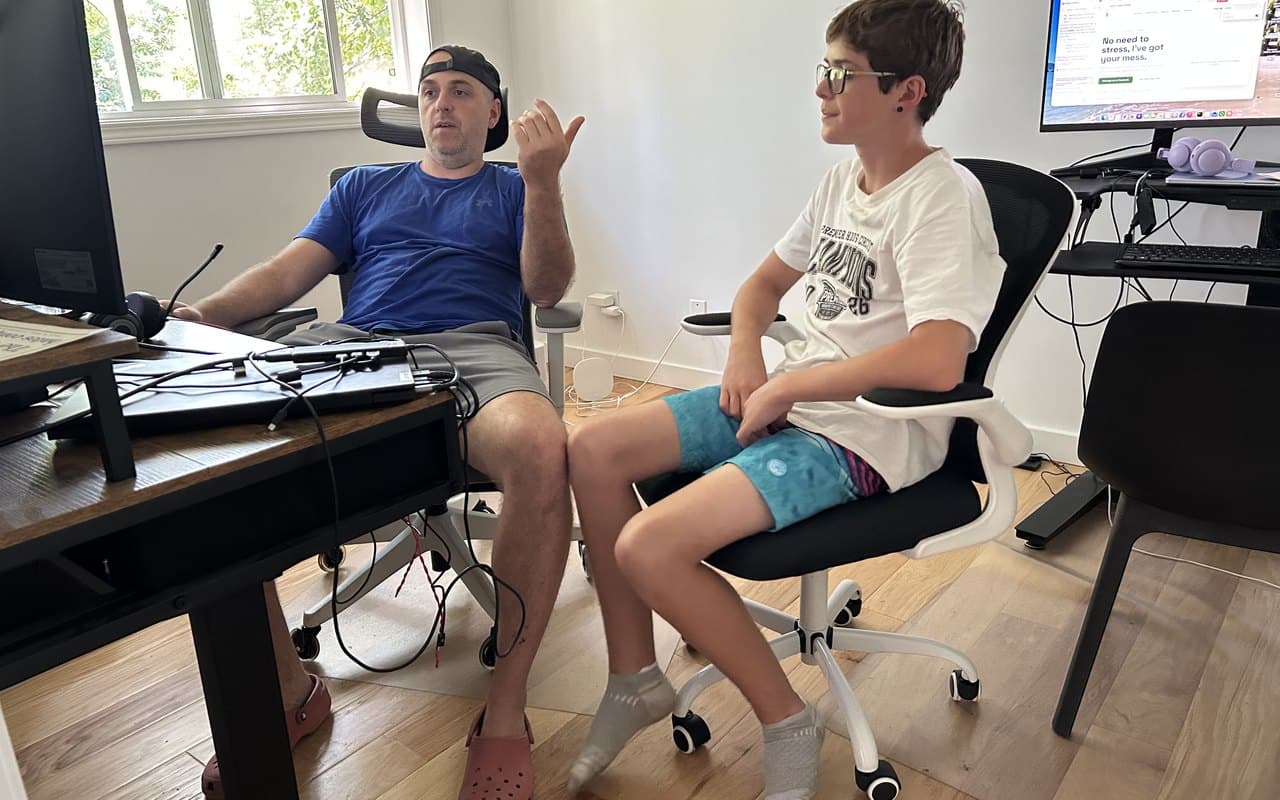
One of the most common questions I hear from parents considering homeschooling is some version of this: can you actually homeschool if you work full-time? Usually it comes with a follow-up that reveals the real worry underneath: isn’t homeschooling itself a full-time job?
These two questions are worth taking together, because the answer to the second one is exactly why the first one is possible. Homeschooling is not a six-hour teaching shift you clock into every day. And once you understand what it actually involves, working and homeschooling stops sounding impossible and starts sounding like a logistics problem, which is a very different, very solvable kind of problem. This is one of the biggest myths standing between parents and the homeschool journey, so let us take it apart honestly, including the parts that really are hard.
The short answer
So can you homeschool with a full time job? Yes, for many families. Parents homeschool and work full time every day, all over the place: work-from-home parents, opposite-shift couples, part-time and flexible workers, business owners, and single parents. It is common enough that entire online communities exist just for working homeschool parents.
But an honest yes comes with an honest asterisk: how hard it is depends enormously on your specific situation, and for some setups it is genuinely difficult. So rather than a cheerful "anyone can do it," this post gives you the real picture: why it is more doable than it sounds, the actual models that work, and the situations where it is a real uphill climb.
Why "is homeschooling a full-time job?" is the wrong question
The fear that you cannot work and homeschool comes almost entirely from one mistaken picture: that homeschooling means sitting your kid at a desk and teaching them, lecture-style, for the same six or seven hours a school day takes. If that were true, then yes, homeschooling would be a full-time job, and stacking it on top of another one would be impossible.
But that picture is wrong. A traditional school day is mostly not teaching. It is transitions, lining up, waiting, crowd control, busywork, and managing thirty kids who all need different things. Strip that away and the actual instruction that a class of thirty receives in a day compresses down to a shockingly small amount of focused time when it is one-on-one at home. The real question is not is homeschooling a full time job, but how many hours does homeschooling take. And the answer is: far less than you think.
How much time does homeschooling actually take?
Here are honest, real-world numbers for focused, parent-involved learning. Not the whole day, just the part that needs you.
- Early years (roughly ages 5 to 8): about 1 to 2 hours a day of focused learning, and even that is broken into short chunks. Most of a young child’s real learning happens through play, reading together, and everyday life, not seat work.
- Middle years (roughly 9 to 11): about 2 to 3 hours a day, with a growing share the child can do independently once you have set them up.
- Older kids (12 and up): often just a couple of hours of direct involvement, because a well-practiced tween or teen does much of their work on their own. Your role shifts from teacher to guide, checking in rather than leading every minute.
Notice the trend: the older the kid, the less hands-on time it takes, because independence grows. And notice what fills the rest of the day: reading, projects, play, outdoor time, real life. None of that requires you to be actively teaching. A lot of it does not require you at all. For a fuller picture of what a day can look like, our sample homeschool schedules lays out real examples.
The models that actually make it work
Working homeschool families are not doing the impossible. They are using arrangements that fit the real amount of time homeschooling takes into the gaps and edges of a working life. Here are the most common ones, and most families mix several.
Work from home plus independent learning
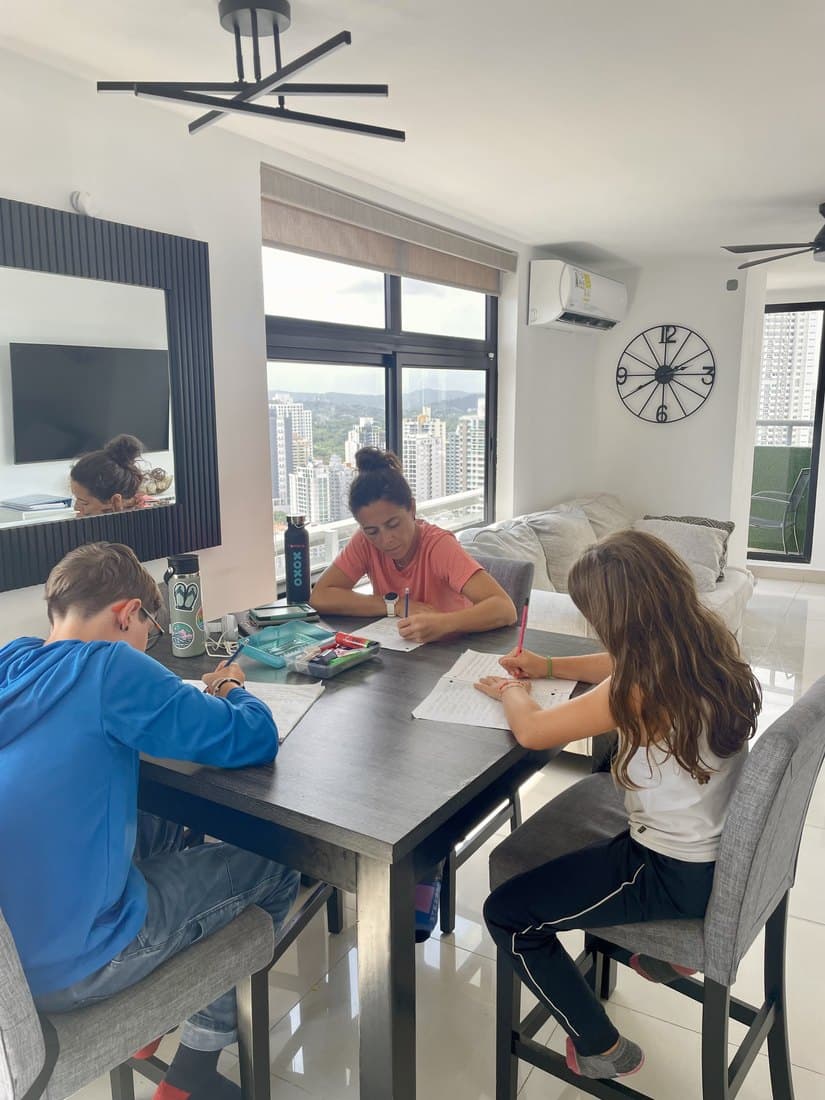
The most common setup. The parent works, the kids do independent work nearby, and the focused teaching happens in short bursts: early morning before work, during a lunch break, in the evening. Kids learn to work alongside a working parent, which is itself a valuable lesson. It is not distraction-free, but it works, especially as kids get older and need less direct help.
Opposite shifts or tag-team parenting
When two parents work, many split the day: one works mornings while the other handles learning, then they swap. Opposite shifts, compressed work weeks, and flexible start times all create this. It is tiring and requires coordination, but for two-parent households it is one of the most reliable models, and it means kids get real time with both parents.
Part-time, flexible, or self-employed work
Not every "job" is nine-to-five in an office. Part-time hours, freelance and contract work, running a business, and remote roles with flexible schedules all leave room to arrange the focused learning time around the work. Many families restructure their work life specifically to make homeschooling fit, trading some income or a rigid schedule for flexibility.
Co-ops, tutors, classes, and hybrid programs
You do not have to be the only teacher. Homeschool co-ops, tutors, online classes, drop-off enrichment programs, and hybrid schools (part-week in-person) all cover chunks of the week. A working parent might use a co-op two mornings a week and handle the rest themselves. Outsourcing part of the teaching is not cheating; it is normal, and it is exactly how many working families make the math work.
Lean hard on independence as they grow
This is the quiet superpower of homeschooling while working. The more you build a kid’s independence, the less of your time their learning requires. A twelve-year-old who owns their own schedule and works through a checklist on their own frees up huge amounts of parental time. Building that self-direction is worth its weight in gold for a working parent, which is why raising an independent kid and homeschooling while working go hand in hand.
In the Membership
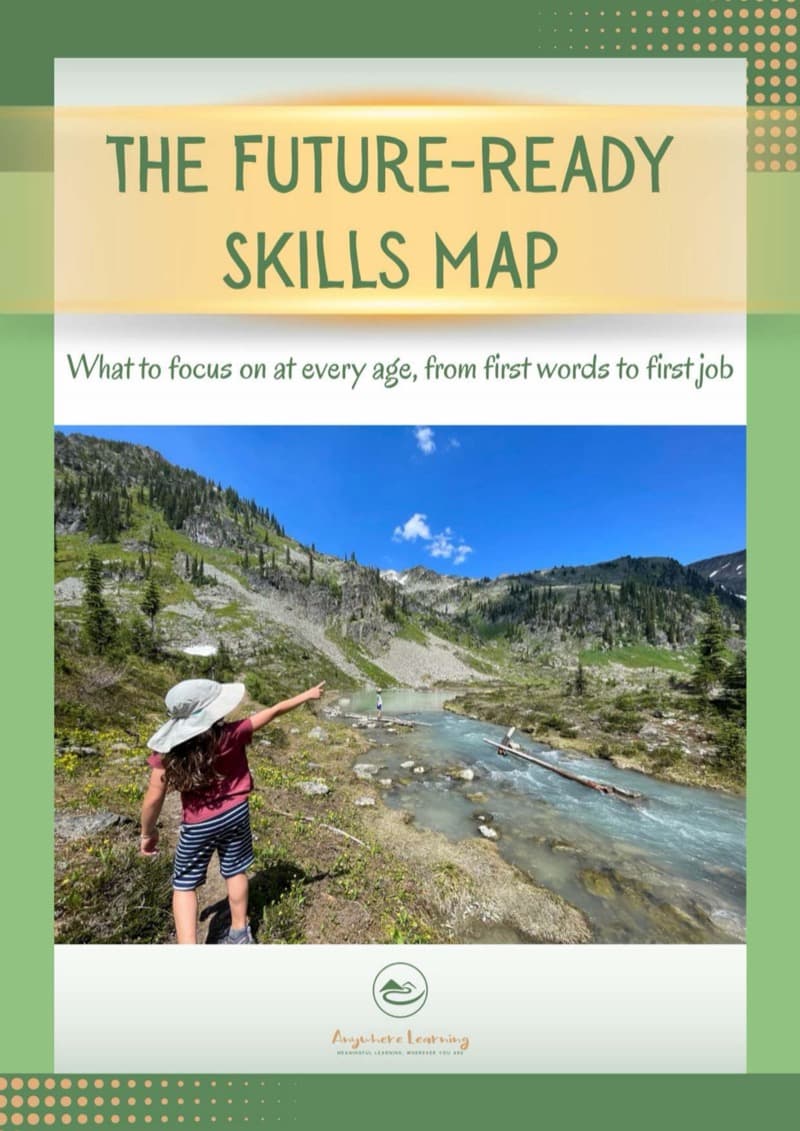
The Future-Ready Skills Map
A simple way to build the independence and real-world skills that let kids learn more on their own, which is exactly what a working homeschool parent needs.
Who it is genuinely hard for
An honest post has to say this part out loud. Homeschooling while working is very doable for a lot of families, but it is genuinely hard, sometimes prohibitively so, for certain situations. Pretending otherwise does no one any favors.
- A single parent with an inflexible, full-time, out-of-the-home job and young children is the hardest case. Without a second adult or flexible hours, there is a real supervision gap that is tough to bridge, though co-ops, family help, and childcare-sharing sometimes make even this work.
- Two parents both working rigid, full-time, on-site jobs with no flexibility face the same supervision problem: someone has to be with young kids, and neither can be.
- Very young or high-needs children who cannot yet do anything independently require the most hands-on time, which is the hardest to find while working.
The common thread is not the job itself but the combination of no flexibility and no other adult, paired with kids too young to be independent. If that is your situation, homeschooling is not impossible, but it will require real creativity: shifting work, sharing childcare with another family, leaning on relatives, or waiting until kids are a bit older. Be honest with yourself about your constraints, because burning out helps no one, and there is no prize for making it harder than it needs to be.
What has to be true to make it work
Across all the families who pull this off, a few things tend to be true. If you are weighing this up, these are the levers that matter most:
- Flexibility somewhere. In your work hours, your partner’s, or through outside help. You need some give in the system. A totally rigid job with no other adult and young kids is the one combination that rarely works.
- Letting go of school-at-home. The families who struggle most are the ones trying to recreate a full school day. The ones who thrive embrace short, focused learning plus real-world living, which fits a working life far better.
- Leaning on independence and real-world learning. The more your kids can do on their own, and the more learning happens through ordinary life rather than formal lessons, the less of your scarce time it consumes.
- A support system. Co-ops, other homeschool families, tutors, relatives, community. Almost no one does this fully alone, and the working families who last are the ones who build support.
- Realistic expectations. Some days the house is messy, the work is imperfect, and everyone is tired. That is normal, not failure. Protecting yourself from burnout matters as much as any lesson, which is why our guide on homeschool burnout is worth a read.
The mindset shift that makes it possible
In the end, working while homeschooling comes down to one reframe. Your job is not to be a teacher delivering six hours of instruction a day. Your job is to be the person who sets up an environment where learning happens: a few focused lessons, good books, real responsibilities, interesting projects, time outdoors, and a kid who is increasingly able to run their own learning. Most of that does not require you to be actively teaching, and a lot of it does not require you to be present at all.
Seen that way, homeschooling is not a second full-time job stacked on your first. It is a different way of organizing your family’s life, one that a surprising number of working parents find not only possible but genuinely better than the alternative. Hard some days, yes. Impossible, no. Not even close.
Want low-prep, open-and-go learning that works even on your busiest days? Our free guide is full of real-world activities kids can dig into with almost no setup from you.
So if you are the parent asking whether you can homeschool with a full-time job, the honest answer is: probably, depending on your situation, and far more likely than the myth of the six-hour teaching day would have you believe. Look at your real constraints, find your flexibility, lean on independence and community, and let go of recreating school. Thousands of working families are doing this right now. You would be in very good company.
And the single most useful thing for a working homeschool parent is learning that opens and goes with almost no prep. That is exactly what the Anywhere Learning membership is built for: real-world, hands-on activities for ages 6 to 14 that your kid can dig into without you planning the night before, or hovering the whole time. When your time is the scarce resource, low-prep is everything.