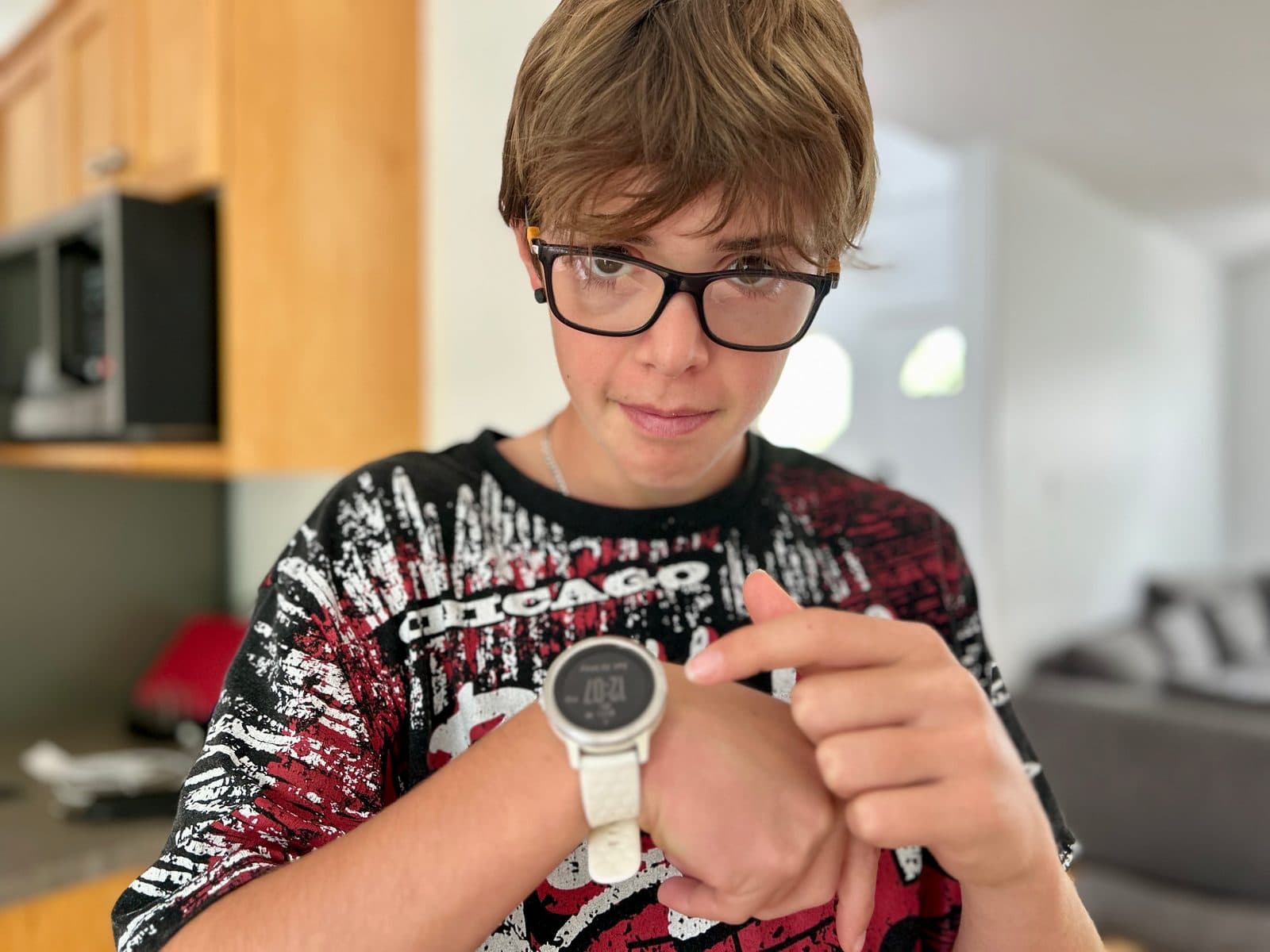
There is a familiar morning scene in a lot of homes. You call up the stairs that you are leaving in ten minutes. Then five. Then two. Then you are standing at the door with your keys, narrating the countdown like an air traffic controller, while a kid wanders past in one sock looking genuinely surprised that time has continued to pass.
It is easy to read that as your kid not caring, or not listening, or being deliberately slow. Usually it is none of those things. It is that your kid has almost no internal sense of how long ten minutes is, no practice planning backward from a deadline, and, crucially, no real reason to track time, because you are tracking it for them. You are their clock. And a kid who has never had to be their own clock does not develop the skill of being one.
Time management is one of the most quietly important future-ready skills there is, and one of the most teachable. It sits squarely inside our larger pillar on life skills for kids, the umbrella that every real-world skill lives under. The good news is that it does not require an app, a planner system, or a single lecture about responsibility. It is built through everyday life, on purpose, by slowly handing kids ownership of their own time.
What time management actually is for a kid
When most adults hear "time management for kids," they picture a tidy planner, a kid who is never late, or a color-coded chart on the fridge. That is not it. Those are tools, and tools are downstream of the actual skill. A kid can have a beautiful planner and zero ability to manage time, the same way a kid can own a violin and not be able to play it.
For a kid, time management is really five underlying capacities working together:
- Feeling time: having a rough internal sense of how long a chunk of time actually is. Knowing in your body, not just on a clock, the difference between five minutes and an hour.
- Estimating time: being able to guess how long a task will take before doing it. "Getting dressed is a two-minute job, not a twenty-minute job."
- Sequencing: putting steps in a sensible order so they fit together. Shoes after socks. Pack the bag before you are standing at the door.
- Prioritizing: deciding what has to happen first when you cannot do everything. This one is really a decision-making skill in disguise.
- Recovering: adjusting when the plan blows up, which it will, without the whole thing collapsing into a meltdown.
Notice what is not on that list: being fast, being naturally organized, or having a Type A personality. Time management is not a temperament. It is a set of skills, and skills are buildable. It is also, technically, a branch of executive function, the brain's management system for planning, working memory, and self-control. If your kid struggles broadly with planning and follow-through, that post is the foundational read, and this one is the time-specific application of it.
Why kids today struggle with it
If it feels like kids are worse at managing time than you remember being, you are not entirely imagining it. A few things have genuinely shifted, and they stack on top of each other.
The biggest one is what gets called time blindness: a weak or missing internal sense of time passing. This is not a moral failing or laziness. Young brains are still developing the machinery for tracking time, and for some kids, especially those with ADHD, that machinery stays unreliable for years longer. A time-blind kid genuinely does not feel the gap between "in a minute" and forty-five minutes later. The clock on the wall means nothing because the felt sense underneath it is not there yet.
On top of that, time is almost completely externalized for the modern kid. Think about how a typical day works. A bell or a schedule tells them when to switch tasks. An adult tells them when to wake up, eat, leave, and stop. A parent runs the morning countdown. At no point in a heavily managed day does the child have to hold the time themselves. They are passengers in their own schedule. And you do not learn to drive from the passenger seat.
Then there are screens, which are essentially time-perception machines built to make time disappear. A well-designed app or game collapses your sense of duration on purpose. "Ten more minutes" becomes ninety with no felt difference. This is true for adults too, but a kid whose internal clock is still forming gets it warped by a device that is actively engineered to erase the feeling of time passing. The dopamine loop and the clock do not coexist well.
And finally, the brand thesis we keep coming back to: kids today are over-supervised and under-challenged. A kid almost never gets to mismanage their time and feel the natural consequence, because an adult is always there to catch the fall. You drive them so they cannot miss the bus. You pack the bag so nothing gets forgotten. You issue the countdown so they are never actually late. Every rescue is well meant, and every rescue quietly removes the one thing that teaches the skill: the consequence.
How time-management skill actually develops
Time management is not taught in a sit-down lesson. It develops through a loop, the same way most real skills do. A kid takes ownership of a piece of time, makes a plan or an estimate, runs it, sees how it actually went, feels the result, and adjusts for next time. Round and round. Each loop tightens the skill a little.
You can break that loop into the layers that build on each other, roughly in order:
First, feeling time
Before a kid can manage time, they have to be able to feel it. This is the most overlooked step and the most foundational. A kid who cannot feel the difference between five minutes and twenty is going to fail at every planning task downstream, no matter how good their planner is. The work here is making time visible and felt: timers they can see, guessing how long things take, noticing "that felt fast" or "that felt forever."
Then, estimating
Once a kid can feel time, they can start to guess at it. Estimation is the engine of all planning. "How long will it take to clean your room? Guess. Now let us time it and see." Kids are wildly bad estimators at first, and that is the point. The gap between their guess and reality is the lesson. Over dozens of small estimates, the guesses get closer, and a kid who can estimate accurately can finally plan.
Then, sequencing and prioritizing
With a felt sense of time and a decent estimate, a kid can start ordering things. Sequencing is "what comes first, second, third." Prioritizing is the harder cousin: "I cannot do all of this, so what matters most?" Prioritizing is genuinely a decision-making skill, because every priority is a small decision about what to let go of. A kid who can prioritize is doing real cognitive work, not just being organized.
And finally, recovering
No plan survives contact with a real day. The most important and most ignored part of time management is what a kid does when the plan blows up. The bus is missed. The project ran long. They lost track and now there is not enough time. A kid who can shrug, reassess, and salvage the situation has a superpower. A kid who melts down at the first deviation does not have a time problem, they have a recovery problem, which is really a resilience problem. The two skills are joined at the hip. You cannot manage time well if a blown plan destroys you.

In the Membership
Time & Energy Planner
Life skills for kids ages 9-14: map energy patterns, build a real daily plan, test it, and make it better. Self-management that sticks.
Time management by age
What is realistic at 7 is very different from what is realistic at 13. Pushing a planner system onto a first grader is as pointless as treating a thirteen-year-old like they still need the morning countdown. Here is what is developmentally fair to expect, and a few concrete real-world ways to practice at each stage. As always, do these with your kid, not to your kid.
Ages 6 to 8: feeling time
At this age, the brain is still building the basic felt sense of duration. The goal is not planning a day. It is making time visible and starting to notice it. Do not expect a six-year-old to manage a schedule. Expect them to start feeling the difference between fast and slow.
- Use a visual timer for everyday transitions. A timer that shows time shrinking as a colored wedge (or even a sand timer) turns abstract minutes into something a kid can see. "Brush your teeth before the red runs out." You are externalizing time on purpose so they can start to internalize it.
- Play the guess-and-check game with daily tasks. "How long do you think it takes to put on your shoes? Guess a number. Let us time it." Then show them. Kids love this, and the surprise of the real number is the whole point.
- Give them one small timed job that is genuinely theirs. Setting the table before dinner is ready, feeding the pet at the same time each day. Something with a natural deadline they can feel, not a clock they have to read.
Ages 9 to 11: estimating and sequencing
Now the felt sense is coming online and a kid can start to plan short stretches. This is the age to hand over small, contained chunks of time and let them feel the consequence of how it goes. This is also the age where it is most tempting to keep rescuing, and most important to stop.
- Let them be late and feel it. This is the hard one. If they dawdle and miss the start of something low-stakes, let it happen. Do not give the fifth warning. The natural, survivable consequence of being late teaches more in one morning than a month of reminders. Save your countdowns for things that genuinely matter.
- Build the backward plan together. Before leaving anywhere, ask "What needs to happen before we walk out the door, and how long does each part take?" Shoes, water bottle, find the thing, use the bathroom. Let them build the list and add up the minutes. This is the seed of all real planning.
- Hand them one part of the day to run. Let them be in charge of getting everyone out the door for one outing, or running the whole bedtime sequence for themselves. They hold the time. You bite your tongue.
Ages 12 to 14: prioritizing and recovering
Teens and pre-teens can genuinely manage real stretches of time, including time with competing demands. This is the stage for real ownership, real deadlines, and real recovery from blown plans. This is also where time management starts to matter for the rest of their lives, so the stakes can be a little higher.
- Let them own a multi-step project with a real deadline. A school assignment, an event they are organizing, a thing they are building or selling. Do not manage it for them. Let them feel the difference between starting early and scrambling the night before. The scramble is a teacher.
- Hand over the tools and let them choose their own system. At this age, a planner, a phone calendar, a whiteboard, or a notebook is finally useful, because there is a real skill underneath to support. Let them try one and abandon it and try another. The system is theirs to figure out.
- Make them responsible for being on time to something that matters to them. A practice, a shift, a meetup with friends. When the consequence of being late is a coach or a friend, not a parent, the motivation gets real fast. Our older one runs a small business at twelve, and nothing taught him to respect a deadline faster than a customer waiting on him.
Real-world activities that build it
These are not exercises on paper. They are real-life situations that put a kid into the estimate-plan-run-feel-adjust loop on purpose. Pick the ones that fit your kid's age. Do them alongside your kid, and resist the urge to take over the second it gets bumpy. The bumpy part is the lesson.
- 1The time estimation game (ages 6 to 10). Pick a daily task. Have them guess how long it takes. Time it. Compare. Do this with a dozen different tasks over a few weeks and watch their guesses sharpen. This single habit builds the felt sense of time faster than anything else.
- 2Pack your own day (ages 9 to 13). Give them a free day or a weekend morning and have them plan the whole thing in advance: what they will do, in what order, and roughly how long each part takes. Then let them run it. Afterward, talk about where the plan held and where it fell apart.
- 3The reverse planner (ages 8 to 14). Start from a fixed end point and work backward. "We need to be at the trailhead at 9. What time do we leave the house? What time do we eat? What time do we get up?" Working backward from a deadline is the core move of all real scheduling, and most kids have never been shown it.
- 4Cook a timed meal (ages 9 to 14). Make a meal where several things have to finish at the same time. The pasta, the sauce, the bread, the salad. This forces sequencing and parallel planning in the most concrete possible way. There is no faking it: either dinner lands together or the pasta is cold while the bread is still baking.
- 5Catch a real bus on a real schedule (ages 11 to 14). Public transit runs on a clock that does not care about your kid. Planning to catch a specific bus, and missing it once, is one of the most powerful time lessons available in the modern world, precisely because the consequence is real and the bus is indifferent.
- 6Design your own morning routine (ages 9 to 14). Instead of you running the morning, have them map out their own routine, in their own order, with their own time estimates. Let them test it for a week and revise it. A routine a kid designs themselves is one they will actually follow, unlike one imposed from above.
- 7The countdown handoff (ages 8 to 12). For one outing, make your kid the official timekeeper. They get the clock, they call the warnings, they get everyone to the door. You become the passenger who shows up when called. It is amazing how differently a kid relates to time when they are the one holding it.
What NOT to do
A lot of the work here is subtraction. If time management is not building in your kid, there is a good chance one of these is quietly in the way.
- Do not be their external clock forever. The morning countdown, the endless reminders, the "five more minutes" announcements. Every time you hold the clock for them, you remove their reason to hold it themselves. Wean yourself off it as they get older, on purpose.
- Do not rescue every blown deadline. The forgotten homework, the missed bus, the project left to the last minute. If you swoop in and fix it every time, the consequence never lands, and the consequence is the entire teacher. Pick the deadlines that genuinely matter and let the rest play out.
- Do not impose an adult planner system on a young kid. A color-coded planner means nothing to a seven-year-old who cannot yet feel what twenty minutes is. You are decorating a skill that does not exist yet. Build the felt sense first; the tools come later, and they should come from the kid.
- Do not turn it into nagging. Time management taught through constant nagging just teaches a kid to wait for the nag. The goal is to transfer the clock to them, not to become a louder clock.
- Do not confuse fast with good. Some kids are naturally quick and some are naturally slow, and neither is the same as managing time well. A thoughtful slow kid who plans and finishes is doing better than a fast kid who never thinks ahead. Praise the planning and the recovering, not the speed.
You do not teach a kid to manage time by managing it for them. You teach it by handing them the clock and staying close while they figure out how to read it.
A note on different kids
Time management is not one-size-fits-all, and this is especially true for kids with ADHD, where time blindness is not a phase but a genuine, well-documented difference in how the brain perceives time. For these kids, the felt sense of duration can stay unreliable for years, and the gap is real, not a matter of effort or attitude. Treating an ADHD kid's time struggles as laziness is both wrong and counterproductive.
The answer for a time-blind kid is more scaffolding, not more pressure. Visible timers everywhere. External structure that does the time-tracking the brain cannot reliably do yet. Shorter chunks. More frequent check-ins. Tools that live where the kid can see them, not in a planner that gets forgotten. The goal is not to drill them into having a sense of time they do not have. It is to build supports around the gap so they can succeed anyway, and to slowly, patiently strengthen the felt sense over years.
And for any kid, anxious or sensitive types included, watch the pressure. Time stress floods a sensitive nervous system fast, and a flooded kid cannot plan. If timers and deadlines are triggering panic, scale the stakes way down and rebuild from low-stakes, no-consequence practice. The skill grows from calm repetition, not from high-stakes pressure.
Time management is one of those skills that looks small and turns out to be enormous. A kid who can feel time, plan around it, and recover when it goes sideways walks into adulthood with an advantage that compounds for the rest of their life. And the only way they get it is by being handed the clock, over and over, on ordinary days, while you stay close enough to help and far enough back to let it be theirs. It is one strand of the bigger picture in our life skills for kids pillar, which is worth reading if you want to see how all these future-ready skills fit together.
If you want the ideas in this post structured into ready-to-use activities, planning prompts, and weekly rhythms by age, that is exactly what we build inside the Anywhere Learning membership. No rigid system to follow, just real-world ways to hand your kid the clock and practice the skill alongside them. But you can absolutely start tonight, for free. Pick one thing from the list above. Hand over one piece of the day. Stay close. Let them be a little bit late. That is the whole job.
Want the age-by-age version? The Capable Kid Guide lays out what kids can actually do from 6 to 14, and how to hand each skill over. Free, from a former teacher.