- 1Why chores matter (and it is not about the clean house)
- 2Ages 2 to 3: the helper stage
- 3Ages 4 to 5: real tasks, real pride
- 4Ages 6 to 8: building the routine
- 5Ages 9 to 11: independence is the goal
- 6Ages 12 to 14: the apprentice phase
- 7Ages 15 to 17: ready for the real world
- 8How to make it work without turning your house into a battleground
- 9The research behind chores and life outcomes
- 10What if you are starting late?
- 11Frequently asked questions
There is a conversation that comes up in every parenting group eventually: should kids do chores, and how much is reasonable? The answers range from "they should earn their keep" to "let them be kids." But the research points somewhere more interesting than either camp.
The Harvard Grant Study, one of the longest-running studies of adult life, found that the single strongest predictor of professional success was not grades, not family income, not IQ. It was whether the person had done chores as a child. Not because folding towels is a career skill, but because chores teach something harder to measure: the ability to see what needs doing and do it without being asked.
That is a life skill. And it is one that every kid can start building surprisingly early.
Why chores matter (and it is not about the clean house)
When a child folds laundry, they are not just folding laundry. They are practicing sequencing (sort, fold, stack, put away), fine motor coordination, task completion, and contributing to something bigger than themselves. When they empty the dishwasher, they are practicing categorization, spatial reasoning, and routine.
The life skills embedded in household tasks include:
- Responsibility: owning a task from start to finish without someone hovering
- Time management: fitting tasks into a day alongside things they want to do
- Executive function: remembering what needs doing, planning the order, starting without a prompt
- Self-sufficiency: the quiet confidence that comes from knowing you can take care of yourself
- Contribution: understanding that a household runs because everyone does their part
None of these show up on a report card. All of them show up in adult life, every single day.
Ages 2 to 3: the helper stage
Toddlers want to help. They are desperate to participate in whatever the adults are doing. This is the window to build the habit, not because they are efficient (they are not), but because the willingness is there and it will not last forever if you keep saying "not now."
What they can handle:
- Put toys in a bin (with you doing it alongside them)
- Carry unbreakable dishes to the sink
- Wipe up spills with a cloth
- Put dirty clothes in the hamper
- Help feed a pet (you scoop, they carry the bowl)
- Pick up sticks or leaves in the yard
A two-year-old wiping a table will make it wetter than before. That is fine. The point is the action, not the result. Correct the technique later. Right now, you are building the identity of someone who pitches in.
Ages 4 to 5: real tasks, real pride
This is when kids start to feel genuinely useful, and they love it. A five-year-old who sets the table for dinner walks a little taller. They can follow simple multi-step instructions and are starting to understand routine.
What they can handle:
- Set the table (count out the right number of plates, forks, cups)
- Clear their own plate after meals
- Make their bed (it will be lumpy, that counts)
- Sort laundry by colour
- Water plants
- Help put groceries away (hand them one bag at a time)
- Match socks from the clean laundry pile
- Wipe down low surfaces with a spray bottle and cloth
Notice that several of these are also sneaky math practice: counting plates, sorting by category, matching pairs. Household tasks teach academic skills without either of you trying.
Ages 6 to 8: building the routine
This is the turning point. Kids this age can handle real responsibility if you are willing to step back and let the first few attempts be imperfect. The goal is consistency, not perfection.
What they can handle:
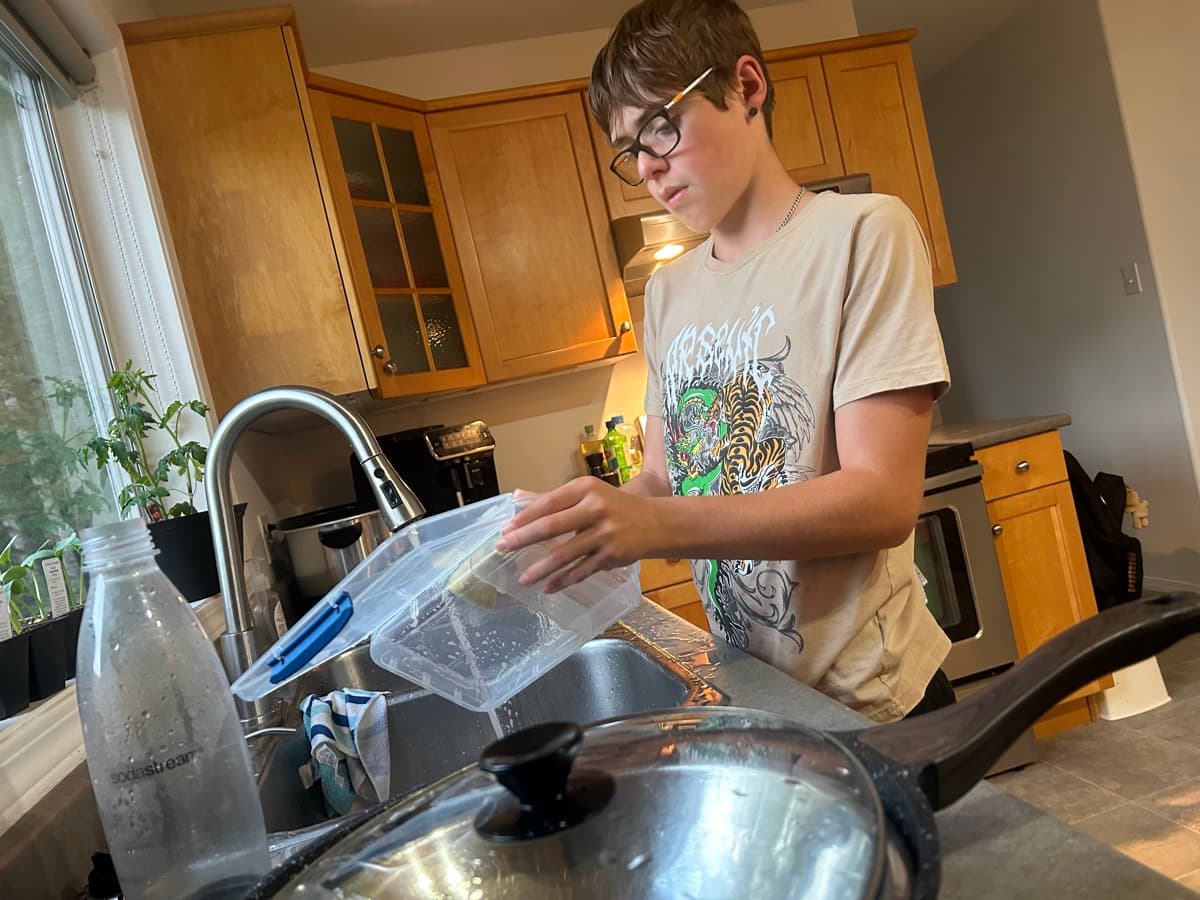
- Load and unload the dishwasher
- Fold simple laundry (towels, t-shirts, underwear)
- Sweep the floor (the corners will be missed, that is OK)
- Take out the recycling or compost
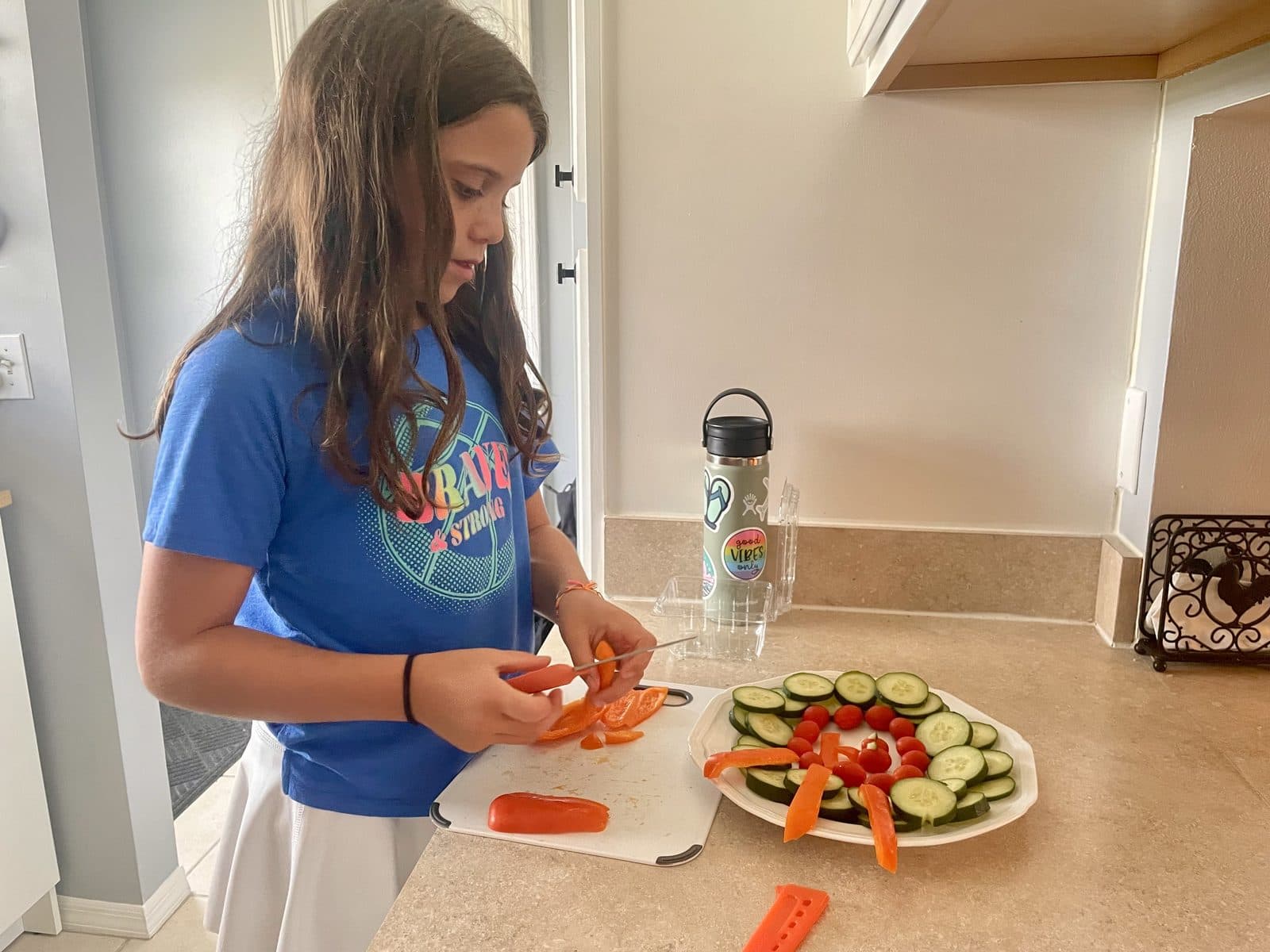
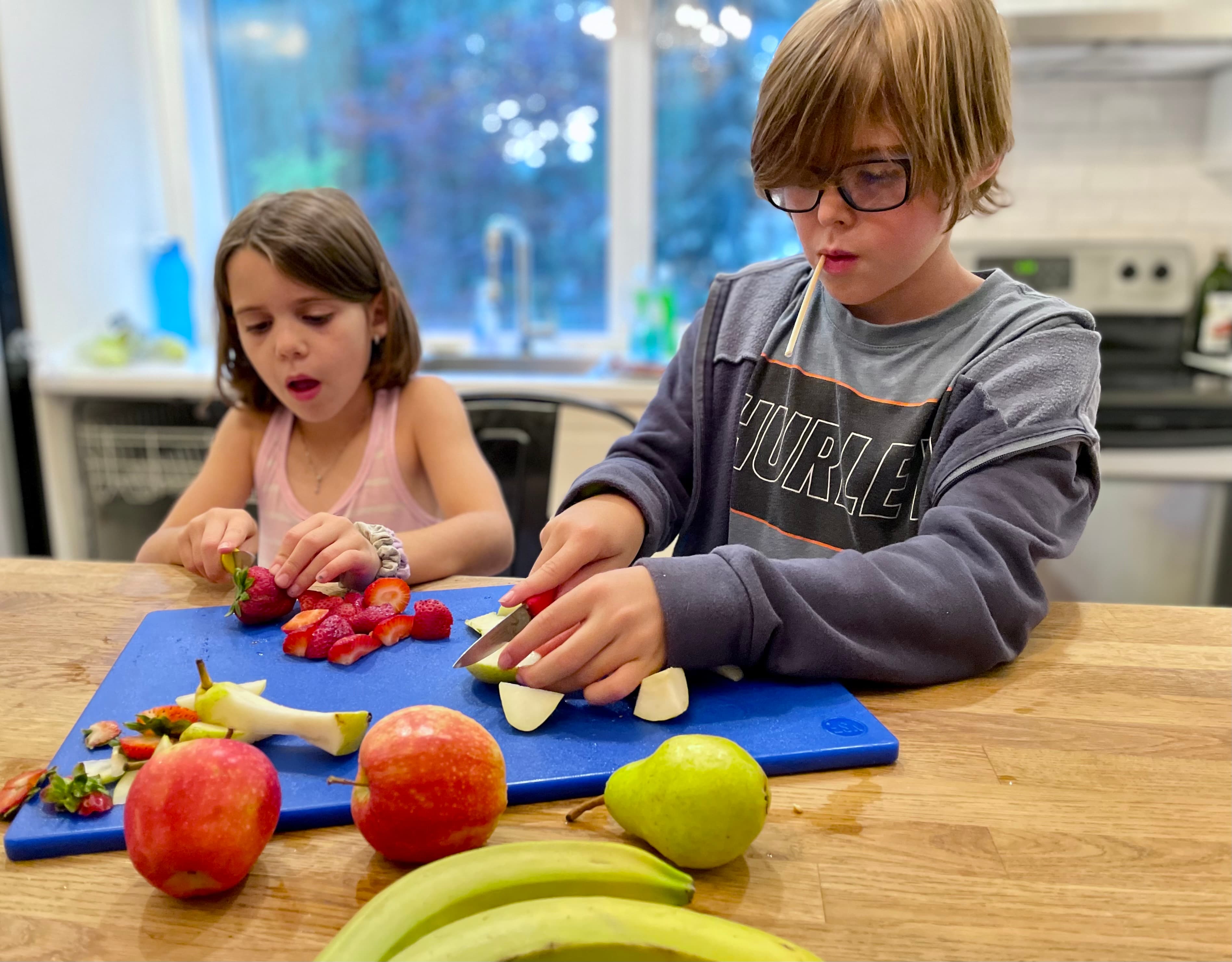
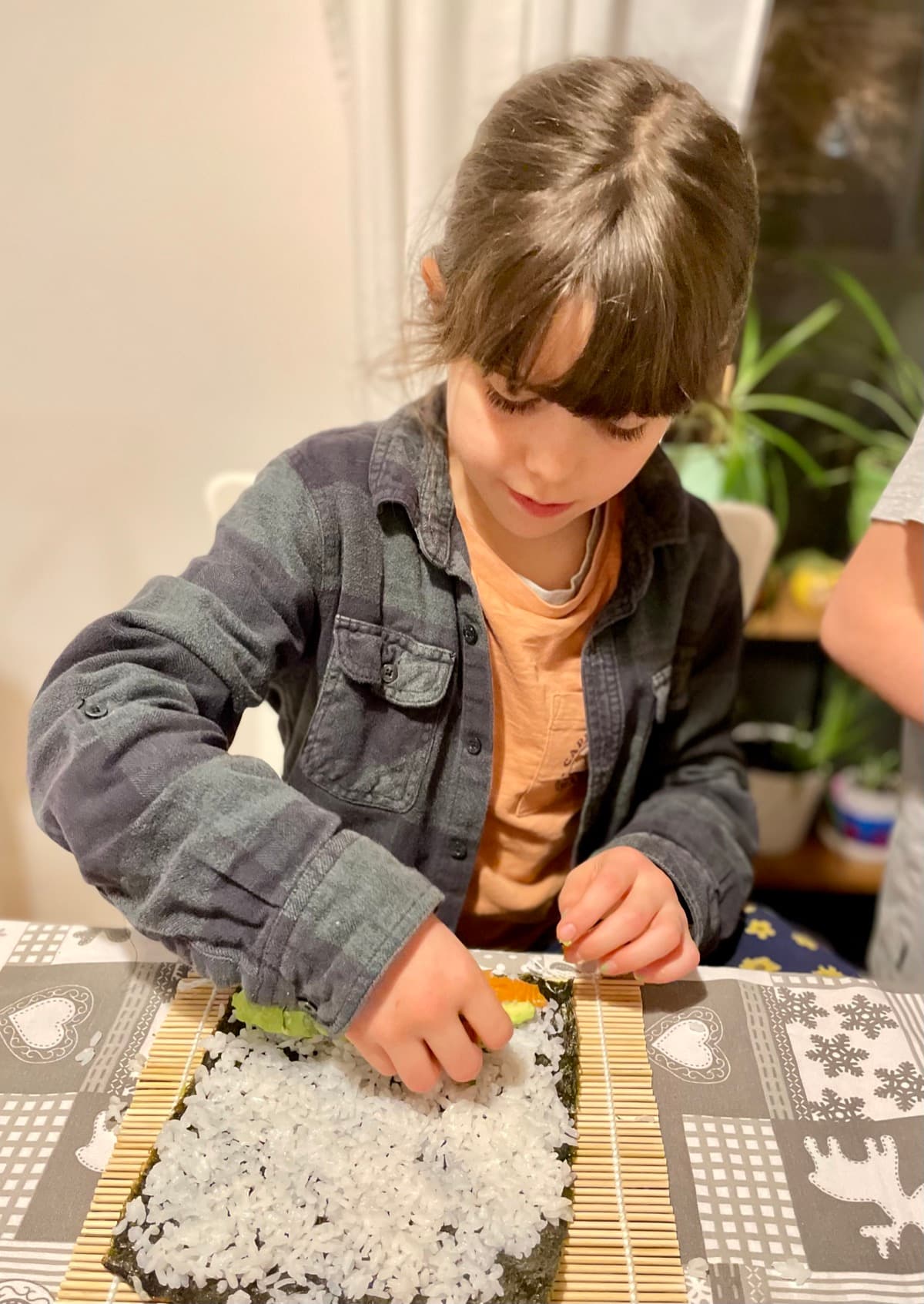
- Help prepare simple foods: wash vegetables, make a sandwich, pour cereal
- Feed pets independently on a schedule
- Tidy their own room without step-by-step instructions
- Bring in the mail and sort it
- Weed a small section of garden
The shift here is from "help me with this" to "this is yours." Ownership is what builds the skill. A kid who helps you fold laundry learns folding. A kid whose job is to fold their own laundry learns responsibility.
In the Membership
The Future-Ready Skills Map
44-page parent guide to 12 future-ready skill areas for kids ages 0-16+: milestones, hands-on activities, and sample weeks.
Ages 9 to 11: independence is the goal
By this age, kids are capable of far more than most parents give them credit for. The question is not "can they do it?" but "will I let them?"
What they can handle:
- Do their own laundry start to finish (sort, wash, dry, fold, put away)
- Cook simple meals with minimal supervision (eggs, pasta, quesadillas)
- Clean a bathroom (toilet, sink, mirror, floor)
- Vacuum or mop a room
- Pack their own bag for trips, activities, or school
- Manage a simple schedule (know when things happen and get themselves ready)
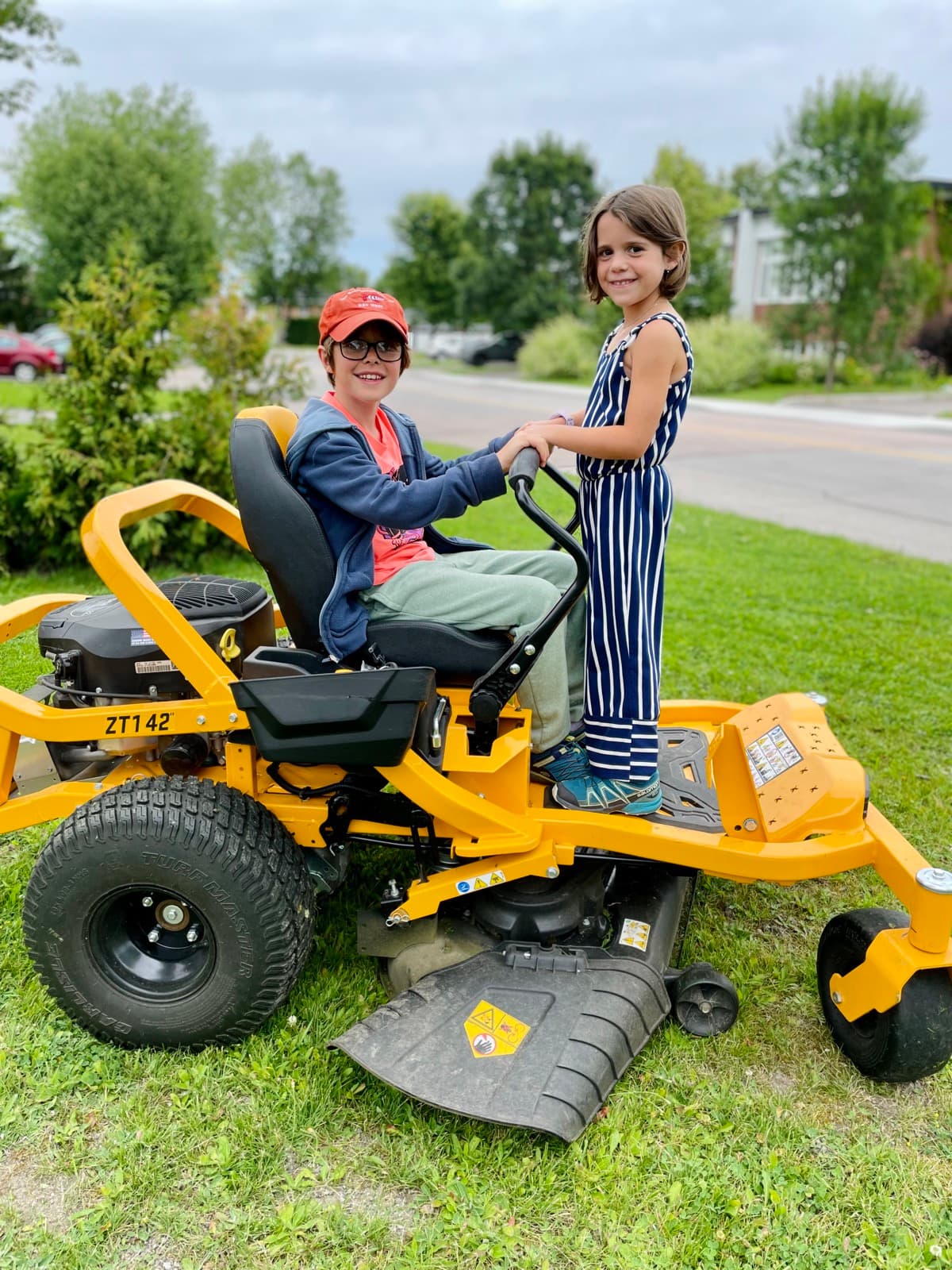
- Mow the lawn or rake leaves (with age-appropriate equipment)
- Help with grocery shopping: compare prices, find items, stay on budget
- Care for younger siblings for short stretches
This is the age when kids start connecting daily tasks to bigger life skills. A kid who can cook, clean, and manage their own belongings at 10 is a kid who will not be helpless at 18.
Ages 12 to 14: the apprentice phase
Tweens and young teens are ready for tasks that require judgment, planning, and multi-step problem-solving. This is where chores stop looking like chores and start looking like real-world competence.
What they can handle:
- Plan and cook a full family meal (choose a recipe, make a list, prep, cook, clean up)
- Do yard work: mowing, trimming, seasonal clean-up
- Basic home repairs: tighten a screw, change a light bulb, unclog a drain, patch a hole
- Run errands independently (walk to the store, return a library book)
- Babysit younger siblings for longer stretches
- Manage their own money for specific expenses (clothing budget, activity fees)
- Deep-clean a room or space
- Do basic car maintenance with a parent (check tyre pressure, refill washer fluid)
The common objection here is "they will do it badly." Yes. At first. That is how learning works. A 13-year-old who has never cooked will burn the pasta. The second time, they will not. The fifth time, they will be adjusting the recipe. You cannot shortcut the process by doing it for them.
Ages 15 to 17: ready for the real world
The test for this age group is simple: if they moved out tomorrow, could they keep themselves alive and reasonably functional? If the answer is no, there is work to do. And it is not too late.
What they should be able to handle:
- Meal plan for a week and shop within a budget
- Do all their own laundry and basic clothing repairs (sew a button, fix a hem)
- Clean an entire living space, not just their room
- Basic financial tasks: track spending, understand a bank statement, file simple paperwork
- Schedule their own appointments (dentist, haircut, doctor)
- Navigate public transportation or plan a driving route
- Handle a minor household emergency (power outage, small leak, locked out)
- Cook at least five meals from memory without a recipe
If this list feels ambitious, that is a sign of how much we have collectively lowered the bar. Previous generations expected all of this by 15 or 16. There is nothing wrong with today's kids. They just need the practice. For a deeper dive into teen readiness, see what teens should know before they leave home.
How to make it work without turning your house into a battleground
Knowing what kids can do at each age is the easy part. Getting them to actually do it is where most families hit a wall. A few things that help:
- Work alongside them first. Nobody wants to be assigned a task and sent off alone. Do it together until the skill is solid, then hand it over.
- Lower your standards (temporarily). A seven-year-old's version of "clean" is not your version. Accept it. Raise the bar gradually over months, not days.
- Make it routine, not random. "You always unload the dishwasher after breakfast" is easier to follow than "help out when I ask." Predictability reduces resistance.
- Stop calling them chores. Call them contributions, responsibilities, or just "your stuff." Language matters. "Doing your chores" sounds like punishment. "Handling your responsibilities" sounds like growing up.
- Never redo their work in front of them. Nothing kills motivation faster than watching a parent re-fold every towel you just folded. If it needs fixing, wait until they are gone or do it together as a learning moment.
- Connect the skill to their future. "You are going to be the roommate everyone wants" lands better with a teenager than "because I said so."
The goal is not a clean house. The goal is a kid who sees what needs doing and does it, without being asked, without being managed, without falling apart when life gets hard.
The research behind chores and life outcomes
This is not just folk wisdom. Multiple longitudinal studies point in the same direction:
- The Harvard Grant Study (75 years of data) found that childhood chores were a stronger predictor of adult well-being than academic achievement, family income, or IQ.
- A University of Minnesota study tracking children from preschool to their mid-twenties found that the best predictor of success (completing education, starting a career, healthy relationships) was whether they had started doing chores by age three or four.
- Research published in the Journal of Developmental and Behavioral Pediatrics linked regular household responsibilities with higher self-esteem, better academic performance, and stronger social skills in children.
The pattern is clear: kids who contribute to a household develop the internal skills (follow-through, initiative, competence) that carry over into everything else. It is not about the dishes. It is about what doing the dishes builds inside them.
What if you are starting late?
If your 11-year-old has never done laundry or your 14-year-old cannot cook an egg, do not panic and do not dump everything on them at once. Start with one task. Teach it, practice it together, then make it theirs. Add another task once the first one is automatic. Most kids catch up faster than you expect once they realize they are capable.
The kids who resist hardest are usually the ones who have been told (through years of "I will just do it myself") that they are not competent enough to help. Reversing that belief takes patience, but it happens. Start where they are. Not where you wish they were.
Want this as a free printable? Grab the 30 Chores for Kids by Age: 2 to 14, Plus a Daily Chore List, free to read, and the printable version lands in your inbox.