- 1The three core executive function skills
- 2Why some kids struggle more than others
- 3Building working memory at home
- 4Building impulse control at home
- 5Building cognitive flexibility at home
- 6Executive function by age: what to realistically expect
- 7The environment matters as much as the skill
- 8When executive function struggles need professional support
- 9Frequently asked questions
If you have ever watched a kid get distracted halfway through getting dressed, forget what they went upstairs for, melt down because plans changed, or start a project and abandon it twenty minutes later, you have seen executive function in action. Or rather, you have seen what happens when it is still developing.
Executive function is the brain's management system. It is the ability to hold information in mind, plan a sequence of steps, resist impulses, shift between tasks, and keep going when things get boring or hard. It is the skill behind every other skill, and it develops slowly, unevenly, and much later than most parents expect.
The good news: executive function is trainable. Not through apps or workbooks, but through the kind of everyday challenges that home life is already full of.
The three core executive function skills
Researchers generally break executive function into three interconnected skills:
Working memory
The ability to hold information in your mind while using it. Following multi-step instructions, doing mental math, remembering what you went to the store for. Working memory is the mental whiteboard. When it is overloaded, kids lose track, forget steps, and seem like they are "not listening" when they are actually just out of mental bandwidth.
Inhibitory control (impulse control)
The ability to stop and think before acting. Resisting the urge to blurt out, waiting your turn, not eating the cookie before dinner, choosing to keep working when you want to stop. This is the skill that keeps kids (and adults) from doing the first thing that comes to mind, which is usually not the best thing.
Cognitive flexibility
The ability to adjust when things change. Switching between tasks, adapting when plans fall apart, seeing a problem from a different angle, coping with transitions. Kids with weak cognitive flexibility get stuck. They insist on doing things one way, fall apart when routines change, and struggle to recover when things do not go as expected.
These three skills work together like the legs of a stool. Weakness in any one of them affects the others. And all three can be built through practice.
Why some kids struggle more than others
Executive function skills develop on a long timeline. They begin emerging around age 2, grow rapidly between ages 3 and 5, and continue developing into the mid-twenties. But the timeline varies enormously from kid to kid.
Some factors that affect executive function development:
- Neurodivergence: ADHD is fundamentally an executive function difference. Kids with ADHD are not lazy or defiant; their executive function hardware is wired differently. Autism, anxiety, and learning differences can also affect executive function.
- Sleep: tired kids have dramatically worse executive function. If your child is struggling with focus and planning, check their sleep before anything else.
- Stress: chronic stress (family conflict, school pressure, social anxiety) actively impairs executive function. A child who is stressed is a child whose management system is offline.
- Screen habits: excessive screen time, especially passive scrolling, does not build executive function and may weaken it. Active, creative screen use (building in Minecraft, editing a video) is different from passive consumption.
- Practice: like any skill, executive function improves with use. Kids who are given opportunities to plan, decide, remember, and self-correct develop stronger skills than kids who are managed for.
If your child struggles significantly with executive function, it is worth understanding whether neurodivergence is part of the picture. But regardless of the cause, the strategies for building these skills are the same: practice them in real life, with support.
Building working memory at home
Working memory is the skill that gets better with use. These are not "brain training games" but real activities that stretch the mental whiteboard:
- Give multi-step instructions verbally: "Go upstairs, get your shoes, bring down your water bottle, and meet me at the door." Start with two steps for young kids and build up.
- Cook together without re-reading the recipe: read the step, close the book, then do it from memory.
- Play memory-based games: card matching, Simon Says, or "I went to the market and I bought..." where each person adds an item and recites the whole list.
- Ask them to retell a story or explain a movie plot. Sequencing events from memory builds the same skill.
- Let them memorize the grocery list instead of reading it. Start with five items. Build to ten.
- Teach mental math through real situations: "We have $20. The bread is $4.50 and the milk is $3.75. How much is left?" No paper, no calculator.
When the task is about something other than memory (like learning to clean the bathroom), use checklists, visual schedules, or step-by-step photos. Save the memory challenge for when working memory itself is the goal. Overloading a developing brain creates frustration, not growth.
In the Membership
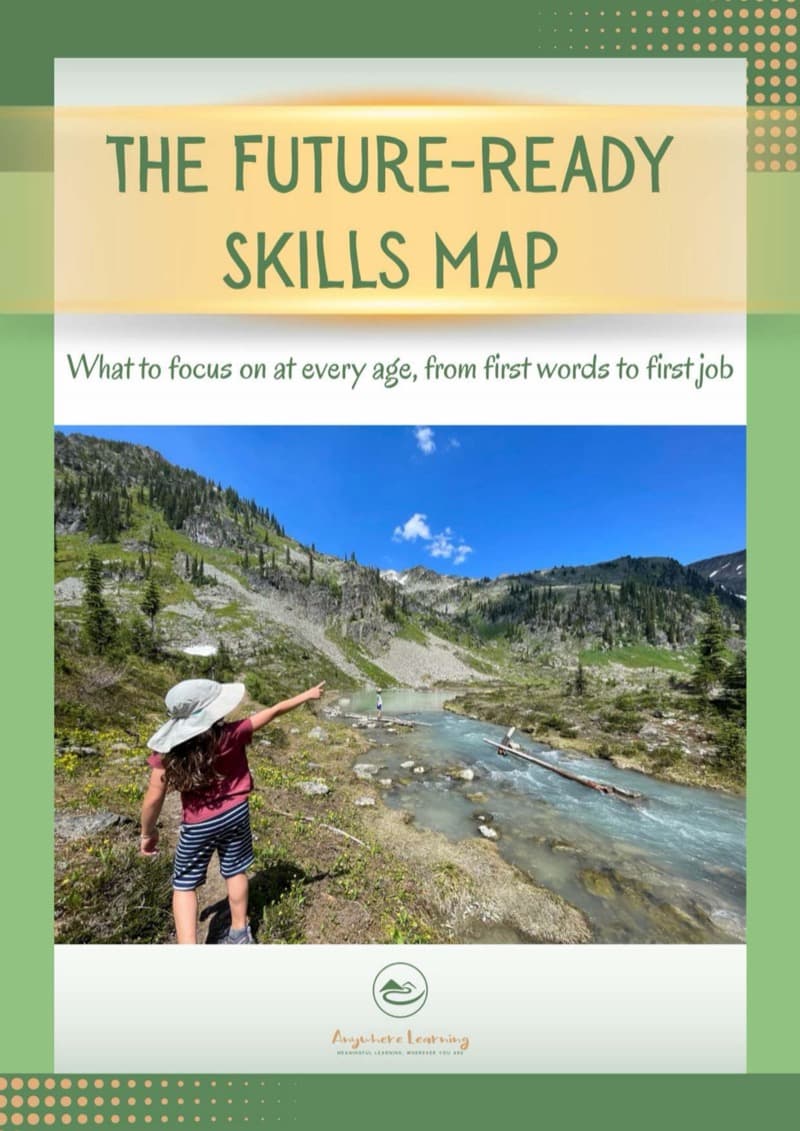
The Future-Ready Skills Map
44-page parent guide to 12 future-ready skill areas for kids ages 0-16+: milestones, hands-on activities, and sample weeks.
Building impulse control at home
Impulse control is the executive function skill that gets the most attention (usually because the lack of it is the most visible). It builds slowly and benefits enormously from practice in low-stakes situations.
- Turn-taking games: board games, card games, and conversations where waiting is built into the structure.
- The marshmallow experiment, at home: put a treat on the table and say "If you wait five minutes, you can have two." This is not a test. It is practice. And it is OK if they eat it.
- Red light, green light and freeze games: these require stopping the body mid-action, which is impulse control in physical form.
- Cooking with timers: "The muffins need 12 more minutes. What can you do while you wait?" Delayed gratification, practiced daily.
- The pause before answering: at dinner or during conversation, introduce a rule where everyone waits three seconds before responding. It feels awkward at first. It builds the pause muscle.
- Journal before reacting: for older kids, especially with social conflicts, "write it down before you respond." The act of writing creates a gap between impulse and action.
The most important thing to remember about impulse control: it is a muscle, not a switch. Kids are not choosing to be impulsive. They are working with what their brain can do right now. Punishment for impulsive behaviour does not build impulse control. Practice does.
Building cognitive flexibility at home
Cognitive flexibility is the skill that helps kids cope with change, think creatively, and solve problems. It is also the one that is hardest to build through traditional teaching. Real life does it better.
- Change the routine sometimes, on purpose: take a different route to the park, rearrange the schedule, eat breakfast for dinner. Small, safe disruptions build adaptability.
- Play "what else could this be?": hand them a random object and brainstorm alternative uses. A colander is a helmet, a drum, a planet. This is divergent thinking, the cognitive flexibility workout.
- When plans change, narrate the pivot: "We were going to go to the beach but it is raining. What are our other options?" Include them in the problem-solving.
- Encourage perspective-taking: "Why do you think she said that? What might she be feeling?" Seeing situations from another angle is cognitive flexibility in social form.
- Play strategy games: chess, Settlers of Catan, or any game where you need to adjust your plan based on what other players do.
- Let them solve problems without giving the answer: "The drawer is stuck. What could you try?" The process of generating and testing solutions is flexibility in action.
Executive function by age: what to realistically expect
Ages 3 to 5
Can follow two-step instructions. Can wait briefly for a turn with support. Easily frustrated by changes in routine. Beginning to plan simple sequences (get dressed, pick a snack). Still needs lots of external structure and reminders.
Ages 6 to 8
Can follow three to four step instructions. Starting to organize their own materials. Can wait longer and take turns more reliably. Beginning to plan ahead ("I need to bring my swimsuit tomorrow"). Still needs visual checklists and reminders for multi-step tasks.
Ages 9 to 11
Can manage a simple schedule. Starting to prioritize tasks. Can work independently for longer stretches. Can adjust plans when things change (with some frustration). Starting to notice their own patterns ("I work better in the morning").
Ages 12 to 14
Can plan multi-step projects. Starting to manage their own time. Can set goals and work toward them. Can handle more complex social situations. Still developing and still need support, even if they insist they do not.
Ages 15 to 17
Can plan for the future (weeks or months out). Can manage competing priorities. Can reflect on their own strengths and weaknesses. Should be taking increasing ownership of their own schedule, responsibilities, and decisions. Still not fully developed, and that is normal.
Executive function is not about being organized. It is about being able to manage yourself, your time, your emotions, and your actions, even when no one is watching.
The environment matters as much as the skill
You can practice executive function all day, but if the environment is working against your child, progress will be slow. A few environmental factors that support executive function development:
- Consistent sleep: 9 to 12 hours for school-age kids. Non-negotiable.
- Physical activity: daily movement dramatically improves focus and impulse control. It does not have to be sports; a walk, a bike ride, or a dance party works.
- Reduced clutter: a visually calm space helps a visually overwhelmed brain. This does not mean minimalist, just not chaotic.
- Predictable routines: knowing what comes next frees up mental bandwidth for higher-order thinking.
- Autonomy: kids who make some of their own decisions practice executive function. Kids who are managed for everything do not.
- Limited passive screen time: active creation on screens is fine. Endless scrolling is not. The difference matters for developing brains.
When executive function struggles need professional support
All kids develop executive function at different rates. But if your child is significantly behind their peers, if daily tasks are a constant battle, if they are distressed by their own inability to focus or plan, or if you suspect ADHD or another neurodevelopmental difference, it is worth getting an assessment.
Occupational therapists, educational psychologists, and neuropsychologists can all evaluate executive function and provide targeted strategies. For kids with ADHD, understanding the executive function component is often more helpful than any behavioural intervention, because it reframes the problem from "will not" to "can not yet" and opens up different solutions.
Want the age-by-age version? The Capable Kid Guide lays out what kids can actually do from 6 to 14, and how to hand each skill over. Free, from a former teacher.