Somewhere in every road trip there is a kid asking how much longer, and a parent doing arithmetic in their head to answer. Distance left, speed, the stop for gas, whether you will make it before dark. That arithmetic is the whole math lesson. The only change worth making is handing it to the kid.
Road trip math is my favourite kind of real-world math because nothing about it has to be invented. The trip is real, the gas price is real, the motel costs what it costs, and if the numbers are wrong you find out at the pump. A kid who plans one real trip does more multi-step arithmetic with decimals, rates, and percentages than a month of practice pages, and remembers all of it, because they were in the car when the answer came true.
This post has two halves. The first is the big project: your child plans the trip before you leave. The second is the in-the-car half, nine games sorted by age for when the planning is done and the highway is long, and every one of them has something to win. If you want the planning half laid out step by step with the sheets already made, that is the Road Trip Calculator in the library. Everything below works without it.
Why a road trip is the best math project you will run this year
Most math practice has a right answer that someone else already knows. Trip math has a right answer that nobody knows yet, and the family needs it. That changes how a kid works. They check. They redo the multiplication because a wrong fuel estimate means an awkward moment at a gas station three hours from home. They argue for the shorter route and then discover it is slower. They see a percentage go up on a real odometer.
- Distance and unit rates: miles or kilometres, miles per gallon or litres per 100 km, dollars per gallon or per litre.
- Multi-step problems with decimals: distance divided by mileage, times the price, plus the stops.
- Time: hours and minutes, average speed, departure and arrival, what a 20-minute stop does to the whole day.
- Comparison and trade-offs: cheaper versus faster, and which one your family actually wants.
- Budgeting and percentages: adding up categories, building in a contingency, and tracking how far along you are.
- Estimation and checking: is that answer even reasonable, before we trust it?
That is a term of grade 5 to 8 math in one weekend, and it leans on the same decision-making skills and money skills you are probably already working on. The academics and the life skills are the same task, which is the whole idea behind everything we make.
The big project: let your kid plan the trip (ages 8 to 14)
Do this a few days before you leave. Give your child the real inputs (where you are going, what car you are driving, roughly what gas costs right now) and let them build the plan on paper or in a simple spreadsheet. You are the client. They are the planner. Resist fixing their numbers; ask questions instead.
Step 1: How far is it, really?
Start with a map, a paper one if you have it, and the mapping app for the check. Have them find the route and write down the total distance, then break it into legs: home to the first stop, first stop to lunch, and so on. For younger kids, measuring the map with a ruler and using the scale is a great first job. For older kids, ask them to estimate the total before they look it up, then compare. Being within 10% is a genuine skill.
Worked example we will carry through: a 480-mile trip (about 770 km), one long day, four people.
Step 2: What will the gas cost?
This is the heart of it. They need three numbers: the distance, the car’s fuel economy, and the price of gas. Look up your actual car’s mileage (the manual, or the trip computer on the dash) and today’s price at your usual station. Then:
- 1Divide the distance by the mileage to get the gallons needed: 480 miles at 30 miles per gallon is 16 gallons.
- 2Multiply by the price: 16 gallons at $3.50 is $56.
- 3Round up. Gas prices change and hills happen: call it $60.
If you are in Canada like us, it is the same math in different units: 770 km at 8 litres per 100 km is about 62 litres, and at $1.60 a litre that is roughly $99. Doing it both ways is a nice bonus lesson in why unit rates matter. Either way the number is real, and your kid now knows what a tank of gas is worth, which most adults never had to learn at 10.
Step 3: How long will it take?
Driving time is distance divided by average speed, and the average is always lower than the speed limit. A good rule for a mixed highway trip is about 60 miles per hour (100 km/h), so 480 miles is 8 hours of driving. Then add the stops. Three stops of 20 minutes is another hour, so the real day is 9 hours. If you want to leave at 8 in the morning, when do you arrive? Have them write the whole day as a timeline: leave 8:00, gas at 10:40, lunch at 12:30, arrive 5:00. Then, on the day, let them check the plan against the clock. This is where time math stops being a worksheet exercise and becomes a thing they can feel.
Step 4: Compare two routes
Most trips have a choice: the highway or the scenic road, the direct route or the one past the good bakery. Have them work out both. Say route B is shorter, 430 miles, but on slower roads averaging 45 miles per hour. Fuel: 430 divided by 30 is about 14.3 gallons, so roughly $50, six dollars cheaper. Time: 430 divided by 45 is about 9.6 hours of driving, an hour and a half longer than the highway. Now the question is not a math question, it is a family question: is six dollars worth ninety minutes? Let them make the case either way. That trade-off is the most grown-up thinking in the whole project.
Step 5: Build the budget (with a cushion)
Finally, the whole trip in one table. Categories work best: fuel, food, sleeping, doing things, and the everything-else line. For our example day: fuel $60, two meals out for four at about $12 a head is $96, snacks $20, one night in a motel $130, one activity for the family $60. That is $366. Then teach the single most useful budgeting habit there is: add a contingency. Ten percent of $366 is about $37, so the trip budget is $400. Ask them why the cushion matters, and let them find out on the trip when the motel charges for parking.
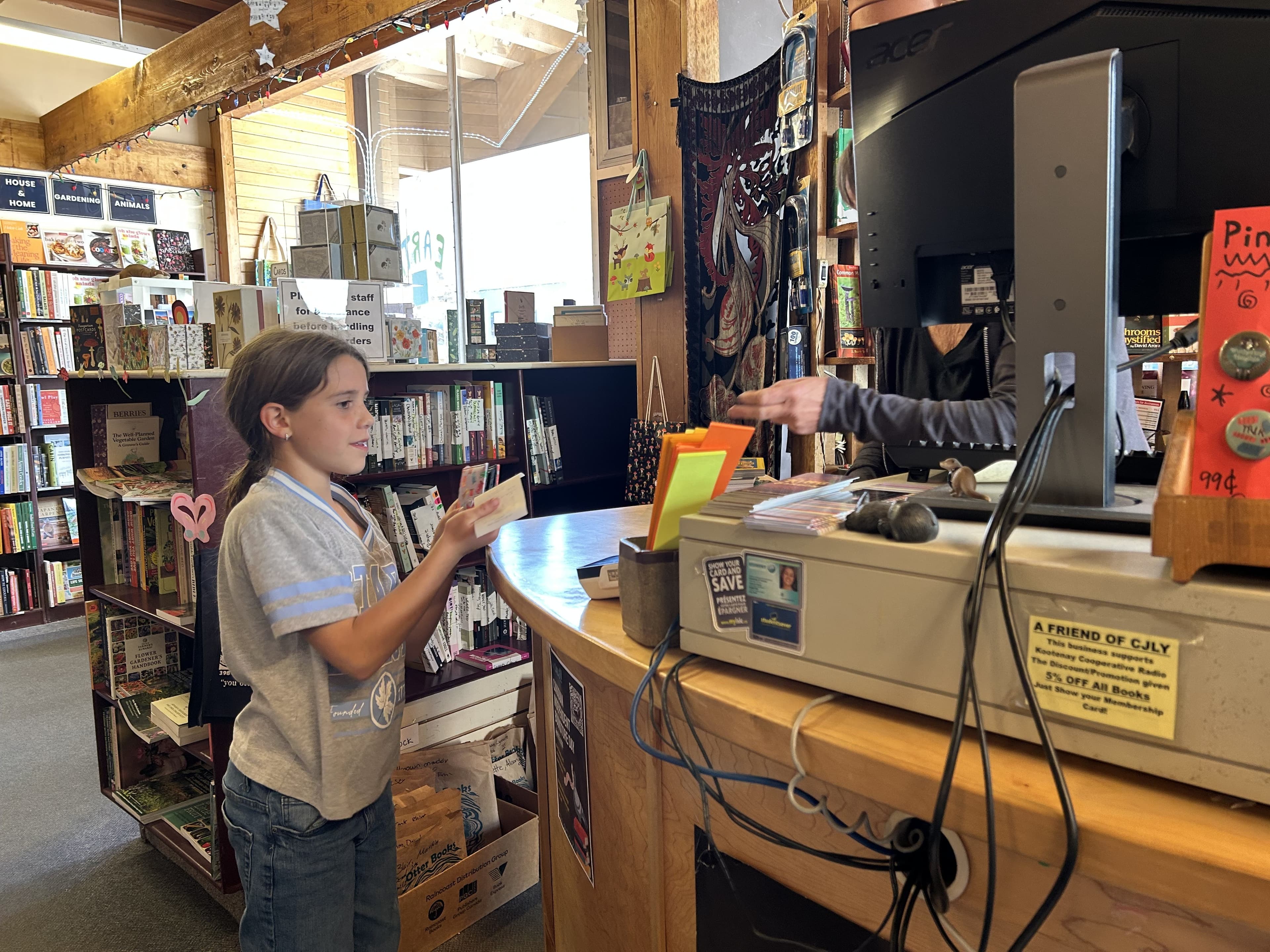
On the trip, have your child keep the running total. Every receipt goes to them, they subtract it from the budget, and at each stop they report the number left. A kid tracking $400 down to $38 learns more about money than any allowance conversation.
In the Membership
Road Trip Calculator
If you want all five steps laid out with the distance, fuel, time, route comparison, and budget sheets ready to fill in, the Road Trip Calculator does exactly that for ages 8 to 14. Open it the night before and hand it over.
Road trip math games that are actually games
Once the planning is done, the drive itself can carry the math, but only if it feels like a game and not a quiz. The difference is a guess before the reveal, something to win, or someone to beat. Every game below has one of those built in. Pick the age band, play a round or two, and quit while they are still asking for another. Prizes are optional: points, a running tally to the next stop, or nothing at all. In our family we say the prize is the pride, and that has always been enough.
Ages 5 to 7
Plate Poker. Before the next car passes, everyone calls "high" or "low." Then add up the digits on its licence plate. High wins if the total is 15 or more, low wins if it is under. First to five wins the round. The math is addition, over and over, and nobody notices.
Sign Guess. Every time a distance sign is coming up (the driver calls "sign in thirty seconds"), everyone guesses the number on it. Closest guess takes a point, exact guess takes three. Kids get good at this fast because they start doing the subtraction from the last sign, which is the whole point.
The Fair Share Deal. Hand the youngest the snack bag and make the deal: split it so everyone gets the same, and whatever is left over is yours. A bag of 22 crackers and four people means they end up with the two extras, and they will count twice to make sure. Fractions and remainders with a real prize.
Ages 8 to 10
Are We There Yet, the Bet. The question is banned. Instead, once an hour everyone bets what percent of the trip is done, and the kid with the notebook is the judge: odometer now minus odometer at home, divided by the total. 168 of 480 miles is 35%. Closest bet wins the round. Kids figure out very quickly that the judge always wins, so make the judge rotate.
Speed Trap. The driver holds a steady speed and does not say what it is. Players time one mile between mile markers with a phone stopwatch. Sixty seconds is 60 miles per hour, 50 seconds is 72. First to call the speed, checked against the dashboard, wins the mile. Then the driver changes speed and the next mile starts. Kilometre markers work the same way: 36 seconds per kilometre is 100 km/h.
The Price Is Right, Gas Station Edition. Before the pump starts, everyone writes down what the total will be. The kid who planned the trip has an edge, because they know the tank is about 12 gallons and the price on the sign. Closest without going over wins. Then the pump reveals the answer, and someone is always six dollars off and outraged.
Ages 11 to 14
The ETA Sweepstakes. Before pulling out of each stop, everyone writes an arrival-time prediction in the notebook, and predictions are locked. The guessers guess. The kid who does the math (miles left, divided by a realistic average speed, plus the stops still to come) wins almost every leg. Watching a tween quietly out-predict two adults is the best moment of the trip.
Fuel Economy Poker. At each fill-up, everyone bets what the car actually got since the last tank, in miles per gallon (or litres per 100 km). Then the pump gives the gallons, the odometer gives the miles, and one division settles it. Closest wins the tank. Mountains, air conditioning, and a roof box all change the answer, which makes the second round a genuine argument about physics.
Detour. At a stop, the parent announces a plot twist: "Road closed ahead. Forty extra miles and one more stop." First player to hand back a correct new arrival time and a new fuel cost wins the round. Run it two or three times over a long trip, and by the last one they are re-planning the whole afternoon faster than the map app.
None of these need anything but a window, a notebook, and someone willing to lose. They are the same questions that show up in homeschooling while traveling, turned into something with a scoreboard. And a kid who is busy winning a bet about the arrival time is not asking how much longer, because they already worked it out.
After the trip: the reckoning
The project is not finished when you get home. Sit down with the plan and the receipts and compare. Fuel was $63 against an estimate of $60: why? The motel was $150, not $130: what did we miss? Did the contingency cover it? Where did we land against the $400? This is the step most adults skip and the one that teaches the most, because it turns estimating into a skill that improves. Then ask the best question of all: what would you change next time? Write the answer on the plan and keep it for the next trip. A kid who has done this twice is a better planner than most grown-ups.
Adapting it by age
For ages 8 to 10, run steps 1 to 3 with you alongside: distance from the map, one fuel calculation with round numbers, and a simple timeline. Let them be the treasurer on the trip. For ages 11 to 14, hand over the whole thing, including the two-route comparison and the budget with a contingency, and ask them to present the plan to the family before you go. Push for reasons: why this route, why that cushion. If they get the bug, the next step is bigger trips, currency conversion, and eventually a trip they plan entirely themselves, which is one of the life skills every kid should have before 12 anyway.
Want this as a free printable? Grab the 22 Travel & Worldschool Activities for Kids, free to read, and the printable version lands in your inbox.
A road trip is a math project that comes with its own motivation built in. The numbers are real, the answer decides something, and your kid is sitting in the result for nine hours. Hand them the map, the mileage, and the gas price, and let them tell you what the trip costs. You will get a better planner, a kid who understands what money and time are actually worth, and a much quieter back seat.
And if you would rather open a guide that walks them through all of it, that is what the Anywhere Learning membership is for: real-world, hands-on projects for ages 6 to 14, from trip budgets to business pitches to building things, ready to run with nothing to plan the night before.