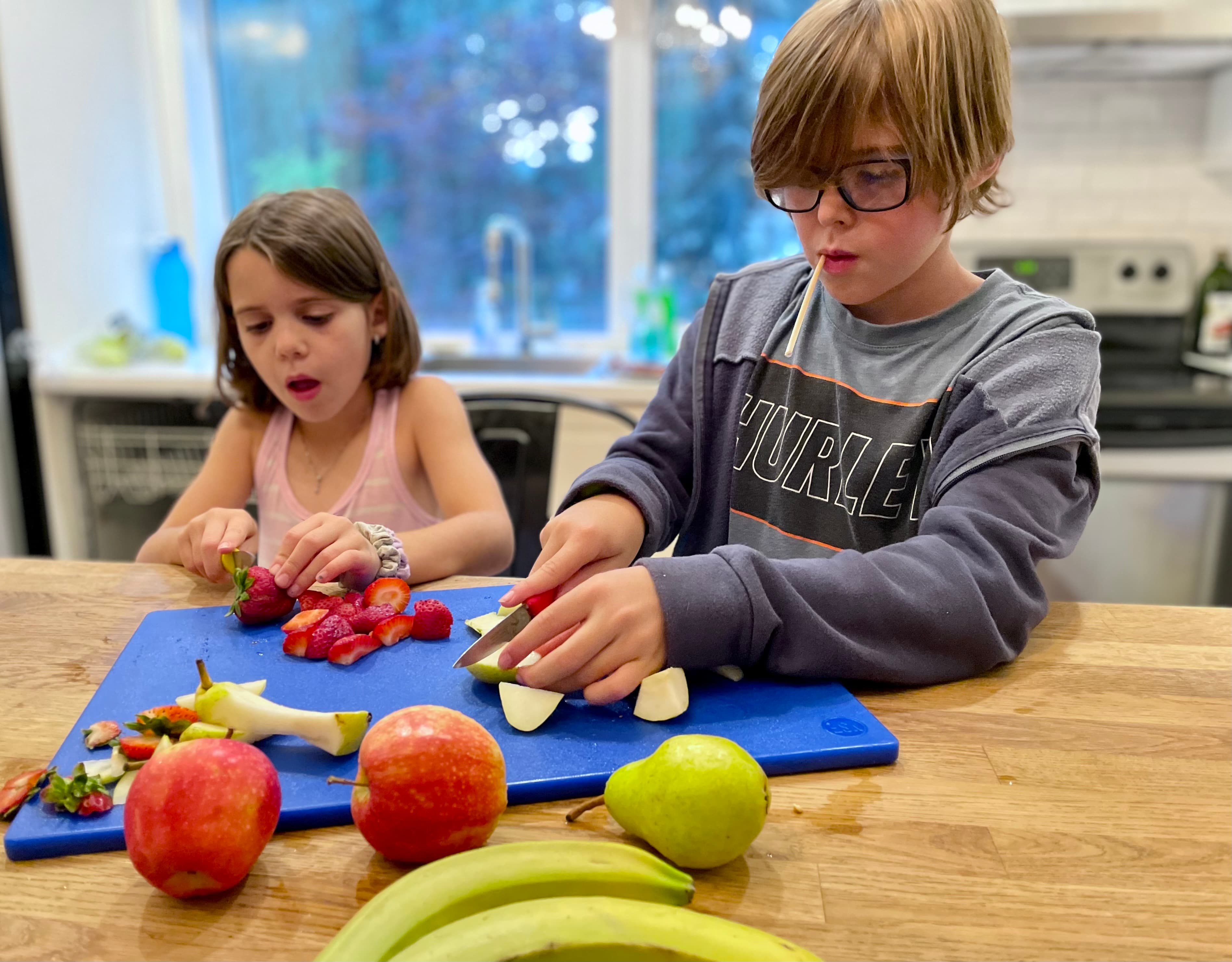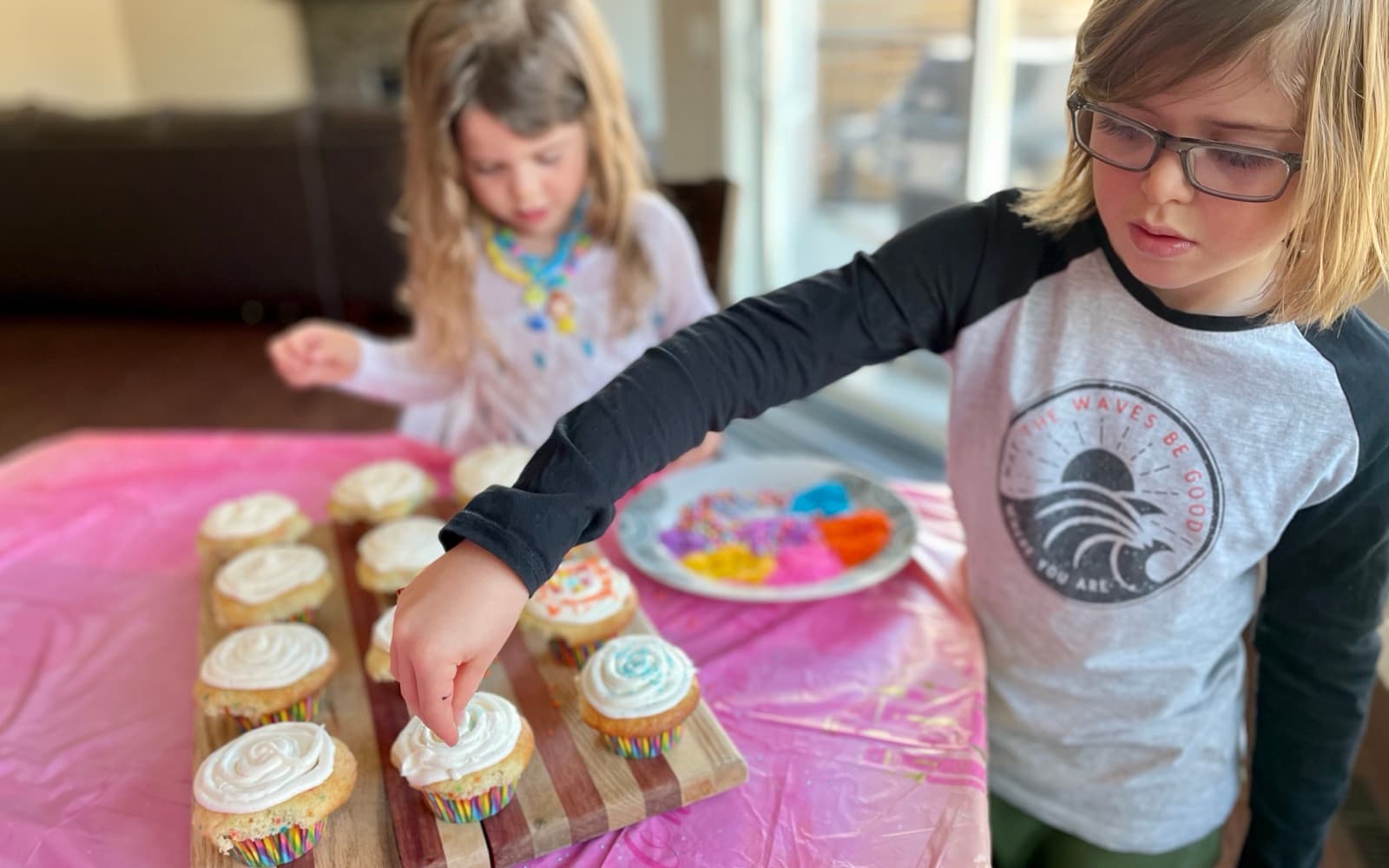
Every kid has opinions about their own party. The theme, the cake, the guest list, the games. What they rarely see is the part a parent does at the kitchen table the week before: counting heads, working out how many pizzas feed eleven kids, and quietly moving money around when the balloons cost more than expected.
Hand that part to them. That is the whole project. The party is real, the budget is real, and the math is the only way to get there. A kid who plans one party does more multiplying, dividing and estimating than a stack of word problems, and cares about every answer, because the answers decide whether there is enough cake.
It works for a birthday, a holiday dinner, a sleepover, a picnic for the neighbours, or a tea party for the stuffed animals if your kid is six. Any gathering with guests, food and a limit. Here are the steps, the math that shows up at each one, and how to size it for ages 6 to 14.
The math hiding in a party
You do not need to teach any of this. It comes up on its own the moment the party has to feed real people on real money. Your job is to ask the questions and let them do the numbers.
- Multiplication: food per guest times the number of guests, and plates, cups and napkins times the list.
- Division: slices per pizza, a pack of 24 split across the table, the total cost divided by the number of guests.
- Fractions and ratios: a recipe for 12 turned into a recipe for 18, with a cake at the end of it.
- Estimation: how much will people actually eat, and how long will each game take?
- Comparing prices: the small pack against the big one, and the price per piece when the sizes do not match.
- Budgeting and trade-offs: a fixed amount, a first total that runs over, and the decision about what gets cut.
- Time: a party timeline worked backward from the minute the first guest rings the doorbell.
It leans on the same money skills and real-world math you may already be working on, just with a deadline and a guest list.
How to plan a party with math, step by step
Six steps. A small party fits in two or three planning sessions; a bigger one runs across a week. The only rule for you: they do the numbers, you check them.
Step 1: Set the budget and the guest list
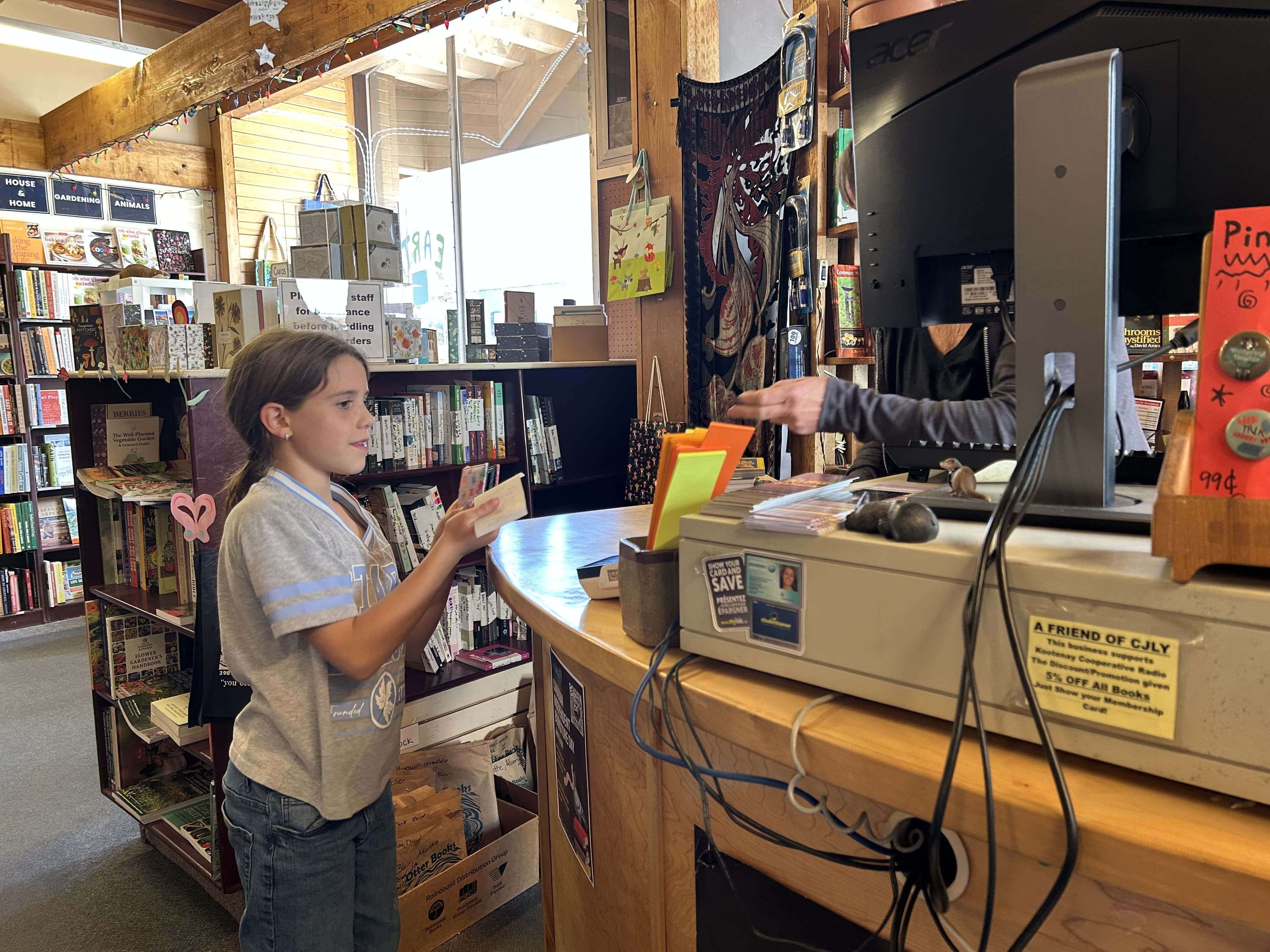
Give them the budget as a real number: "You have $60 for everything." Not "don’t spend too much." A real limit is what turns a wish list into math. Then the guest list, because nothing else can be calculated until they know how many people are coming. Remind them to count the family. Kids forget the adults eat too.
For younger kids, put the budget in an envelope as actual bills. Watching the envelope get thinner at the store teaches more than any number on paper.
Step 2: Work out the food per guest
Start with one guest. How many slices of pizza does one kid eat? How many cups of juice? Then multiply by the list. This is where the best moment of the project usually shows up: the answer is not a whole number, and you cannot order a quarter of a pizza.
- 1Guests: 10 kids and 4 adults, so 14 people.
- 2Pizza: 3 slices each is 42 slices. At 8 slices a pizza, 42 divided by 8 is 5.25, so 6 pizzas.
- 3Juice: 2 cups each is 28 cups. A 2-litre bottle pours about 8 cups, so 4 bottles.
- 4Cupcakes: 1 each plus a few spares is 18, and the recipe makes 12. That is step 3.
The rounding-up conversation is the good part. Why 6 pizzas and not 5? What happens to the leftover quarter? Kids who have never cared about a remainder suddenly care a lot.
Step 3: Scale the recipe
If the recipe makes 12 and they need 18, they have to scale it by one and a half. Doubling is the easy version: every amount times 2. One and a half is the real lesson. Half of 3/4 cup of sugar is 3/8, and 3/4 plus 3/8 is 1 1/8 cups. Let them work it out on paper first, then measure it for real, and taste what happens if they got it wrong.
If they want more of this, the kitchen learning lab has twenty more ways to do math with a mixing bowl.
Step 4: Price the list and compare
Now every item on the list gets a price, from the store, a flyer or a website. Two questions do most of the work: which one is cheaper per piece, and do we actually need that many?
Plates are the classic. A pack of 20 for $4 is 20 cents a plate. A pack of 50 for $7 is 14 cents a plate. The big pack wins per plate, but the small pack is $3 cheaper today, and 36 leftover plates sit in a cupboard for three years. There is no single right answer, which is exactly why it is worth arguing about.
Step 5: Make it fit
The first total will be over. It almost always is, and that is the best moment in the whole project. Do not rescue it. Ask one question: what matters most to you about this party? Then let them cut. Round, made-up numbers here; use real prices from your own store.
- 1First total on a $60 budget: 6 pizzas at $9 is $54, juice $8, cupcake ingredients $10, plates, cups and napkins $9, balloons $6, goody bags at $3 for 10 kids is $30. Total: $117.
- 2Cut 1: homemade pizza on flatbreads instead of takeout, $20 instead of $54.
- 3Cut 2: a craft the kids make and take home instead of goody bags, $8 instead of $30.
- 4New total: $20 plus $8 plus $10 plus $9 plus $6 plus $8 is $61. One dollar over, and the balloon debate takes ten minutes.
Each cut is a subtraction and a decision, and kids defend the ones they chose. The party they planned inside the budget is the one they will brag about.
Step 6: The timeline, then the party
Last piece: work backward from when guests arrive. If the party starts at 2:00, the cupcakes need 25 minutes in the oven and an hour to cool before icing, and icing 18 cupcakes takes half an hour, when does the baking have to start? That is elapsed time, the kind that matters.
Then run the party. Afterwards, sit down with the receipts and compare the plan with what was actually spent and eaten. How close were the estimates? Which number was furthest off? That comparison is where estimating gets better, and the next party’s numbers will be closer.
In the Membership
Party Planner Math
If you want it laid out for your kid, the Party Planner Math guide walks them from guest list to final cost: food quantities, supply price comparisons, a timeline and a budget tracker.
Adapting it by age
Ages 6 to 8
Small, round numbers. Six guests, a $20 budget, prices rounded to whole dollars. They count heads, add up the list with you, and choose between two treats. Multiplication can be repeated adding with real plates laid out on the table.
Ages 9 to 11
The full food-per-guest calculation, one recipe scaled by one and a half or two, price comparisons on three or four items, and a budget kept in a simple table. They present the plan to you before anything gets bought.
Ages 12 to 14
They run it. Unit prices across different package sizes, a recipe scaled by an awkward number, a budget with a 10 percent buffer, and the timeline for the whole day. After the party, one page: planned against actual, and what they would change next time.
What to say while they plan
You are the client, not the planner. Questions beat answers: "How much will one person eat?" "What if three more people say yes?" "Which of these would you cut first?" When a number is wrong, ask them to check it against something real: count the slices on an actual pizza, or fill the measuring cup. The mistake they catch on the counter is the one they remember.
Want this as a free printable? Grab the 30 Cooking & Kitchen Activities for Kids, free to read, and the printable version lands in your inbox.
A party is a math project kids never have to be talked into. The date is on the calendar, the guests are real, and every number decides something they care about. Hand over the budget and the guest list this time, and stay in the room as the client.
And if you would rather open a guide that walks them through the whole thing, that is what the Anywhere Learning membership is for: real-world, hands-on projects for ages 6 to 14, from parties to road trips to business pitches, ready to run with nothing to plan the night before.