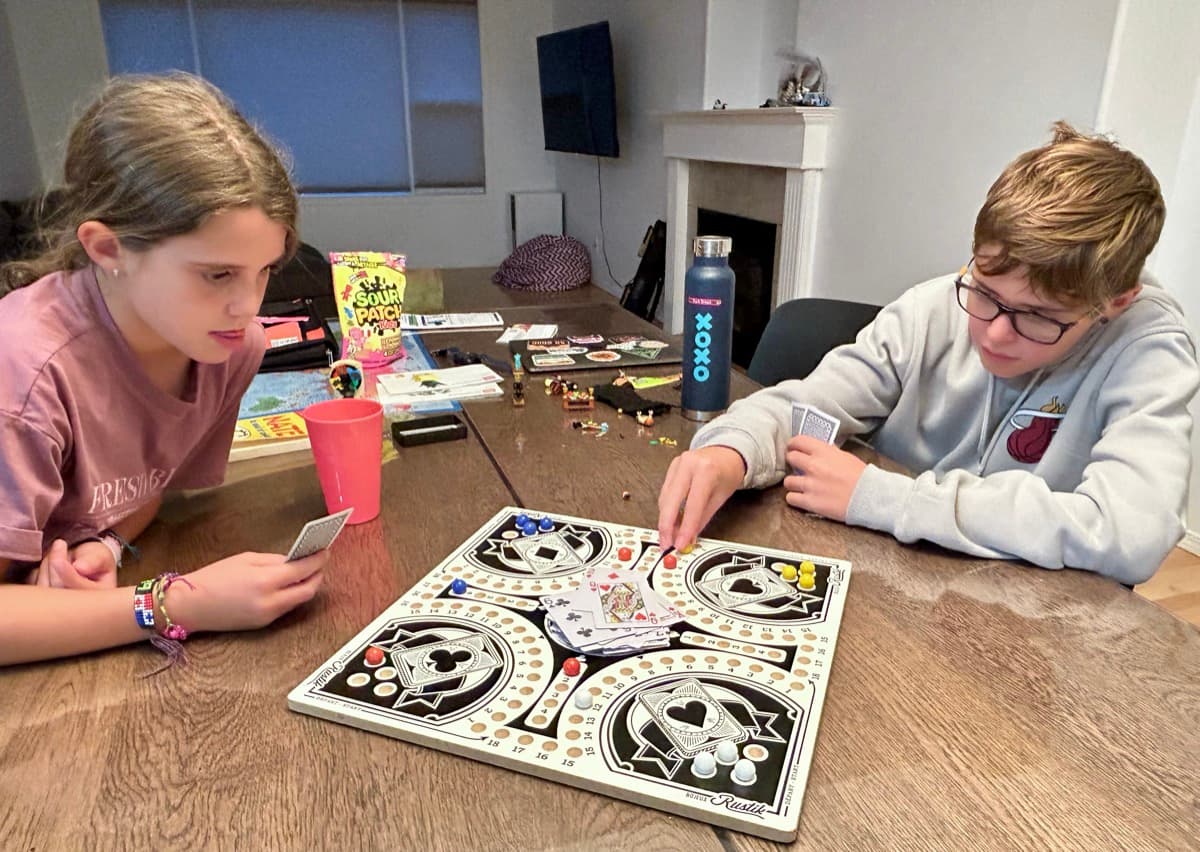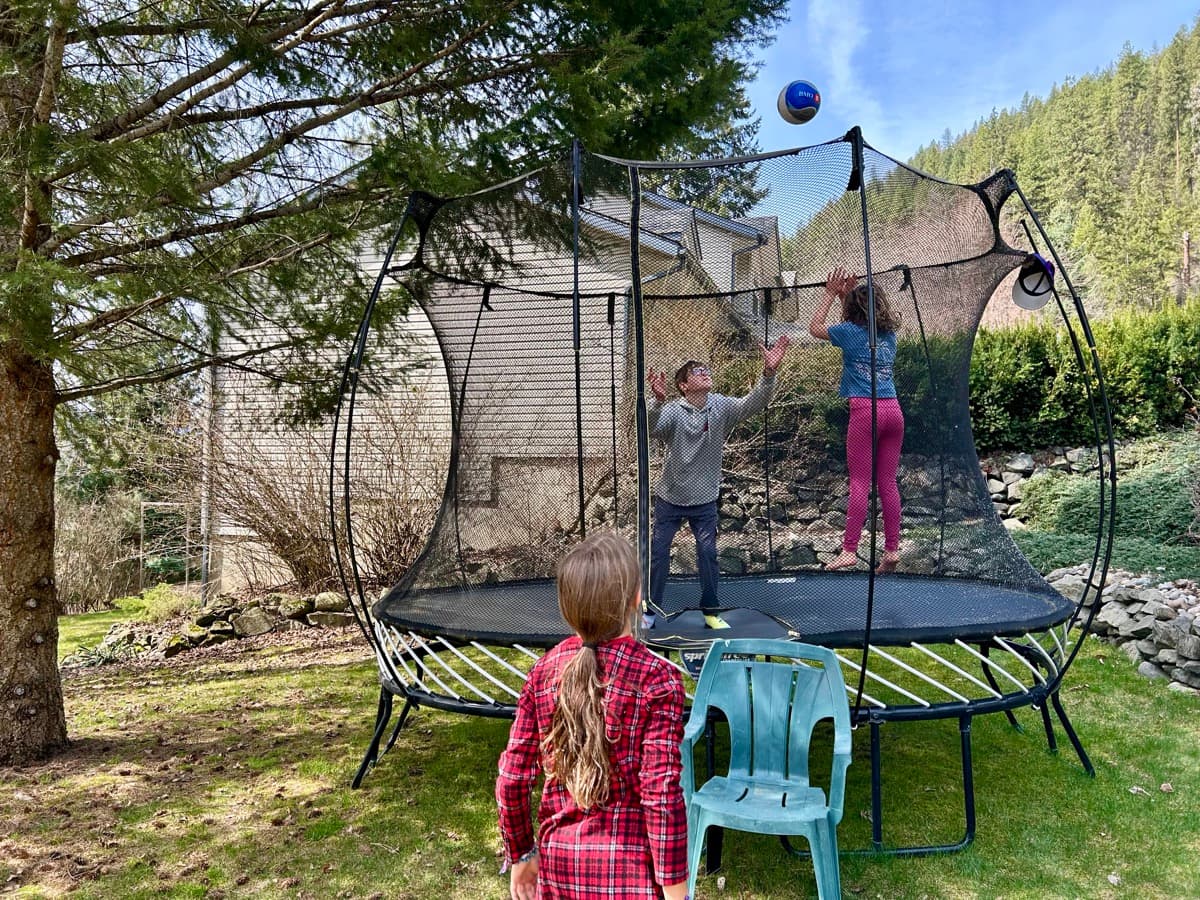
My son and his friends invented a trampoline game called “Get Blocked”, played with mini basketballs, with rules they made up on the spot. The scoring system is incomprehensible to adults. Someone inevitably declares themselves the referee while also playing on both teams simultaneously. It is chaos.
It was also the most engaged, physically active, socially complex afternoon they’d had in weeks. And nobody planned it. Nobody said “time for PE.” They just started playing and the game evolved.
That’s what happens when you let kids invent their own sports. The play is the learning, and the learning is so much deeper than anything that happens in a structured PE class.
Why rule-making IS the learning
When adults think about inventing a sport, we think about the physical activity. But for kids, the most valuable part isn’t the running and throwing; it’s the rules.
Making rules is hard. You have to think about edge cases (“what if the ball hits the tree?”), fairness (“but you’re taller, that’s not fair”), clarity (“that’s not what I meant by ‘out’”), and consequences (“what happens when someone breaks the rule?”). This is legislative thinking. It’s the same intellectual work that goes into writing laws, creating contracts, and designing social systems.
And kids do it naturally, instinctively, and with passionate investment, because the stakes are real. If the rules are bad, the game isn’t fun. That immediate feedback is more motivating than any grade.
- Logic and fairness reasoning: “If older kids can reach higher, we need a rule that balances that”
- Clear communication: “Everyone needs to understand the rule the same way”
- Negotiation: “I’ll agree to your rule if you agree to mine”
- Iteration: “That didn’t work, let’s change it”
- Empathy: “This isn’t fun for the younger kids, how do we fix that?”
How to get started (without taking over)
The most important thing you can do is not organise it. Don’t hand them a whistle and a clipboard. Just create the conditions and step back.
Here’s what works:
- 1Provide a space (backyard, park, beach, even a living room for rainy days)
- 2Provide a few objects (balls, cones, sticks, buckets, pool noodles, the more random, the better)
- 3Say something like: “What if you invented your own sport?” or “Can you make up a game using only these things?”
- 4Walk away. Or sit nearby and read a book. Or join in if they invite you
- 5When arguments happen (they will), resist the urge to mediate immediately. Give them a chance to work it out
The initial game will probably be terrible. That’s the point. The first version is just a starting place. The learning happens in the revisions, every rule change is a problem identified, a solution proposed, and a theory tested.
The negotiation lesson you can’t plan
Here’s what you’ll hear when kids invent a sport:
“That’s not fair!” “Yes it is!” “But you always win because you’re bigger!” “Fine, then you get two throws and I get one.” “Okay, but if I hit the bucket from far away it counts double.”
This is negotiation in its purest form. They’re identifying power imbalances, proposing handicap systems, compromising, and testing whether the compromise actually works. No adult could design a lesson that teaches this as effectively as a genuine dispute over whether the ball was in or out.
My two kids will argue for 15 minutes about a single rule in a game they invented five minutes ago. My instinct is always to intervene. But when I hold back, I watch them negotiate: they propose solutions, test them, reject them, and eventually land on something both can live with. That’s a consensus mechanism. Kids independently inventing governance principles, because the game won’t work without them.
When kids argue about rules, they’re not misbehaving. They’re doing the hardest, most important kind of thinking: figuring out how to be fair.
In the Membership
Invent a New Sport
Creativity project for kids ages 6-14: invent a new sport. Design rules, build equipment, and playtest with family.
What this looks like in real life
Kids don’t invent a sport and play it once. They invent a game, play it, argue about it, revise it, play it again, and repeat until they’ve iterated through ten versions in a single afternoon. The pool, the backyard, a hiking trail, a rainy living room, any space becomes a playing field when kids are in charge of the rules.
What makes these invented games so rich is that they’re never just physical. Every one involves maths (scoring, distance, counting), literacy (explaining and revising rules), science (trajectory, balance, momentum, even if they don’t use those words), and social-emotional learning (fairness, frustration management, sportsmanship).
Adapting for ages and abilities
One of the beautiful things about invented sports is that kids naturally build in accessibility, especially when the group has mixed ages or abilities. They’ll create handicap rules, different point values, special roles for younger players, and modified equipment without being asked. They do this because they want everyone to keep playing, and a game that’s unfair loses players fast.
Ages 3–5
Young kids create games that are more like improvisational play with loose rules. The rules will change constantly, and that’s developmentally appropriate. Let them lead. The game is the thing, not the rulebook.
Ages 6–9
This is the golden age for invented sports. Kids can articulate rules, keep score, and playtest meaningfully. They’re also deeply invested in fairness, which drives the best rule revisions.
Ages 10+
Older kids can create surprisingly sophisticated games with complex scoring, tournaments, and written rulebooks. Encourage them to teach the game to someone new, explaining rules to an outsider is one of the best tests of whether the game actually makes sense.
Keep a “Game Inventor’s Notebook.” After each session, have your kids write or draw the rules of their game. Over time, they’ll see their designs evolve, and they’ll have a record of their creative thinking that’s way more interesting than a workbook.
Let them play their way
The urge to structure free play is strong, especially when you’re a homeschool parent who wants to document learning. Resist it. The documentation can happen after. The learning can be reflected on at dinner. But in the moment, let the game be a game.
Your kids don’t need you to organise their play. They need you to give them space, a few random objects, and the freedom to create something that’s entirely theirs. The sport they invent might look silly. The rules might be absurd. The scoring system might make no sense to you.
But underneath the silliness is some of the most complex, creative thinking your child will do all week. And they’ll do it voluntarily, joyfully, and with more physical activity than any structured PE session. That’s what learning looks like when kids are in charge.
Want this as a free printable? Grab the 26 Creative & Maker Ideas for Kids, free to read, and the printable version lands in your inbox.