- 1Why "make friends" feels harder for homeschool parents than it actually is
- 212 places homeschool kids actually meet friends
- 3The mistake most homeschool parents make
- 4Special situations
- 5When there isn't a community yet
- 6How to actually grow a friendship once your kid meets someone they click with
- 7And one last thing
- 8Frequently asked questions
Of all the questions homeschool parents get asked, the friends question is the one with the most worry baked in. Curriculum questions are practical. Legal questions are answerable. But the friend question? That one carries grief and longing and the parent's own school memories all tangled up together.
Here's the honest answer in one line: homeschool kids make friends almost the same way adults do. By doing things they care about, in places where other people show up.
Now the tactical playbook.
Why "make friends" feels harder for homeschool parents than it actually is
Most parents grew up in a system that produced friendship as a side effect of attendance. You went to school, your kid was randomly placed with 25 same-age strangers, and after a few years of forced proximity, two or three of them stuck. It worked, and we mistook it for "how friendships happen."
Homeschooling removes that automatic mechanism. So now you have to be intentional. That feels like work, but it's actually a feature: you get to help your kid build friendships based on shared interests and values rather than birth-year alignment.
A homeschool kid who plays soccer with the local team, attends a weekly co-op, and sees the same library kids on Tuesday afternoons is having the same amount of social input as a school kid. Just spread across the week instead of stacked into one building. The research on homeschool socialisation backs this up clearly.
Homeschool friendships aren't worse. They're distributed. Your job is to set up enough touch points that the friendships have somewhere to grow.
12 places homeschool kids actually meet friends
In rough order of accessibility:
- 1Homeschool co-ops. Search "[your town] homeschool co-op" or "[your area] homeschool group" on Facebook. Most areas have at least one. Some are weekly classes, some are park days, some are unschool meetups. Try one. If it's not your tribe, try another.
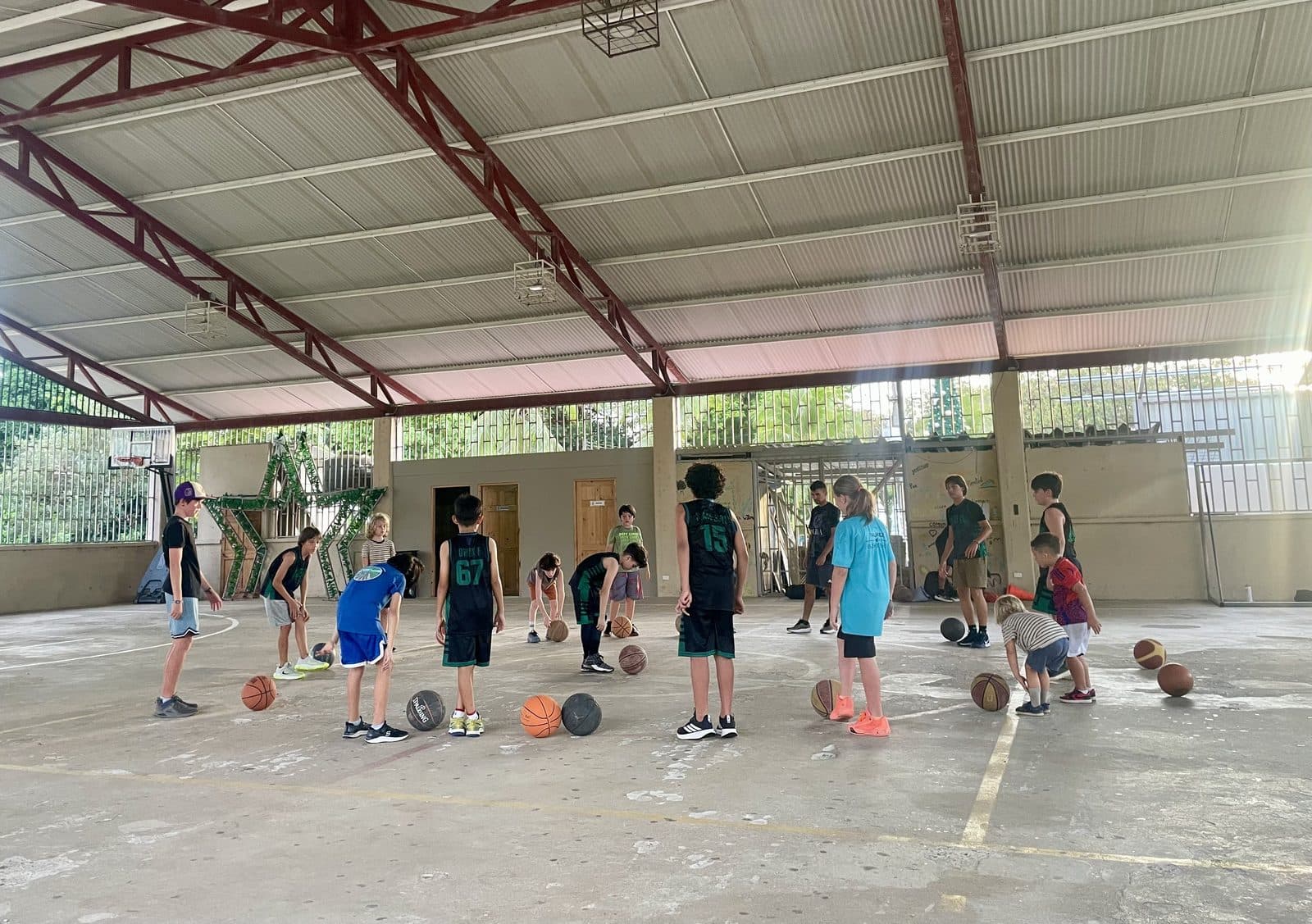
- 2Sports teams and physical clubs. Soccer, swim, gymnastics, climbing gym, martial arts. Same teammates every week creates real friendship windows. Look for community-league programmes, not competitive elite ones, in year one.
- 3Library programmes. Story hour, kid book clubs, teen art nights, Lego club, summer reading programmes. Free and full of regulars.
- 4The neighbourhood. Don't underestimate the kids on your street. Be the house with the popsicles, the chalk, and the open backyard. Friendships often start with proximity, not personality.
- 5Faith communities, if that's your family. Sunday programmes, mid-week kids' clubs, youth groups: built-in regular contact.
- 6Cousins, family friends, and family-of-family-friends. The "homeschool of two with the cousins down the road" model is older than school and works beautifully.
- 7Park days and meetups. Many homeschool groups have an open weekly park day. Easy entry, low pressure, you can leave whenever.
- 8Music, theatre, and arts classes. Choir, drama club, art studio, music lessons in groups. The shared creative thing builds friendship faster than small talk.
- 9Volunteering and community projects. Older kids especially make great friends through community gardens, food banks, animal shelters, and cause-based groups. Shared purpose is a fast bond.
- 10Hobby and interest groups. Chess club, robotics, makerspaces, 4-H, scouts, rock-climbing teams, dance crews. The kid who loves chess will find their people through chess, not through a generic homeschool meetup.
- 11Online communities (with care). Pen-pal exchanges, structured kid forums, Minecraft servers run by homeschool families, online book clubs. Not a replacement for in-person, but a real complement, especially for niche interests or rural families.
- 12At your elbow. The shopkeeper your kid chats with weekly, the librarian who saves them books, the elderly neighbour they bring soup to. Cross-generational friendships are one of homeschooling's biggest gifts and also count.
The mistake most homeschool parents make
They sign their kid up for a generic "homeschool group" and assume that's socialisation. It can be. But generic groups full of strangers can also feel awkward for shy kids and don't always produce friendships, just attendance.
A better approach: pick activities organised around something your kid genuinely cares about. The kid who loves animals will make friends at the animal shelter faster than at a generic homeschool park day. The kid who loves building will make friends at robotics club faster than in a co-op art class. Match the activity to the kid.
Most kids only need one or two real friends to be socially fed. A child with two close friends is usually doing better than one with twenty acquaintances. Stop trying to give them a friend group. Help them find their two.
Special situations
Rural areas with no homeschool community
You're going to drive. That's the trade-off. Most rural homeschool families build friendships through one weekly drive: to the closest co-op, the nearest sports league, the regional homeschool meetup an hour away. One regular drive beats five sporadic local outings.
Online friendships count more here, and that's okay. A pen pal in another state, a video-call buddy from a previous town, a Minecraft friend they actually talk to most days: these are real friendships, even if your generation didn't have them.
Travelling families and worldschoolers
Friendships on the road look different. Shorter, sometimes intense, often picked back up months later when paths cross again. Travelling kids often have a wider circle of friends across countries than at-home kids do across town. The grief of saying goodbye is real, and so is the gift of staying connected through video calls and messages.
If your family is moving frequently, prioritise destinations with known worldschool communities (Mexico, Costa Rica, Bali, Lisbon, Chiang Mai). Choosing destinations with kids in mind makes a real difference.
Only children
Only-child homeschool families have to be more deliberate, but the friendships often go deeper. With no built-in sibling buffer, your kid will form stronger ties to one or two outside friends, and develop unusual ease with adults. That's a feature, not a problem.
Introverts
Introverted homeschool kids may genuinely be happiest with one good friend, occasional group activities, and lots of recharge time. Don't pathologise that. Watch them with their one friend; if it's warm and close, they're fine. The introvert who meets people on their terms (one at a time, in low-stakes settings) often does better socially than the same kid forced into 25-kid classrooms.
In the Membership
Community Tour Guide
Writing activity for kids ages 6-14: create a guided tour of your community. Builds voice and local storytelling skills.
When there isn't a community yet
You start one. Honestly. Most thriving homeschool communities started because one parent put a meetup on Facebook and three families showed up. Try:
- A weekly park day at a fixed time (e.g. Tuesdays 10am at [park]). Consistency beats variety. People show up to predictable things.
- A monthly project meetup. Themed: nature scavenger hunt, art day, building day. Easy to commit to, easy to skip.
- A book club for a specific age. Hard to find ready-made; easy to start.
- A walking group for parents while kids play. Yes, you matter too.
The community you wish existed almost certainly doesn't. The community you build will.
How to actually grow a friendship once your kid meets someone they click with
A friendship is mostly logistics. Once your kid clicks with another kid, your job is the boring grown-up part: get the parents' contact info, suggest a follow-up, host them once, accept the next invitation. The kids do the friendship; you do the logistics.
- Ask for the parent's phone number or email at the second activity, not the tenth.
- Be the one who texts first to set up a hang. Most parents are willing but won't initiate.
- Host a low-stakes thing first: an hour at a park, not a sleepover.
- Repeat. Friendships need at least three or four hangs in a row to take root.
- Don't over-engineer the playdates. Send them outside. Hand them a snack. Let them figure it out.
And one last thing
Your kid is also watching how you handle friendships. If they see you call your friends back, host people occasionally, and stay in touch with people you love, they'll learn how to do that too. The way you do friendship in front of them is the actual lesson.
If you're still spiralling about whether your homeschool kid will be okay socially, the data on homeschool socialisation is genuinely reassuring. And life skills like having a hard conversation, asking good questions, and reading social cues are part of friendship too: they're built through real-world practice, not seat time.
Want hands-on activities that get your kids talking to neighbours, shopkeepers, and locals? Our free 7-day guide gives you seven of them, low prep, ages 6-14.