If you have spent any time in homeschool circles, you have probably heard people talk about their morning basket in the reverent tones usually reserved for a really good coffee order. There is a reason. For a lot of families, the morning basket is the single best part of the homeschool day, and often the one thing that survives even the messiest weeks.
And yet if you are new to it, the whole thing can sound vaguely mysterious. What is actually in the basket? What do you do with it? Is it a religious thing, a Charlotte Mason thing, a curriculum you have to buy? The good news is that it is none of those things unless you want it to be. A morning basket is simply a gathered time at the start of the day where your family learns a few good things together, and it is one of the warmest, lowest-prep habits you can build. It fits naturally into the homeschool journey at any stage.
Here is what a morning basket actually is, why it works so well, a generous list of what you can put in yours, and a simple routine to make it a habit.
What is a morning basket?
A morning basket is a literal basket (or bin, or shelf, or tote) that holds the materials for a gathered learning time you do together at the start of the day. You pull it out, everyone piles onto the couch or around the table, and you move through a few short things as a family: a chapter of a read-aloud, a poem, a bit of art or music, something to memorize, whatever you have chosen to include.
It goes by a few names. Some families call it morning time, some call it circle time, some borrow the older Charlotte Mason idea of a gathered "morning symposium." The label does not matter. What they all share is the same shape: the subjects that are better done together get done together, and they get done first, before everyone scatters into their individual work. It can be secular or faith-based, elaborate or barebones, ten minutes or a leisurely hour. Yours gets to look however fits your family.
Why the morning basket works so well
A few reasons this simple habit punches so far above its weight:
- It front-loads the good stuff. The read-aloud, the poetry, the beautiful together-learning tends to be the first thing sacrificed when a day gets busy. Doing it first means it actually happens, every day, before math and life can crowd it out.
- It is a gentle on-ramp. Nobody does their best focused work cold. A morning basket eases everyone into the day the way a warm-up eases you into a run. By the time individual work starts, brains are already switched on.
- It covers multiple ages at once. A six-year-old and a twelve-year-old can share the same read-aloud, poem, and art print, each taking what they can. This is one of the few times mixed-age homeschooling is a genuine advantage instead of a juggling act.
- It is connection disguised as school. Piled on the couch listening to a story together is family time that happens to be educational. On the hard days, the basket is often the thing that keeps everyone feeling like a team.
- It requires almost no daily prep. Once the basket is stocked, the prep is done. You open it and go. For a tired parent, that is everything.
What to put in your morning basket
Wondering what to put in a morning basket? This is the fun part, and also where people overthink it. Below is a generous list of morning basket ideas, but you do not need all of these. Pick a few that appeal to you, keep it short, and rotate things in and out as you go. A good basket has a couple of anchors you do every day and a few extras you dip into.
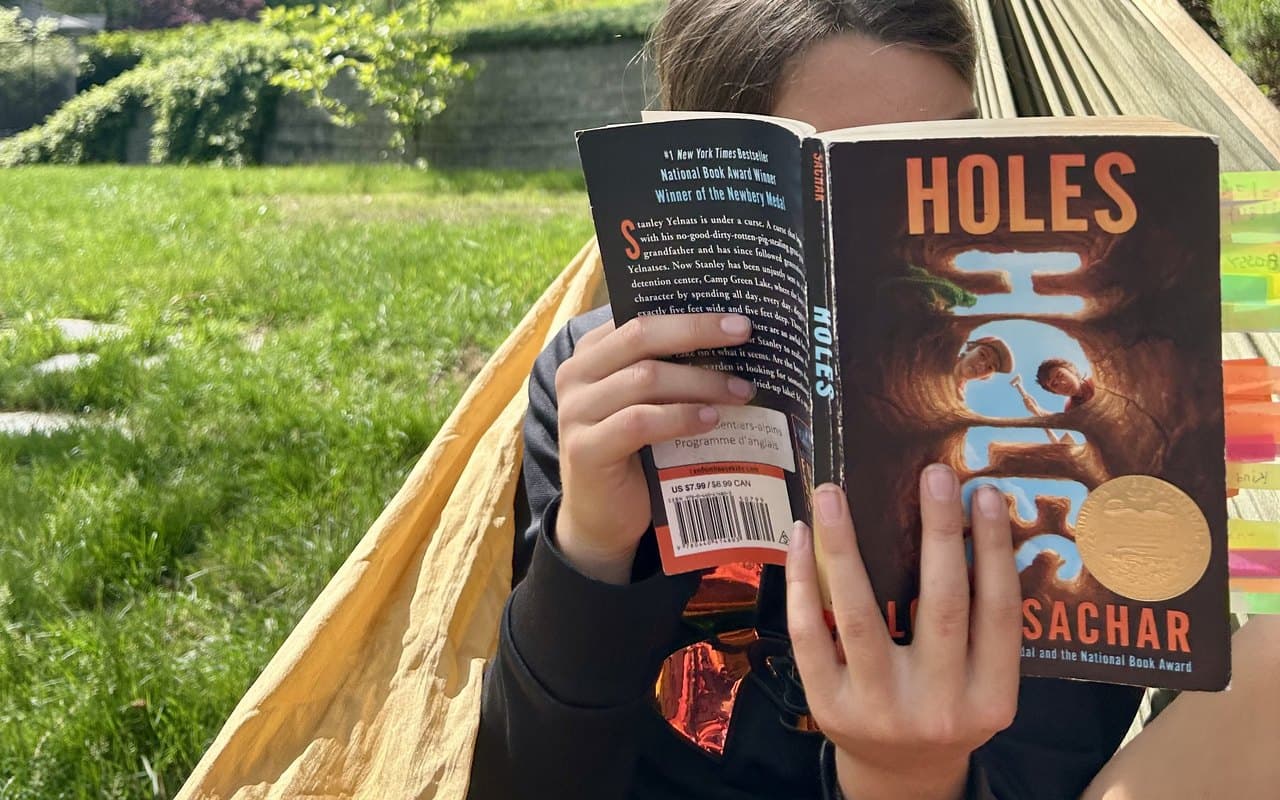
- A read-aloud. The heart of most morning baskets. One good chapter book you work through together, a little each day. This alone is worth starting a basket for.
- Poetry. One poem, read out loud, maybe the same one for a week so it sinks in. No analysis required. Just let the words be in the room.
- Picture study or art. Put out a print of a famous painting, look at it together, and talk about what you notice. Swap it weekly. Kids build a visual library without a single worksheet.
- Music or composer study. Play one piece while everyone listens or draws. Stick with one composer for a few weeks. It is astonishing how quickly kids start recognizing them.
- Something to memorize. A poem, a psalm, a famous speech, the provinces, a math fact set. Memory work is easy and satisfying in a group, a few lines at a time.
- A map or globe. Find where your read-aloud is set, where the news happened, where family lives. Geography sticks when it is attached to a story.
- Nature or science. A seasonal nature item to observe, a science fact of the day, a page of a nature journal. Bring the outside in for a few minutes.
- A values or gratitude moment. A question to discuss, a proverb, a gratitude go-around, a family read on kindness or courage. This is where character quietly gets taught.
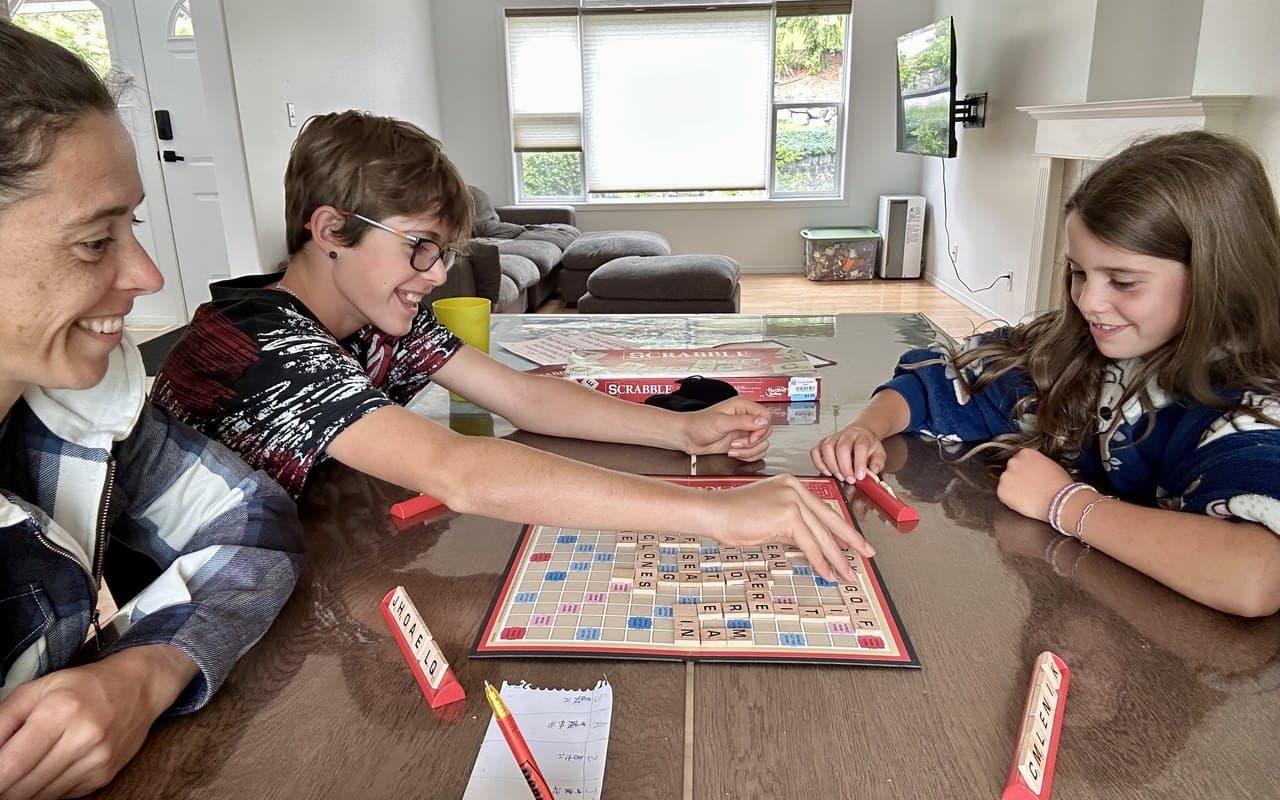
- A game, riddle, or brain teaser. A quick logic puzzle, a riddle, a round of a word game like Scrabble or Bananagrams. Ends the basket on a laugh and warms up the brain. On a slow morning, do not be surprised if a favorite board game becomes the whole basket, and that is completely fine. Games are learning, and playing one together is exactly the kind of gathered time morning basket is for.
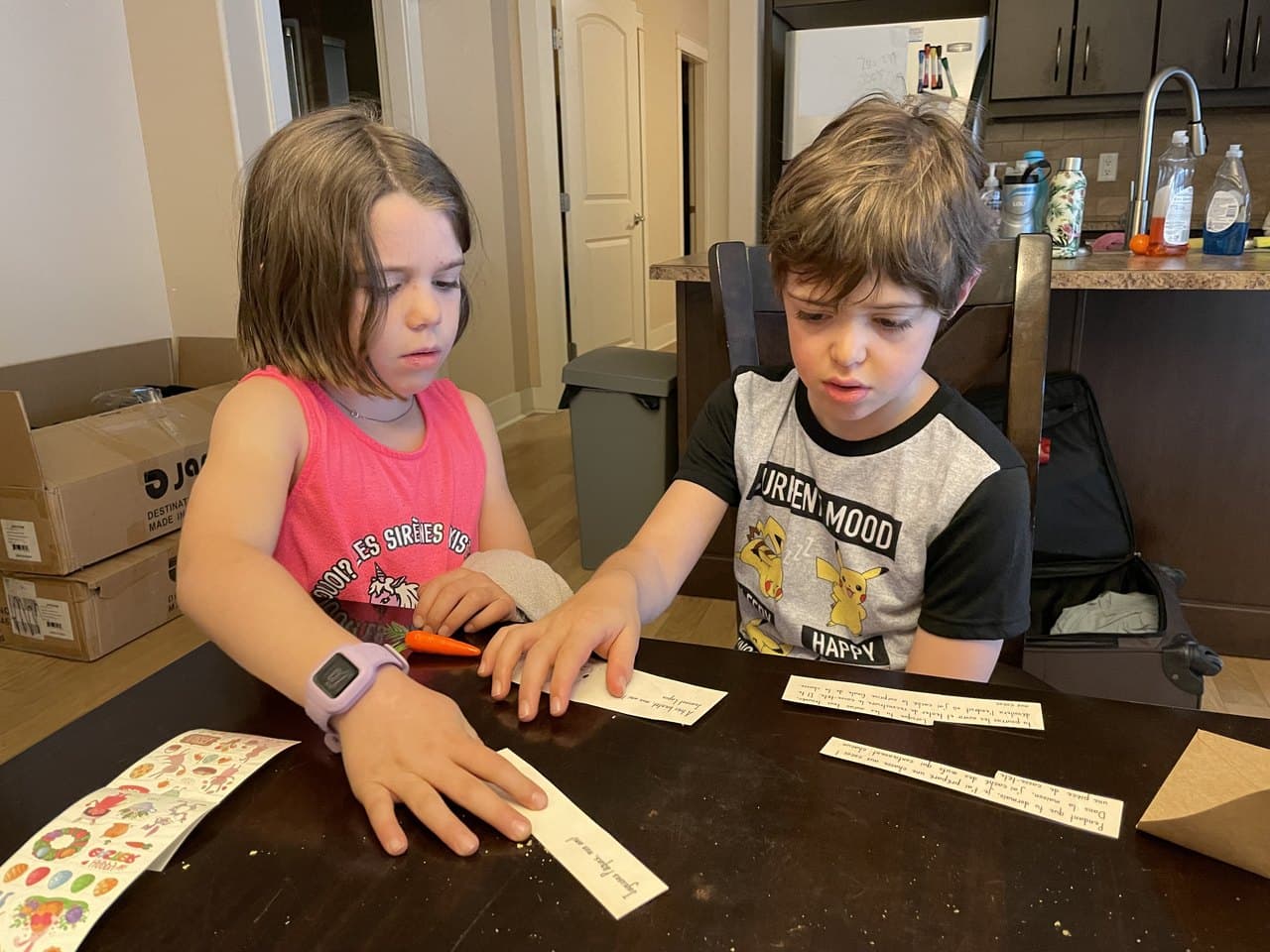
- A language snippet. A few words of a language you are learning, a song, a greeting. Tiny and daily beats big and occasional.
That is ten ideas, and you should absolutely not do all ten. Two or three anchors plus one rotating extra is plenty for most families. The magic is in the daily rhythm, not in cramming.
A simple morning basket routine
You do not need a script, but a loose order helps it flow. Here is a gentle ten-to-twenty-minute shape you can adjust:
- 1Gather and settle. Everyone finds a spot, maybe with a snack or a warm drink. This signals the day has started, softly.
- 2Open with something short. A poem, a gratitude go-around, the calendar. A small thing to get everyone present.
- 3The read-aloud. The main event. One chapter, everyone listening, no pressure to do anything but enjoy it.
- 4One or two rotating extras. Picture study today, composer study tomorrow, a map the next day. Keep each one to a few minutes.
- 5End on a high note. A riddle, a game, a laugh. Close the basket and roll into the rest of the day with everyone in a good mood.
That is it. The whole thing can be over in fifteen minutes, and it will be the most consistently pleasant fifteen minutes of your homeschool day. If you are still building your overall daily rhythm, the basket slots perfectly into the "slow open" of a back-to-homeschool routine, and you can see how it fits a full day in our sample homeschool schedules.
The number one morning basket mistake is overstuffing it, then feeling behind when you cannot get through everything. Do not. A basket is a buffet, not a checklist. Pick two or three things a day, leave the rest for tomorrow, and never apologize for skipping something. A short basket you actually do beats an ambitious one you dread.
In the Membership
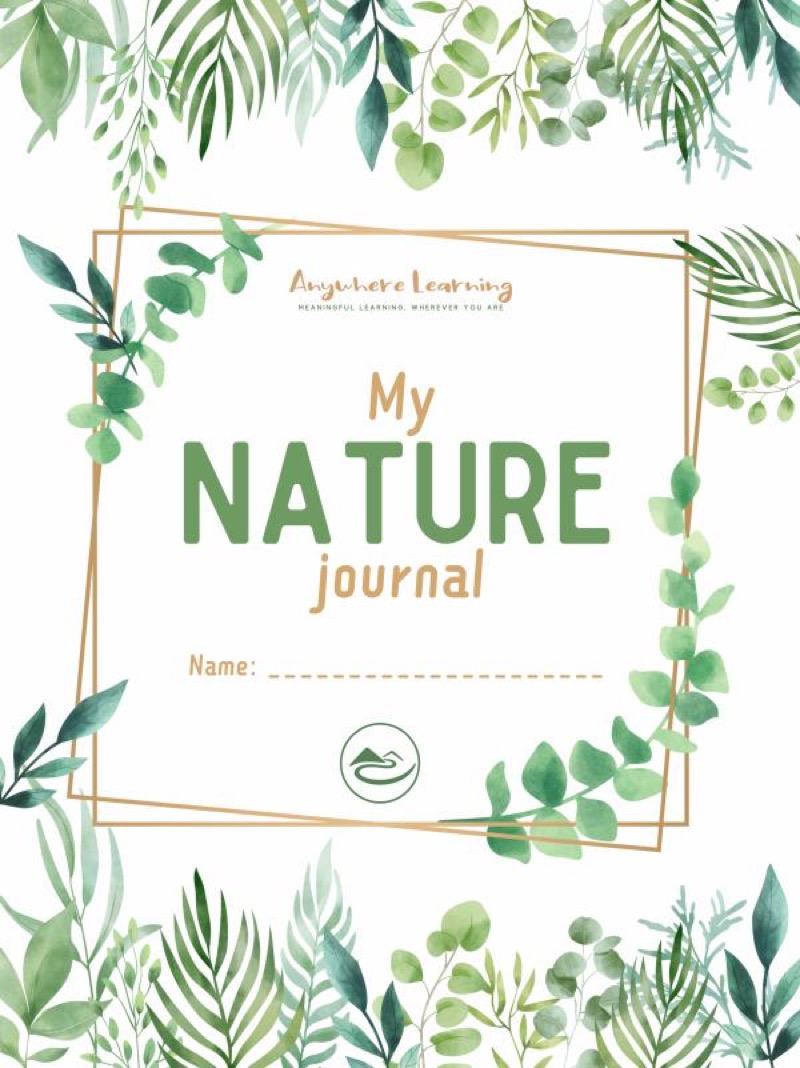
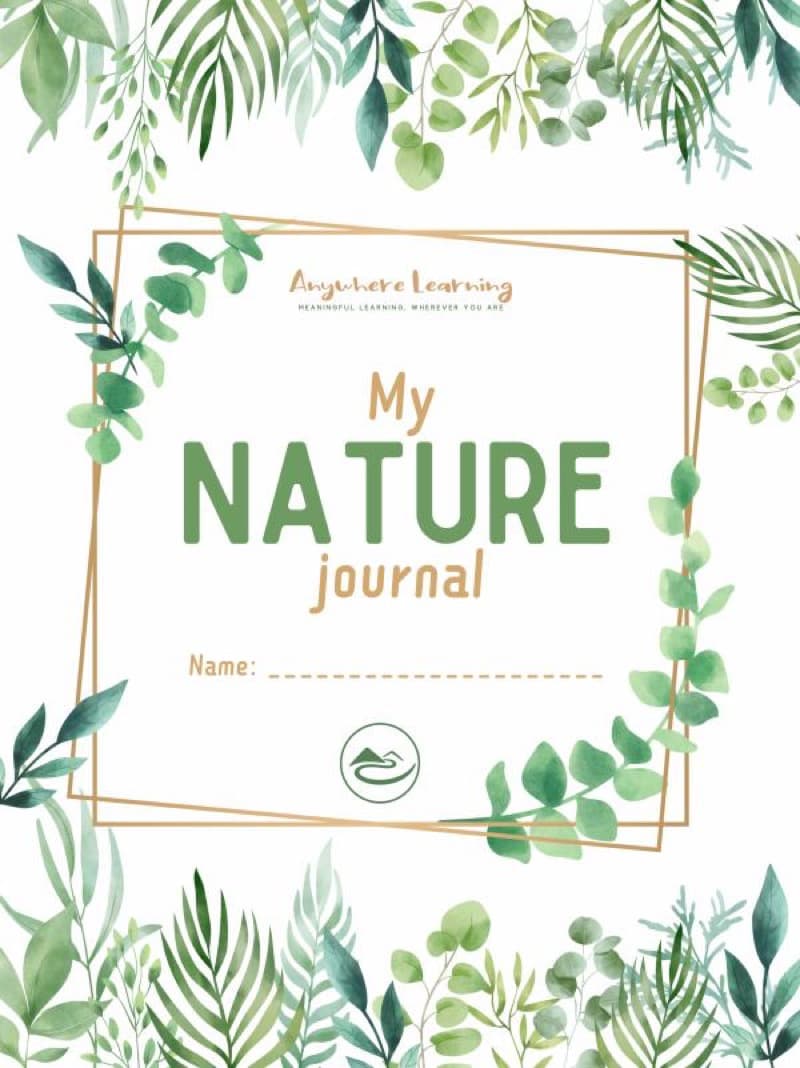
My Nature Journal
A ready-to-use way to add a nature study element to your basket, so the "science" slot takes zero planning.
Morning basket by age
The beauty of the basket is that it flexes across ages, but a few tweaks help at each stage.
Little ones (6 to 8)
Keep it short and hands-on. Ten minutes is plenty. Lean on picture books, movement, songs, and things they can hold or point to. Let them wiggle, draw, or build quietly while they listen. Presence matters more than stillness at this age.
Middle (9 to 11)
This is the sweet spot. They can handle a longer read-aloud, engage with picture and composer study, and enjoy memory work as a challenge. Give them small jobs: choosing the poem, running the map, reading a part aloud. Ownership keeps them in it.
Older kids (12 to 14)
Tweens can drift if it feels babyish, so level it up. Swap the picture book for a meatier read-aloud, add current events and real discussion, let them lead a section. Framed as a grown-up conversation rather than circle time, most older kids will happily stay, especially for the connection.
When it falls apart (because it will)
Some mornings the basket will be a wiggly, bickering disaster, and that is normal. A few fixes that help: keep it shorter than you think, let hands stay busy with drawing or fidgets while ears listen, and drop anything that consistently causes groans. If a kid resists, give them a job or a choice rather than a battle. And on the truly rough days, just do the read-aloud and call it done. One good chapter is a complete morning basket. You are building a habit and a feeling, not hitting a quota.
Want low-prep, open-and-go activities to round out your morning basket and the rest of your day? Our free guide is full of real-world learning ideas you can use right away.
A morning basket is one of those rare homeschool habits that is easy to start, cheap to run, and disproportionately good for your family. It turns the start of the day from a scramble into a gathering. It gets the loveliest learning done first. And more than anything, it gives you a daily pocket of time where everyone is together, learning something good, on the same team. Stock a basket, pick two or three things, and start tomorrow. You will not look back.
The morning basket handles the gentle, gathered part of the day: the read-aloud, the poem, the together time. For the hands-on, real-world learning that fills the rest of it, that is where the Anywhere Learning membership comes in: open-and-go activities for ages 6 to 14 that you do alongside your kids, no planning the night before. Different part of the day, same low-prep spirit.