- 1Why failure is the skill, not the obstacle
- 2The rescue reflex (and how to resist it)
- 3How to create the conditions for productive struggle
- 4Age-appropriate struggle: what it looks like at every stage
- 5The difference between productive struggle and suffering
- 6What to say (and what not to say) when they fail
- 7Building a family culture around failure
- 8Frequently asked questions
There is a moment every parent recognizes. Your child is building something and it falls over. They are working on a problem and getting it wrong. They tried out for something and did not make it. And every instinct you have screams: fix it, soften it, make it better.
That instinct is not wrong. It comes from love. But acting on it every time teaches kids something you did not intend: that they cannot handle difficulty. That failure is something to be rescued from rather than moved through. That struggle means something has gone wrong.
The opposite is also true. Kids who are allowed to struggle, who fail and get back up, who experience the frustration of not-yet and push through it, develop something that cannot be taught in any other way: the deep, quiet belief that they can handle hard things.
Why failure is the skill, not the obstacle
Carol Dweck's research on growth mindset has been discussed so widely that it has almost lost its edge. But the core finding is worth restating because it is that important: kids who believe ability is developed through effort outperform kids who believe ability is fixed, across every domain studied.
The mechanism is simple. A child with a fixed mindset avoids challenges because failure threatens their identity ("I am not smart enough"). A child with a growth mindset seeks challenges because failure is information ("That did not work, what else can I try?"). Same child, same ability, completely different trajectory, based entirely on how they relate to failure.
This relationship with failure is not formed by pep talks or motivational posters. It is formed by experience. Kids who have experienced failure and survived it, who have been frustrated and kept going, who have been bad at something and gotten better, those kids develop resilience. There is no shortcut.
The rescue reflex (and how to resist it)
Modern parenting has a rescue problem. And it is not just helicopter parents. Even the most well-intentioned, independence-minded families fall into it because rescuing feels like kindness.
Common rescue behaviours:
- Finishing a task when they are struggling with it ("Here, let me just...")
- Calling the school/coach/other parent to fix a social problem
- Preventing the consequence of a poor choice (bringing the forgotten lunch, retrieving the left-behind homework)
- Offering the answer instead of letting them sit with the question
- Smoothing every conflict before they have a chance to work it out
- Lowering the challenge so they do not experience frustration
Every one of these feels helpful in the moment. But every one of them sends the same message: "You cannot handle this without me." Repeated over years, that message becomes a belief. And beliefs drive behaviour.
When your child is struggling and you feel the urge to jump in, wait 30 seconds. Watch what they do. Most of the time, they will try something. That attempt, even if it fails, is worth more than your solution.
How to create the conditions for productive struggle
Letting kids fail does not mean abandoning them. It means creating an environment where failure is safe, expected, and treated as part of the process rather than the end of it.
1. Choose the right level of challenge
Productive struggle happens in the zone between "too easy" and "impossible." A task that is slightly beyond their current ability, where success requires effort but is achievable, is the sweet spot. If they are breezing through, raise the bar. If they are drowning, lower it. The struggle should be real but not crushing.
2. Normalize failure with your own example
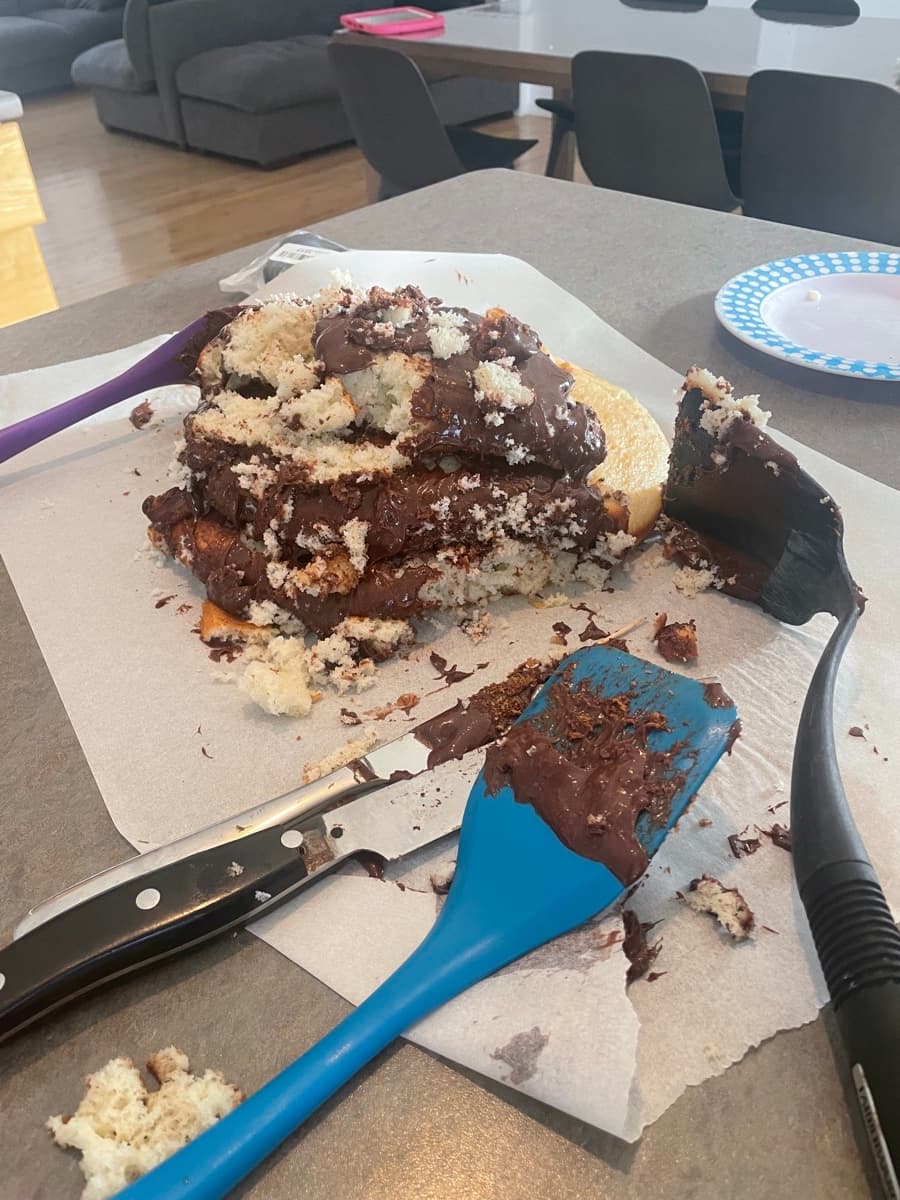
Talk about your own failures openly. Not in a "when I was your age" lecture, but in real time. "I messed up this recipe. I am going to try a different approach." "I was wrong about that and I need to fix it." "This is really frustrating, but I am going to keep working on it." Kids who see adults fail and recover learn that failure is a normal part of doing things, not a catastrophe.
3. Praise the process, not the outcome
This is the most well-known growth mindset strategy and also the most commonly botched. "Good job!" is not process praise. Effective process praise is specific and effort-focused:
- "You stuck with that even when it was hard."
- "I noticed you tried three different approaches before it worked."
- "You asked for help at exactly the right moment."
- "Last month you could not do this. Look at the progress."
Avoid praising intelligence or talent ("You are so smart!"), which Dweck's research shows actually decreases resilience because kids become afraid to attempt things that might disprove the label.
4. Let natural consequences teach
A child who forgets their lunch goes hungry (not dangerously, just uncomfortably). A child who does not practice for the recital performs poorly. A child who is unkind to a friend experiences that friend pulling away. These consequences are not punishments. They are reality. And reality is the best teacher you will ever find.
The parent's job is not to prevent the consequence. It is to be there after it happens: "That was hard. What do you think you will do differently next time?" No lecture. Just the question.
In the Membership
The Future-Ready Skills Map
44-page parent guide to 12 future-ready skill areas for kids ages 0-16+: milestones, hands-on activities, and sample weeks.
Age-appropriate struggle: what it looks like at every stage
Ages 3 to 5: small frustrations, big learning
- Putting on their own shoes (even when it takes five minutes and you are late)
- Building with blocks that keep falling over
- Waiting for a turn
- Solving a puzzle that is just slightly too hard
- Accepting "no" without a meltdown (this is a long game)
At this age, the support is physical presence and emotional validation. "That is frustrating. You are working really hard on that." Do not fix the block tower. Let it fall. Let them rebuild it.
Ages 6 to 9: expanding the challenge zone
- Learning a new skill (instrument, sport, craft) and being bad at it for weeks
- Losing a game without falling apart
- Getting a wrong answer and trying again
- Navigating a disagreement with a friend without adult intervention
- Following a recipe or instructions that are slightly above their level
- Doing chores imperfectly and improving over time
This is the age where the growth mindset language really lands. "Your brain is growing right now" or "Mistakes mean you are learning" starts to become something they actually believe, if it is backed up by real experience.
Ages 10 to 14: real stakes, real growth
- Not making the team or not getting the role
- Getting a bad grade on something they worked hard on
- Having a friendship conflict and figuring out how to repair it
- Starting a project that fails and deciding whether to restart or pivot
- Managing time poorly and experiencing the consequence
- Presenting work publicly and getting critical feedback
At this age, the parent moves from co-regulator to coach. After the emotional dust settles, the conversation shifts to: "What happened? What would you do differently? What did you learn?" Not "What can I do to fix this for you?"
The difference between productive struggle and suffering
Not all failure is productive. There is an important line between "this is hard and I am growing" and "this is overwhelming and I am drowning." The difference:
- Productive struggle: the child is frustrated but still engaged. They are trying things. They might complain, but they have not shut down.
- Suffering: the child has stopped trying. They are in tears, checked out, or saying things like "I am stupid" or "I can not do anything." The difficulty has exceeded their capacity.
When you see suffering, step in. Lower the difficulty, offer support, or stop the activity entirely. Pushing a child past their breaking point does not build grit. It builds helplessness. The art is keeping them in the struggle zone without tipping them into despair.
Resilience is not built by avoiding difficulty. It is built by moving through it, one manageable challenge at a time, with someone nearby who believes you can.

What to say (and what not to say) when they fail
Language matters enormously in how kids process failure. Some phrases help. Others, even well-intentioned ones, do damage.
Say this:
- "That did not go how you wanted. How are you feeling about it?"
- "What is one thing you would try differently next time?"
- "I have seen you work through hard things before. You will figure this out."
- "It is OK to be disappointed. That means it mattered to you."
- "What did you learn from this?"
Not this:
- "It is not a big deal." (It is, to them.)
- "You should have tried harder." (Maybe. But shame does not motivate.)
- "I told you so." (They already know.)
- "Just forget about it." (Avoidance is not regulation.)
- "You are so brave!" (This centres performance, not process.)
Building a family culture around failure
The most powerful thing you can do is make failure normal in your household. Not celebrated in a forced way, but genuinely expected and discussed without drama.
A few ideas that work:
- Share "fails of the week" at dinner. Everyone, parents included, shares something that went wrong and what they learned. This normalizes it faster than any conversation about mindset.
- Keep a "first attempt" archive. Save early drawings, first tries at coding, wobbly first bakes. Looking back at how far they have come is more motivating than any pep talk.
- Use the word "yet." "I can not do long division" becomes "I can not do long division yet." It is a small word with enormous psychological impact.
- Let them see you struggle. Do a puzzle in the living room. Try to fix something and fail. Learn a new skill publicly. Your willingness to be a beginner gives them permission to be one too.
Want this as a free printable? Grab the Resilience Checklist: 12 Challenges for Kids, free to read, and the printable version lands in your inbox.