Nature journaling has a slightly precious reputation. Beautiful watercolour sketches of mushrooms, careful Latin names, calligraphy. That is one version of it. It is not the version most kids actually need.
The version that works is messy, scribbly, full of questions, and looks more like a working scientist's field notes than an art project. The goal is not pretty pages. The goal is teaching a kid to slow down enough to notice things, then record what they notice in some form they can revisit later. That is the whole practice.
This post walks through how to start a nature journal with your kid this week, the three-prompt framework that keeps it scientifically grounded, and the real talk on how to actually maintain the habit beyond the first week of enthusiasm. (For the bigger picture of why this matters, our nature-based learning guide covers the research.)
What nature journaling actually is
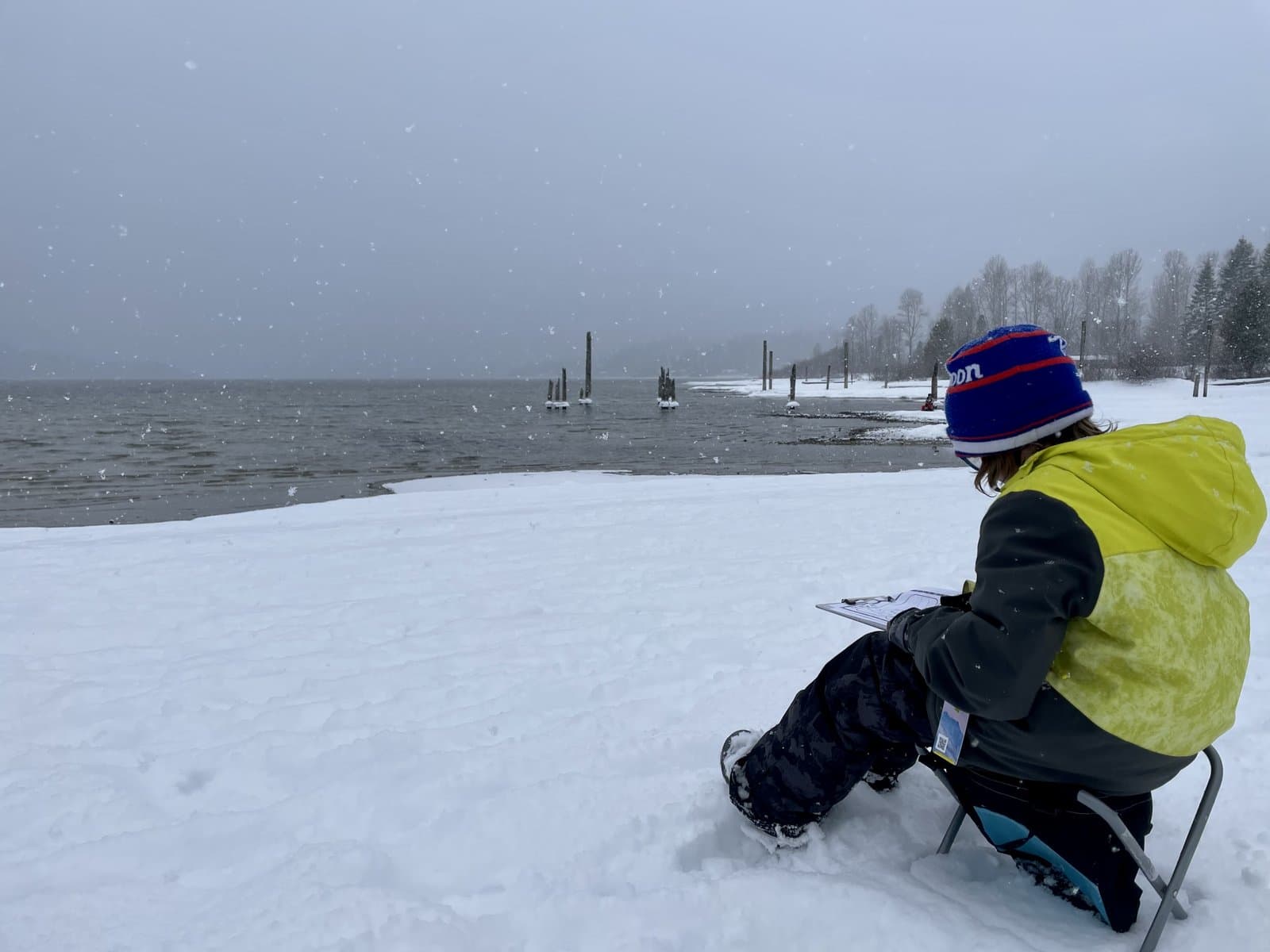
A nature journal is a personal record of what a child notices outdoors. It can include drawings, written observations, questions, lists, measurements, pressed leaves, taped-in feathers, sketches of animal tracks, and weather notes. There is no single right format. Most journals end up being a hybrid of drawing and writing because that combination forces the observer to look more carefully than either alone.
What it is not: a craft project, a homework assignment, or an art portfolio. The moment a parent starts evaluating the drawings, journaling dies. The point is observation, not artistic output.
Why nature journaling builds real skills
On the surface, it looks like drawing leaves. Underneath, it builds skills that transfer to almost every academic and life domain:
- Observation: noticing details (vein patterns, edge shapes, colour gradients) instead of seeing a generic "leaf"
- Scientific thinking: forming hypotheses, predicting, comparing today's observation to last week's
- Writing: putting a specific observation into words sharper than "it was cool"
- Drawing: not for artistry, for the slow attention drawing requires
- Memory: the act of journaling encodes the experience more deeply than passive looking
- Sense of place: kids who journal the same spot repeatedly develop a relationship with that place that anchors them
The three-prompt framework
Most kids will not naturally write or draw without a structure. The most reliable framework, taught by naturalist John Muir Laws and used in nature schools worldwide, is three short prompts:
- I notice: an observation. What does it look like, smell like, sound like? Drawing or describing in words both count.
- I wonder: a question. What is this? Why is it here? What is it doing? Where did it come from?
- It reminds me of: a connection. Has the child seen something like this before? Does it look like something else? Does it relate to a story or memory?
That is it. Every page has at least one of each. Three prompts cover sensory observation, scientific curiosity, and connection-making, which are the building blocks of how scientists, naturalists, and good thinkers process the world. It pairs naturally with our post on turning nature walks into science lessons, where the same kinds of questions drive what you do with your feet instead of your pencil.
Resist the urge to answer your kid's "I wonder" questions, even when you know the answer. The wondering itself is the skill. If you supply the answer too fast, the prompt stops being generative. Better response: "Hmm, good question. How could we find out?"
Setting up the journal (cheap version)
You do not need a special nature journal kit. Most of those are overpriced. The setup that works:
- A sturdy notebook with unlined pages (any spiral-bound sketchbook from a drugstore works). Bigger is better up to about 8x10 inches.
- A pencil and an eraser. Pen leaves no room for fixing observations.
- A small set of colored pencils (12 is plenty). Optional but useful.
- A pencil case or zip pouch to keep it all together.
- A backpack or bag to take outside.
Total cost: under $20. Keep the whole setup by the door so it is ready to grab on the way out. The single biggest predictor of whether a nature journal becomes a habit is whether you can leave the house with it in under 30 seconds.
In the Membership
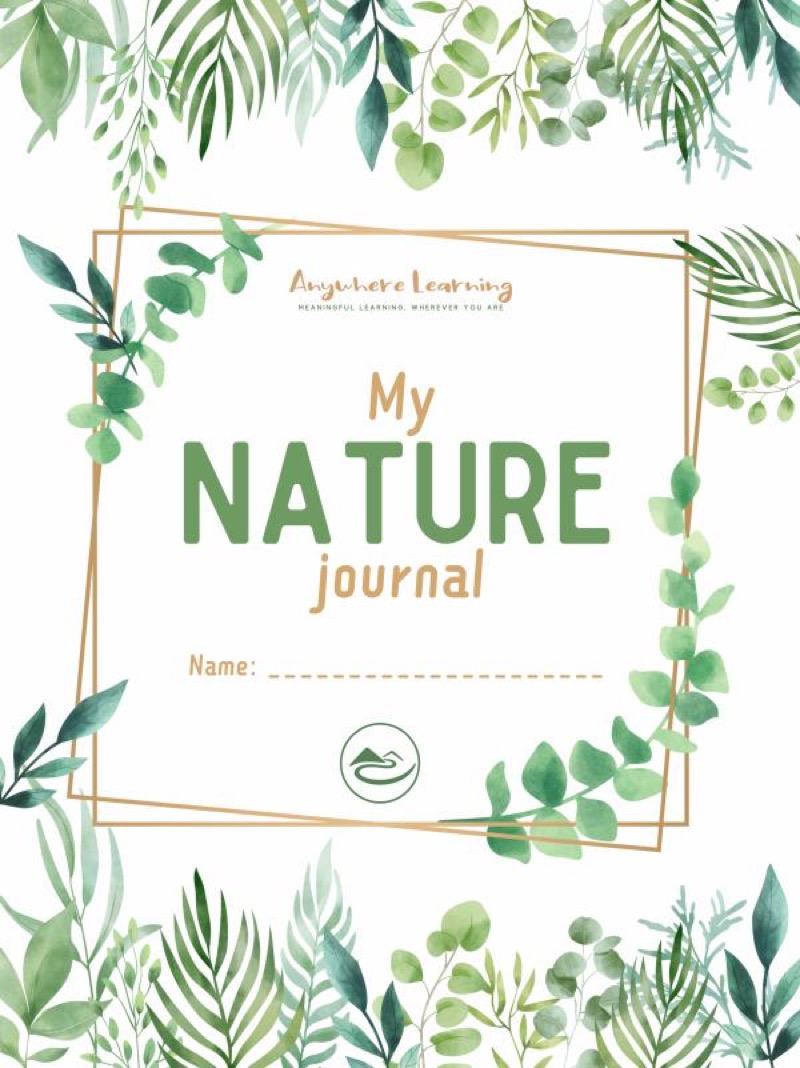
My Nature Journal
Nature journal for kids ages 6-14: guided prompts for sketching, writing, and outdoor observation. Any season, any trail.
What a first page actually looks like
New journalers (especially adults supervising them) often expect the first page to be a polished botanical study. It is not. A realistic first page looks like:
- Date and rough location written at the top (helps later when reviewing)
- One quick sketch of something the kid noticed (a leaf, a bug, a cloud shape)
- Two or three short notes around the sketch ("yellow center," "5 petals," "wet")
- One "I wonder" question scrawled somewhere ("Why is it growing in the crack?")
- A messy connection ("It reminds me of the umbrellas at grandpa's")
That is a complete entry. It probably took 10 minutes. If your kid spent 20 minutes on it, even better. If they only spent 4 minutes, also fine. Consistency beats depth in the early weeks. If your kid needs a more structured entry point, try pairing the journal with one of our free seasonal nature scavenger hunts, which give them specific things to find before they sketch.
How to make it stick beyond week one
Most nature journals die in week two. Here is how to keep the habit going:
- Anchor it to something else: every Saturday walk, every Tuesday afternoon, after every park visit. A predictable trigger beats willpower.
- Journal alongside your kid. Modelling matters more than any instruction. Even one minute of you sketching is enough.
- Resist the urge to comment on the artwork. Ever. Comment on the observation. ("Whoa, you noticed five different shades of green in that one leaf.")
- Walk the same place often. Repetition makes change visible, and change is what fuels the next entry.
- Skip the perfect page. A two-minute scribble counts. A week of two-minute scribbles is more valuable than one beautiful page that took an hour and burned everyone out.
- Review old entries together. Once a month, flip back through. Kids are usually amazed at what they noticed weeks ago.
What changes over months
A nature journal kept for one month is a notebook. A nature journal kept for six months is a transformation. The shifts are slow but unmistakable:
Drawings get more accurate, not because the kid is learning to draw, but because they are learning to look. Vocabulary gets specific (a "yellow flower" becomes "five-petaled with a brown center, growing in the cracks of the sidewalk"). "I wonder" questions get sharper and start to compound (last week's wonder gets answered or revisited). The kid starts spotting things you did not see, which is the moment you realise the practice is working.
For our family, the clearest signal was when our kids started reaching for the journal unprompted. Not because they had to. Because they had something they wanted to record.
Want this as a free printable? Grab the Nature Walk Checklist: 50 Ideas for Kids, free to read, and the printable version lands in your inbox.
Nature journaling teaches kids to see what other people walk past. That skill compounds.