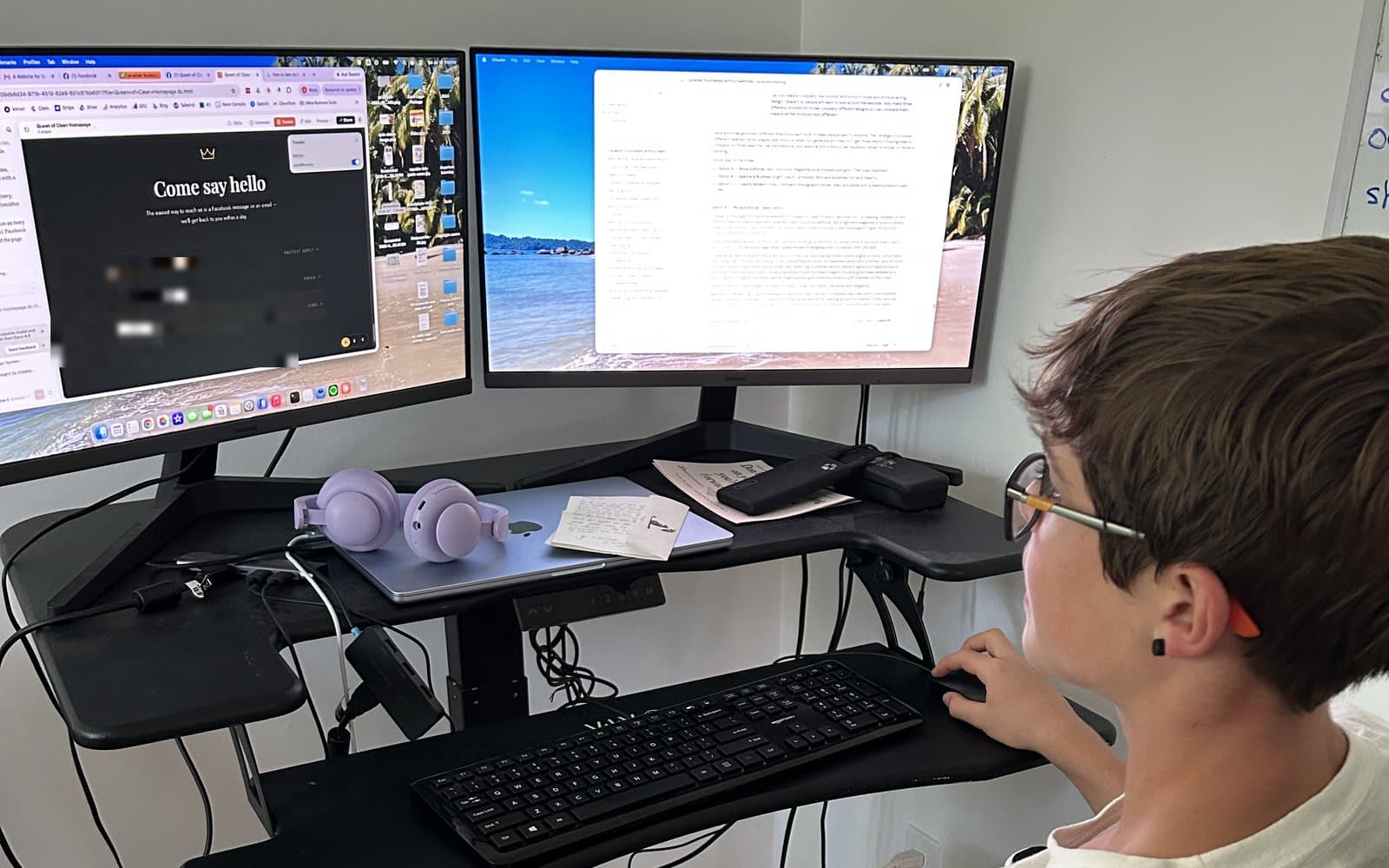
- 1So, is it actually cheating?
- 2The real question isn’t cheating. It’s whether they’re still learning.
- 3The line: is AI doing the thinking, or helping them think?
- 4This is really about a bigger habit
- 5How to talk to your kid about it (without becoming the AI police)
- 6A simple family rule for AI and homework
- 7What to do if you catch them using it to cheat
- 8Frequently asked questions
If you have found AI-written work on your kid’s screen, or you just suspect it, you are not overreacting and you are not behind. This is the new normal, and it happened fast. Pew Research Center found that teen use of ChatGPT for schoolwork doubled in a single year, and by late 2025 more than half of teens said they use chatbots for schoolwork, with about one in ten leaning on them for all or most of it.
So banning it outright is not really on the table, and honestly, it might not even be the goal. AI is going to be part of how this generation works and learns. The real question is not whether your kid uses it. It is whether they are still learning when they do.
So, is it actually cheating?
Here is the honest answer: it depends entirely on how it is used. The same tool can be completely fine or completely dishonest, and the difference is simply who does the thinking.
Most schools have landed in the same place. Using AI to explain a hard concept, brainstorm ideas, or check a finished draft is usually allowed, and often encouraged. Pasting the assignment in and turning the answer in as your own is not. It is the difference between using a calculator to check your math and having someone else sit your test for you.
- Not cheating: asking AI to explain a concept a different way, quiz them, suggest topic ideas, or point out weak spots in a draft they wrote themselves.
- Cheating: pasting in the question and submitting whatever comes out, or having it write the essay and copying it word for word.
If your kid could not explain what they turned in, they did not do the work. That is the simplest test there is.
The real question isn’t cheating. It’s whether they’re still learning.
Cheating is a school-rules problem. But there is a bigger thing underneath it, and it is the part I care about most as a former teacher. When a kid hands their thinking to a chatbot, they skip the exact struggle that builds the skill. That messy middle part, where you are stuck and have to work it out, is not the obstacle to learning. It is the learning.
A kid who uses AI to skip the hard part gets the assignment done and learns nothing. A kid who uses it to understand the hard part gets the assignment done and gets smarter. Same tool, opposite result. Our job is not to keep AI away from them. It is to make sure they are still the one doing the thinking.
AI can build your kid’s thinking or replace it. The whole game is teaching them the difference.
The line: is AI doing the thinking, or helping them think?
Here is a simple way to tell the difference in real life, and to teach it to your kid. After they use AI, ask one question: do they understand more, or did they just get to the answer faster?
- Helping them think: "I don’t get how photosynthesis works, can you explain it like I’m ten?" Then they write the answer in their own words.
- Doing the thinking for them: "Write me a paragraph about photosynthesis." Then they copy it.
- Helping them think: "Here’s my essay, what are three things I could make stronger?" Then they revise it themselves.
- Doing the thinking for them: "Write my essay on this book." Then they hand it in.
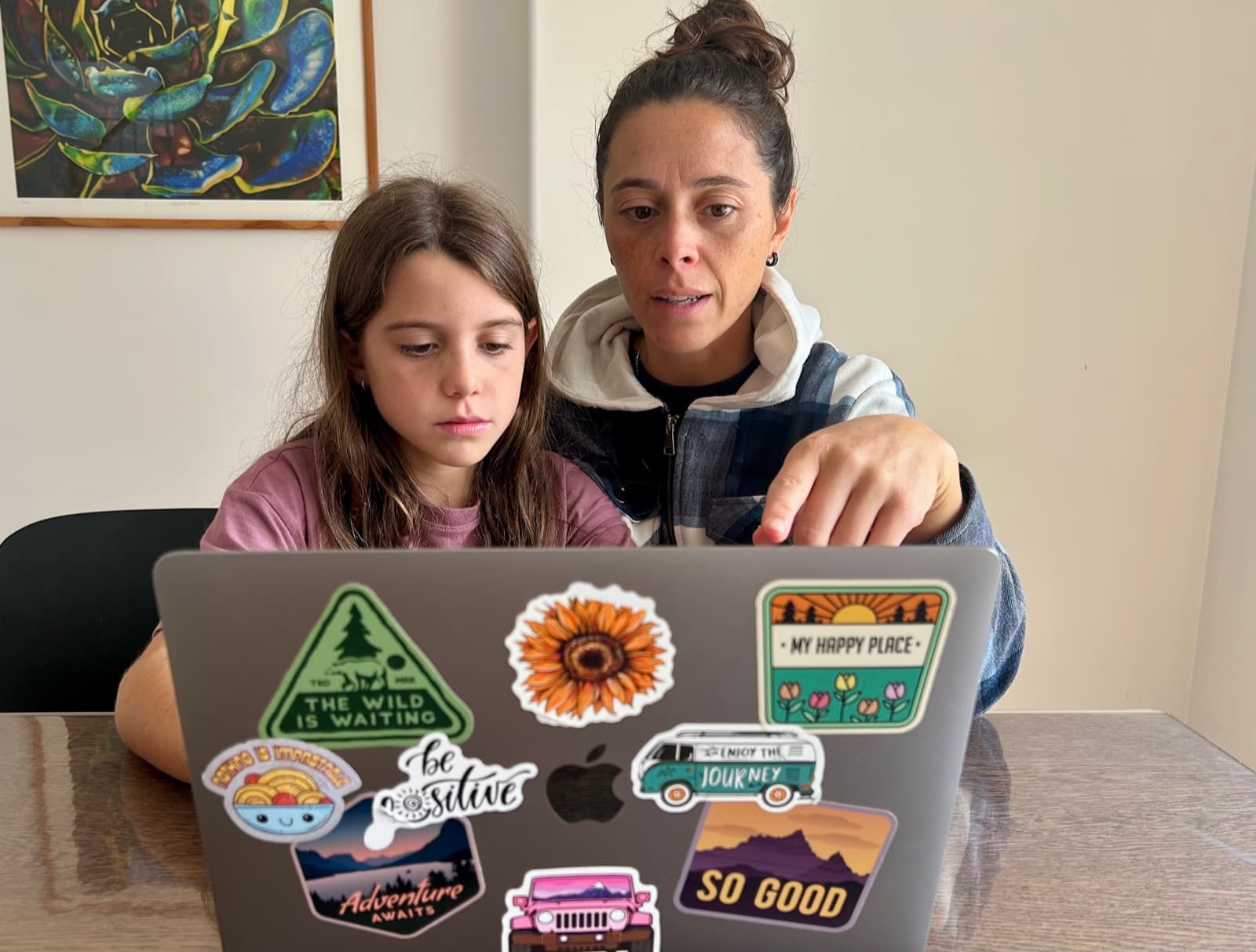
Notice the pattern. In the good version, your kid is still the one writing, deciding, and understanding. AI is the tutor in the room, not the kid taking the test. If you want to teach that skill directly, our guide on how to teach kids to prompt AI shows them how to use it like a coach instead of an answer machine.
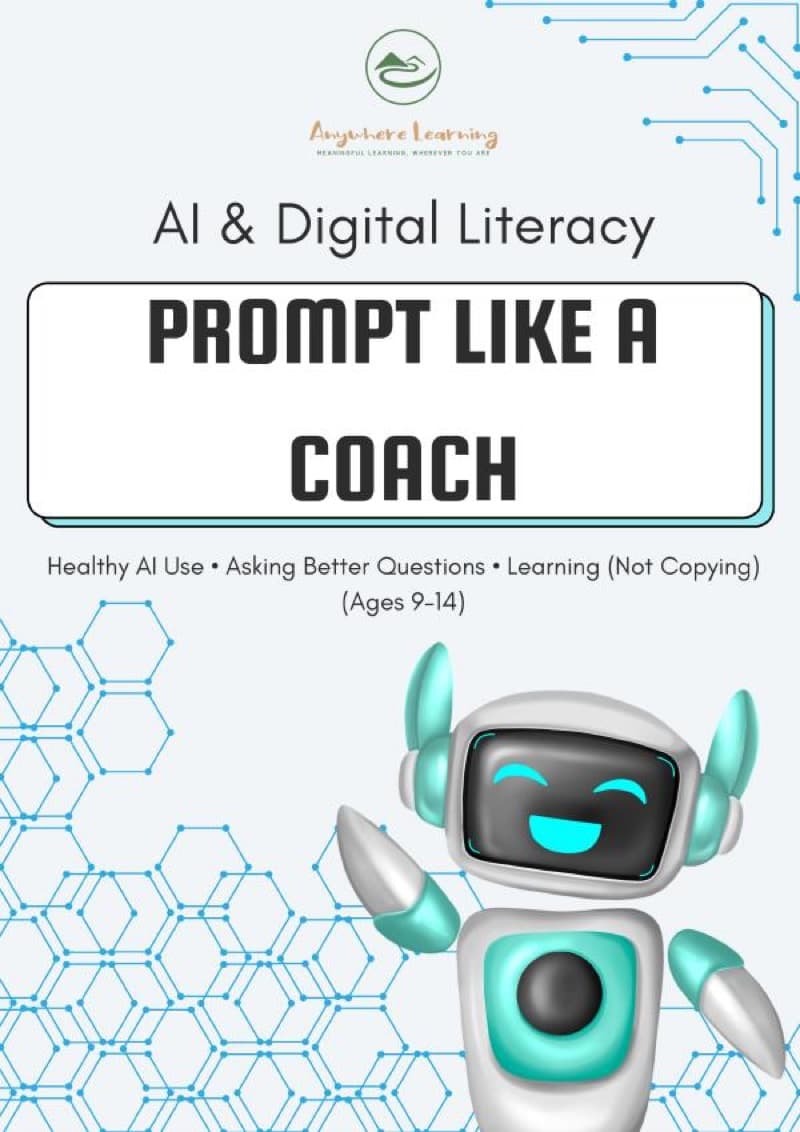
In the Membership
Prompt Like a Coach
A guided activity that teaches kids to use AI as a thinking partner and coach, the questions to ask and the ones to avoid, so it builds their skills instead of doing the work for them.
This is really about a bigger habit
You may have heard me say this about screens: the goal is less consuming, more creating. AI is the same idea. A kid who uses it to consume answers is on one path. A kid who uses it to make their own work better is on another. The tool is neutral. The habit is everything, and habits start young. It also connects to plain old media literacy, because a kid who leans on AI needs to know it can sound completely confident and still be wrong.
How to talk to your kid about it (without becoming the AI police)
The instinct is to lock it down, monitor everything, and treat every use as a crime. I understand it, but experience says that backfires. Kids who feel policed just get better at hiding it. Kids who feel understood are the ones who actually learn to use it well.
- Start early. Have the conversation in the elementary years, before they run into AI socially at school. Setting the habit is much easier than breaking one.
- Ask, don’t accuse. "Show me how you used it" opens the door in a way "Did you cheat" never will.
- Use the explain-it-back test. After a paper or project, ask them to explain it to you in their own words. If they can, they learned it. If they can’t, that is your conversation, calmly.
- Name the why. Kids often reach for AI because they are overwhelmed or stuck, not lazy. Fix the overwhelm and a lot of the shortcut-taking goes with it.
A simple family rule for AI and homework
You do not need a ten-page policy. One clear line does most of the work:
Use AI to learn it, never to skip it. If you couldn’t explain it, you didn’t do it.
From there, a couple of house rules help. AI is allowed for understanding, brainstorming, and checking, but the final work has to be in your own words and your own thinking. And when a teacher says no AI on an assignment, that is the rule, full stop. Learning to respect that boundary is its own life skill.
What to do if you catch them using it to cheat
First, breathe. This is a teaching moment, not a character verdict. Almost every kid will test this line at some point. What matters is what happens next.
- Get curious before you get angry. "Walk me through what you did" tells you far more than a lecture.
- Reconnect it to the point. "The assignment was never really the paragraph, it was learning to think it through. You skipped the part that was actually for you."
- Have them redo it with AI as the tutor, not the writer. Same tool, right way. That is the lesson landing.
Handled with calm and curiosity, a caught shortcut becomes the exact moment your kid learns to use AI well. That is a win, even if it does not feel like one at nine o’clock on a Sunday night.
Frequently asked questions
Is it cheating for kids to use AI for homework?
Should I let my child use ChatGPT for schoolwork?
How do I know if my kid is using AI to cheat?
At what age should I talk to my kid about AI and homework?
Can AI actually help kids learn?
Want this as a free printable? Grab the 18 AI & Digital Literacy Ideas for Kids, free to read, and the printable version lands in your inbox.