- 1What kindergarteners actually need
- 2What you can safely skip at age 5
- 3A simple kindergarten rhythm (not a schedule)
- 4But what about reading and math?
- 5What if they want more structure?
- 6The comparison trap
- 7What to do when you panic
- 8Signs it is working (even when it does not feel like it)
- 9When curriculum does make sense
- 10Frequently asked questions
If your kid just turned 5 and you are staring at a screen full of "complete kindergarten curriculum" options wondering which one to buy, let me save you some money and a lot of stress: you probably don't need one.
I know that feels scary to hear. We have all been told that kindergarten is where "real school" begins, that if we don't start structured learning now our kids will fall behind. Behind whom, exactly? Behind the arbitrary benchmarks designed for a classroom of 25 kids who need to move through material at the same pace? Your kid is not in that classroom anymore. That's the whole point.
So take a breath. Your five-year-old is going to be fine. Better than fine, actually.
What kindergarteners actually need
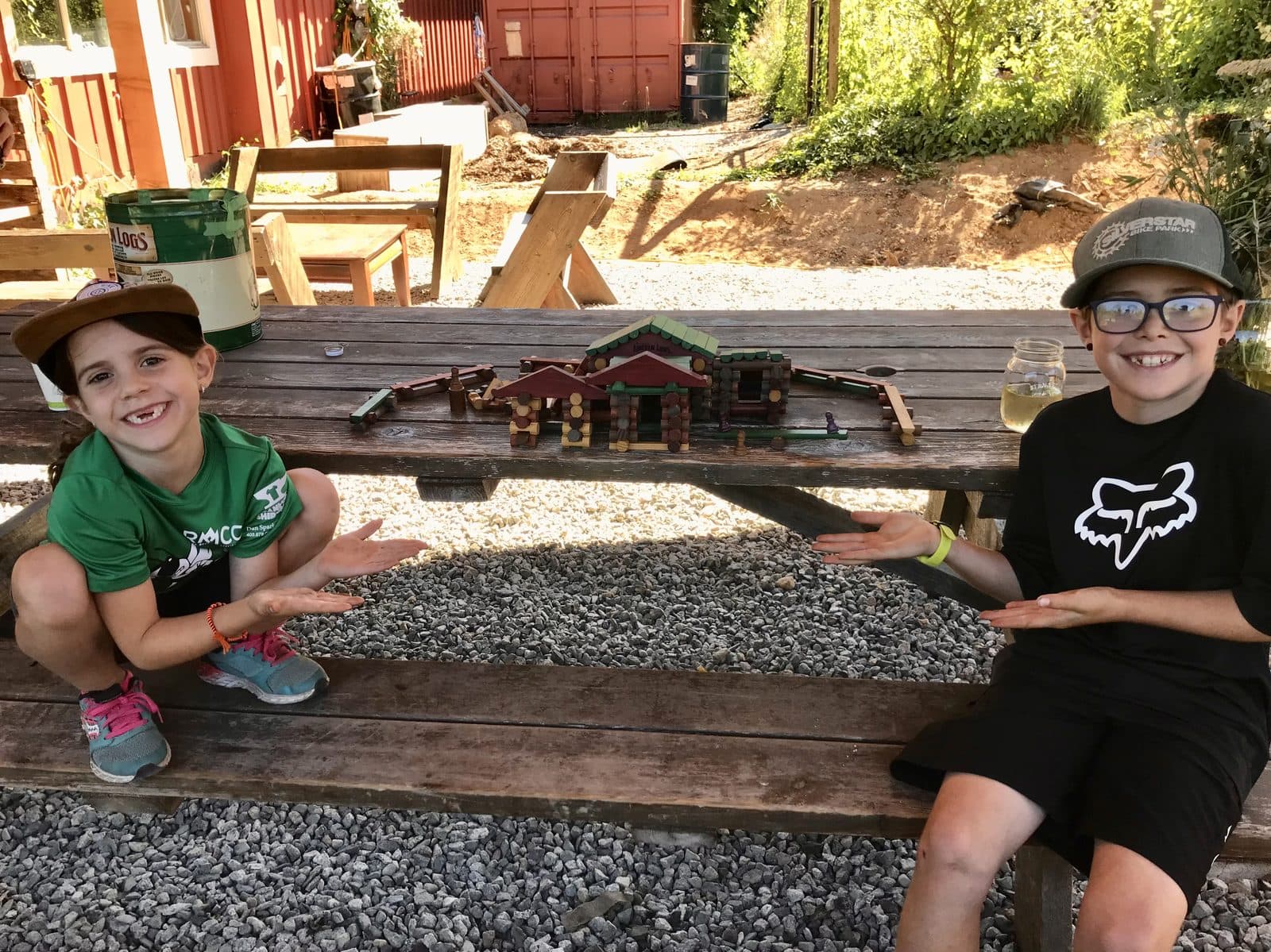
Here is what the research and every honest early-childhood educator will tell you: five-year-olds learn through play. Full stop. Not play "with educational objectives." Not play "that secretly teaches phonics." Just play. Building with blocks is geometry. Pretending to run a restaurant is literacy, math, and social skills. Digging in the dirt is science. Arguing with a sibling about whose turn it is? Conflict resolution. It all counts.
- Lots of unstructured free play (inside and outside)
- Being read to every single day
- Time outdoors, ideally daily
- Conversations with adults who listen to them
- Access to art supplies, blocks, and open-ended materials
- Real-world experiences: grocery stores, libraries, parks, kitchens
- Enough sleep and enough downtime
That's the list. It is not long. It does not require a laminator.

What you can safely skip at age 5
I say this gently, because I know the anxiety is real: most of what gets marketed as "kindergarten curriculum" is unnecessary for a child learning at home one-on-one.
- Formal handwriting workbooks (let them draw, colour, and trace when they want to)
- Phonics programmes (unless your kid is asking to read, and even then, keep it playful)
- Graded math worksheets (counting happens naturally when you bake, shop, or play board games)
- Daily lesson plans with timed subject blocks
- Any product that promises your child will be "grade-level ready" by June
Will your kid learn letters? Yes, from reading together, from signs at the grocery store, from writing their name on birthday cards. Will they learn numbers? Yes, from counting stairs and sorting rocks and figuring out how many crackers each person gets. It happens. You don't have to force it into a schedule.
Instead of "are they learning enough?" try "are they curious?" A curious five-year-old who loves books and asks a million questions is doing better than any worksheet could measure.
A simple kindergarten rhythm (not a schedule)
If you need some structure to feel grounded (and most of us do, especially at first), here is a loose daily rhythm that works beautifully at this age. It is not a timetable. It is more like a flow.
- 1Morning: read aloud together. One or two picture books. Snuggle up. This is the single most powerful thing you can do for a kindergartener's brain.
- 2Mid-morning: one small, hands-on activity. A nature walk where you collect things. Baking muffins. Building something out of cardboard. Drawing a map of your house. Keep it to 20-30 minutes. If they are into it, let it run longer. If they are not, let it go.
- 3Lunch and free play: let them play. Actual unstructured, nobody-directing-it play. This is where the deep learning happens.
- 4Afternoon: outside time. Park, garden, bike ride, puddle jumping. As long as possible.
- 5Evening: another read-aloud before bed if you can. Talk about the day. Ask what they noticed.
That is a full kindergarten day. Some days it will look like this. Some days it will look like pajamas until noon and an afternoon at the library. Both are fine.
But what about reading and math?
This is the question that keeps most kindergarten parents up at night, so let me be direct: there is a wide, completely normal range for when kids learn to read. Some read at 4. Some read at 7 or 8. Both are developmentally normal. Pushing a child to read before they are ready does not make them a better reader. It makes them hate reading.
The single best predictor of reading success is being read to. Not flashcards. Not phonics apps. Being read to by a person who loves them, with books they enjoy, every single day. You are already doing that.
For math, the same principle applies. A five-year-old who helps set the table (how many forks do we need?), counts steps on a walk, sorts their Halloween candy by type, and plays simple board games is building a stronger math foundation than any worksheet could provide. This is exactly how kitchen math works, and your kindergartener can do age-appropriate versions of all of it.
In the Membership
My Nature Journal
Nature journal for kids ages 6-14: guided prompts for sketching, writing, and outdoor observation. Any season, any trail.
What if they want more structure?
Some kids genuinely ask for "school." They want a workbook. They want to sit at a desk and do a thing. That is fine too. Follow their lead. Get them a simple, gentle workbook and let them do it when they feel like it. The key word is "when they feel like it," not "every day at 9am whether they want to or not."
If you want a light framework for days when your kid is asking for something more, try picking one activity from a different area each day:
- Monday: nature or outdoor exploration
- Tuesday: art or building
- Wednesday: cooking or kitchen project
- Thursday: books and storytelling
- Friday: free choice (they pick the adventure)
Loose, flexible, zero pressure. Skip a day. Swap them around. It does not matter.
The comparison trap
Here is what will happen at some point: you will see another homeschool family on Instagram whose kindergartener is doing cursive handwriting and reading chapter books and building volcanoes out of baking soda. You will feel terrible. You will wonder if you are ruining your child.
You are not. Instagram shows the highlight reel, not the meltdown that happened five minutes before the volcano photo. Every family is different. Every kid is different. Comparison at this age is especially pointless because the developmental range is enormous. A child who "seems behind" at 5 can be ahead by 7. It evens out. It always evens out.
The goal of kindergarten is not to produce a reader. It is to produce a child who loves learning and believes they are good at it.

What to do when you panic
Because you will. Every homeschool parent does, especially in the first year. Here is your panic protocol:
- 1Close the browser tabs. All of them.
- 2Go sit with your kid and watch them play for 10 minutes. Actually watch.
- 3Write down three things they learned this week, even small ones.
- 4Remember that millions of children around the world do not start formal schooling until age 6 or 7 (Finland starts at 7, and they are doing just fine).
- 5Text a friend who gets it. If you do not have one yet, find your people.
The panic is not evidence that you are doing it wrong. It is evidence that you care. Those are very different things.
Signs it is working (even when it does not feel like it)
- Your child asks questions. Lots of them. About everything.
- They play for long stretches without needing you to direct them.
- They are excited about at least some of the things you do together.
- They are not anxious about "getting it wrong."
- They sleep well, eat well, and generally seem happy.
- They talk to you. About real stuff. Unprompted.
If most of those are true most of the time, you are doing a beautiful job. Full stop. No curriculum needed to prove it.
When curriculum does make sense
I am not anti-curriculum. I am anti-panic-buying-curriculum. If you have been homeschooling for a few months, you have a feel for your kid, and you genuinely want a resource to guide you through a subject, go for it. Just make sure you are choosing it because it serves your family, not because fear told you to.
A few signs you might be ready for some structure: your child is consistently asking for more challenge, you want a framework for a specific subject (like math or reading), or you are planning to transition into a more structured approach for first grade and want a gentle bridge.
And if you start a curriculum and it is making everyone miserable? Put it on the shelf. You have not failed. You have just learned what does not work for your family. That is data, not defeat. For more on navigating this feeling, the curriculum guilt permission slip might help.
Want a few hands-on activities to try this week with your kindergartener? Our free guide has 7 real-world activities, one a day, that work beautifully for ages 5 and up.