A free printable checklist of 15 science experiments kids ages 5 to 11 can run in the backyard, covering water and weather, plants and soil, and animals and bugs. Every experiment uses what you already have: water, dirt, jars, and sunlight. No lab coat, no kit.
Put together by Amelie, B.Ed, M.Ed, former classroom teacher · Updated June 2026
Anywhere Learning
anywherelearning.co
Nature & Outdoor
15 ideas · 3 themes
Backyard Science Checklist: 15 Experiments
Want the full guide? anywherelearning.co/blog/backyard-science-experiments
Meaningful Learning, Wherever You Are
anywherelearning.co/ideas
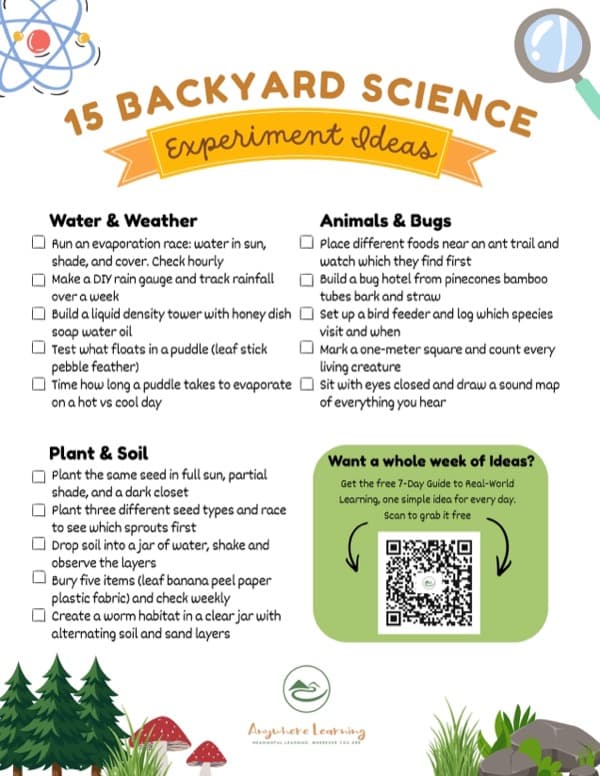
Free printable checklist
Want this list on paper? Full colour or black and white, ready for the fridge or your bag.
These are hands-on science experiments you do alongside your kids, not demos they watch. Set up the materials together, ask what they think will happen before you start, and let them get it wrong. The mess and the surprise are where the learning lives. Work through one experiment at a time and let the questions pile up.
This checklist is the quick version. For the why behind each idea, parent tips, and the full walkthrough, read Backyard Science Experiments: 15 No-Prep Ideas Kids Can Do Today.
The printable version, in full colour and black and white. Print it for the fridge or tuck it in your bag, and let them tick things off themselves.
Everything on this page stays free to read. The printable is just the version that survives leaving the house.
Already know you want the whole library? See what’s inside the membership
